
ElevenLabs review
AI audio platform with 5,000+ voices in 70+ languages: text-to-speech, voice cloning, dubbing, and agents.
The quality leader in AI voice generation and cloning, with a credit system that drains fast once you produce long-form audio regularly.
Pros
- Consistently rated among the most natural-sounding TTS voices available
- Voice cloning works from short samples and holds up across long scripts
- 5,000+ voices across 70+ languages, plus a community voice library
- Dubbing preserves emotion and speaker characteristics across languages
- Low-latency models (around 75ms with Flash) suit real-time and agent use cases
Cons
- Credit-based usage runs out quickly for long-form narration
- The product surface has grown complex: agents, music, SFX, and API can overwhelm creators who just want voiceovers
- Fine control over delivery still takes trial and error compared to recording a human take
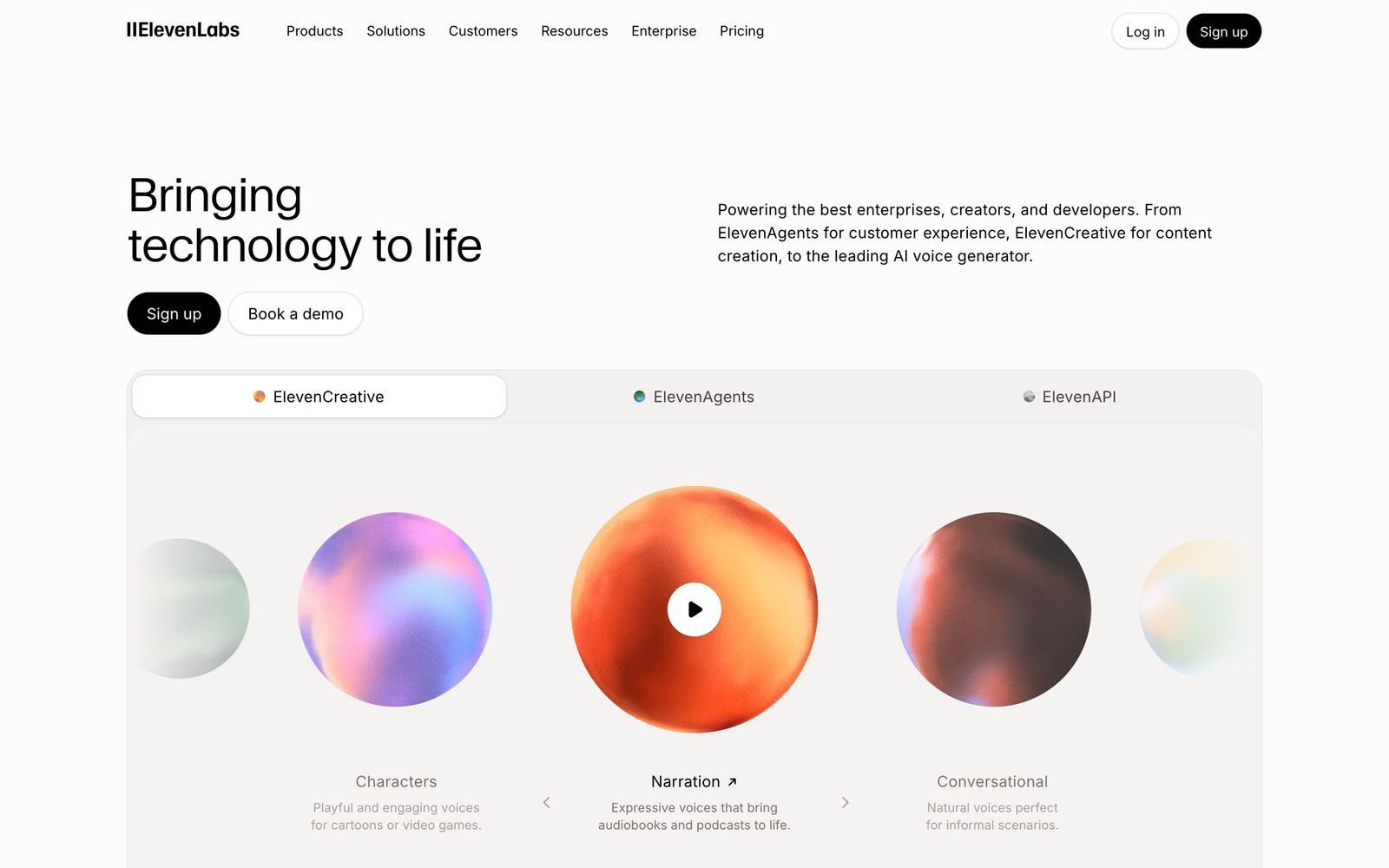
ElevenLabs is the tool most creators name first when AI voice generation comes up, and after testing it against the rest of the text-to-speech field, that reputation is mostly earned. It is an AI audio platform that covers text-to-speech, voice cloning, dubbing, sound effects, and even conversational voice agents, with 5,000+ voices available in 70+ languages. For YouTubers, podcasters, course creators, and audiobook narrators, it has become the default benchmark every other AI voice tool gets measured against.
What ElevenLabs actually does
At its core, ElevenLabs converts written scripts into spoken audio that sounds convincingly human, including breath sounds, natural pacing, and emotional inflection. You pick a voice from the library, paste your script, and generate. The voice cloning feature goes further: upload a sample of your own voice and the platform builds a synthetic version you can use to narrate scripts without recording. Professional cloning, trained on longer samples, gets close enough that listeners rarely flag it.
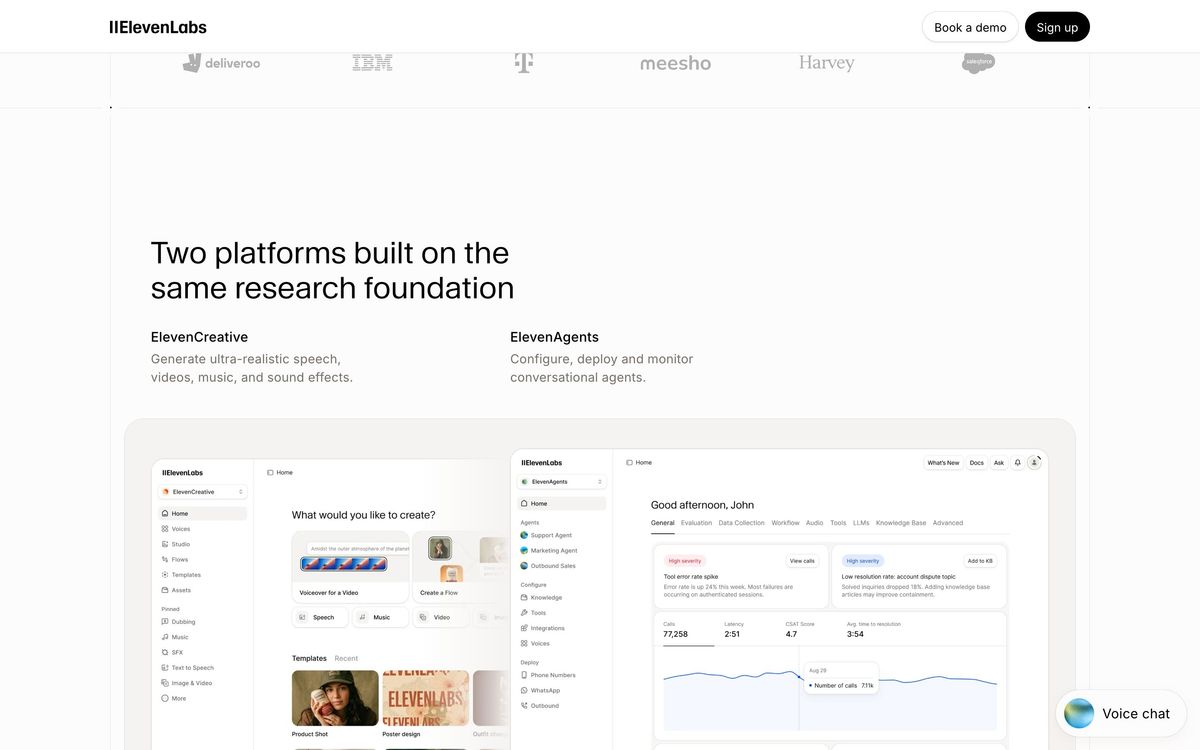
Beyond basic narration, the platform has expanded into a full audio suite. The dubbing workflow translates and re-voices video content while preserving the original speaker's emotional delivery. There are sound effect generation, music tools, speech-to-text, and an agents product for building voice-driven assistants. Developers get an API with multiple model tiers, including a low-latency Flash model that responds in roughly 75 milliseconds.
Key features
- Text-to-speech with 5,000+ voices across 70+ languages and accents
- Instant and professional voice cloning from audio samples
- Dubbing that carries emotion and speaker identity across languages
- Sound effects and music generation for video and podcast production
- Speech-to-text transcription with speaker diarization
- API and SDKs with model options tuned for latency, consistency, or expressiveness
The voice library deserves a specific mention. Community-shared voices mean you can usually find a tone that fits your channel without cloning anything, and the filtering by use case, age, and accent makes browsing manageable.
Who it's for
ElevenLabs fits creators producing faceless YouTube channels, narrated Shorts and Reels, audiobooks, course modules, and podcast segments where recording every take is impractical. It also suits multilingual creators who want to dub their existing catalog instead of re-recording it. The free tier is a real free plan with monthly credits, which is enough to test voices and produce short clips, though anyone publishing weekly long-form audio will hit the ceiling fast and need a paid plan. Developers building voice features into apps are a separate, well-served audience through the API.
It is less ideal if you only need occasional, utilitarian voiceover for internal videos. The quality premium matters most when audiences listen closely, and simpler tools may cover casual use.
How it compares
Against Murf AI, ElevenLabs wins on raw voice realism and cloning quality, while Murf counters with a more guided studio workflow, built-in slide and video syncing, and integrations like Canva and Google Slides that suit corporate e-learning teams. Against Play.ht, ElevenLabs generally produces more consistent emotional delivery on long scripts, though Play.ht competes on voice variety and pricing flexibility. If your priority is editing recorded audio rather than generating it, Descript is the better starting point, since its voice cloning exists to patch recordings rather than narrate from scratch.
Verdict
ElevenLabs is the strongest pure AI voice generator I have tested, and the gap is audible: cloned voices keep their character across long scripts, and stock voices avoid the flat, robotic cadence that plagues cheaper TTS. The honest tradeoffs are cost at scale, since credits disappear quickly with long-form narration, and a product surface that has sprawled well beyond voiceover. If voice quality is the deciding factor for your content, start here. If you need a full editing workflow or tight budget predictability, weigh Murf or Descript first.
Ready to try ElevenLabs?
There's a free tier, so you can test it before committing.
More creators tools like ElevenLabs
Riverside
4.5Browser recording studio that captures every remote guest locally in 4K, then edits and publishes the episode.
Read Riverside review →Ticket Tailor
4.3Box office software that charges a flat fee per ticket instead of a percentage of the door.
Read Ticket Tailor review →Beautiful.ai
4.2AI presentation software with smart slides that auto-align layout, spacing, and branding as you type.
Read Beautiful.ai review →Castmagic
4.2Turns audio and video recordings into show notes, posts, articles, and clips-ready copy automatically.
Read Castmagic review →Circle
4.2Community platform with courses, events, paid memberships, email and branded apps on your own domain.
Read Circle review →LearnWorlds
4.2Course platform and LMS for selling training: site builder, interactive video, certificates and checkout.
Read LearnWorlds review →