
Circle review
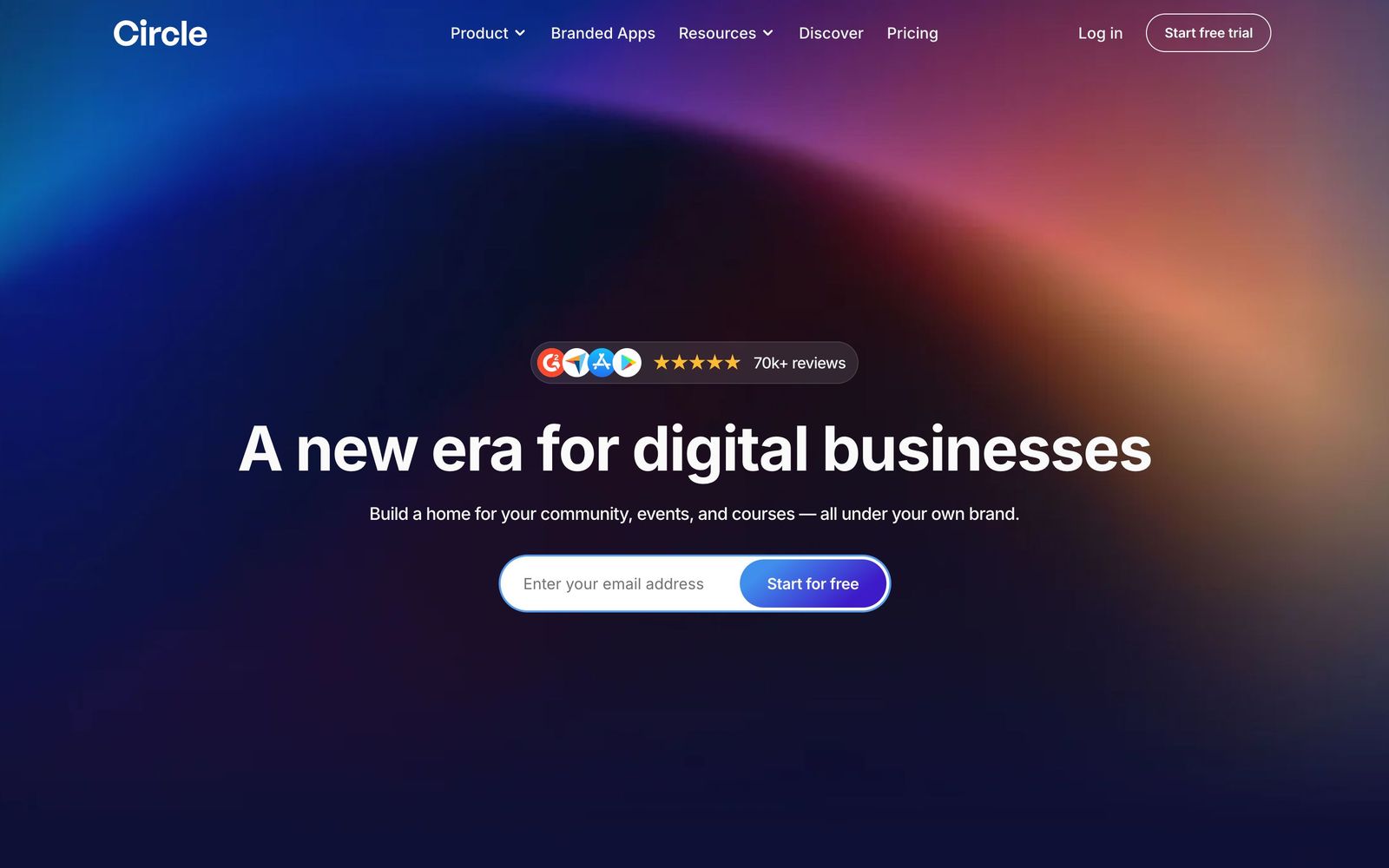
Community platform with courses, events, paid memberships, email and branded apps on your own domain.
The most complete way to run a paid community as a business rather than a hobby, though retiring the cheap entry plan made the first step an expensive one.
Pros
- Spaces keep discussions, courses, events and member directories under one navigation instead of separate products
- Native checkout ties payment, access and membership state together, so a lapsed card removes access automatically
- Branded iOS and Android apps with push notifications are available rather than a shared platform app
- Custom domain and white-labelling, unlike platforms that permanently host a community on their own subdomain
- Email broadcasts and automations run against the member list without exporting to a separate sender
Cons
- The former entry plan was retired, so the cheapest way in is now what used to be the middle tier
- Workflows, automation and API access only appear on the second tier, roughly doubling the monthly cost
- Circle takes a percentage of every transaction on top of the subscription and on top of Stripe's own fee
Circle pricing
List prices in USD per month, taken from the vendor at review time.
| Plan | Per month | What it covers |
|---|---|---|
| Professional | $89 | 3 admin seats, 2% transaction fee |
| Business | $199 | 5 admin seats, 1% transaction fee, adds workflows and API |
What Circle actually does
Circle is a hosted platform for running a community as a product. The structural unit is the space: a discussion forum, a course, an events calendar, a chat room or a member directory, grouped into sections and arranged behind whatever access rules the operator sets. Members log in to a site on the operator's own domain, with the operator's branding, and can be given access by plan, by purchase or by invitation. Around that sit the commercial pieces, including a checkout for one-off sales, subscriptions and paid memberships, so payment status and access permissions stay in step without a middleware layer.
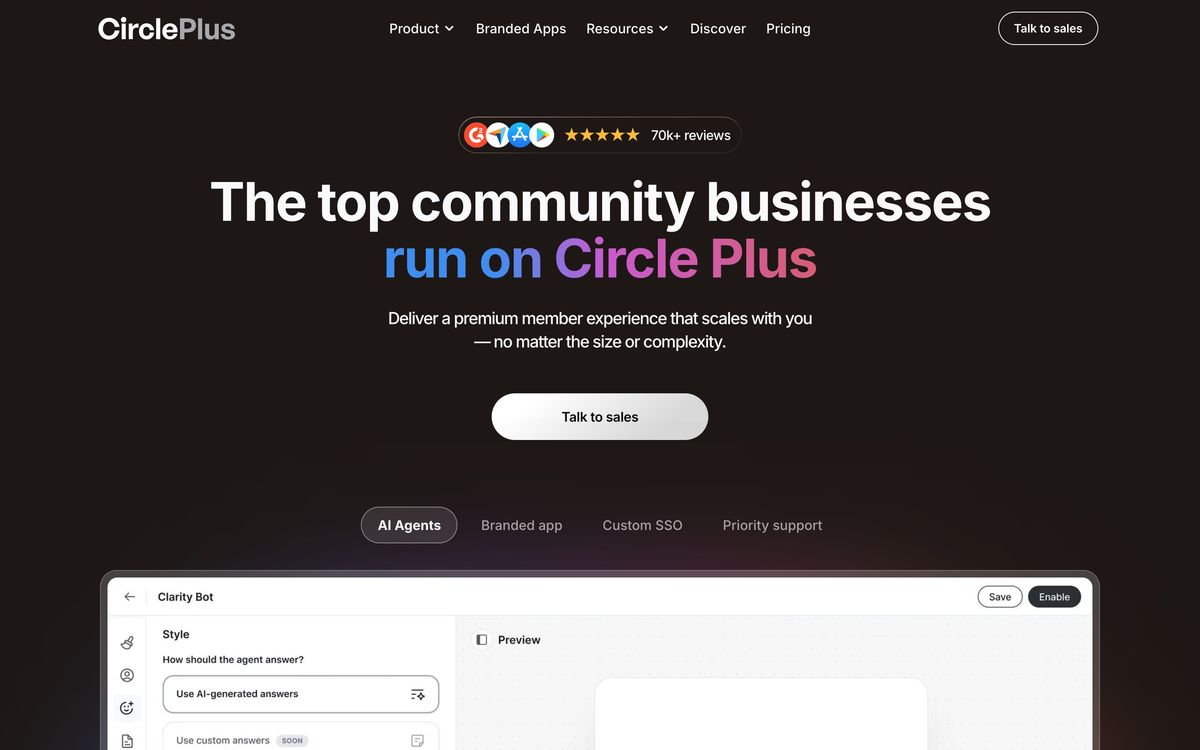
The platform has widened considerably in the past two years. There is now a course builder with drip scheduling and progress tracking, live streaming and event hosting, an email marketing module with broadcasts and automation, a visual site builder for landing and sales pages, and native iOS and Android apps carrying the operator's own branding and push notifications. AI features handle summarising, drafting and a set of agent skills. The company's position is that a community business should not need a separate forum, course platform, email sender and checkout, and the product is now broad enough to support that claim.
Key features
The capabilities that decide most purchases:
- Spaces and space groups for discussions, courses, events and directories
- Native checkout for one-off purchases, subscriptions and paid memberships
- Course builder with lessons, drip scheduling and progress tracking
- Live streaming and event hosting with RSVPs and recordings
- Email broadcasts, forms and automation running on member data
- Branded mobile apps and a site builder on a custom domain
Who it's for
Circle fits the creator or educator whose community is the business rather than a support channel for it: paid memberships, cohort courses, coaching groups, professional networks. It rewards operators who care about owning the relationship, because the custom domain, branded apps and exportable member data mean the audience is not parked on someone else's platform. Teams with an operations person also get more from it, since workflows and the API can automate onboarding, tagging and offboarding.
It is the wrong purchase for a free community with no revenue attached, where the subscription buys polish nobody is paying for and a free forum or a chat server would do the same work. It is also awkward for anyone whose priority is visual expression, because customisation stops at theming and colour unless developers get involved, and the layout stays recognisably Circle whatever the branding. Communities whose members live on their phones should test the mobile experience first, since that is where the most consistent complaints land.
How it compares
Skool wins on engagement and simplicity, with a flat price and a gamified feed, but it hosts every community on its own subdomain and offers little control over structure or branding. Mighty Networks is stronger for social-first, feed-driven groups and weaker once courses and monetisation get complicated. Kajabi comes at the same problem from the course side, with a more polished student experience and a heavier price, and its community layer remains the junior partner. Circle sits between them as the infrastructure choice.
Verdict
For a community that already earns money, Circle is the most credible platform available, and the combination of checkout, courses, email and branded apps genuinely removes several subscriptions. The caveat is cost shape rather than cost level. Retiring the cheap plan raised the floor, the automation and API that make the platform efficient sit one tier up, and a transaction fee applies to revenue that has already paid a processor. Model the fees against expected revenue before committing, because the percentage matters more than the monthly figure.
Ready to try Circle?
More creators tools like Circle
Descript
4.5AI audio and video editor where you edit recordings by editing the transcript text.
Read Descript review →Gamma
4.5AI design partner that generates presentations, documents, websites, and social content from a prompt.
Read Gamma review →Riverside
4.5Browser recording studio that captures every remote guest locally in 4K, then edits and publishes the episode.
Read Riverside review →Consensus
4.4AI search engine over 200M+ academic papers, with a Consensus Meter showing where the science agrees.
Read Consensus review →QuillBot
4.4AI writing suite used by 35M+ writers: paraphrasing, grammar checking, summarizing, and citations.
Read QuillBot review →Murf AI
4.3Generative speech platform with 200+ voices in 35+ languages: studio voiceovers, dubbing, and a real-time API.
Read Murf AI review →