
Cerri review
Project and portfolio management with resource capacity, budgets and stage-gate governance, on cloud or on-premise.
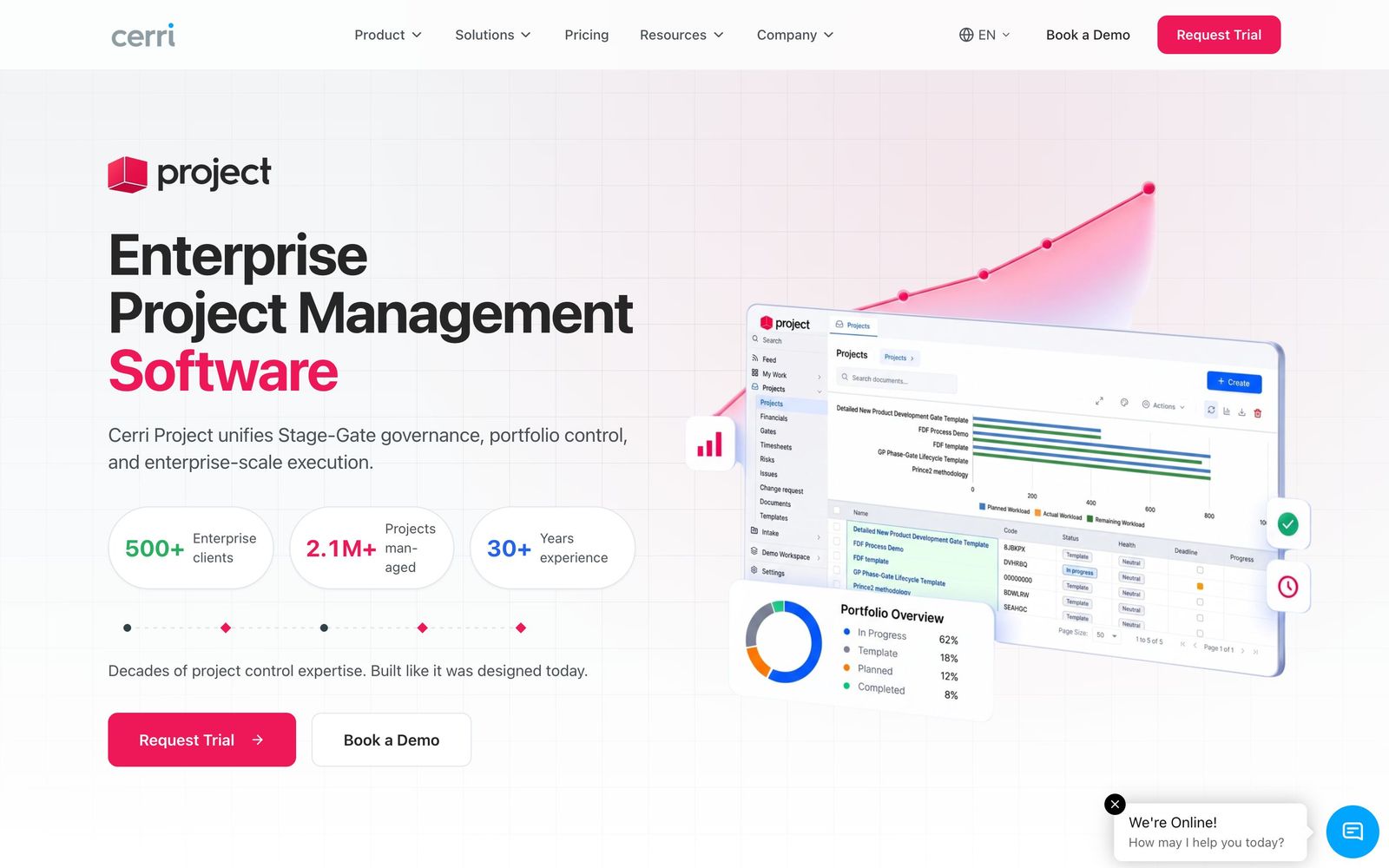
A serious portfolio management system with the budget and resource depth most task trackers lack, though the interface is dated and configuration is a project in itself.
Pros
- Portfolio, resource capacity and budget tracking are first-class rather than add-ons bolted onto a task list
- On-premise and private cloud deployment options survive procurement reviews that reject multi-tenant SaaS
- Stage-gate and approval workflows suit regulated and new-product-development processes with formal checkpoints
- Per-user pricing without feature tiers, so a licence does not have to be upgraded to reach a specific report
- Multi-language and multi-currency support with SSO, SAML and role-based access for cross-border portfolios
Cons
- The interface is visibly dated and navigation is heavy, which hurts adoption among occasional contributors
- Configuration is complex enough that reaching a usable setup is a consulting exercise, not an afternoon
- No real mobile application, so status updates from the field mean a laptop
Cerri pricing
List prices in USD per month, taken from the vendor at review time.
| Plan | Per month | What it covers |
|---|---|---|
| Standard | $40 | per user, billed annually, private cloud or on-premise |
| 1-Year Starter Pack | $300 | fixed price covering 10 users for one year, no automatic renewal |
What Cerri actually does
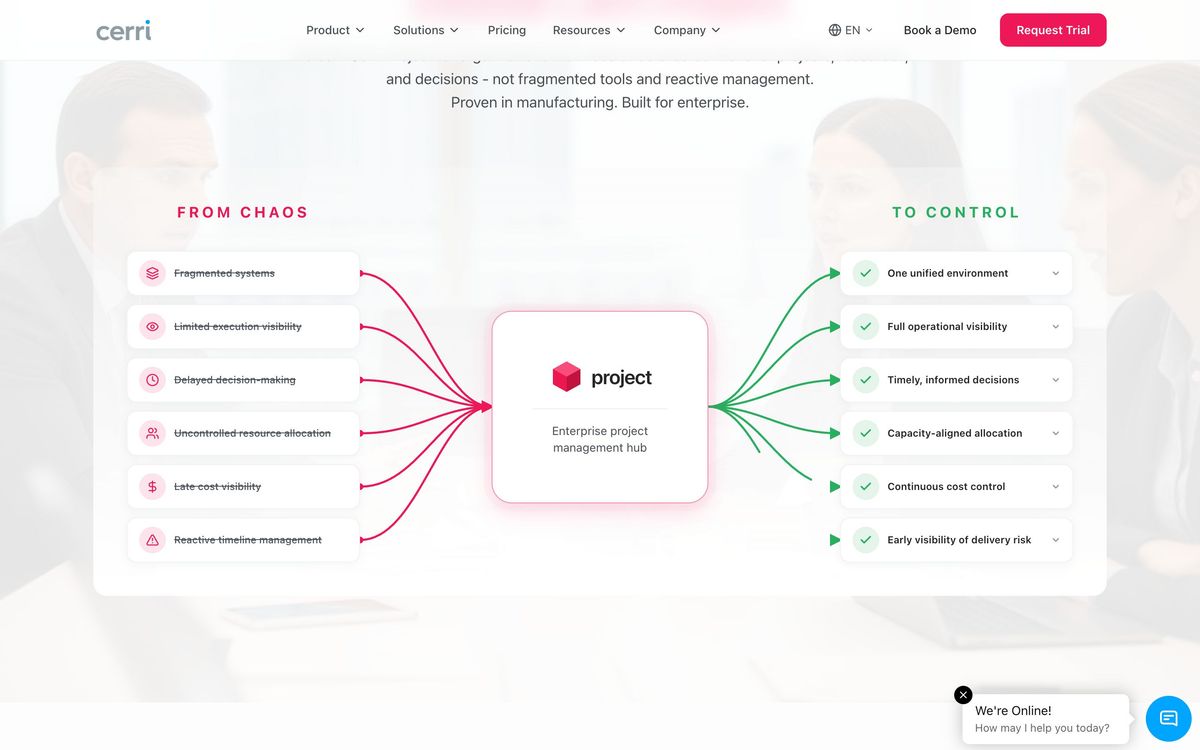
Cerri Project is project and portfolio management software for organisations that manage projects as investments rather than as to-do lists. The unit of interest is the portfolio: which projects are funded, what they are consuming, whether the people assigned to them exist in sufficient quantity, and how each is tracking against the objective that justified it. Under that sit the conventional project mechanics, Gantt scheduling, dependencies, baselines, timesheets feeding actual effort back into the plan, but the reason a company buys Cerri is the layer above them.
Two characteristics separate it from the general project tools. The first is financial and resource depth: budgets carry forecasts and actuals in context, and capacity management shows whether committing to the next project would over-allocate people already assigned. The second is governance: stage-gate workflows with formal approval checkpoints, the pattern regulated industries and new-product-development teams are required to follow. Deployment matches that audience, with private cloud or fully on-premise installation, SSO and SAML authentication, role-based access, multi-currency and multi-language support, and a REST API alongside connectors to systems such as SAP and Microsoft Project. The company has been selling this software for over three decades, which shows in both the capability and the interface.
Key features
What a PMO configures and uses:
- Portfolio dashboards ranking, funding and tracking projects against strategic objectives
- Resource allocation and capacity planning across concurrent projects and shared teams
- Budget planning with forecasts and actuals held against the project plan
- Gantt scheduling with dependencies and baseline comparison
- Stage-gate governance and configurable approval workflows for product development
- Cloud or on-premise deployment with SSO, SAML, role-based access and REST API access
Who it's for
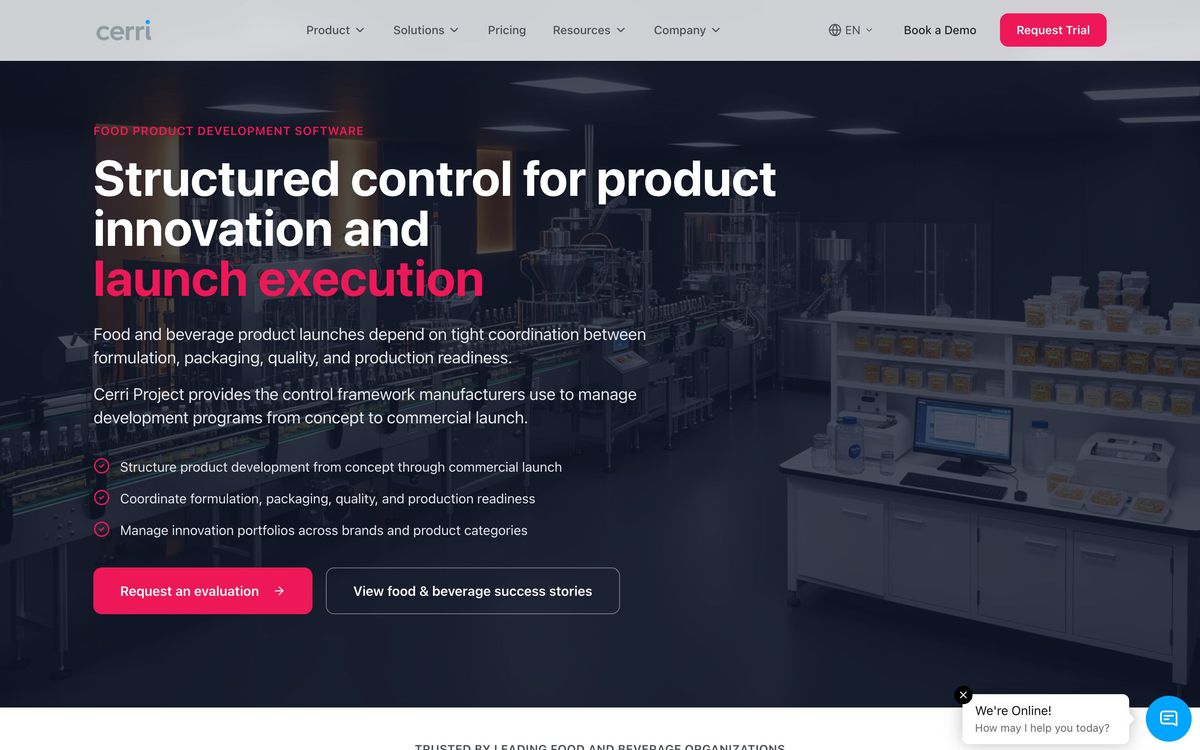
The right buyer is a project management office, or an operations leader acting as one, in an organisation running a portfolio of funded work where resource contention is the real constraint. Engineering, manufacturing, pharmaceutical and professional services organisations fit the shape, particularly those with a governance obligation that a lightweight tool cannot satisfy and a security or data-residency requirement that rules out standard SaaS. The starter pack for ten users exists so that kind of buyer can evaluate the system in production before committing the organisation.
It is a bad fit for small teams looking for a nicer task board. The configuration effort alone will exceed the value, and occasional contributors will resist an interface that predates the design conventions they expect. Distributed teams that update work from phones should look elsewhere, because there is no genuine mobile application. Anyone hoping to be running within a week should reset that expectation.
How it compares
Wrike is far easier to adopt and considerably better looking, and wins on user acceptance, but its portfolio financials and capacity planning are shallower and licensing gets expensive at scale. Planview PPM Pro is the closest peer on portfolio and reporting depth, generally stronger on reporting flexibility, and priced for larger enterprises. Smartsheet appeals to organisations that want spreadsheet familiarity with some portfolio reporting layered on, and loses badly on governance. Cerri's argument against all three is capability per licence dollar plus on-premise availability; its argument against nobody at all is usability, where reviewers consistently mark it down.
Verdict
Cerri delivers genuine portfolio management, capacity, budgets, gates, governance, at a per-user price well below the enterprise PPM incumbents, and the on-premise option keeps it in contention where most modern competitors are disqualified outright. The cost is paid in adoption. Reviewers describe complex configuration, an old-fashioned and heavy interface, and no real mobile access, all of which fall on the people you most need to keep updating their projects. If you have a PMO with the patience to configure it properly and a governance requirement to satisfy, the trade is defensible. If adoption is your main risk, buy something people enjoy opening.
Ready to try Cerri?
More founders tools like Cerri
P3MO
3.7Portfolio management for PMOs and boards: one view from strategic objectives down to individual projects.
Read P3MO review →PDWare
3.7Resource and portfolio planning that tests whether the people you have can deliver the projects you approved.
Read PDWare review →Plansom
3.5Turns a strategy document into SMART goals, a prioritised task list and a shareable execution plan.
Read Plansom review →Todoist
4.3A task manager with natural-language capture and shared projects, built to hold personal and team work in one list.
Read Todoist review →SmartSuite
4.2Structured records, views, dashboards and automations in one platform for teams outgrowing spreadsheets.
Read SmartSuite review →Backlog
4.1Project management and bug tracking with built-in Git/SVN, Gantt charts, and wikis; flat per-space pricing.
Read Backlog review →