
Airia review
Enterprise platform for building, orchestrating, and governing AI agents and workflows at scale.
Airia is best at giving enterprises one governed platform to build and run AI agents across teams; the tradeoff is a breadth of admin tooling that feels like overkill for solo builders with a single use case.
Pros
- No-code drag-and-drop, low-code, and pro-code agent building in one platform
- Model-agnostic routing across OpenAI, Anthropic, Google, Mistral, and Meta models with budget enforcement
- Out-of-the-box connectors for Microsoft 365, Salesforce, Confluence, and SharePoint, plus Model Context Protocol support
- Genuinely free forever plan: 1 user, 10 agents, 100 agent executions per month
- Prototyping Studio lets you test agents in production-mirrored environments before rollout
Cons
- 100 monthly agent executions on the free plan run out quickly in real testing
- Young platform (founded 2024) with a smaller community and fewer third-party resources than established frameworks
- Governance and admin layers add setup overhead if you only need one or two simple agents
- SSO/SAML and audit logs are gated to the Enterprise tier
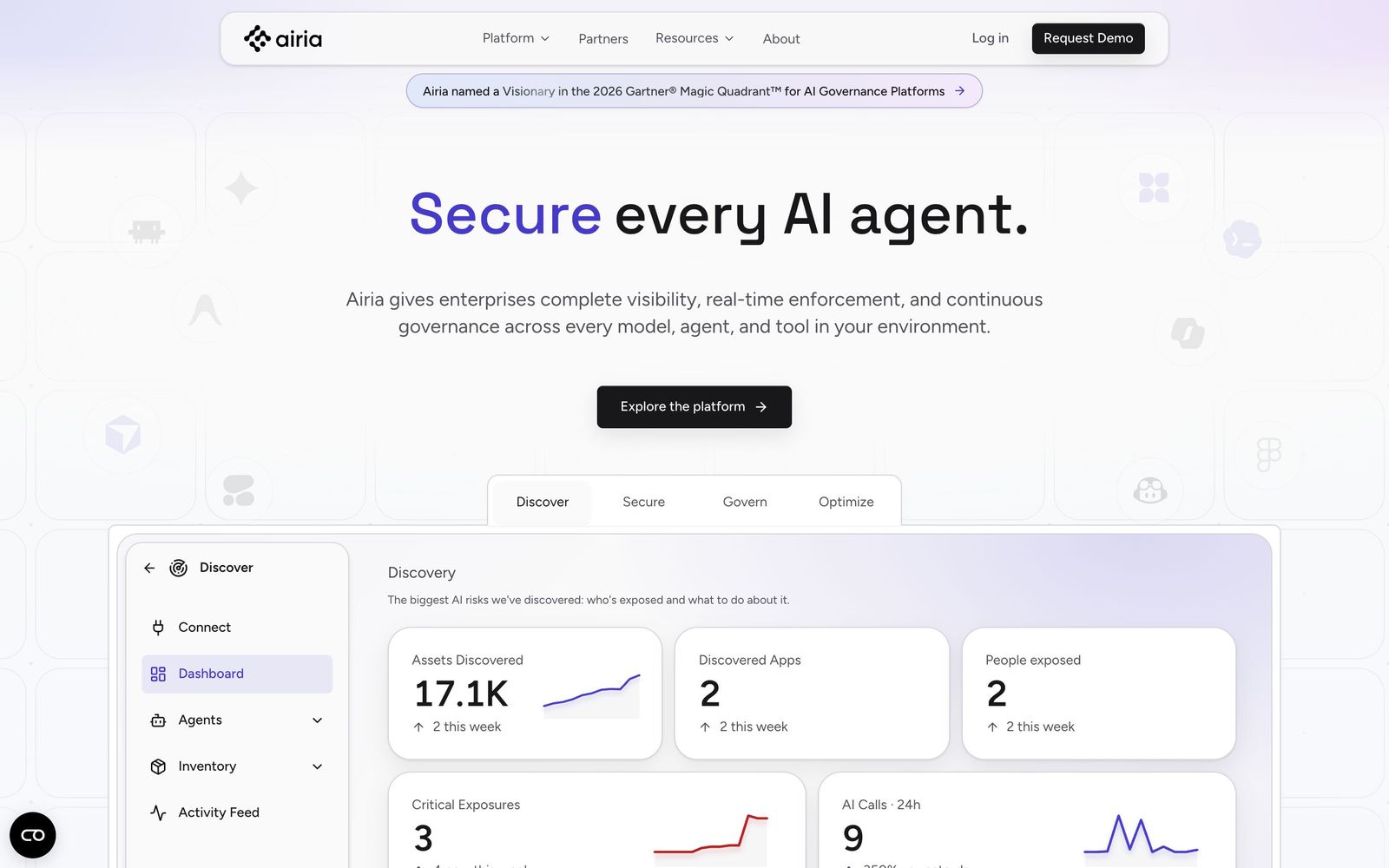
Airia is an enterprise AI orchestration platform that promises to replace the patchwork of agent frameworks, model gateways, and admin dashboards most companies accumulate once AI projects multiply. Founded in 2024, it bundles an AI agent builder, workflow automation, model management, and centralized oversight into a single product, and it is already in use at large organizations like ArcelorMittal, Mars, BuzzFeed, and Northwestern University. We dug into the platform to see whether the unified pitch holds up and who actually needs this much machinery.
What Airia actually does
At its core, Airia is a control layer for the entire AI lifecycle. You build agents and automated workflows in its studio, connect them to your business systems, route them through whichever large language models your organization has approved, and monitor everything from one place. The platform is model-agnostic: it works with models from OpenAI, Anthropic, Google, Mistral, and Meta, and its routing engine can pick among approved models while enforcing usage budgets in real time. Agents run inside centralized policies with controlled tool access, so an admin can see exactly what every agent did and which systems it touched.
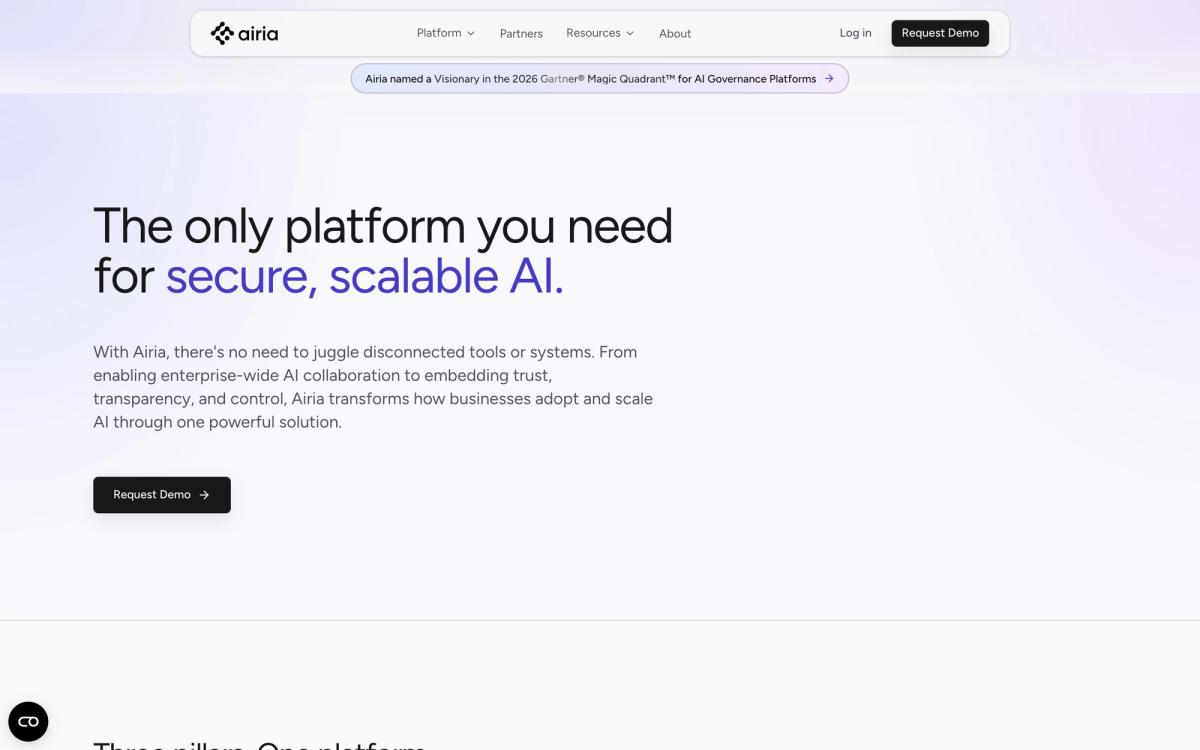
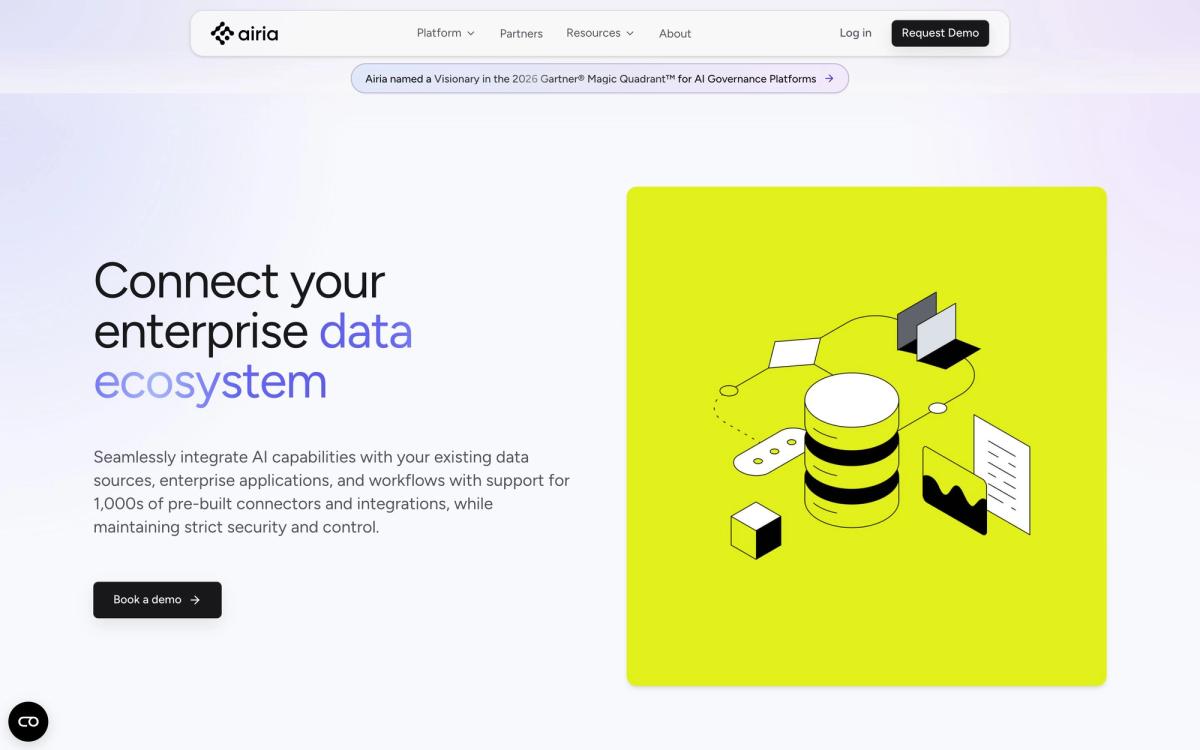
The other half of the product is connectivity. Airia ships out-of-the-box connectors for Microsoft 365, Salesforce, Confluence, SharePoint, and major cloud databases, and it supports the Model Context Protocol (MCP), which opens the door to thousands of additional tools and internal systems. An enterprise search layer adds AI-powered discovery across organizational data, so agents answer with company context rather than generic model knowledge.
Key features
- Agent builder with three modes: drag-and-drop no-code, low-code configuration, and full pro-code development
- Prototyping Studio that tests agents in production-mirrored environments before they go live
- Intelligent model routing across OpenAI, Anthropic, Google, Mistral, and Meta with budget enforcement
- Model lifecycle management for comparing performance and managing model access
- Out-of-the-box connectors for Microsoft 365, Salesforce, Confluence, SharePoint, and cloud databases, plus MCP support
- Centralized execution visibility, agent constraints, and usage analytics for leadership
- A free forever plan with 1 user, 10 agents, and 100 agent executions per month
Who it's for
Airia is built for organizations where AI agents are becoming a team sport: IT leaders who need to know what agents exist and what they can touch, operations teams automating workflows across Salesforce and Microsoft 365, and developers who want a managed runtime instead of maintaining their own orchestration stack. The no-code builder genuinely lowers the bar for business users, while the pro-code path keeps engineers from feeling boxed in. Solo founders can use the free plan to evaluate it, but the platform's center of gravity is clearly multi-team deployment. If you need exactly one chatbot, most of Airia's surface area will sit unused.
How it compares
The closest mainstream alternative is Microsoft Copilot Studio, which is the default choice for companies deep in the Microsoft ecosystem. Copilot Studio wins on tight Teams and Power Platform integration; Airia counters with model flexibility, since you are not steered toward a single vendor's models, and with broader orchestration controls across non-Microsoft systems. On the developer side, LangChain remains the popular open-source route for building agent pipelines. LangChain gives you maximum flexibility and a huge community, but you assemble and operate everything yourself; Airia trades some of that freedom for a managed platform with built-in routing, cost discipline, and a no-code path that LangChain simply does not offer non-developers.
Verdict
Airia earns a 4.3. It delivers on the unified promise: agent building, workflow automation, model routing, and oversight genuinely live in one product, and the free forever plan makes evaluation painless. The honest caveats are its age (the company launched in 2024, so the ecosystem and community are still thin), the quick ceiling of 100 free executions per month, and a feature set that assumes you are scaling AI across teams rather than shipping one quick automation. For enterprises consolidating a sprawl of AI experiments, Airia is one of the most complete orchestration platforms we have reviewed this year. For a single small project, lighter tools will get you there faster.
Ready to try Airia?
There's a free tier, so you can test it before committing.
More founders tools like Airia
monday.com
4.3Board-based work platform where typed columns drive timelines, dashboards and automated hand-offs.
Read monday.com review →SmartSuite
4.2Structured records, views, dashboards and automations in one platform for teams outgrowing spreadsheets.
Read SmartSuite review →Glide
4.1Turns a spreadsheet or database into a mobile and desktop business app without code, with role-based views per user.
Read Glide review →Softr
4.1No-code builder for client portals and internal tools on top of Airtable, Notion or a SQL database.
Read Softr review →Wrike
4.0Work management with custom workflows, request forms and resource planning for teams running repeatable delivery.
Read Wrike review →Process Street
3.9Checklist-driven workflow platform for recurring processes, approvals and audit-ready completion records.
Read Process Street review →