
Springbolt ID review
Site pixel that names individual US visitors and hands the contact record to Clay or a CSV.
Person-level visitor identification aimed at outbound teams that already run Clay, though the product is documented so thinly that almost every claim has to be taken on the vendor's word.
Pros
- Resolves individual people rather than only the company an IP belongs to, which gives a rep a name to contact
- Requires no form, gated asset or pop-up, so it captures visitors who would never have filled anything in
- Records the pages each identified visitor moved through, which gives an opening line beyond the fact they showed up
- Delivers straight into Clay or as a CSV, so existing enrichment and sequencing workflows do not have to change
Cons
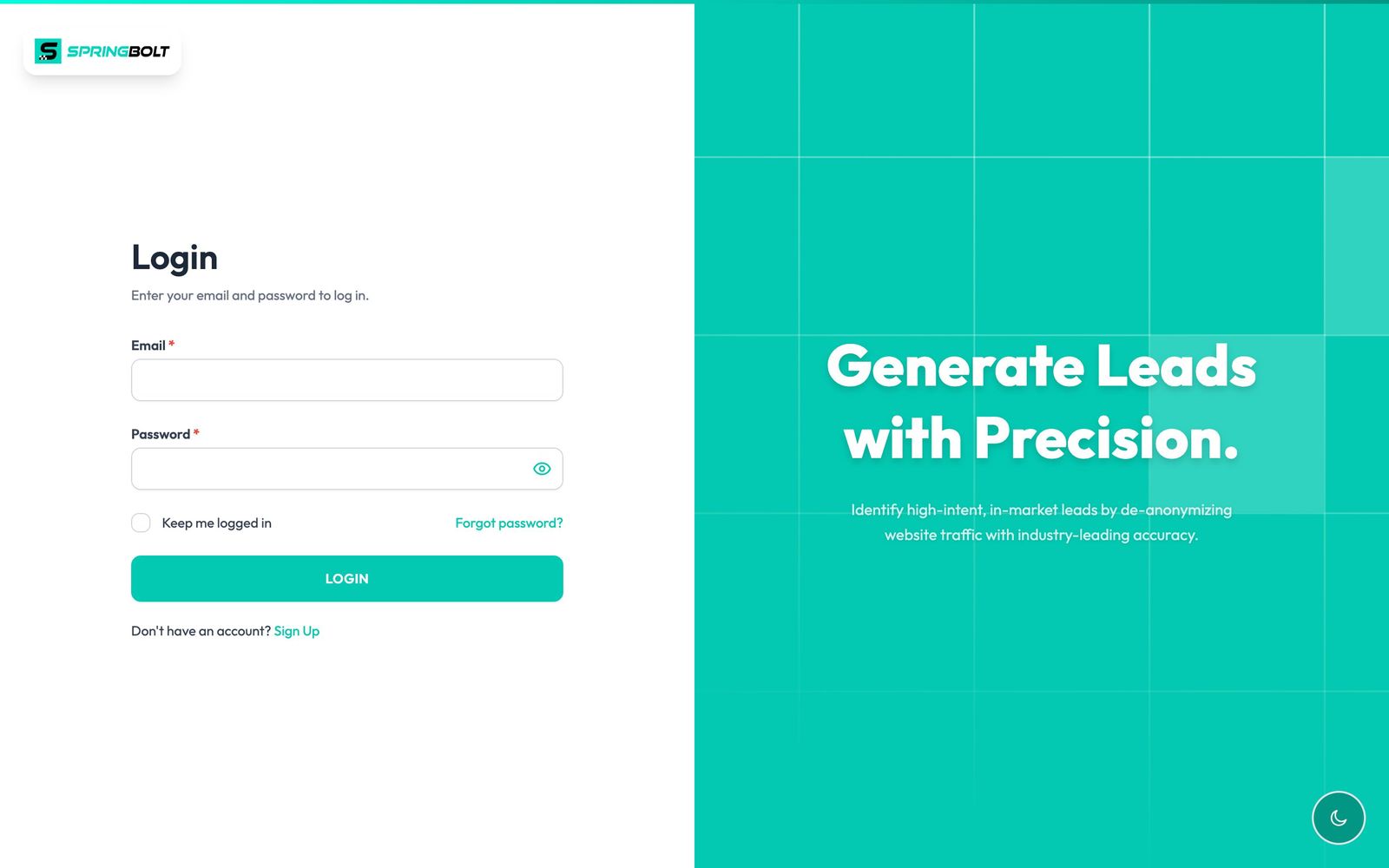
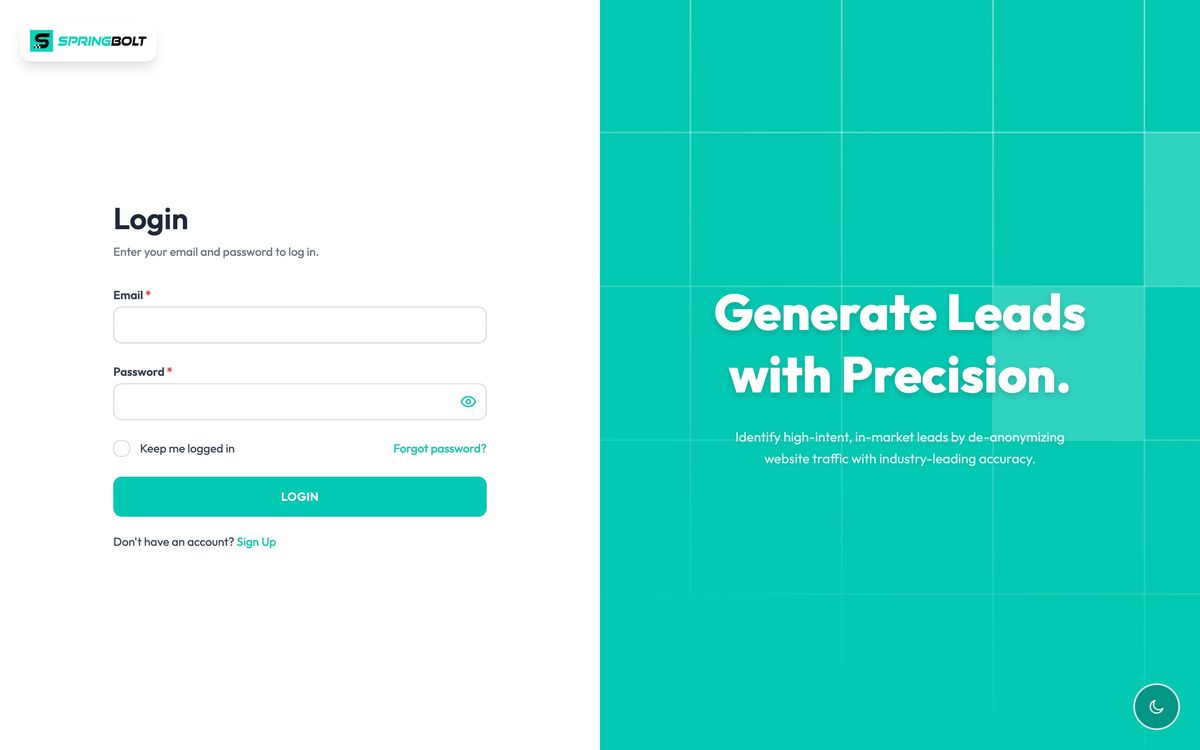
- The public product surface is a login screen: no documented feature list, no integrations directory, no API reference and no published price to evaluate before a sales call
- The match rate, the count of returned data points and the identity-resolution method are vendor claims with no independent verification behind them
- Person-level identification is a US-only proposition and sits badly with GDPR, so European and UK traffic is out of scope
What Springbolt ID actually does
Springbolt ID belongs to the person-level website identification category: a tag on the site, a match against a US identity graph, and a contact record for a visitor who never filled in a form. The claim is a name, an email address, a company and a job title, plus a longer tail of attributes the vendor puts at more than thirty-seven fields, for something between half and seventy percent of American traffic. Identified visitors also carry a page-by-page trail, so a rep sees that someone read pricing twice before leaving. Records ship into Clay or download as a CSV, which fits the way most outbound teams already enrich and sequence.
The context matters as much as the mechanism. Springbolt ID is operated by Springbolt Group, a marketing, creative and data agency whose public site sells brand strategy, design subscriptions, geofencing and audience data rather than software. The identification product lives at a separate address that presents only a login screen, and third-party listings, not the vendor, supply most of what can be learned about it. Where the parent does publish numbers, they are for data by the thousand records and for services by the hour, which suggests the offering is sold as part of an engagement rather than as a self-serve seat.
Key features
Everything below comes from the vendor's own description, since there is no public documentation to check it against.
- A site tag that identifies individual visitors without a form or pop-up
- Contact records with name, email, company and title, plus additional attributes
- Page-level journey tracking for each identified visitor
- Identity resolution described as verified rather than probabilistic IP matching
- Delivery into Clay or as a CSV for CRM import
- Coverage limited to US visitors
Who it's for
The buyer is a US outbound team with real traffic and a working Clay pipeline, where a hundred named visitors a month convert into sequences without anyone rebuilding a workflow. Agencies running lead generation for clients are the other natural fit, particularly ones that already buy audience data and want the site layer from the same supplier.
Everyone else should look elsewhere. Teams selling into the EU or the UK cannot use person-level identification in the way this product describes, and consent-based alternatives are the only defensible option there. Companies that need to evaluate software before buying it will also struggle: there is no trial page, no feature documentation, no integration list and no published price, so due diligence means a sales conversation rather than an afternoon of reading.
How it compares
RB2B made this category visible with a free tier that pushes identified US visitors into Slack, and it remains the cheapest way to test whether person-level data changes anything for a given site. Warmly layers orchestration on top, adding chat, alerting and sequencing so the identified visitor is acted on inside one product. Dealfront and Leadfeeder take the company-level, consent-first route that works in Europe, trading precision for legal comfort. Against all three, Springbolt ID's disadvantage is not the data, which may well be comparable, but the opacity: rivals publish what they do, what they cost and what they connect to.
Verdict
The underlying idea is sound and the category is proven. What holds this one back is everything around it. A product whose entire public presence is a login form, whose numbers come from aggregator listings, and whose parent company bills marketing services by the hour asks for more trust than an unfamiliar buyer should extend without a pilot. If the offer is a short paid trial on real traffic, with the match rate measured against known accounts, it is worth running. Signing a longer commitment on the strength of the claims alone is not, particularly when a competitor with a free tier can answer the same question in a fortnight.
Ready to try Springbolt ID?
More sales tools like Springbolt ID
Cognism
4.2B2B contact database with human-verified mobile numbers and compliance-checked records, strongest across Europe.
Read Cognism review →CrankWheel
4.0Screen sharing a prospect can open on a phone in seconds, with no download, account or install.
Read CrankWheel review →ZoomInfo
4.0B2B contact and company database with buying-intent signals, sold as an annual platform to full sales teams.
Read ZoomInfo review →Bitscale
3.9Spreadsheet-style GTM data layer that runs enrichment waterfalls and buying signals into a CRM.
Read Bitscale review →Bookyourdata
3.9Self-serve B2B contact database sold in credit packs instead of seats, with verification run at export.
Read Bookyourdata review →SalesRabbit
3.9Field sales platform for door-to-door teams: territory canvassing, lead tracking, contracts and rep performance.
Read SalesRabbit review →