
Cognism review
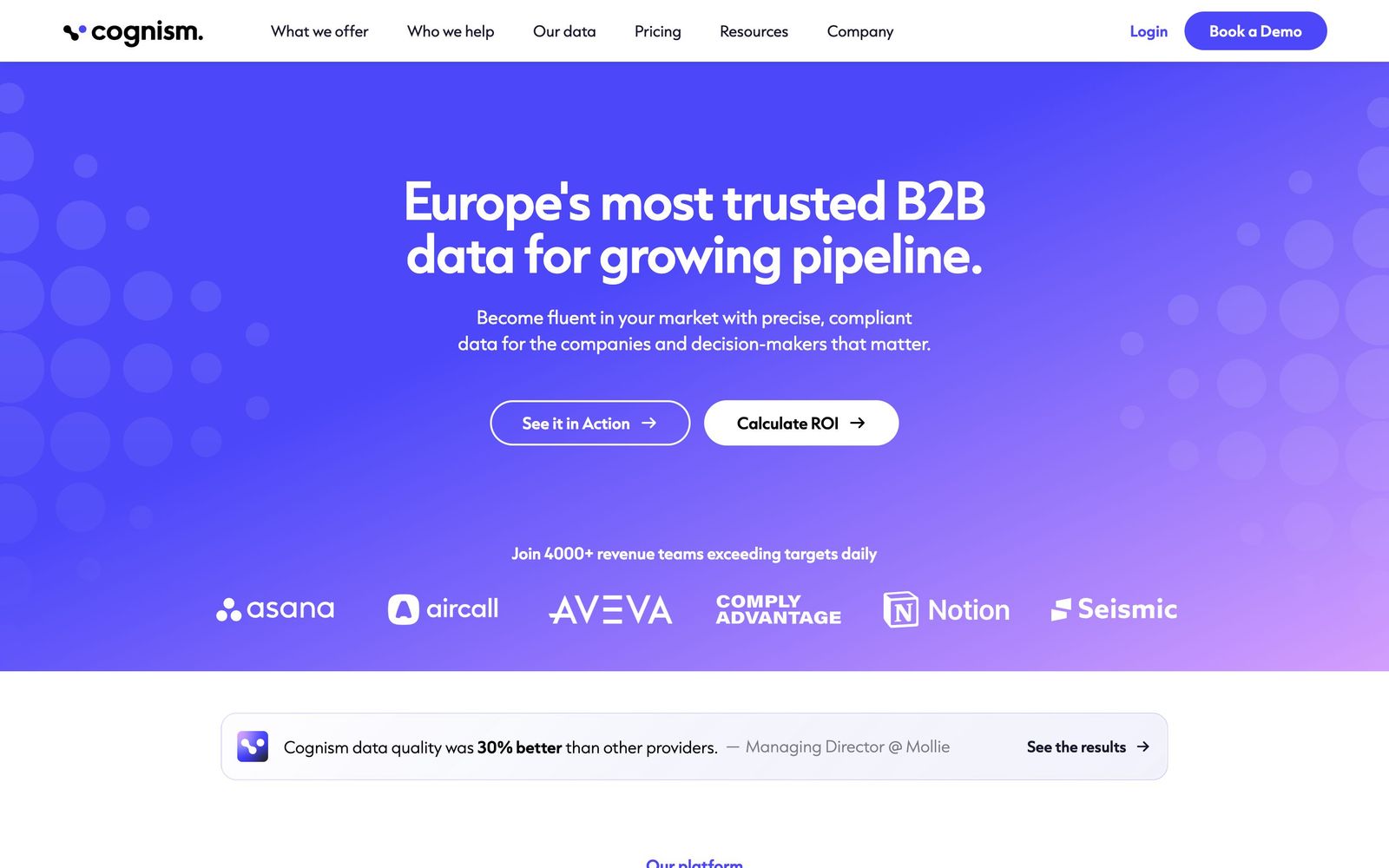
B2B contact database with human-verified mobile numbers and compliance-checked records, strongest across Europe.
The clearest choice for teams cold calling into the UK and EMEA, though US coverage is thinner and the annual platform fee rules out small teams.
Pros
- Mobile numbers pass a human verification step before release, so connect rates hold up on live dials
- Records are sourced against GDPR and CCPA rules and screened against European do-not-call registers, which shortens legal review
- UK and EMEA coverage is deeper and more current than most American-first data vendors offer
- Credits are only spent on first reveal, so re-exporting a contact already revealed costs nothing
- CRM enrichment runs on existing Salesforce and HubSpot records rather than only new list builds
Cons
- US, Canadian and APAC records are noticeably patchier than the European set, which undercuts the pitch for globally spread territories
- Pricing is quote-only with an annual platform fee on top of seats, so a five-seat team cannot budget without sitting through a demo cycle
- Contracts are annual and reps push back on shorter or monthly terms, which makes a trial-then-commit path hard to negotiate
What Cognism actually does
Cognism sells B2B contact and company data: work emails, direct dials, mobile numbers and firmographics for decision-makers, delivered through a web app, a Chrome extension, CRM sync and a bulk data feed. A rep filters by title, seniority, industry, headcount, revenue, technology or location, builds a list, and pushes it into the CRM or the sequencing tool. Consumption runs on credits, where one credit reveals one contact; a contact already revealed can be exported again at no further cost, which matters more than it sounds when several reps work the same account list.
The part Cognism is known for is the mobile number set it markets as Diamond Data, where numbers go through an additional verification layer rather than being scraped and hoped for. That only matters if the team still picks up the phone, but for teams that do, it is the reason to look here first. The second differentiator is compliance posture: records are sourced against GDPR and CCPA rules and screened against European do-not-call registers, so European legal teams tend to approve it with less argument than they give American-first vendors. Around the prospecting app sit two other products - CRM enrichment, which repairs and refreshes decision-maker records already in Salesforce or HubSpot, and a data-as-a-service option that ships records by API or batch file for teams building their own systems.
Key features
The feature list is deliberately narrow: this is a data business, not a sales engagement suite.
- Human-verified mobile numbers released only after an additional checking layer
- Search filters covering seniority, role, industry, headcount, revenue, installed technology and location
- Intent, hiring, job-change and funding signals used to rank accounts by timing
- Chrome extension that reveals contact records while browsing LinkedIn or a company site
- CRM enrichment that fills empty fields and refreshes stale records on a rolling cycle
- API and batch delivery for teams loading data into a warehouse rather than a CRM
Who it's for
Cognism fits an outbound team of roughly five reps and upward whose territory is the UK, DACH, the Nordics or southern Europe, and whose motion still includes calling. If the compliance department has previously blocked a data vendor, the sourcing story here is the argument that usually gets past it. It also fits revenue operations teams whose CRM has quietly rotted - job titles three years old, half the mobile fields empty - because the enrichment product works on the existing database rather than requiring a fresh list build.
It is a poor fit for a founder doing solo prospecting, a two-person agency, or any team whose accounts sit mainly in the United States. The platform fee is annual and negotiated, the contract is annual, and there is no self-serve entry point, so the smallest viable purchase is well beyond what a small team would spend on data. Teams selling exclusively into North America will get more records per credit elsewhere.
How it compares
ZoomInfo remains the deeper database for North America and carries far more surrounding workflow tooling, but its European records are weaker and its compliance story gives EU legal teams more to argue about. Apollo undercuts everyone on price and bundles sequencing into the same subscription, which suits small teams, but its mobile numbers are unverified and the accuracy gap on live dials is the whole point of Cognism's premium. Lusha is the lighter, more self-serve option with published plans and a free tier, and is the sensible starting point for a team that has never bought data - it simply does not go as deep on European coverage or on the compliance screening. Against all three, Cognism's argument is narrow and specific: better dials in Europe, less friction with legal.
Verdict
This is a well-built data product with an unusually honest specialism. Teams calling into Europe report connect rates that justify the premium, the enrichment product genuinely repairs old CRM records, and support is responsive during onboarding rather than only during the sale. The caveat is structural rather than technical: coverage thins outside Europe, and the quote-only annual pricing with a platform fee on top of seats puts it out of reach for the small teams that would otherwise benefit most from better phone data. Buy it for a European calling motion with a real budget; look elsewhere for a US-centric or self-serve one.
Ready to try Cognism?
More sales tools like Cognism
ZoomInfo
4.0B2B contact and company database with buying-intent signals, sold as an annual platform to full sales teams.
Read ZoomInfo review →Bitscale
3.9Spreadsheet-style GTM data layer that runs enrichment waterfalls and buying signals into a CRM.
Read Bitscale review →Bookyourdata
3.9Self-serve B2B contact database sold in credit packs instead of seats, with verification run at export.
Read Bookyourdata review →Blinq
4.3Digital business cards and event lead capture that push enriched contacts with context into the CRM.
Read Blinq review →Lusha
4.1B2B contact data with a LinkedIn extension, sold per seat and metered by credits.
Read Lusha review →Leadfeeder
4.0Identifies the companies behind anonymous website traffic and pushes the ones that fit your profile into the CRM.
Read Leadfeeder review →