
Angels Partners review
Investor database plus outreach campaigns and deck tracking for founders running their own round.
A reasonable way to build a first investor list and run the outreach in one place, though coverage thins past the well-known funds and cold pitching still converts in low single digits.
Pros
- Free browsing of part of every investor list before any card details are needed
- Priced by monthly investor contacts rather than seats, so a solo founder pays the same as a team
- Deck sharing reports which investors opened the file and how long they stayed on it
- Filters by stage, industry, cheque size and geography narrow a very long list quickly
- Campaign sequences and reply tracking replace the spreadsheet most founders start with
Cons
- Records outside the well-known funds and angels go stale, with missing or bounced addresses
- Contact quotas are the meter, so a wide campaign burns a month's allowance in one send
- The managed tier charges agency-level fees for outreach a founder can run in a few hours a week
Angels Partners pricing
List prices in USD per month, taken from the vendor at review time.
| Plan | Per month | What it covers |
|---|---|---|
| Basic | $99 | GBP per month; £59 on an annual term; up to 100 investor contacts a month |
| Boost | $149 | GBP per month; £99 on an annual term; up to 300 investor contacts a month |
| Prime | $399 | GBP per month; £263 on an annual term; adds warm intros and an account manager |
| Managed Account | $799 | GBP per month; £529 on an annual term; their team runs the outreach |
What Angels Partners actually does
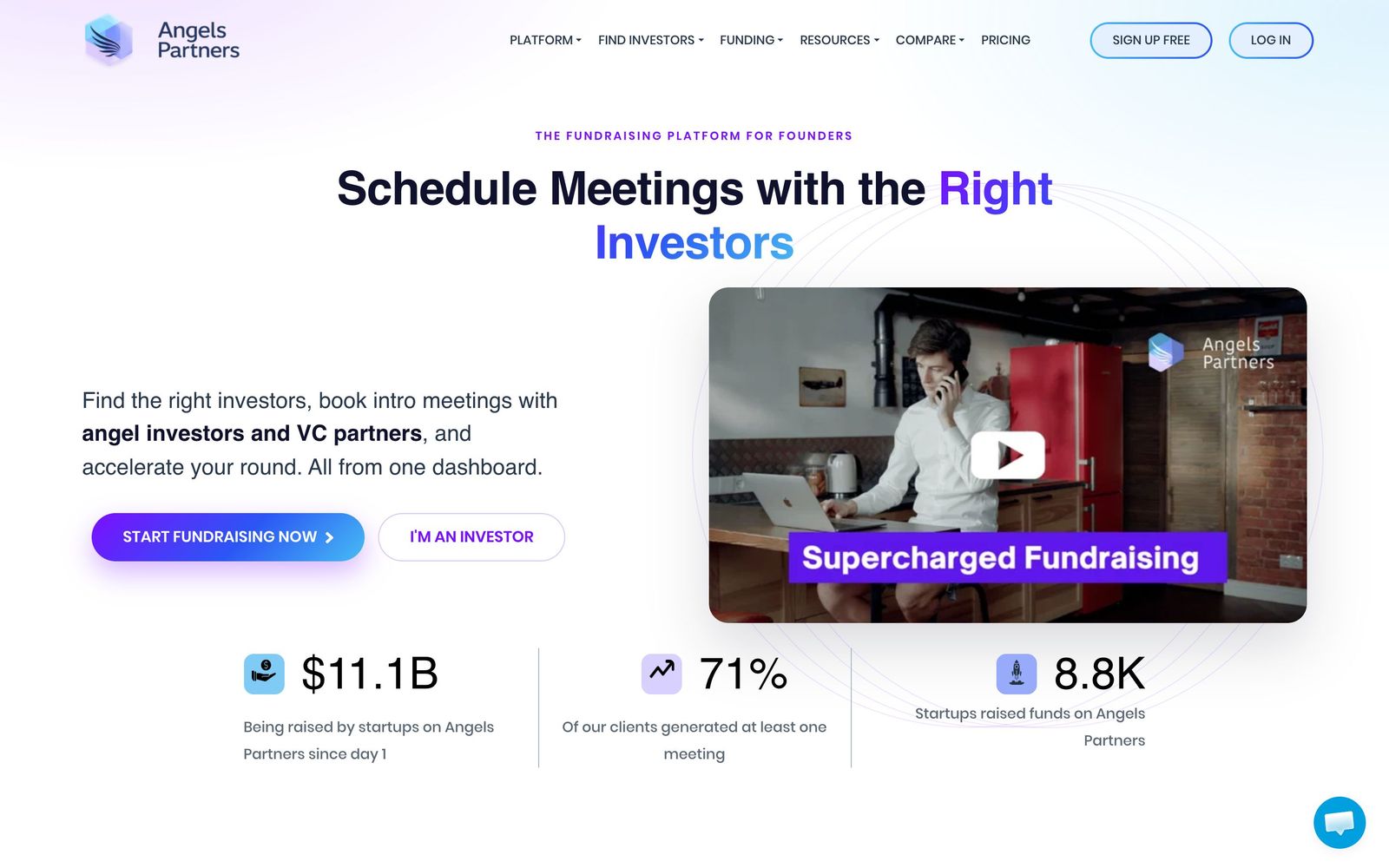
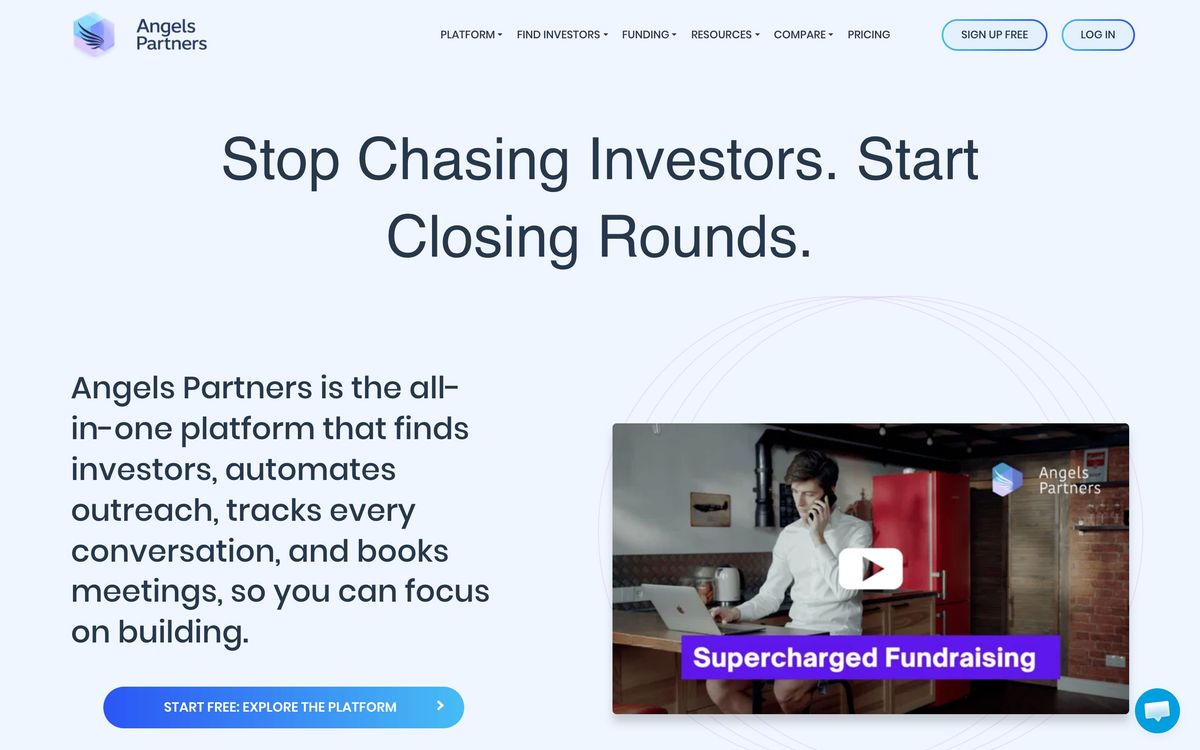
Angels Partners is a fundraising platform for founders running an outbound round without a warm network to lean on. It pairs a searchable directory of angels, venture funds and family offices, which the company puts at more than 120,000 records, with the machinery around outreach: campaign sequences, automated follow-ups, open and click tracking, and a pipeline of who replied. The pitch deck lives in the same system as a tracked link, so a founder can see which investors opened it, which slides held attention and whether the file was passed on.
Access is a browser subscription, and the meter is unusual. Plans are sold by how many investors you may contact in a month rather than by seats, which suits the one- or two-person team that is doing the raise itself. Filters cover industry, stage, cheque size and geography, and the platform suggests warm introduction paths through a founder's LinkedIn connections. A founder community and an investor-facing profile sit alongside the database. At the top of the range the company sells a managed tier where its own team writes and runs the campaigns and reports back every two weeks, which is closer to an agency retainer than to software.
Key features
The subscription bundles research, outreach and tracking that founders usually stitch together from three separate tools.
- Investor directory filterable by industry, stage, geography and recent investment activity, partly browsable before subscribing
- Campaign builder with assisted personalisation and automated follow-up steps
- Monthly contact quotas that scale with the plan rather than per-seat licensing
- Pitch deck sharing with per-viewer analytics and email or password gating
- Warm introduction matching through the founder's own LinkedIn graph
- A CRM view that tracks each investor conversation from first email to reply
Who it's for
This suits a first-time founder at pre-seed or seed with no investor list, no warm introductions and the time to run outreach personally for two or three months. The free browse is enough to judge whether the database covers the relevant thesis and geography before paying, and the entry plan's hundred contacts a month is roughly one focused campaign with follow-ups.
It is a poor fit for later rounds, where existing relationships and a banker matter more than volume, and for founders who expect a subscription to produce meetings on its own. The list is a starting point, not a pipeline. Teams with strong investor relationships already will get more from their own network and a shared spreadsheet than from a paid database, and anyone raising outside the platform's stronger regions should test the filters before committing to a term.
How it compares
OpenVC is free or close to it and works as a directory with an inbound, application-style flow, but has nothing like the campaign tooling. Crunchbase carries deeper firm and funding data and better institutional coverage, at a higher price and with no outreach layer at all. Angel Investment Network is the closest peer in spirit, a large angel list built around posting a pitch, and founders tend to report similar lead quality from a dated interface. Foundersuite bundles an investor CRM, updates and a data room, which fits better once a raise is genuinely under way rather than at the list-building stage.
Verdict
Angels Partners does the mechanical part of a cold raise competently: find plausible investors, sequence the emails, watch the deck opens, keep the pipeline honest. The caveats are the ones that apply to every investor database. Coverage thins beyond the names everyone already knows, records decay, and no amount of personalisation turns an unsolicited pitch into a strong lead. Founders who treat it as a research and tracking tool, write their own emails and keep expectations at a few meetings per hundred contacts get fair value at the lower tiers. Those buying the managed plan in the hope that a raise will be run for them are paying retainer money for a channel with a thin conversion rate.
Ready to try Angels Partners?
There's a free tier, so you can test it before committing.
More founders tools like Angels Partners
Fireflies.ai
4.5AI meeting teammate that records, transcribes, and summarizes calls, with action items and searchable notes.
Read Fireflies.ai review →Miro
4.5Infinite shared canvas for workshops, diagrams and planning, now wrapped around docs, tables and AI.
Read Miro review →Reclaim.ai
4.5AI calendar assistant that auto-schedules focus time, tasks, and habits on Google and Outlook calendars.
Read Reclaim.ai review →Activepieces
4.4Open-source, MIT-licensed AI automation platform with a visual builder, AI agents, and 700+ integrations.
Read Activepieces review →MindStudio
4.4No-code visual builder for AI agents with 200+ models, 1,000+ integrations, and flexible deployment.
Read MindStudio review →Optery
4.4Finds and removes staff home addresses, phones and emails from people-search sites and data brokers.
Read Optery review →