
folk review
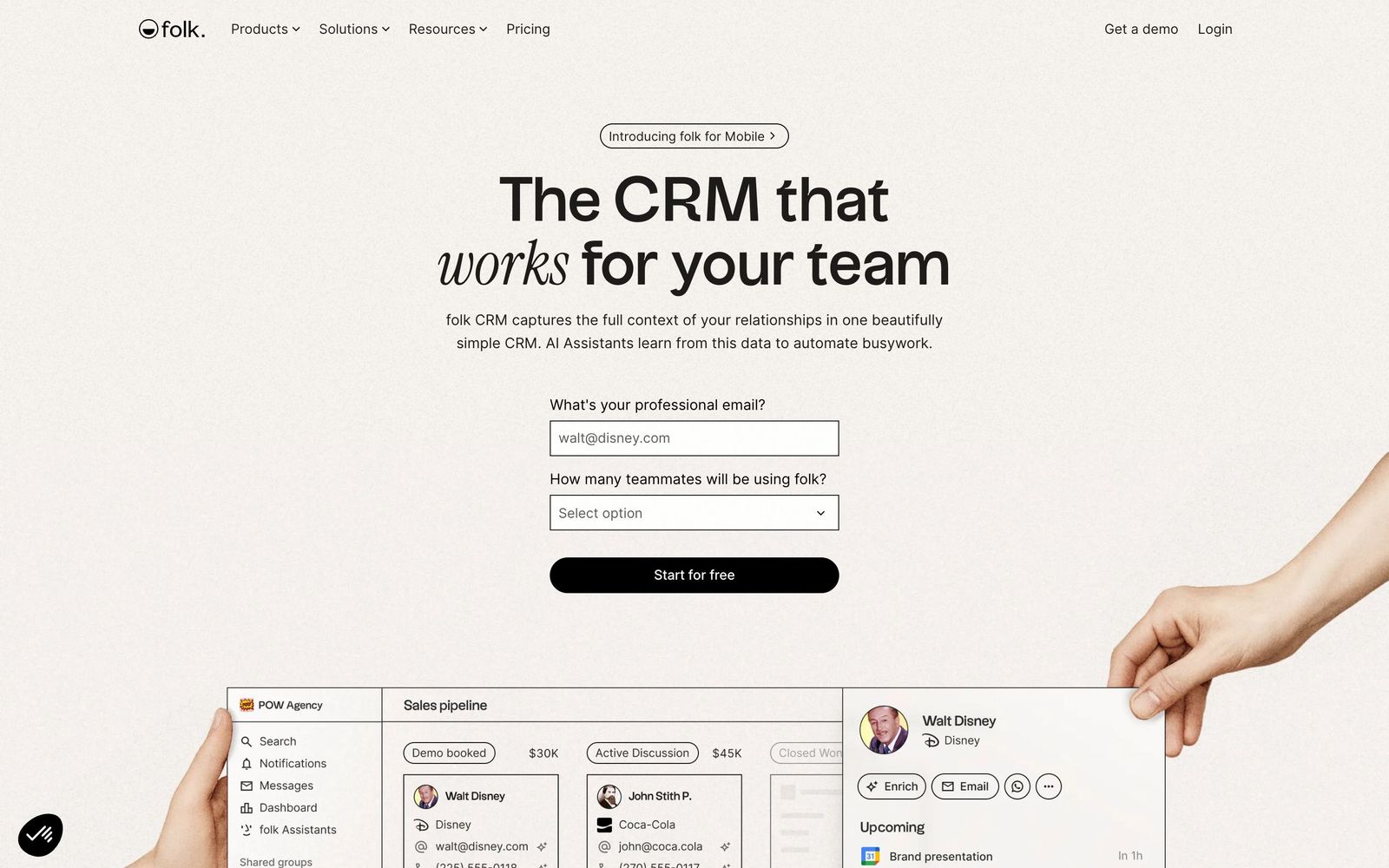
Lightweight CRM that builds its contact base from Gmail, LinkedIn and WhatsApp instead of manual entry.
The most pleasant CRM to keep current when relationships live in inboxes and LinkedIn, though the absence of a mobile app and of real automation limits it to small teams.
Pros
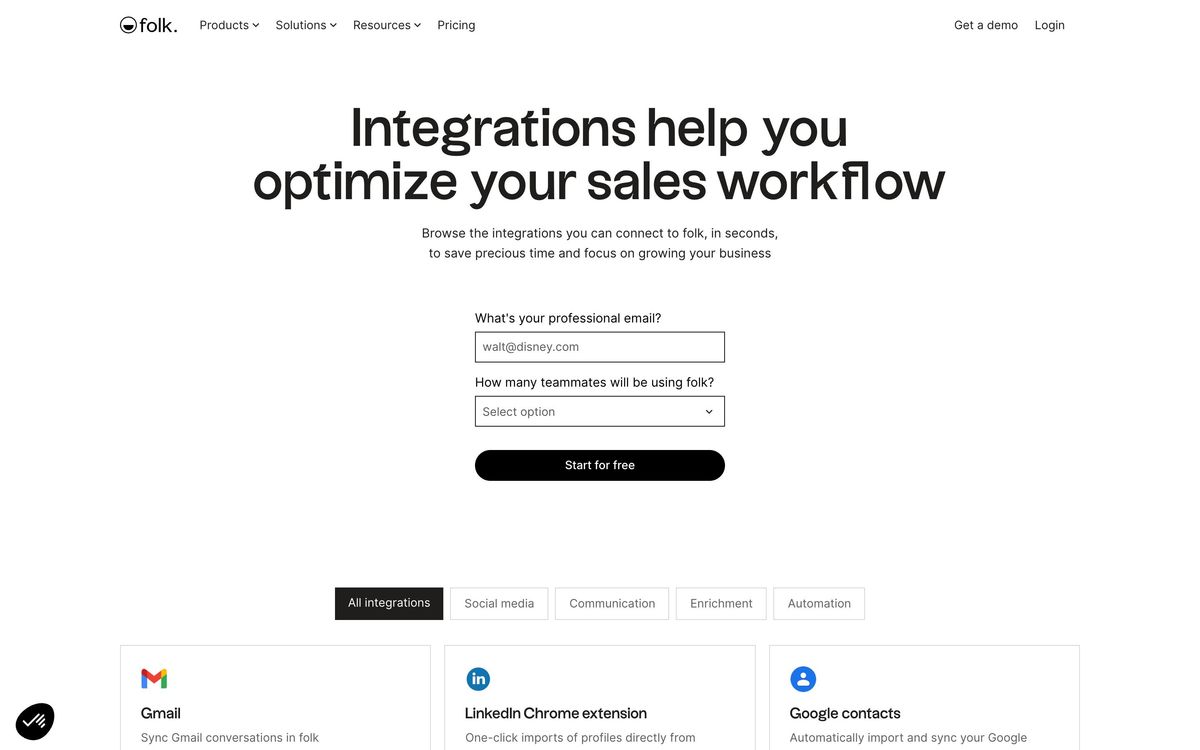
- The folkX browser extension pulls people from LinkedIn and other profile pages into a contact record in one click
- Email, calendar and WhatsApp threads sync onto the contact automatically, so history exists without logging activity
- Enrichment credits are included in the subscription rather than sold as a separate data seat
- AI assistants draft follow-ups, summarise past exchanges and research companies from inside the record
- Setup takes hours rather than weeks, and non-sales staff adopt it without training
Cons
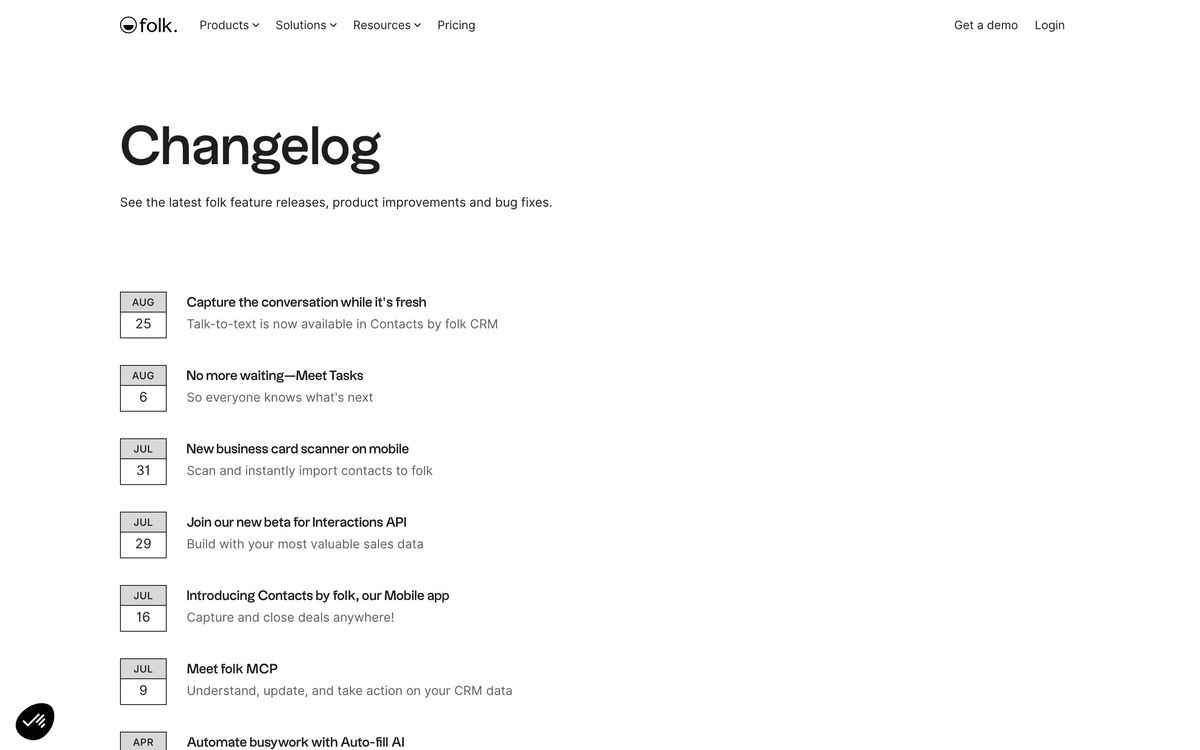
- No native iOS or Android app, so contact lookups on the move happen in a mobile browser
- Automation stops at email sequences and simple triggers, with no branching workflows or approval logic
- Reporting covers pipeline basics only, with no forecast accuracy, win-loss analysis or cohort views
folk pricing
List prices in USD per month, taken from the vendor at review time.
| Plan | Per month | What it covers |
|---|---|---|
| Standard | $30 | per member; $24 on annual billing, 500 enrichment credits |
| Premium | $60 | per member; $48 on annual billing, 1,000 enrichment credits |
| Enterprise | $100 | per member, from; custom limits and security review |
What folk actually does
folk is a customer relationship manager built on a simple observation: most small teams already hold their relationships in Gmail, Outlook, LinkedIn and WhatsApp, and the reason their CRM goes stale is that keeping it current means retyping what those tools already know. So folk starts from capture. A browser extension adds a person or a company from a LinkedIn profile or a website in one click, mail and calendar sync attach the thread and the meeting to the record, and an enrichment step fills in the missing work email or phone number from the subscription allowance rather than from a separate data contract.
On top of that base sit the familiar CRM parts: groups and custom fields for segmenting contacts, drag-and-drop deal pipelines, shared notes and reminders, and dashboards on pipeline movement. A layer of assistants handles the tedious edges, suggesting who has gone quiet, summarising a long exchange before a call, researching a company, and drafting a personalised sequence for a list. Everything runs in the browser, including on a phone, because there is no native mobile app.
Key features
The product is deliberately narrow, and the parts that exist are the ones a relationship-led team touches daily.
- Contact database with custom fields, saved groups and shared team views
- folkX extension for capturing people and companies from LinkedIn and other web pages
- Waterfall enrichment for missing emails and phone numbers, with a monthly credit allowance
- Two-way sync of mail, calendar and WhatsApp conversations onto the contact record
- Deal pipelines with collaborative notes and simple stage automation
- Assistants for follow-up timing, meeting recaps, company research and email campaigns
Who it's for
folk suits agencies, consultancies, recruiters working their own network, partnership teams and small sales groups where the unit of work is a relationship rather than a ticketed opportunity. It fits teams of roughly two to fifteen people who have outgrown a shared spreadsheet, want the network visible to everyone, and would abandon anything that demanded daily data entry. The pricing model, which bundles enrichment into the seat, is also friendly to teams that would otherwise buy a separate prospecting database.
It is the wrong choice for a structured sales organisation. Teams running forecast reviews, territory rules, quota attainment and multi-branch approval flows will hit the ceiling within a quarter, because reporting stops at pipeline basics and automation stops at email. Field teams should note the missing mobile app before committing, and anyone consolidating several messy contact sources should expect to clean duplicates by hand after the first import.
How it compares
Attio covers similar modern ground with far deeper data modelling and reporting, at the price of a longer setup and a more technical feel. Pipedrive is stronger on pipeline discipline, forecasting and mobile use, but its contact records stay flat unless enrichment tools are bolted on. HubSpot Sales Hub outclasses both on automation and analytics, and costs several times more once the tiers that matter are included. folk wins on time-to-value and on the quality of its capture; it loses whenever the buyer needs measurement or process enforcement.
Verdict
folk is one of the few CRMs that a small team will still be using six months after purchase, because it removes the data-entry tax that kills adoption elsewhere. The capture flow from LinkedIn and email is the best part of the product, and the assistants are useful in a modest way rather than a decorative one. The caveats are structural rather than cosmetic: no native mobile app, thin automation, and reporting that will not satisfy anyone who has to defend a forecast. Relationship-led businesses will be well served, and anyone who needs a CRM to enforce a sales process should look at a heavier tool and accept the cost that comes with it.
Ready to try folk?
More sales tools like folk
Capsule CRM
4.0Straightforward CRM for small businesses, with a companion email marketing tool in Transpond.
Read Capsule CRM review →SalesRabbit
3.9Field sales platform for door-to-door teams: territory canvassing, lead tracking, contracts and rep performance.
Read SalesRabbit review →Streak
3.9A CRM built as a Gmail extension, so pipelines, deals and email history stay inside the inbox.
Read Streak review →FullEnrich
4.5B2B waterfall enrichment that cascades 20+ data vendors to find verified emails and mobile numbers.
Read FullEnrich review →Amplemarket
4.4All-in-one AI sales platform: B2B contact data, multichannel sequences, and the Duo AI copilot.
Read Amplemarket review →Clay
4.4A credit-based GTM data workbench that chains 100+ enrichment providers and AI into one spreadsheet.
Read Clay review →