
Paylocity review
US payroll and HCM suite that adds engagement, recognition and survey tools to the core HR record.
A credible one-system replacement for separate payroll, HR and engagement tools in a mid-size US company, though pricing is quote-only and implementation runs for months.
Pros
- Payroll, benefits, time and talent share one employee record, so a pay change or a new hire does not need re-entry in three systems
- The employee-facing side is unusually developed for an HCM suite: a social feed, peer recognition and pulse surveys sit next to the pay stub
- The mobile app is rated far above the category norm by employees, which drives self-service adoption and cuts HR ticket volume
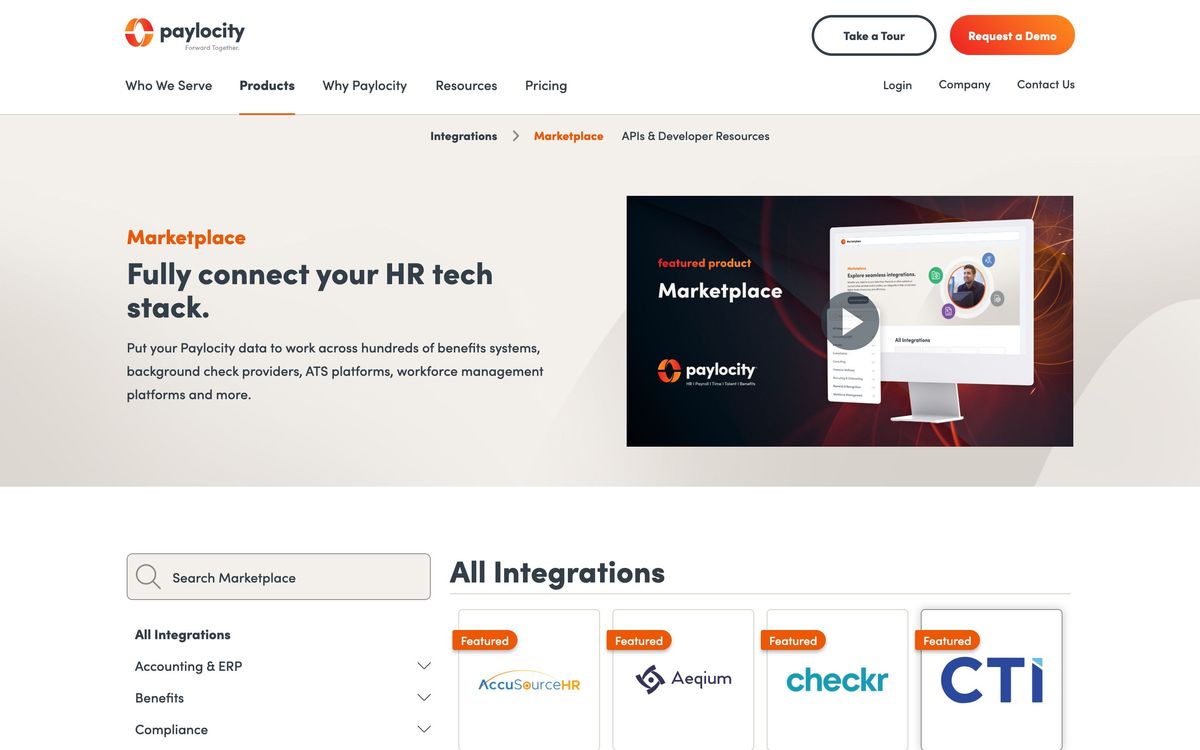
- An integration marketplace covers hiring, background checks, accounting and collaboration tools, including Indeed, Checkr, QuickBooks and Slack
- Recruiting, onboarding, learning and compensation planning are modules of the same platform rather than acquisitions bolted on with a data sync
Cons
- No published pricing anywhere, and implementation is quoted separately from the subscription, so a buyer cannot size the first-year cost without a sales cycle
- Reviewers repeatedly report account manager turnover, which means re-explaining payroll configurations to a new representative every few quarters
- US-only payroll: hiring in another country requires a local entity or a separate employer of record, since Paylocity will not run foreign payroll
What Paylocity actually does
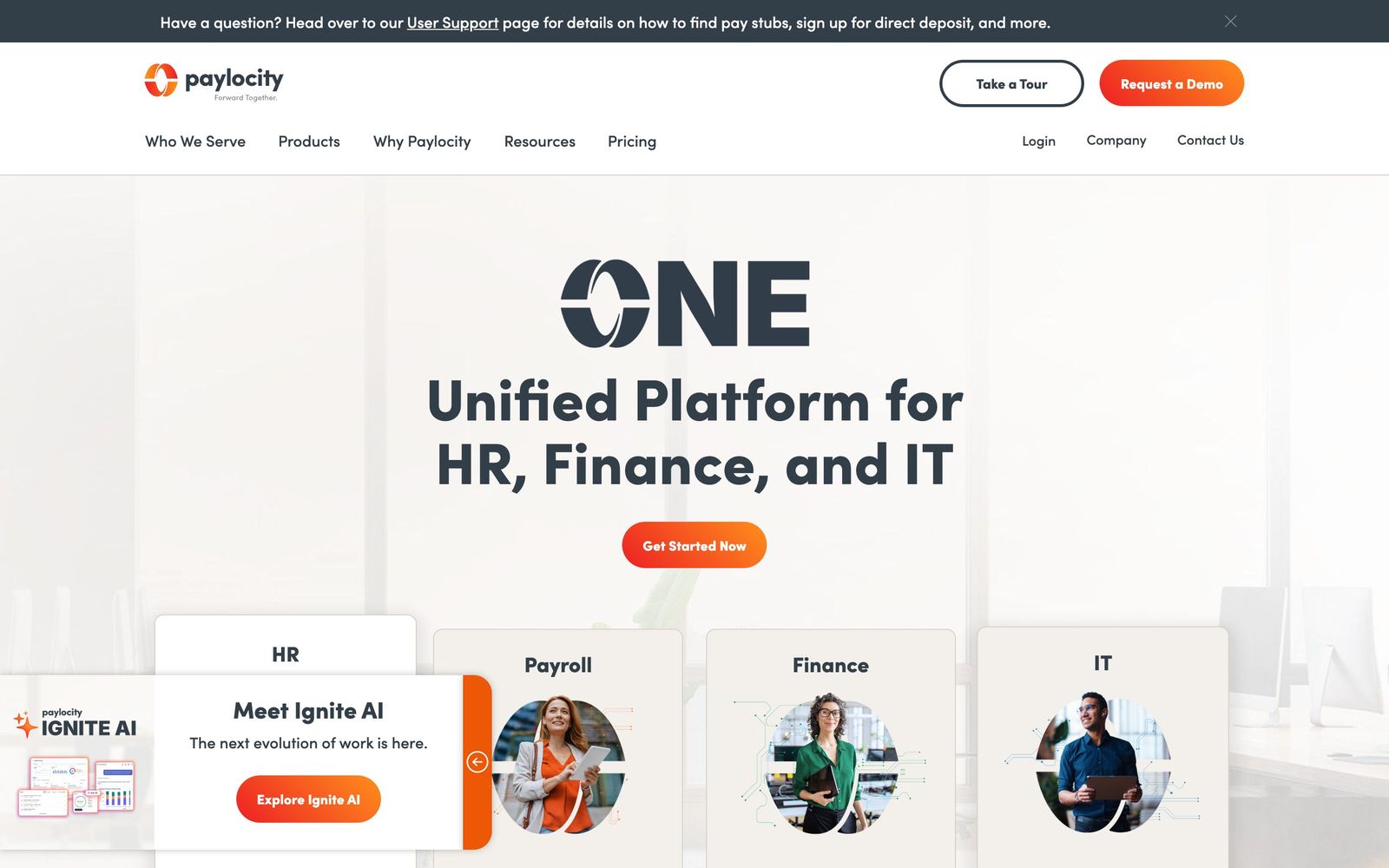
Paylocity is a human capital management platform for US employers: payroll and tax filing at the centre, with core HR, benefits administration, time and attendance, recruiting, performance and learning built around the same employee record. The pitch is consolidation. Instead of a payroll bureau, a separate applicant tracking system, a benefits broker portal and a survey tool that never agree on headcount, one record carries the employee from offer through pay change to exit, and reporting draws on all of it.
What separates it from the older payroll incumbents is the employee-facing layer. Paylocity puts a social feed, peer recognition and pulse surveys, Community, Recognition and Employee Voice, in the same app as the pay stub and the time clock, and the mobile app scores far higher with employees than HCM apps usually do. A spend management capability arrived through the Airbase acquisition, extending the platform into expenses and vendor payments. The company reports more than 41,000 customers, concentrated in organisations of roughly 50 to 750 employees.
Key features
The modules are sold as a bundle, with talent, benefits and time typically raising the per-employee rate above the payroll base.
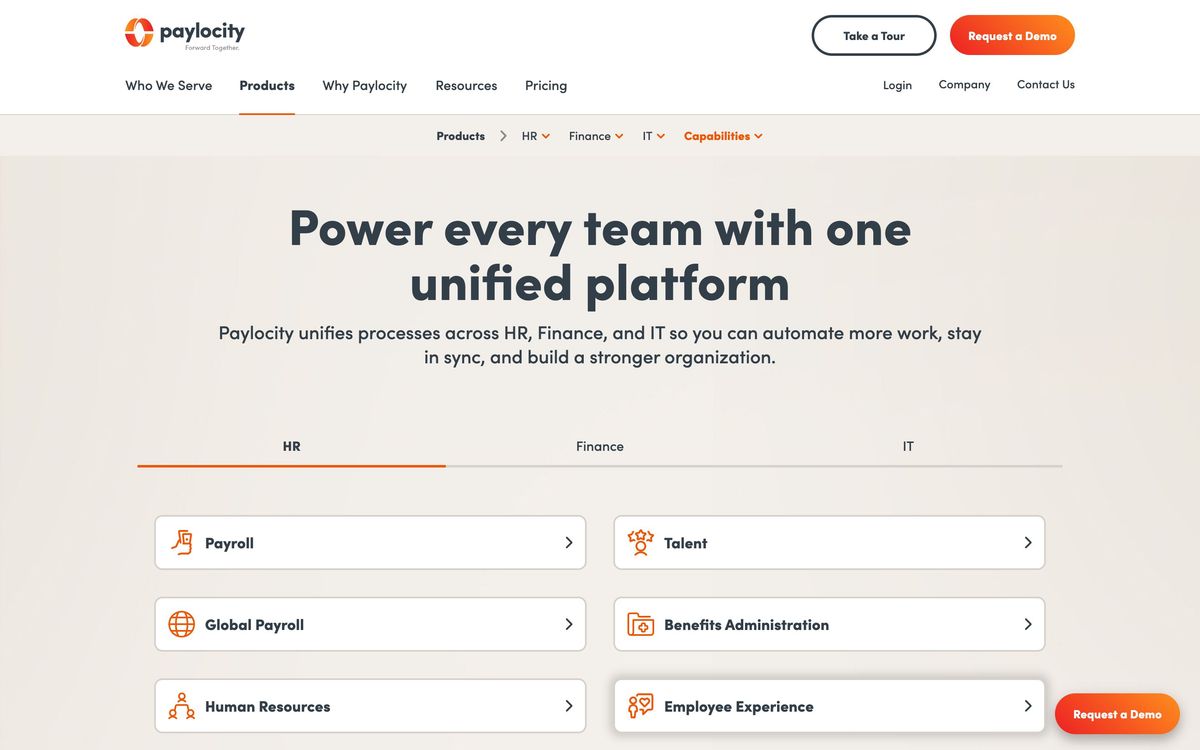
- Payroll with tax filing, garnishment handling and on-demand access to earned wages
- Core HR record covering onboarding, documents, policy acknowledgements and compliance tracking
- Benefits administration with open enrollment and carrier feeds
- Time and attendance, scheduling and labour cost allocation
- Recruiting, performance reviews, compensation planning and a learning management module
- Community feed, peer recognition and Employee Voice surveys inside the same employee app
Who it's for
The fit is a US company that has outgrown a simple payroll service and now has an HR team of one to five people trying to run onboarding, benefits and reviews with spreadsheets between systems. At that size the consolidation argument holds: one record, one login for employees, one place where a manager approves time and reads survey results. Companies with hourly and salaried populations in the same business benefit particularly, because time, scheduling and payroll stop being three vendors.
It is the wrong system for a small team that only needs to run pay and file taxes, the suite is priced and configured for breadth, and a lean payroll product will cost less and deploy in days. It is also wrong for any company with employees outside the US, since foreign payroll is simply not covered. Finance teams should test the report builder before signing; it is the most consistently criticised part of the platform, and custom analysis often ends up in exported data rather than in the tool.
How it compares
ADP Workforce Now goes deeper on regulatory scale and multi-entity complexity, and is the safer choice for a company heading past a thousand employees, but its interface and service model feel a generation older. Gusto is cheaper, quicker to implement and better suited to teams under fifty, though it thins out fast on performance, learning and workforce scheduling. Rippling wins where HR and IT provisioning need to move together, and it handles international hiring through its own employer of record, which Paylocity cannot match. Against that field Paylocity's distinctive claim is the engagement layer, few competitors treat recognition and survey data as core payroll-adjacent functionality.
Verdict
Paylocity is a solid mid-market consolidation play, and the employee experience side is genuinely better than the category average, which is what drives adoption after go-live. The caveats are commercial and operational rather than functional: there is no published pricing, implementation is a separate line item, deployment commonly takes two to three months across modules, and service quality depends on an account manager who may change. Buyers who negotiate implementation scope up front and check reporting against their actual questions get a system that lasts; those who skip that groundwork tend to write the reviews complaining about both.
Ready to try Paylocity?
More recruiters tools like Paylocity
RemotePeople
4.1Employer of record and global payroll in 150-plus countries, with in-country recruiters attached.
Read RemotePeople review →Employment Hero
4.0HR records, payroll, rostering and hiring in one platform for small and mid-sized employers.
Read Employment Hero review →Oyster HR
4.0Employer of record and contractor payments for teams hiring in countries where they have no entity.
Read Oyster HR review →Payoneer Workforce Management
4.0Employer of record, contractor management and cross-border payouts for teams hired in 160-plus countries.
Read Payoneer Workforce Management review →Tellent
4.0Modular hiring and HR suite pairing the Recruitee ATS with an HRIS and performance reviews.
Read Tellent review →Time Doctor
4.0Time tracking and workforce analytics for distributed teams, with configurable screenshots and activity monitoring.
Read Time Doctor review →