
CallRail review
Call, text and form tracking that ties every inbound lead back to the campaign, keyword or page that produced it.
The default choice for attributing phone leads to marketing spend, though the metered billing turns a modest base plan into a much larger invoice faster than most buyers expect.
Pros
- Dynamic number insertion swaps the phone number per visitor, so a call can be traced to the campaign, keyword and landing page behind it
- Recordings and transcripts arrive automatically, which settles arguments about lead quality between an agency and its client
- Over fifty integrations push call data into Google Ads, Analytics and the CRM, so calls appear as conversions where budget decisions are made
- Conversation intelligence tags calls as qualified or converted without a human listening to every recording
- Multi-client account structure and reporting are built for agencies managing many businesses at once
Cons
- Base plans include a small allowance of numbers, minutes and texts, and per-minute overages are charged on every tracked call, so real bills routinely land well above the advertised plan price
- Attribution is last-touch by default and the model cannot be customised much, which misrepresents long sales cycles with several marketing touches
- Reviewers repeatedly report difficulty cancelling accounts and slow escalation past first-line support
CallRail pricing
List prices in USD per month, taken from the vendor at review time.
| Plan | Per month | What it covers |
|---|---|---|
| Lead Tracking | $50 | includes 5 numbers, 250 minutes, 25 texts; overages billed per number, per minute and per text |
| Lead Tracking Complete | $95 | adds form tracking and 1,000 form submissions |
| Lead Conversion | $150 | adds conversation intelligence: 10,000 transcription minutes, 2,500 analysis minutes |
| Lead Conversion Complete | $195 | forms plus conversation intelligence; Voice Assist add-on starts at $95 a month |
What CallRail actually does
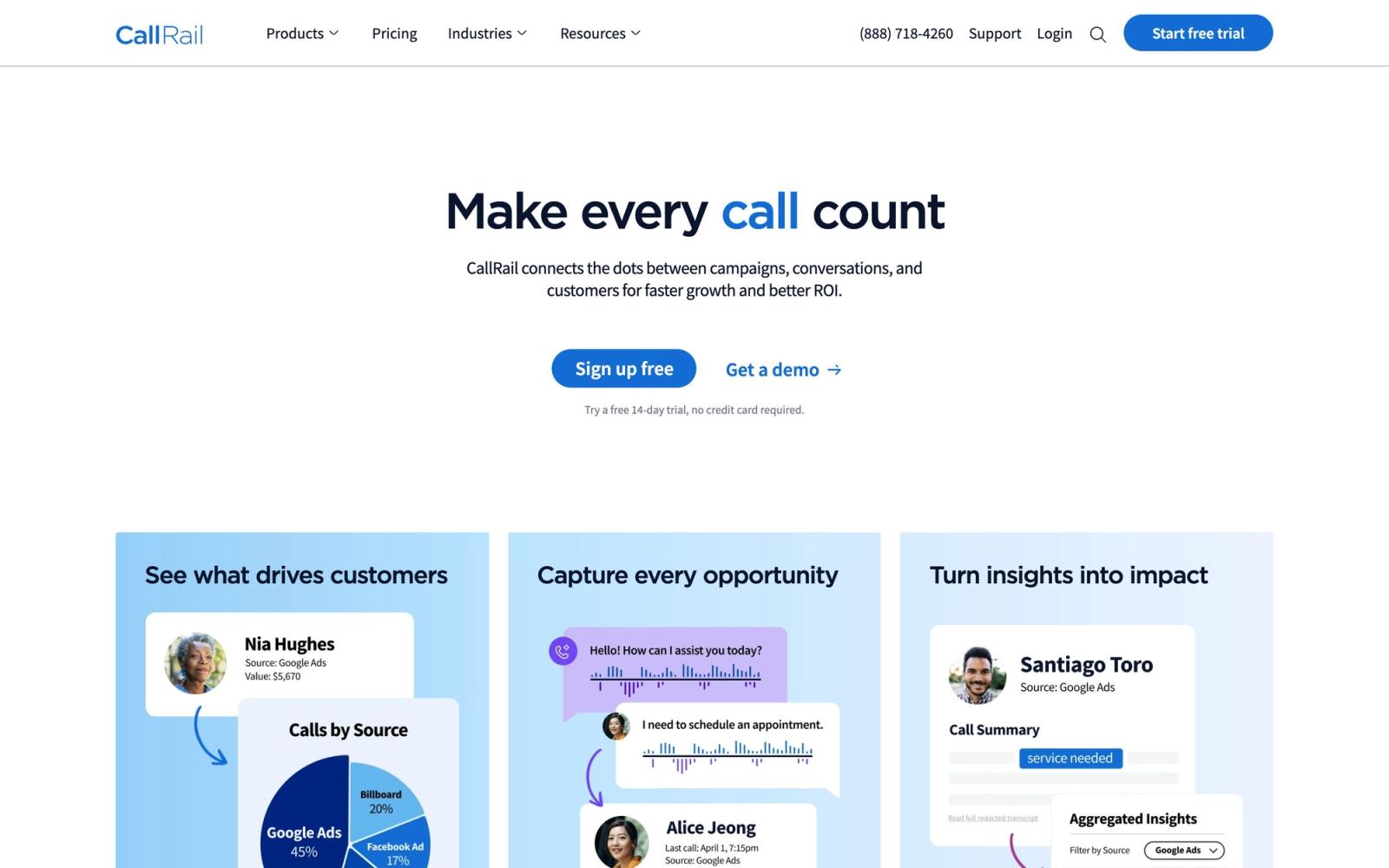
CallRail answers a question that web analytics cannot: which advertising produced the phone call. It provisions tracking numbers and swaps them into the page per visitor, so the number a searcher dials is tied to the source, campaign, keyword and landing page that brought them. Calls, texts and form submissions land in one timeline per lead, complete with a recording and a transcript, and that data is pushed back into Google Ads, Analytics and the CRM as a conversion. For any business where the money is made on the phone, that closes the loop between spend and revenue.
On top of the tracking layer sit two paid extensions. Conversation intelligence transcribes and analyses calls, summarising them, scoring sentiment, spotting keywords and tagging which calls actually converted, which removes the chore of listening to recordings to grade lead quality. Voice Assist is a newer AI receptionist that answers calls around the clock, qualifies the caller and books appointments, sold as a separate add-on rather than as part of a plan. The platform is delivered entirely in the browser, with mobile apps for reviewing calls.
Key features
The tracking layer is the substance; the intelligence layer is what most agencies eventually upgrade for.
- Dynamic number insertion with session-level attribution to source, campaign, keyword and landing page
- Call recording, automatic transcription and routing or tagging rules per number pool
- Conversation intelligence with call summaries, sentiment scoring, trend detection and automatic conversion tagging
- Form tracking with a custom form builder and multi-touch cost-per-lead reporting on the Complete tiers
- Voice Assist, an add-on AI receptionist that answers, qualifies and schedules outside office hours
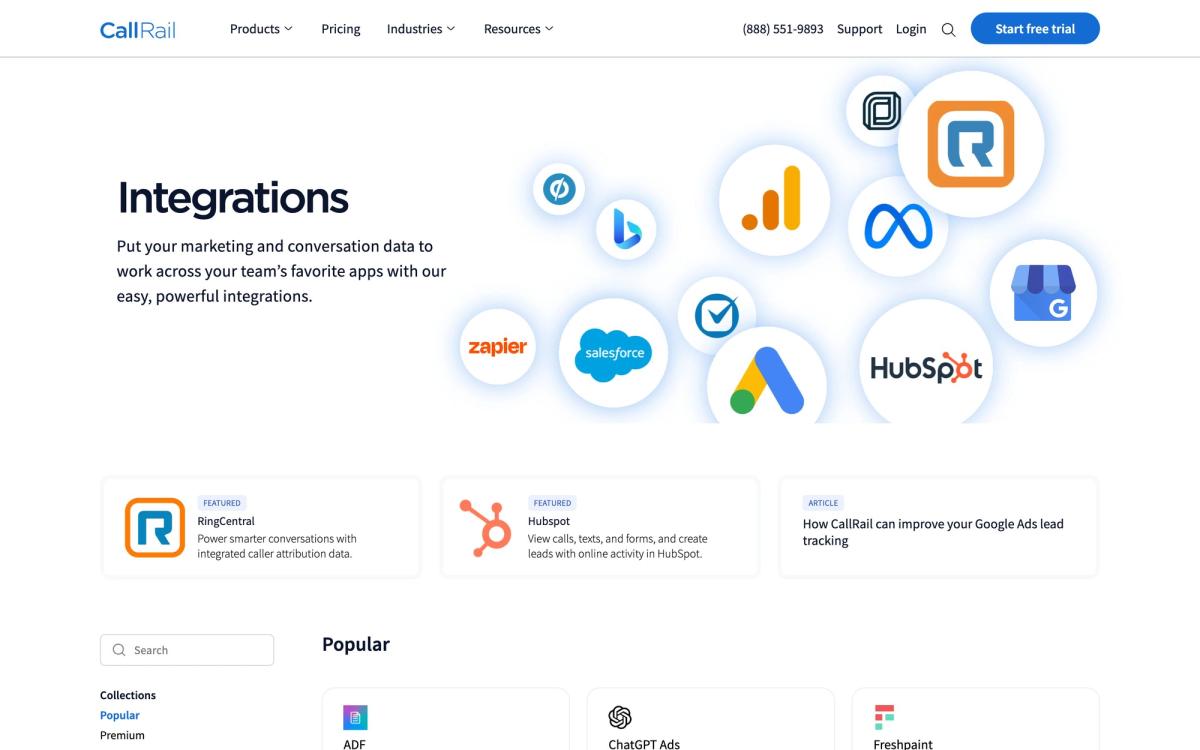
- Integrations with Google Ads, Google Analytics, HubSpot, Salesforce, Microsoft Ads, Meta and Slack, plus an API
Who it's for
CallRail is aimed at two buyers. The first is the marketing agency that needs to prove its work to clients whose leads arrive by phone: home services, legal, medical, automotive, home improvement. The multi-account structure, the client-ready reporting and the Google Ads conversion import exist for exactly that job. The second is the local business running its own campaigns and wanting to know which channel is worth renewing.
It is a bad fit for a solo operator with a handful of calls a month, where the base plan plus metered usage costs more than the insight is worth, and for companies with long, multi-stakeholder sales cycles that need genuine multi-touch modelling. Teams that mainly want a phone system rather than attribution should buy a business phone product instead; CallRail measures calls, it does not run an office.
How it compares
WhatConverts is the closest competitor and goes further on lead-level reporting and marking which leads became revenue, which some agencies prefer for client reviews. Invoca sits above CallRail with deeper AI call scoring and enterprise attribution, priced for large advertisers rather than for a five-client agency. Nimbata and Ringba undercut CallRail on metered pricing and appeal to buyers whose complaint is the invoice, though neither matches the integration catalogue or the polish of CallRail's reporting.

Verdict
As a piece of measurement infrastructure, CallRail is mature and reliable: the number swapping works, the integrations put call conversions where budget decisions are actually made, and the conversation analysis has become good enough to grade leads without a person on headphones. The reason it does not score higher is commercial rather than technical. Metered minutes, texts and analysis credits mean the real monthly cost drifts well above the plan price with no strong warning, attribution is stubbornly last-touch, and account cancellation has a poor reputation. Budget for usage, not for the sticker.
Ready to try CallRail?
More marketers tools like CallRail
WhatConverts
4.3Tracks calls, forms, chats and transactions back to the campaign that produced them, in one lead log.
Read WhatConverts review →Databox
4.2Analytics platform pulling 130+ data sources into dashboards, automated reports, goals, AI-queried metrics.
Read Databox review →Survicate
4.1Customer feedback platform for website, in-product, email and link surveys with AI theme analysis.
Read Survicate review →Bïrch
4.0Rule-based automation and bulk campaign management for Meta, Google, TikTok and Snapchat ad accounts.
Read Bïrch review →Similarweb
4.0Estimated traffic, channel mix and audience data for any website or app, used for competitive and market research.
Read Similarweb review →Crazy Egg
3.9Heatmaps, scrollmaps and session recordings for finding out where a page loses visitors before they convert.
Read Crazy Egg review →