
Kisi review
Cloud access control that turns phones and badges into door credentials across every site you run.
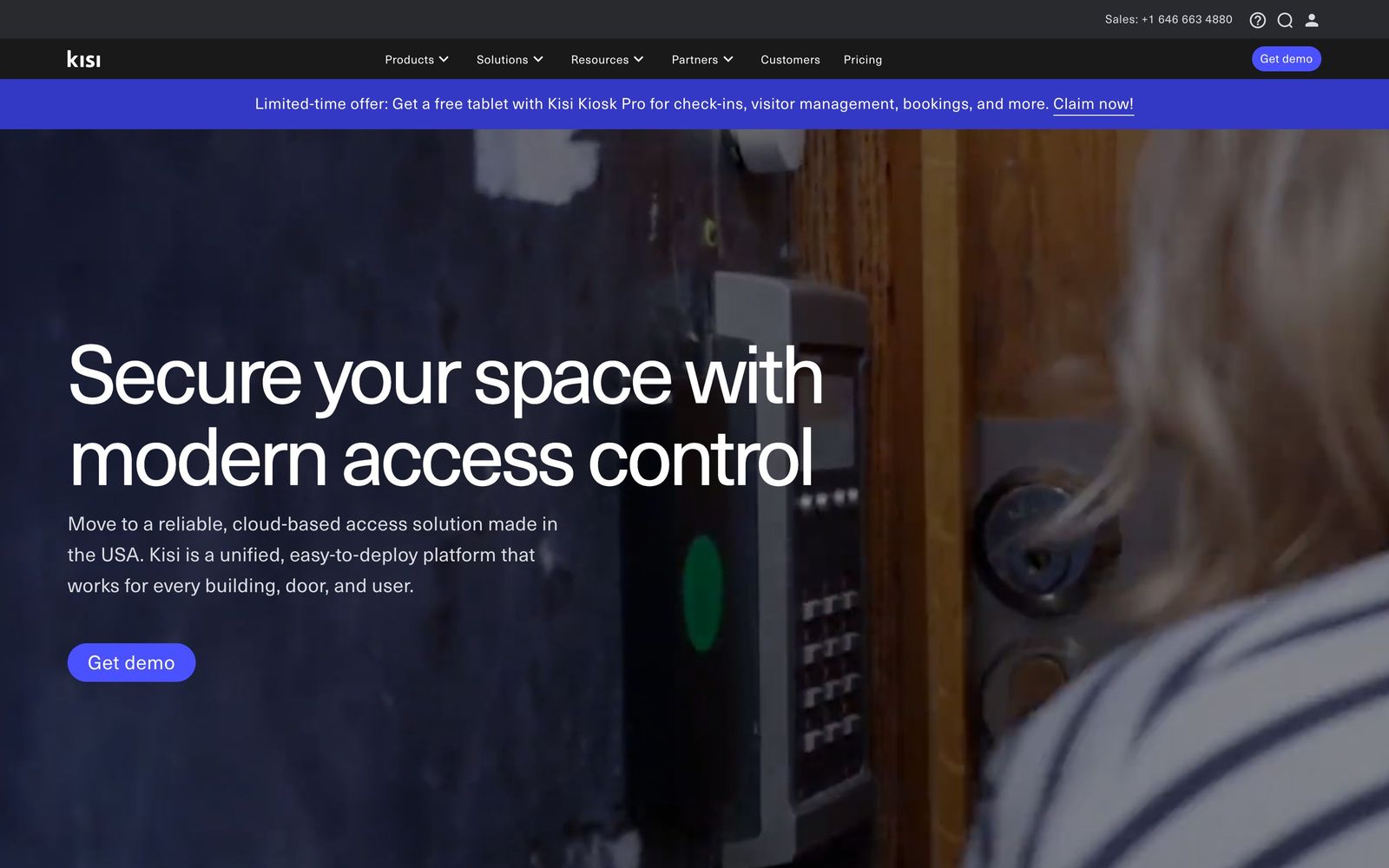
A solid cloud access control platform for multi-site offices and member spaces, though the required controller hardware and separately quoted installation make the real cost much higher than the platform fee.
Pros
- Mobile credentials work as employee badges in Apple Wallet, so staff unlock doors without carrying a fob
- Directory sync with Okta, Microsoft Entra ID, OneLogin and JumpCloud revokes door access the moment someone is offboarded
- One dashboard covers every door across every location, with unlock logs and occupancy reporting per site
- Coworking and fitness integrations (OfficeRnD, Nexudus, Cobot, Mindbody, ABC Glofox) provision members automatically from the booking system
- Readers, controllers, intercom and visitor kiosk come from a single vendor, plus an open API and iOS and Android SDKs for a white-label entry app
Cons
- The Controller Pro is a required one-time hardware purchase per site on top of the monthly platform subscription
- Installation is handled by third-party installers and quoted separately, so the true rollout cost is never visible on the pricing page
- Advanced analytics, custom event retention and custom roles are held back for the quote-only Enterprise tier
Kisi pricing
List prices in USD per month, taken from the vendor at review time.
| Plan | Per month | What it covers |
|---|---|---|
| One Security Platform | $99 | starting price; hardware, credentials and add-ons are quoted separately |
What Kisi actually does
Kisi replaces the mechanical key and the plastic fob with a cloud-managed credential. A controller wired to the door hardware talks to Kisi's service, and access rights live in a web dashboard instead of in a panel bolted to a wall in the server closet. An office manager adds a new hire to a group, that group carries a door schedule, and the hire unlocks the entrance with a phone, a badge in Apple Wallet or a card at a reader. When the person leaves, the credential is revoked centrally and every reader knows within seconds.
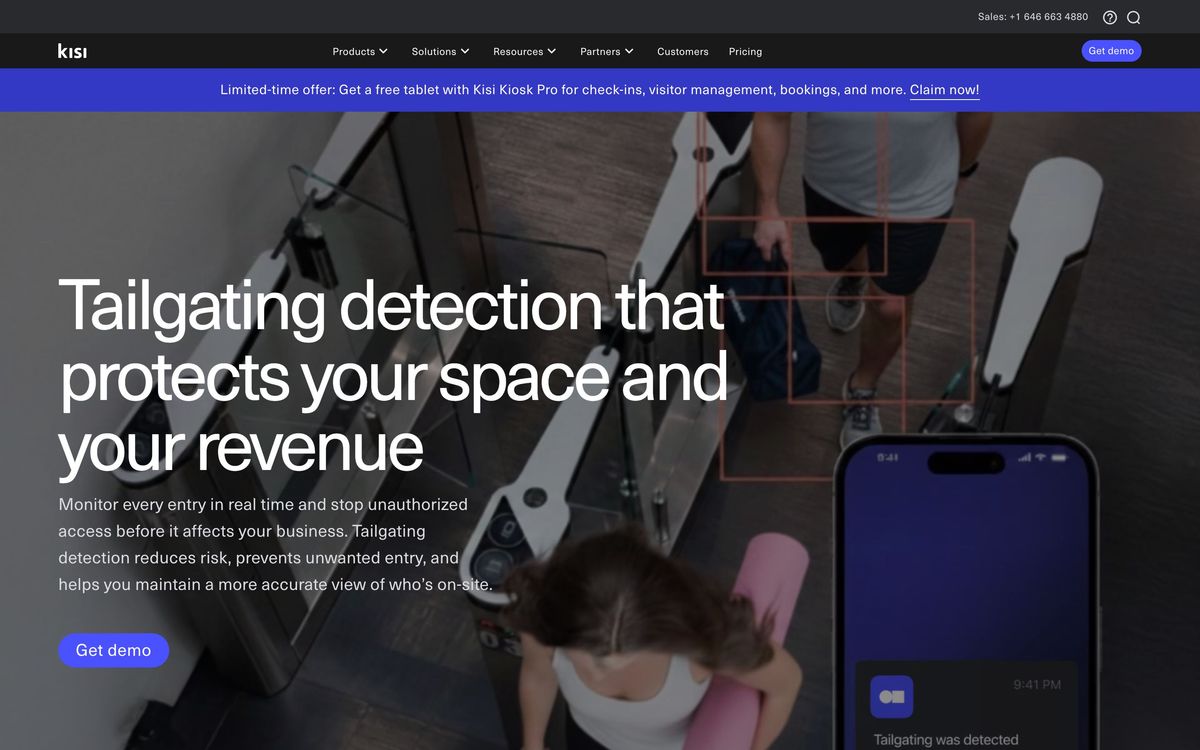
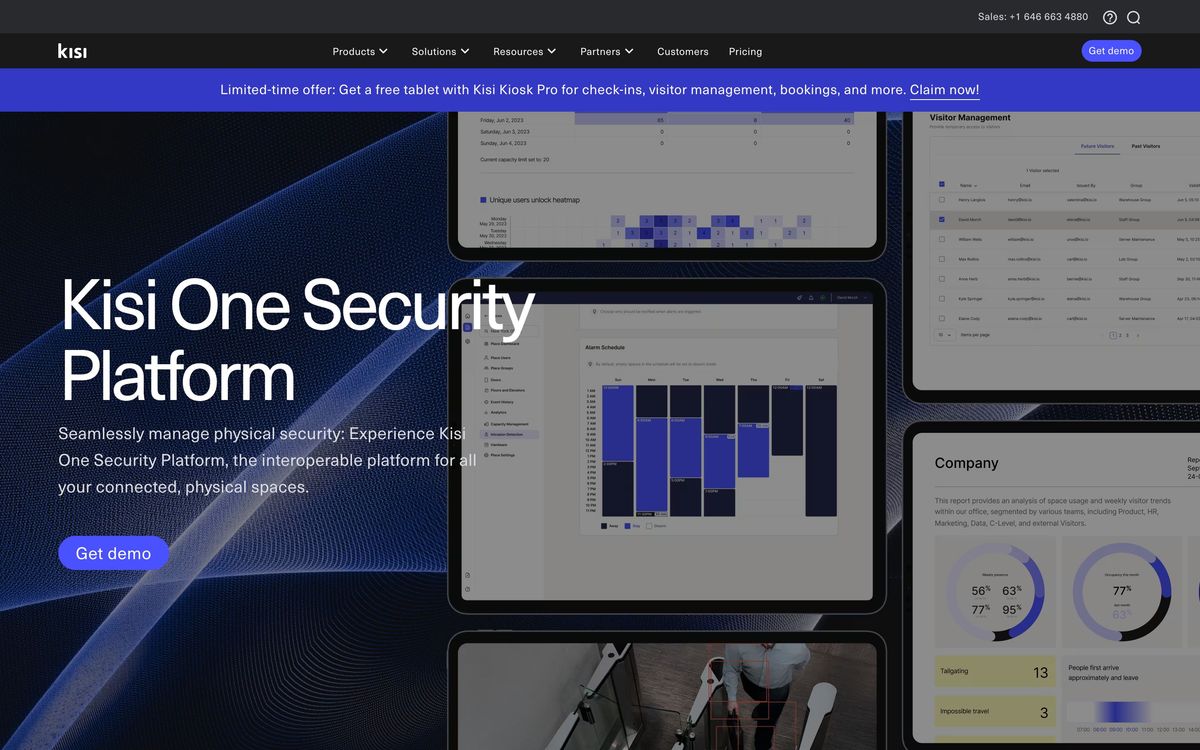
The system is sold as one platform rather than as separate products. Alongside door control there is visitor management through a check-in kiosk, a video intercom with tailgating detection, camera and intrusion integrations, and occupancy reporting drawn from unlock events. The hardware, from the Controller Pro to the Reader Pro, Terminal Pro, Video Intercom and Kiosk Pro, is bought from Kisi and installed by a third-party electrician or integrator who quotes that labour separately. The software is a subscription; the metal at the door is a capital purchase.
Key features
The feature set follows one idea: identity in the directory should equal identity at the door.
- Cloud dashboard for provisioning, scheduling and revoking access across multiple sites
- Mobile credentials, including employee badges carried in Apple Wallet
- SSO and directory sync with Okta, Microsoft Entra ID, OneLogin, JumpCloud and Google
- Visitor check-in on the Kiosk Pro, with video intercom and tailgating detection at the entrance
- Camera integrations with Cisco Meraki, Eagle Eye Networks, Rhombus and Spot AI that tie footage to unlock events
- Open API, iOS and Android SDKs, and white-label app support for branded member entry
Who it's for
Kisi suits operators with more than one door and usually more than one location: coworking spaces, gyms and studios, hybrid offices where the people at the desks change weekly, and property managers running several buildings. The coworking and fitness integrations are the real differentiator. Kisi provisions members straight from OfficeRnD, Nexudus, Cobot, Mindbody or ABC Glofox, so the membership system rather than a facilities spreadsheet becomes the source of truth for who gets in.
It is a poor fit for a single-suite tenant with one door and ten staff, where a smart lock and a shared code cost a fraction as much. It also assumes someone owns the system: the directory integration, the credential policy and the relationship with the installer all need a named person. Teams without that person end up with stale groups and permanent guest credentials, which defeats the purpose of buying access control at all.
How it compares
Verkada bundles access control with its own camera line and suits organisations that want a single security vendor and will pay enterprise prices for it, while Kisi is easier to buy in pieces and friendlier to third-party cameras. Brivo has the longer install base and a deeper dealer network, which helps on awkward retrofits, but its interface feels older and mobile credentials are less central to how it was designed. Openpath, now part of Motorola, competes closely on mobile-first unlocking and often wins on wave-to-unlock reliability; Kisi's counterweight is the coworking and fitness software ecosystem, which no competitor matches for member-based spaces.
Verdict
Kisi does the core job well. Credentials follow the directory, the dashboard can be run by someone who is not a security specialist, and the integrations make member-based spaces genuinely easier to operate. The caveat is the cost structure rather than the software. The subscription is only the visible part: the controller is a one-time hardware purchase for every site, readers and intercoms are priced individually, and installation arrives as a separate quote from a contractor. Multi-site operators who model the whole rollout tend to find the numbers fair. Anyone comparing a monthly platform fee against a consumer smart lock will be surprised by the first invoice.
Ready to try Kisi?
More founders tools like Kisi
ClickUp
4.5All-in-one work platform: tasks, docs, goals, chat, whiteboards, and AI agents in a single workspace.
Read ClickUp review →Fireflies.ai
4.5AI meeting teammate that records, transcribes, and summarizes calls, with action items and searchable notes.
Read Fireflies.ai review →Miro
4.5Infinite shared canvas for workshops, diagrams and planning, now wrapped around docs, tables and AI.
Read Miro review →Reclaim.ai
4.5AI calendar assistant that auto-schedules focus time, tasks, and habits on Google and Outlook calendars.
Read Reclaim.ai review →Activepieces
4.4Open-source, MIT-licensed AI automation platform with a visual builder, AI agents, and 700+ integrations.
Read Activepieces review →MindStudio
4.4No-code visual builder for AI agents with 200+ models, 1,000+ integrations, and flexible deployment.
Read MindStudio review →