
ShipBob review
Outsourced ecommerce fulfilment across a global warehouse network, run from one inventory dashboard.
A dependable way for a growing DTC brand to stop packing boxes and distribute inventory across regions, though the absence of any published rate card makes it hard to compare before you are already in a sales conversation.
Pros
- Inventory can be split across regional fulfilment centres so more orders ship from a warehouse near the customer
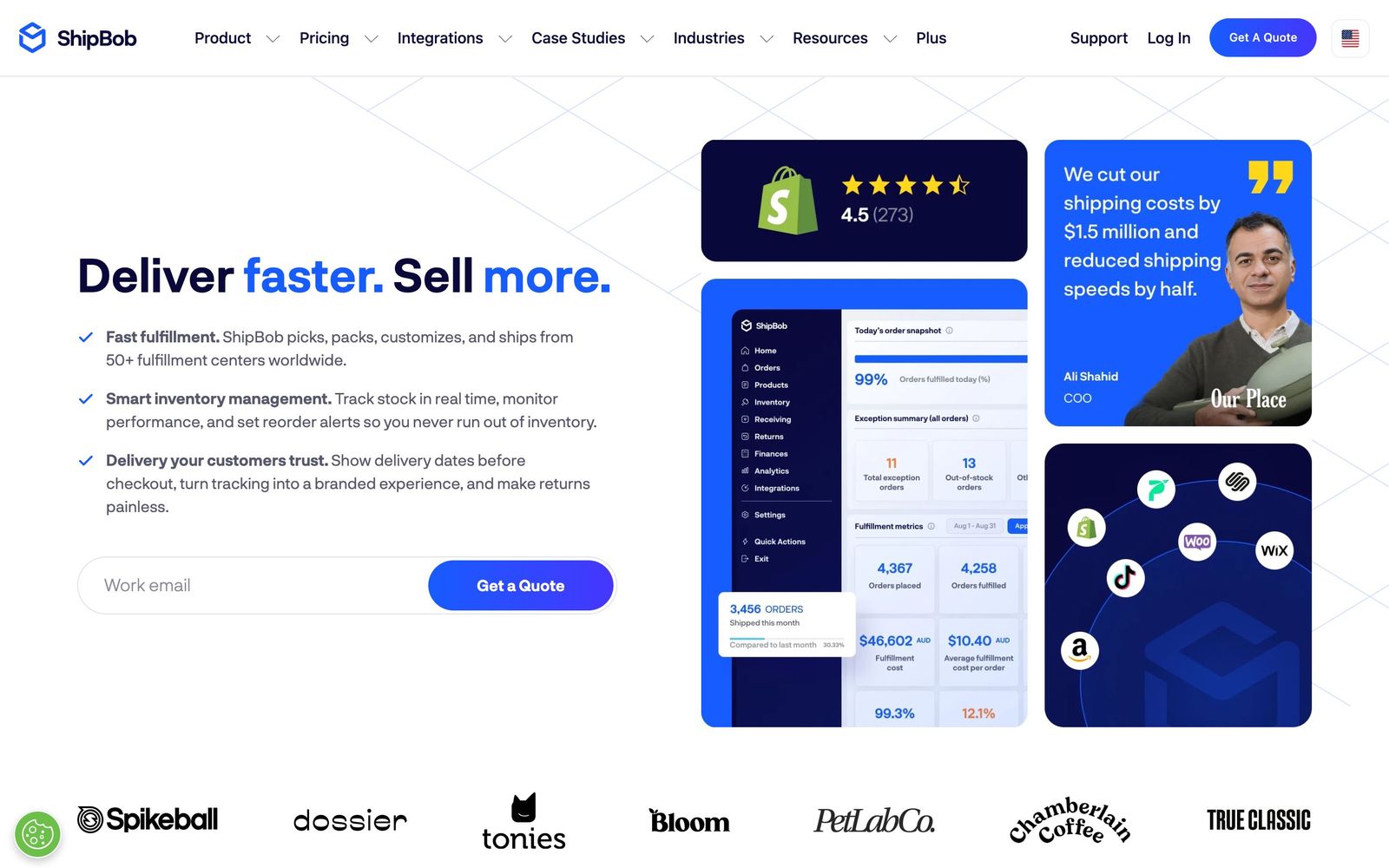
- The merchant dashboard shows stock by location, order status and reorder points without a separate inventory tool
- Storefront and marketplace connections are close to click-through, covering Shopify, Amazon, NetSuite and the returns and support tools around them
- Two-day ground coverage across the continental United States and shipping to more than 250 destinations from one contract
- Kitting, custom packaging inserts, B2B orders with EDI, and returns handling are available from the same operator rather than a second vendor
Cons
- Every quote is bespoke and no rate card is published, so receiving, storage and pick-and-pack costs cannot be compared before sales contact
- Kitting, wholesale and B2B orders and returns management are charged on top of the standard fulfilment fees
- Inventory physically lives in ShipBob's buildings, so leaving means relocating stock rather than cancelling a subscription
What ShipBob actually does
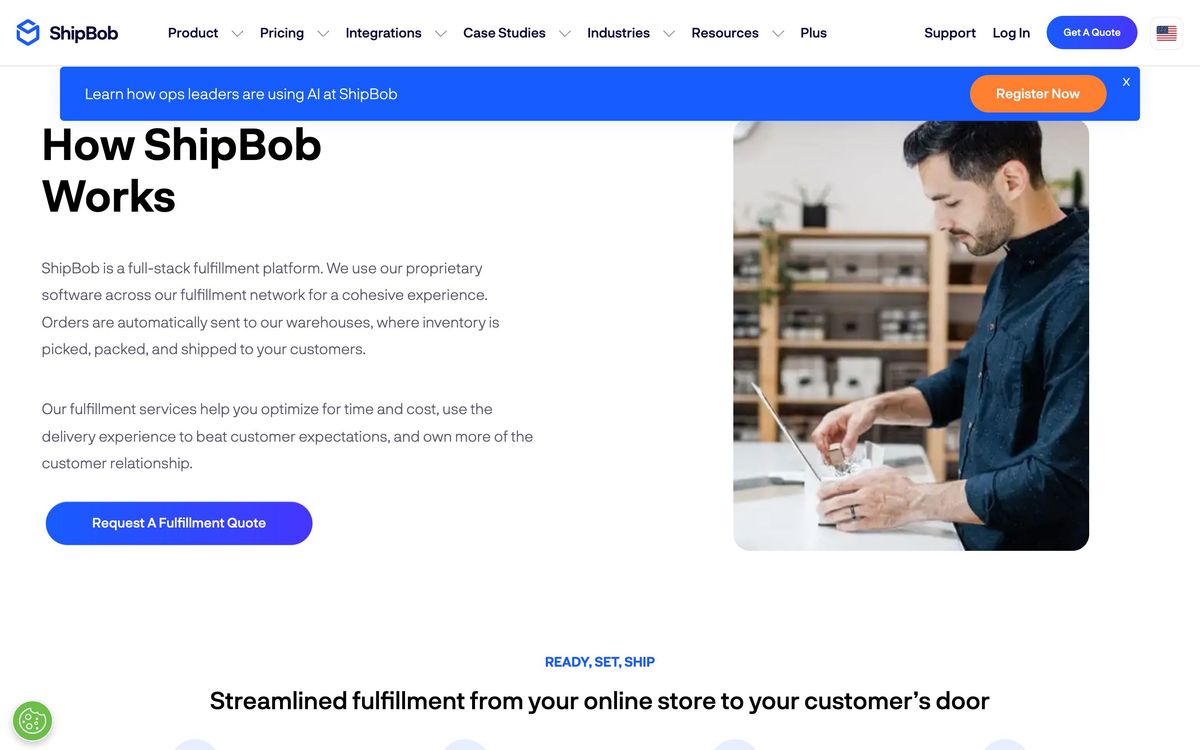
ShipBob is a third-party logistics operator with a software layer on top. A brand ships its inventory into one or several ShipBob fulfilment centres, connects its storefront, and from then on orders flow to the nearest warehouse holding stock, get picked and packed by ShipBob staff, and leave on a carrier ShipBob has negotiated with. The network runs to more than 50 facilities across several countries, and the company reports over 300 million orders processed and a 99.97 per cent accuracy rate on picks.
The software is genuinely part of the product rather than a portal bolted on. The merchant dashboard is where a brand watches stock by location, sets reorder points, tracks order status, and decides how inventory should be distributed between regions so that more orders ship short distances. There is also a warehouse management system for brands that keep their own facility alongside the network, and an automation layer ShipBob markets as an action layer rather than a chatbot, making replenishment and routing decisions from live network data. Access to the software is included for customers; what a brand actually pays for is receiving, storage, picking, packing and postage.
Key features
The capabilities that matter are the ones that remove a warehouse decision from the founder's week.
- Regional inventory distribution with automated replenishment recommendations across the network
- Real-time stock, order and low-stock visibility per fulfilment centre in one dashboard
- Two-day ground delivery across the continental United States and international shipping to more than 250 destinations
- B2B and wholesale fulfilment with EDI and retailer compliance routing
- Returns processing, kitting, and custom branded packaging or inserts
- Around 50 quick integrations including Shopify, Amazon, NetSuite, Klaviyo, Gorgias, Loop Returns and AfterShip, plus an API
Who it's for
ShipBob suits a direct-to-consumer brand that has outgrown packing orders in a garage or a single small warehouse but is not large enough to negotiate directly with national logistics providers. The sweet spot is a few hundred to a few thousand orders a month, a catalogue of manageable SKU count, and products that are light, non-perishable and not subject to unusual handling rules. Brands selling on both their own Shopify store and Amazon benefit most, since one inventory pool serves both channels.
It is a poor fit for very high SKU counts with slow-moving long tails, where storage fees on stagnant inventory quietly become the largest line on the bill. It is also wrong for brands whose differentiator is the unboxing craft: custom assembly is possible but priced as extra work per order, and heavily hand-finished packaging is usually cheaper and better in-house. Anyone unwilling to hand over physical control of stock should stay self-fulfilled.
How it compares
Amazon FBA is cheaper per unit at volume and wins Prime placement, but it optimises for Amazon's channel and treats a brand's own storefront as an afterthought, with multi-channel fulfilment priced accordingly. Deliverr, now inside Flexport, competes on fast-tag delivery promises across marketplaces and is often simpler for sellers who live on marketplaces rather than their own site. Smaller regional 3PLs frequently beat ShipBob on price and on answering the phone, at the cost of the software, the multi-node network and the integration list. ShipBob's real argument is that one contract covers domestic, international, B2B and returns with a dashboard a non-logistics person can read.
Verdict
ShipBob is a sound choice for a brand at the stage where fulfilment has become the constraint on growth. The network is broad, the software is better than most 3PLs manage, and the range of services means fewer separate relationships to manage as the business adds wholesale or international. The caveat is commercial transparency: pricing is quote-only, every line beyond standard pick, pack and ship carries its own fee, and the value of the deal depends entirely on the terms a particular brand negotiates. Model the full cost per order against a regional 3PL quote before signing, and treat the free software as a benefit of the contract rather than a product you are buying.
Ready to try ShipBob?
More ecommerce tools like ShipBob
Increff
3.9Warehouse, order and merchandise planning software for fashion and D2C brands selling across marketplaces.
Read Increff review →MRPeasy
4.2Cloud manufacturing ERP that plans production against materials and capacity for small and mid-sized shops.
Read MRPeasy review →Shippo
4.2Multi-carrier label buying, rate comparison and tracking for online stores, with an API behind the same rates.
Read Shippo review →Katana Cloud Inventory
4.1Live inventory and production tracking for small manufacturers selling through Shopify, Amazon and wholesale.
Read Katana Cloud Inventory review →Sendcloud
4.1European shipping platform that turns store orders into carrier labels, tracking messages and returns.
Read Sendcloud review →Unleashed Software
4.1Cloud inventory, purchasing and light manufacturing for wholesalers and product businesses on Xero.
Read Unleashed Software review →