
Sendcloud review
European shipping platform that turns store orders into carrier labels, tracking messages and returns.
The default shipping layer for European online stores, though the per-label fee on top of the subscription makes the real cost hard to read from the plan price.
Pros
- Contract-free carrier rates mean a small store can print discounted DPD or DHL labels without negotiating its own contract
- Shipping rules pick the carrier and service level automatically based on weight, destination and order value
- Branded tracking pages and notifications cut the volume of where-is-my-order messages reaching support
- A self-service return portal handles the return label and the reason code without manual email threads
- Free tier covers 20 parcels a month, which is enough to test the workflow before subscribing
Cons
- Every label carries a per-shipment fee on top of the monthly plan, and exceeding the plan volume raises that fee
- Automation rules, branded tracking and the return portal are gated by tier, so the entry plan is close to a label printer
- Coverage is European: merchants based outside its eight core countries get much less value from the carrier contracts
Sendcloud pricing
List prices in USD per month, taken from the vendor at review time.
| Plan | Per month | What it covers |
|---|---|---|
| Free | Free | up to 20 parcels a month on Sendcloud rates |
| Lite | $28 | EUR per month on annual billing, plus about 0.10 EUR per label; 3 users |
| Growth | $87 | EUR per month on annual billing, plus a per-label fee; adds return portal and branded tracking |
| Premium | $175 | EUR per month on annual billing; unlimited integrations and advanced returns |
| Pro | $639 | EUR per month on annual billing; unlimited users and checkout options |
What Sendcloud actually does
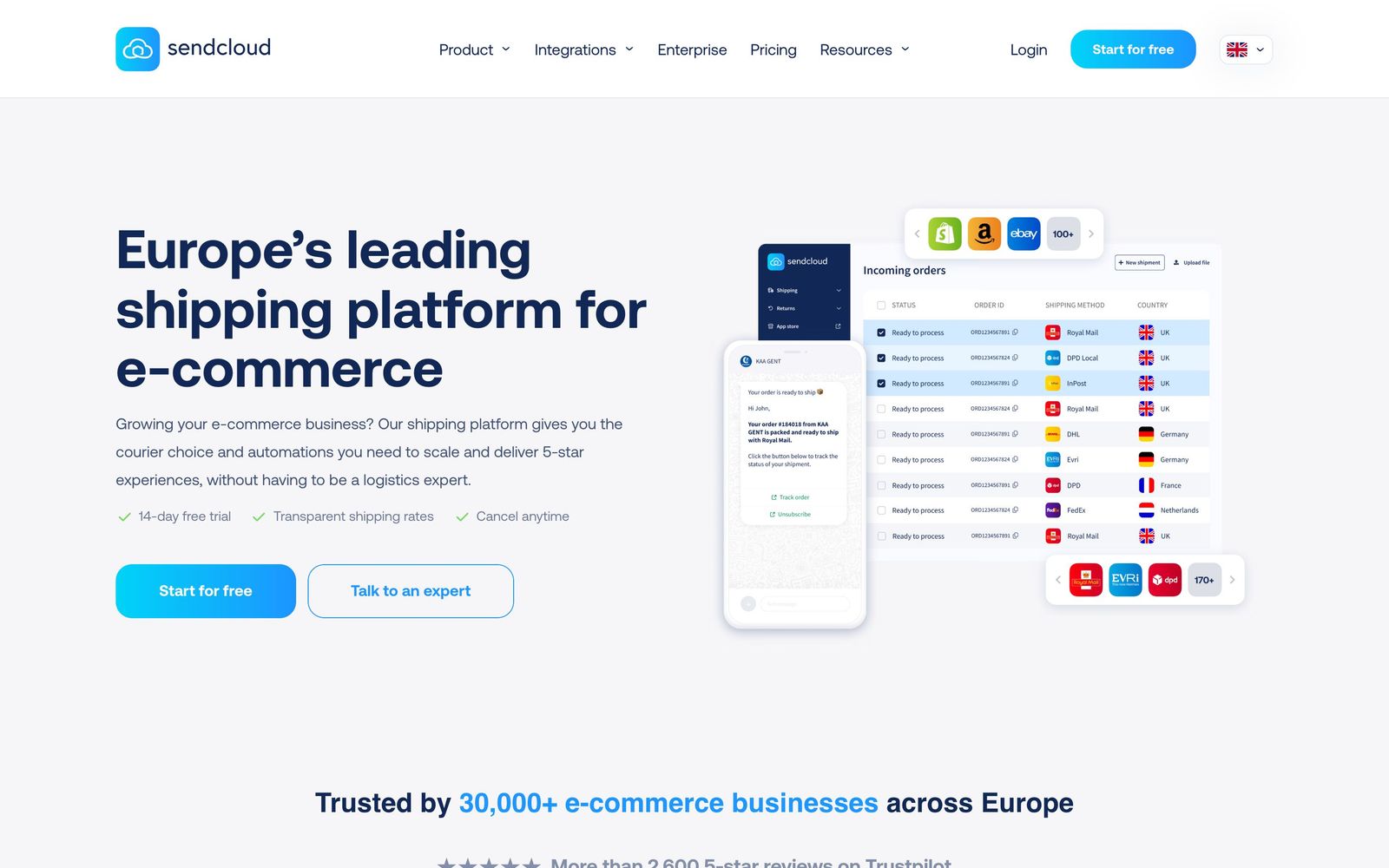
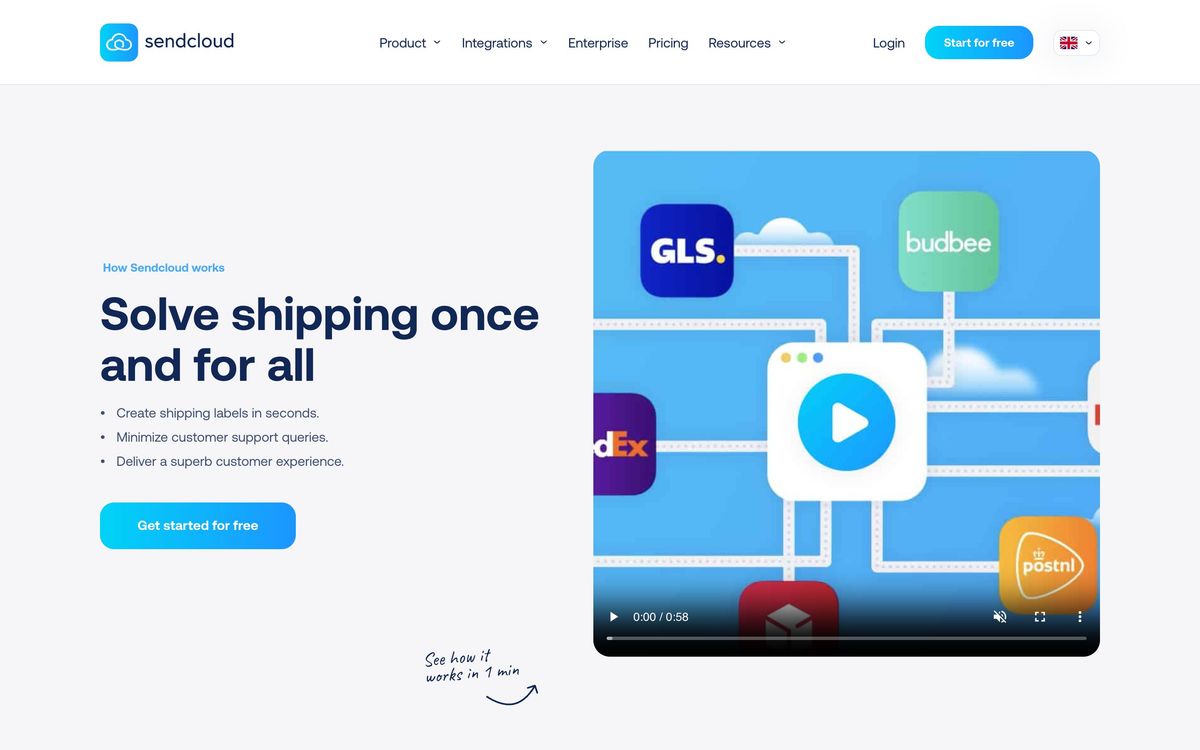
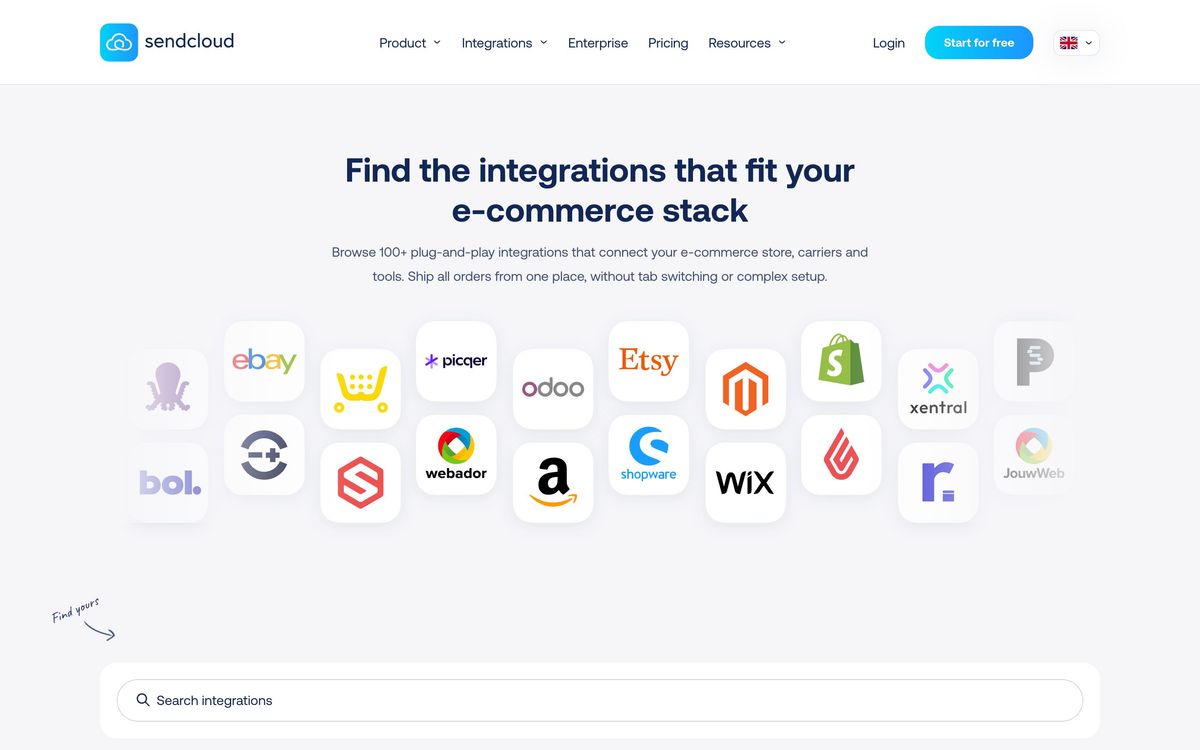
Sendcloud sits between an online store and the carriers that move its parcels. Orders arrive from Shopify, WooCommerce, Magento, PrestaShop or a marketplace such as Amazon or Etsy; Sendcloud validates the address, applies a rule to choose the carrier and service, prints the label, and pushes the tracking number back to the store. The commercial hook is that a merchant can use Sendcloud's negotiated rates with more than 170 carriers rather than signing its own contracts, which is the difference between one carrier and four for most small European stores.
The second half of the product is everything that happens after the label. Tracking pages and delivery notifications carry the store's branding and go out in the customer's language, and a return portal lets the buyer choose a reason, print a label and start the refund without emailing support. A pick and pack module adds scanning for stores that have a stockroom but no warehouse system. Everything runs in the browser, with an API for merchants who want the flow inside their own back office.
Key features
The platform is organised around the order-to-doorstep path, with each stage configurable.
- Order import from storefronts and marketplaces with address checks before a label is created
- Carrier network of more than 170 options, usable on Sendcloud rates or on a merchant's own contract
- Rules engine that selects carrier and service by weight, destination, value or cut-off time
- Branded tracking pages and delivery notifications in multiple languages
- Return portal with reason codes, return labels and refund triggers
- Pick and pack scanning workflow for stores without a warehouse management system
Who it's for
Sendcloud fits a European store that has outgrown printing labels on a carrier portal: a few hundred to a few thousand parcels a month, more than one carrier, and a support inbox filling up with delivery questions. It is particularly useful for cross-border sellers inside the European Union, where the right carrier changes by destination country and the notification language matters. Stores in its eight core markets get the strongest rates and the best support coverage.
It is a weaker choice for merchants outside Europe, where the carrier contracts behind the rate card do not apply and a regional competitor will do better. It also suits low-volume shops badly: the free tier is capped at 20 parcels a month, and the first paid plan buys a label printer with a small allowance of rules rather than the automation the marketing implies. Anyone with strongly negotiated carrier contracts already should check whether the subscription plus the per-label fee actually beats the carrier's own tooling.
How it compares
ShipStation is the closest equivalent for merchants selling into the United States and covers more North American carriers, but its European rate access is thin. Starshipit is strong in the United Kingdom and Australia with a cleaner returns flow, and is cheaper at low volume, though its integration list is shorter. Packlink and similar rate resellers undercut Sendcloud on label price alone, without the rules engine, branded tracking or return portal that make the workflow worth paying for. Sendcloud wins on breadth of European carriers and depth of post-purchase features; it loses on transparency of total cost.
Verdict
Sendcloud does the job it claims to do, and the time saved per parcel is real once rules replace manual carrier choice. Returns and branded tracking pay for themselves in reduced support volume for stores at any meaningful scale. The caveat is the pricing structure: the monthly plan is only part of the bill, since every label carries a fee, shipments beyond the plan volume cost more per label, and carrier surcharges land separately. Reviewers also report uneven support on the lower tiers and friction when cancelling. European merchants with steady volume should still shortlist it; anyone shipping irregularly, or shipping from outside Europe, should model twelve months of labels before signing.
Ready to try Sendcloud?
There's a free tier, so you can test it before committing.
More ecommerce tools like Sendcloud
PitneyShip
3.9Multi-carrier shipping and mailing software that prints labels, stamps and Certified Mail on one consolidated bill.
Read PitneyShip review →ShipBob
3.9Outsourced ecommerce fulfilment across a global warehouse network, run from one inventory dashboard.
Read ShipBob review →Quartile
4.4Cross-channel retail media platform managing Amazon, Walmart, Instacart, Google and Meta ads with ML bidding.
Read Quartile review →soona
4.4Creative-for-commerce platform: studio photo and video, UGC creators, AI editing tools and listing insights.
Read soona review →DataHawk
4.3Enterprise-grade Amazon and Walmart analytics: SKU-level dashboards, anomaly alerts and AI diagnostics.
Read DataHawk review →Gorgias
4.3Ecommerce help desk where order data and refunds live inside the conversation, with an AI agent priced per resolution.
Read Gorgias review →