
Shippo review
Multi-carrier label buying, rate comparison and tracking for online stores, with an API behind the same rates.
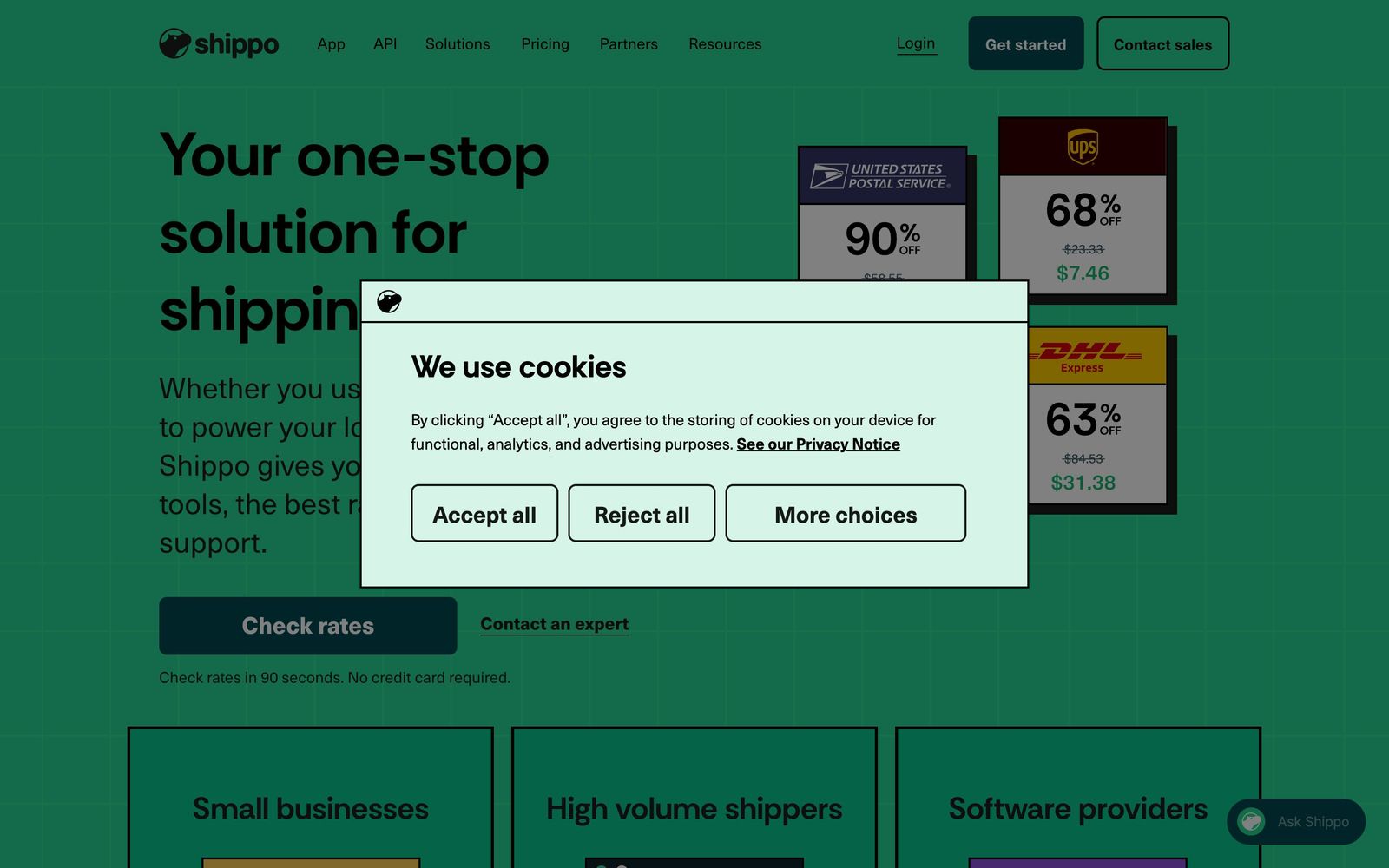
The most balanced multi-carrier shipping tool for a growing store selling on several channels, though a USPS-only seller will find cheaper and simpler options.
Pros
- Discounted rates across more than forty carriers, without negotiating any of them individually
- Orders from every connected store and marketplace land in one queue, with no cap on store connections
- Batch label creation and shipping rules remove most of the repetitive work at moderate volume
- Branded tracking pages and notifications on the paid tier keep post-purchase email out of the carrier's hands
- The API exposes the same rates, labels, address validation and tracking for teams building their own flow
Cons
- The free tier caps monthly labels and charges per label beyond it, so costs creep as volume grows
- Address validation outside the United States is billed per lookup rather than included
- Support is email-first on the free tier, and slow resolution of carrier and billing disputes is the most common complaint in reviews
Shippo pricing
List prices in USD per month, taken from the vendor at review time. Custom means quote-only.
| Plan | Per month | What it covers |
|---|---|---|
| Starter | Custom | up to 30 labels a month, then a per-label fee |
| Pro | $17 | per month, up to 10,000 labels, or annually for a discount |
What Shippo actually does
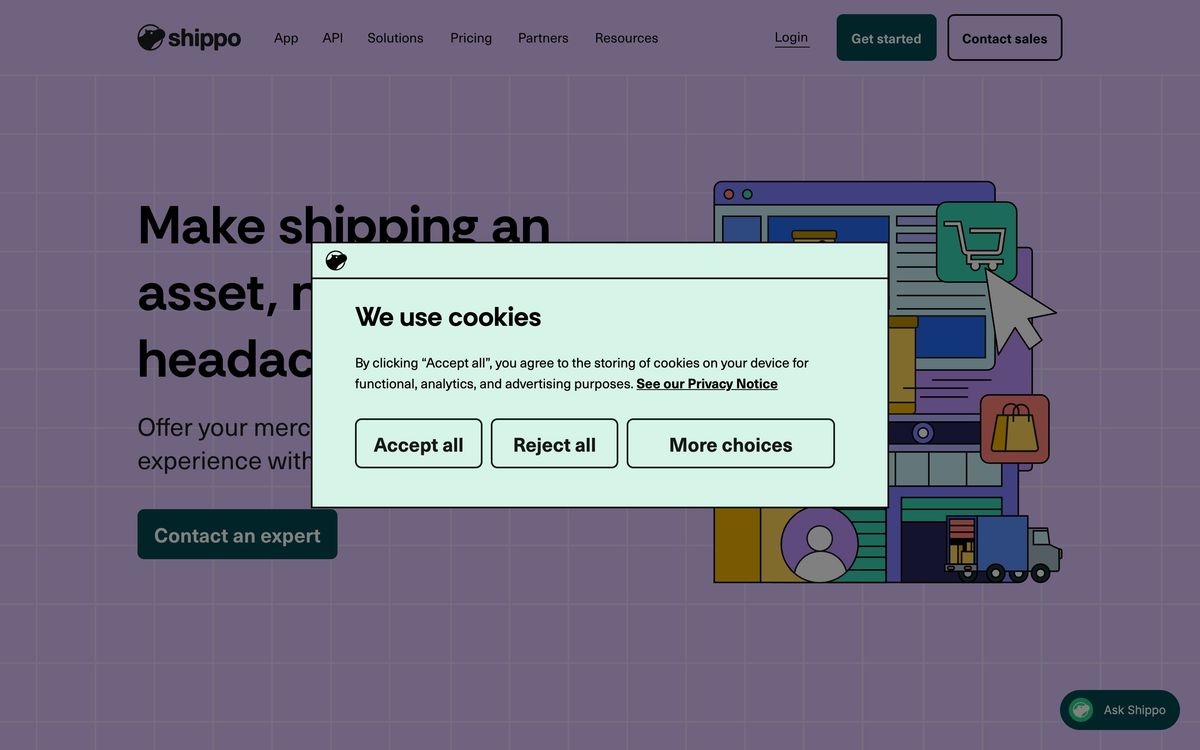
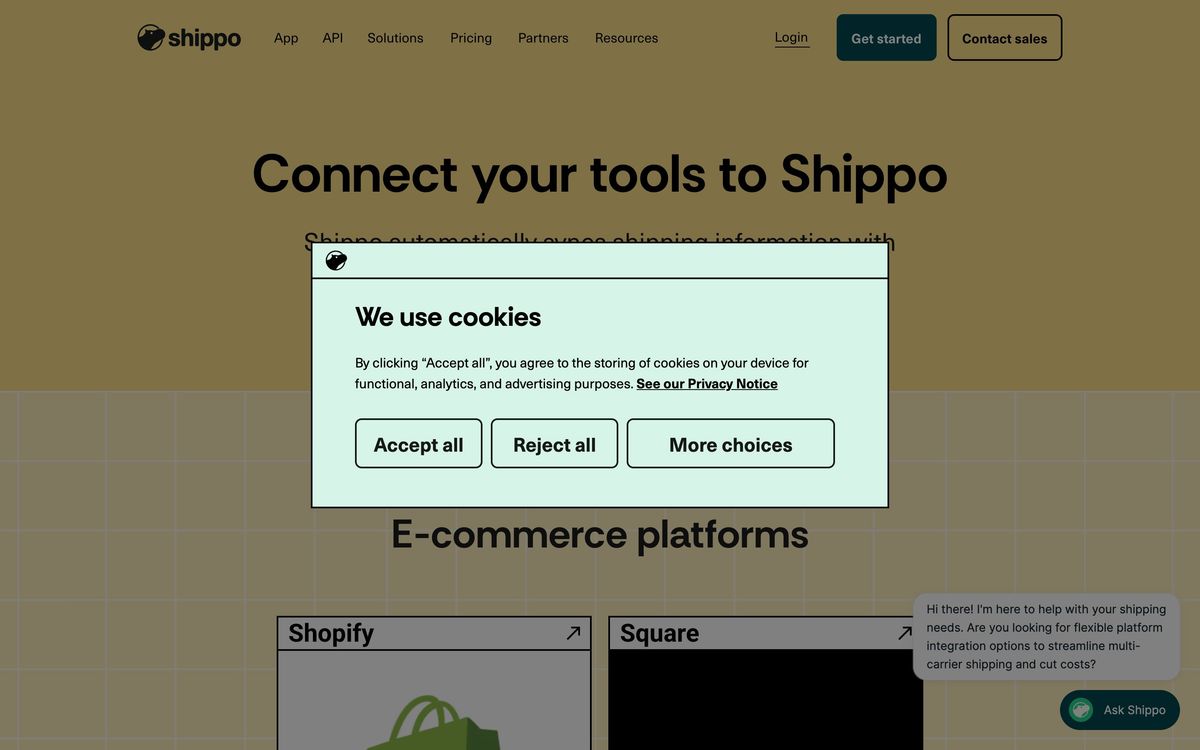
Shippo sits between an online store and the carriers that move its parcels. Connect Shopify, WooCommerce, Etsy, Amazon, Walmart or any of the other supported platforms, and paid orders flow into a single queue. For each one, Shippo returns rates from more than forty carriers side by side, at negotiated prices the seller never had to negotiate, and buys the label with one click. Labels print to a thermal printer or a sheet, tracking numbers write back to the originating store, and the customer gets a notification. Returns work the same way in reverse, with a self-service portal that issues the label.
The second half of the product is the API, and it is the reason Shippo turns up inside other companies' software. The same rating, label purchase, address validation and tracking endpoints that power the dashboard are exposed directly, so a marketplace or a warehouse system can embed multi-carrier shipping without signing carrier contracts of its own. That dual identity, a self-serve app for small sellers and shipping infrastructure for platforms, explains the shape of the plans: a free tier with a low monthly label allowance and per-label overage, a flat paid tier that covers most growing stores, and negotiated terms above that.
Key features
The following is what a typical shipping desk uses each day.
- Side-by-side rate comparison and label purchase across more than forty carriers
- Unlimited store and marketplace connections feeding one order queue
- Batch label creation with saved package presets and automation rules
- Return label generation and a self-service returns flow for customers
- Branded tracking pages and shipment notification emails on the paid tier
- A shipping API covering rates, labels, address validation and tracking
Who it's for
Shippo fits a store that has outgrown printing labels inside each sales channel and now wants one place to work from, particularly one selling across a store plus two or three marketplaces. It also suits sellers who ship a mix of domestic parcels, heavy items and international orders, because the rate comparison across carriers is where the savings actually appear. Developers building shipping into their own product are the other natural buyer, and the API documentation is good enough to prototype against in an afternoon.
It is the wrong tool for a seller who ships almost everything by one domestic carrier and wants nothing more than a cheap label. Those sellers do better with a free single-carrier tool and no monthly commitment. High-volume operations with a warehouse team, pick and pack workflows, and multi-location inventory will also outgrow Shippo's automation and want a full order management system instead.
How it compares
Pirate Ship is free, has no monthly fee, and is the better answer for a USPS-focused seller who wants simplicity, but it covers few carriers and offers no real automation. ShipStation goes further on rules, warehouse workflows and multi-location inventory, and is the stronger choice at high volume, though its plans have grown expensive and its API access is now gated to upper tiers. EasyPost overlaps on the developer side and is more infrastructure than application, with a weaker dashboard for non-technical staff. Shippo's position is the middle: more carriers and automation than the free tools, less operational depth and less cost than the warehouse platforms.
Verdict
Shippo does the boring part of ecommerce well. Rates are competitive without any carrier negotiation, the order queue genuinely collapses several channels into one workflow, and the API means the same account can serve both a shipping clerk and an engineering team. The paid tier is inexpensive for what it removes. The caveats are worth pricing in: the label meter means costs rise with growth, non-US address validation is billed separately, and support is the weakest part of the service, with slow resolution of carrier and billing disputes appearing repeatedly in reviews. For a multi-carrier, multi-channel seller it remains the sensible default.
Ready to try Shippo?
There's a free tier, so you can test it before committing.
More ecommerce tools like Shippo
PitneyShip
3.9Multi-carrier shipping and mailing software that prints labels, stamps and Certified Mail on one consolidated bill.
Read PitneyShip review →ShipBob
3.9Outsourced ecommerce fulfilment across a global warehouse network, run from one inventory dashboard.
Read ShipBob review →Quartile
4.4Cross-channel retail media platform managing Amazon, Walmart, Instacart, Google and Meta ads with ML bidding.
Read Quartile review →soona
4.4Creative-for-commerce platform: studio photo and video, UGC creators, AI editing tools and listing insights.
Read soona review →DataHawk
4.3Enterprise-grade Amazon and Walmart analytics: SKU-level dashboards, anomaly alerts and AI diagnostics.
Read DataHawk review →Gorgias
4.3Ecommerce help desk where order data and refunds live inside the conversation, with an AI agent priced per resolution.
Read Gorgias review →