
PitneyShip review
Multi-carrier shipping and mailing software that prints labels, stamps and Certified Mail on one consolidated bill.
A sound choice for US sellers who ship parcels and send compliance mail from the same desk, though Pitney Bowes charges for capabilities that flat-rate rivals include.
Pros
- Rate shopping compares USPS, UPS, FedEx and DHL side by side before a label is bought
- USPS rates are discounted through Pitney Bowes, and UPS or FedEx can run on a merchant's own negotiated accounts
- Certified Mail with electronic return receipt is handled in the same tool as parcels, which few shipping apps do
- Orders sync from Amazon, eBay, Shopify and Etsy, so labels are generated against the order rather than retyped
- Carrier spend arrives on one consolidated Pitney Bowes bill instead of separate carrier invoices
Cons
- Pitney Bowes prices functions separately, so scales, meters and higher Certified Mail volumes are add-ons rather than plan features
- The pay-as-you-go plan charges a percentage on every label, which quietly erodes the carrier discount for anyone shipping regularly
- Automation is thin below Enterprise: API access, single sign-on and multi-location controls only appear on the quoted tier
PitneyShip pricing
List prices in USD per month, taken from the vendor at review time. Custom means quote-only.
| Plan | Per month | What it covers |
|---|---|---|
| Pay-as-you-go | Custom | no subscription, 5% usage fee per label, 1 user and 1 location |
| Premium | $34.99 | up to 10 users, 30-day trial, 50 Certified Mailings a month with electronic return receipt |
What PitneyShip actually does
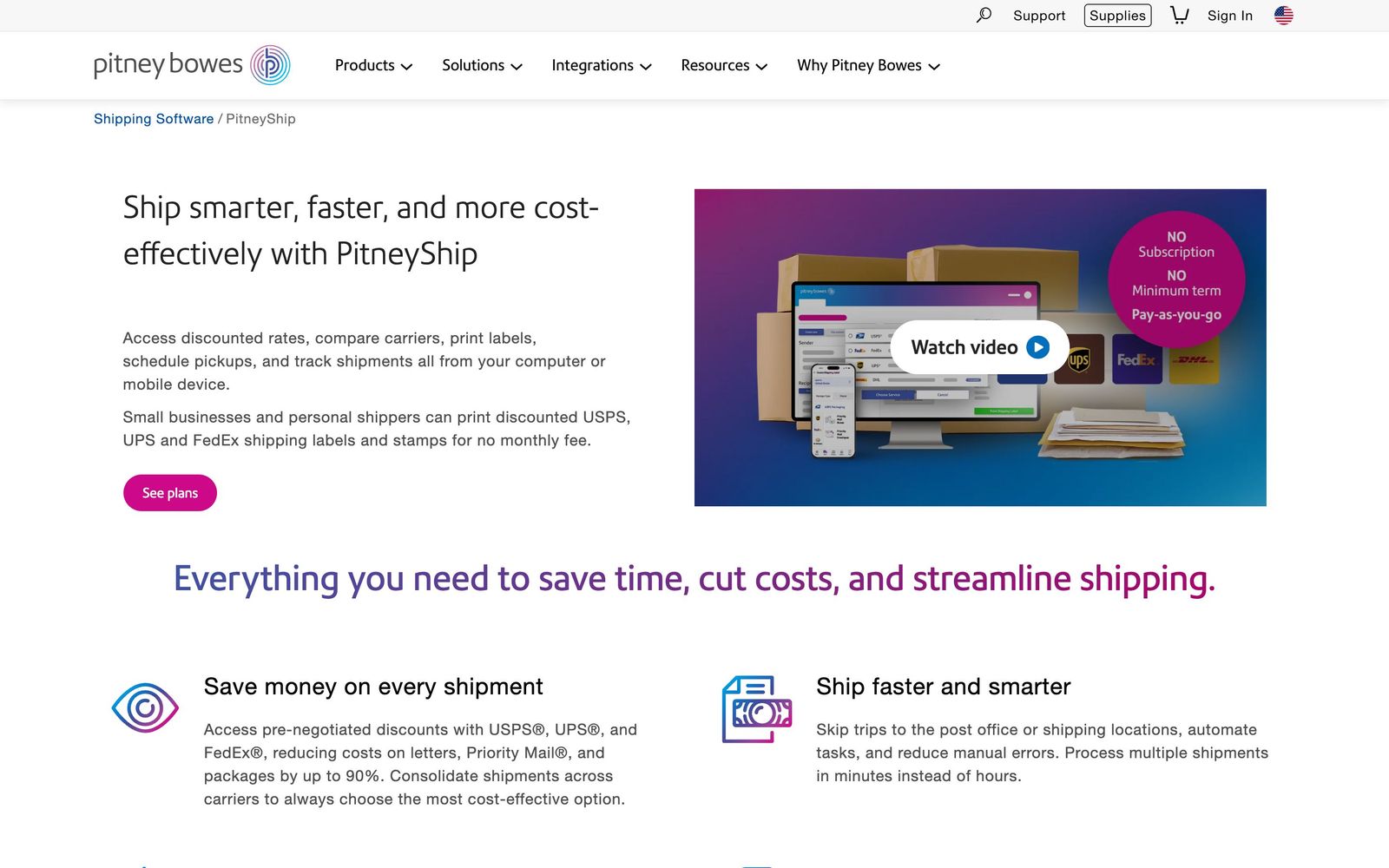
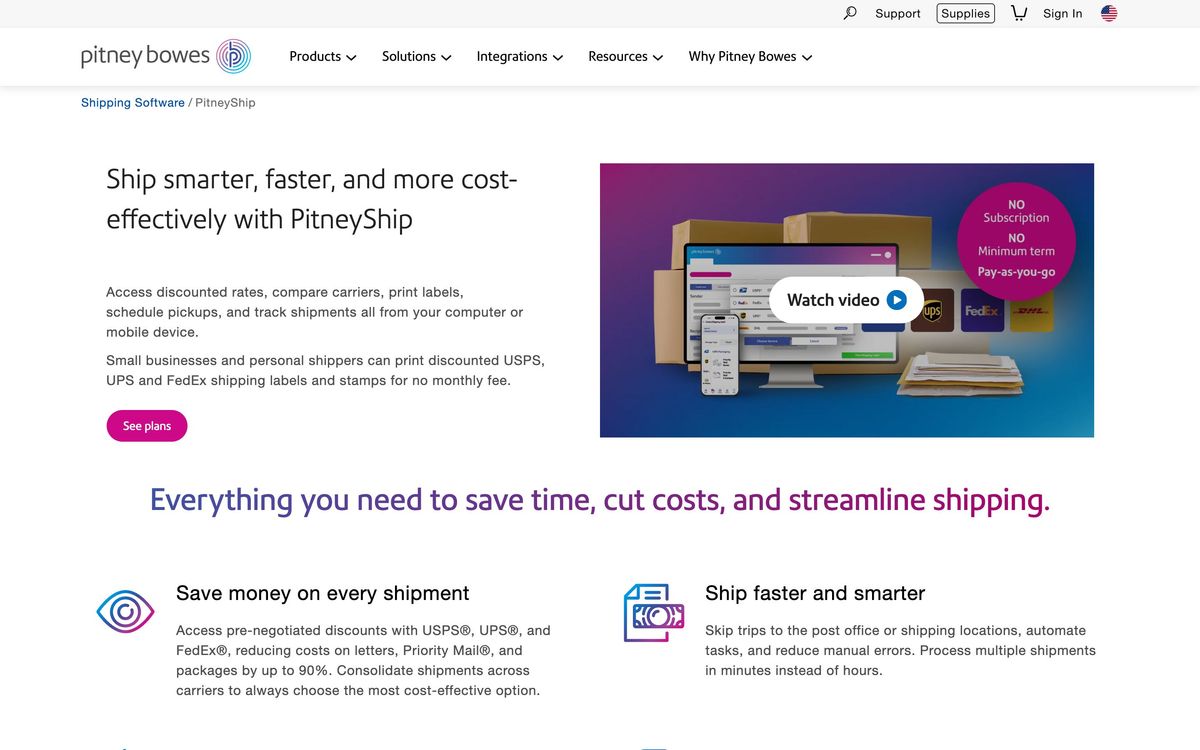
PitneyShip is Pitney Bowes' cloud shipping application: a browser and mobile front end for comparing carrier rates, buying postage, printing labels and tracking what has gone out. The rate engine covers USPS, UPS, FedEx and DHL. USPS rates are discounted through Pitney Bowes and passed to accounts on the platform, while UPS and FedEx can run either on Pitney's negotiated rates or on carrier accounts the merchant brings. All of that spend lands on a single consolidated bill rather than on four separate carrier invoices, which is the strongest operational argument for the product.
The second job is mail rather than parcels, and it is the part that separates PitneyShip from the ecommerce shipping crowd. Pitney Bowes spent a century in metering, and the application carries that forward with stamp printing, Certified Mail with electronic return receipt, and cost accounts that attribute postage to a department, a client or a matter. For a bookkeeping practice, a clinic or a property manager that ships a handful of parcels and a steady stream of legally significant letters, the two jobs sit in one interface. Marketplace orders can be pulled in from Amazon, eBay, Shopify and Etsy so a label is created against the order record, and higher tiers add batch label runs, saved presets, ship requests and carrier pickup scheduling.
Key features
The feature set splits between parcel shipping and traditional mailing:
- Rate comparison across USPS, UPS, FedEx and DHL before purchase
- Label printing with batch processing and reusable shipment presets
- Discounted USPS stamp printing from the desktop
- Certified Mail with electronic return receipt and retained proof of mailing
- Cost accounts that allocate postage spend by department, client or job
- Tracking, carrier pickup scheduling and a mobile app for shipping off-site
Who it's for
The natural buyer is a small US business that ships steadily but not enormously, and that also sends mail which has to be provable: contracts, notices, tax correspondence, patient records. Offices with several people sharing one shipping account get the most from the mid tier, which raises the user count and includes a monthly allowance of Certified Mailings. The cost account feature makes it usable for firms that rebill postage to clients.
It is not the right tool for a high-volume ecommerce operation. Merchants shipping thousands of parcels a month want deep automation rules, warehouse picking support and a long integration list, and PitneyShip keeps its automation, API access and multi-location controls behind a quoted Enterprise tier. Sellers outside the United States are also poorly served, and anyone allergic to itemised billing should be warned that the Pitney Bowes model prices hardware, meters and higher mailing volumes as separate lines.
How it compares
ShipStation is the default rival for ecommerce sellers and wins on automation rules, integrations and multi-warehouse handling, but it has nothing to say about stamps or Certified Mail. Shippo is simpler and cheaper for a store that only needs labels, with clean pay-per-label economics and a good Shopify install, though it does not attempt cost accounting or mailing. Stamps.com sits closest on the mailing side and remains strongly USPS-shaped, whereas PitneyShip's rate shopping spans four carriers. Against all three, PitneyShip's argument is the combination of parcels and accountable mail on one bill; against all three, it loses on flat-rate simplicity.
Verdict
PitneyShip is a competent, unflashy shipping platform that earns its place in offices where parcels and Certified Mail come from the same worklist, and the consolidated carrier billing is a real bookkeeping saving. The rating reflects solid rate shopping and reliable label output, held back by an à la carte pricing culture and by automation that becomes available only on a quoted plan. Sellers who live entirely inside Shopify or Amazon will find lighter tools; offices with a mail obligation as well as a shipping one will find little else that covers both.
Ready to try PitneyShip?
There's a free tier, so you can test it before committing.
More ecommerce tools like PitneyShip
Increff
3.9Warehouse, order and merchandise planning software for fashion and D2C brands selling across marketplaces.
Read Increff review →ShipBob
3.9Outsourced ecommerce fulfilment across a global warehouse network, run from one inventory dashboard.
Read ShipBob review →Quartile
4.4Cross-channel retail media platform managing Amazon, Walmart, Instacart, Google and Meta ads with ML bidding.
Read Quartile review →soona
4.4Creative-for-commerce platform: studio photo and video, UGC creators, AI editing tools and listing insights.
Read soona review →DataHawk
4.3Enterprise-grade Amazon and Walmart analytics: SKU-level dashboards, anomaly alerts and AI diagnostics.
Read DataHawk review →Gorgias
4.3Ecommerce help desk where order data and refunds live inside the conversation, with an AI agent priced per resolution.
Read Gorgias review →