
Katana Cloud Inventory review
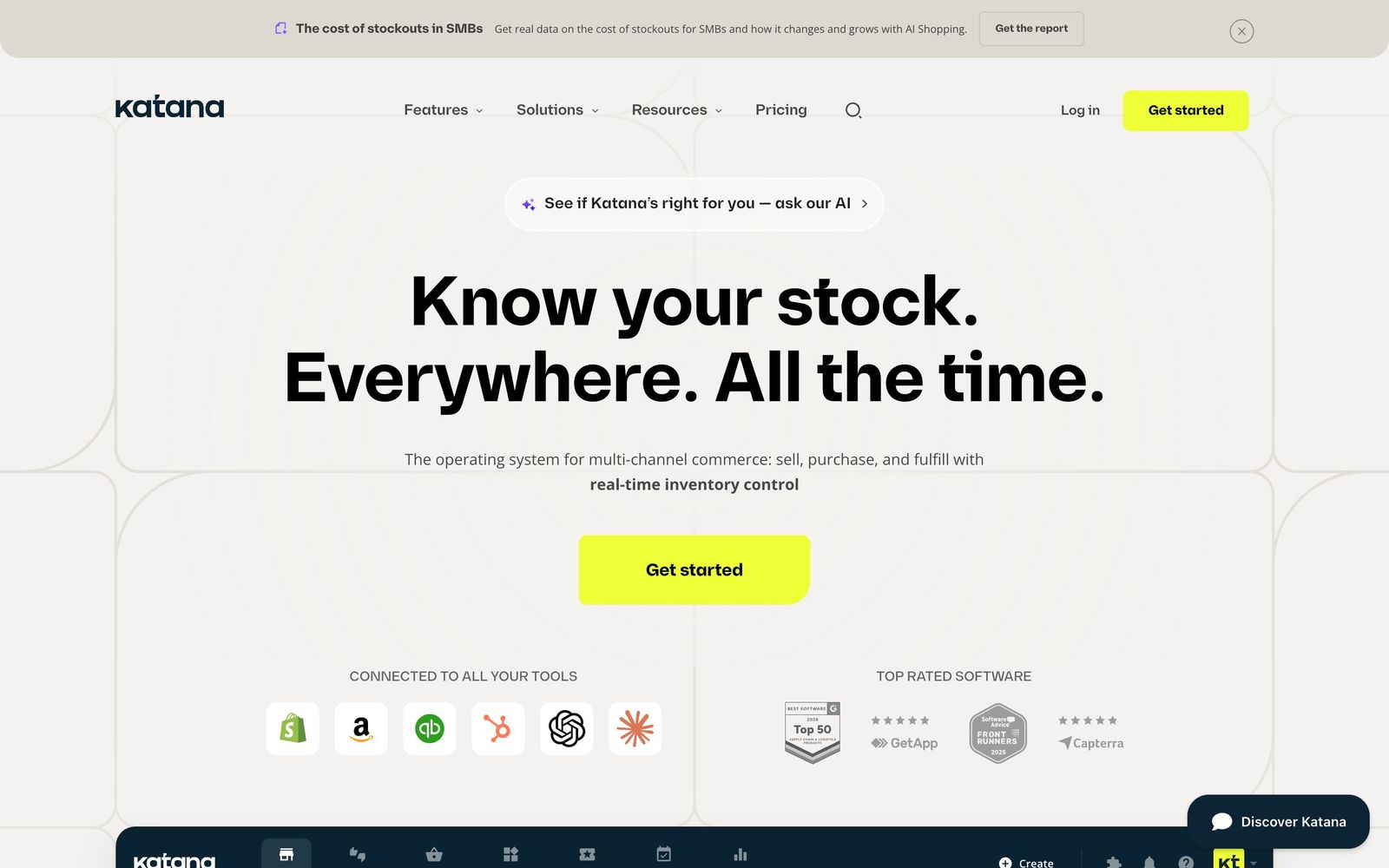
Live inventory and production tracking for small manufacturers selling through Shopify, Amazon and wholesale.
The clearest inventory system for brands that make what they sell, though usage-based pricing punishes shops shipping many low-value orders.
Pros
- One live stock figure across sales channels, warehouse and raw materials, so marketplace overselling stops
- Bills of materials with subassemblies make component shortages visible before a production order starts
- Unlimited users on every plan, so shop floor staff can be on the system without a per-seat decision
- Two-way sync with QuickBooks Online and Xero keeps stock valuation out of manual journals
- Free tier of 30 SKUs is enough to model a real product line before paying
Cons
- Pricing scales with sales orders and merchandise value, so low-ticket sellers land in tiers built for larger businesses
- Traceability, warehouse management and manufacturing management are separately billed add-ons, not core features
- Reviewers report mid-contract pricing changes and renewal renegotiation rather than a stable published rate
Katana Cloud Inventory pricing
List prices in USD per month, taken from the vendor at review time.
| Plan | Per month | What it covers |
|---|---|---|
| Free | Free | 30 SKUs, unlimited users and integrations |
| Core | $299 | starting price, usage-based on sales orders; add-ons billed separately |
What Katana Cloud Inventory actually does
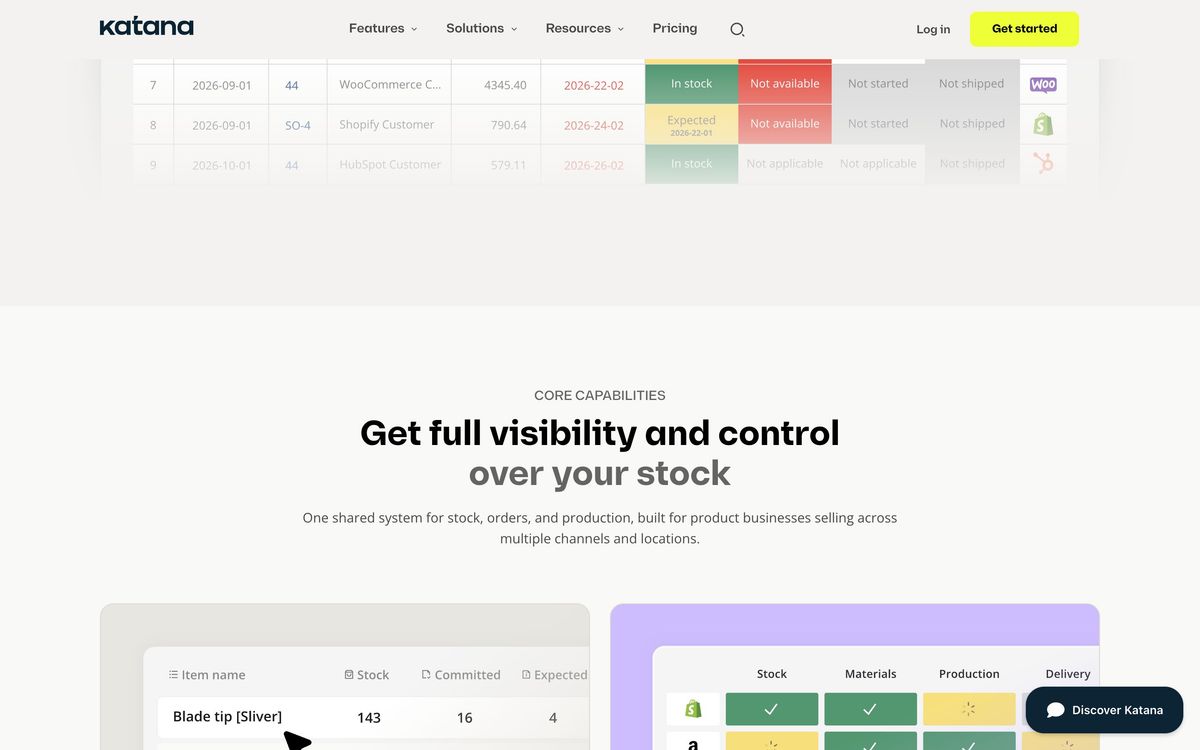
Katana is a cloud inventory system built for the awkward middle of commerce: businesses that make what they sell. It holds one live stock figure across sales channels, warehouse shelves and the raw materials sitting behind a bill of materials, so an order for a finished candle deducts wax, wick and jar at the moment the order lands. Sales orders, manufacturing orders and purchase orders share the same ledger of quantities instead of being reconciled in a spreadsheet at month end.
Delivery is browser-based, with a shop floor app for operators recording completed steps and barcode workflows for picking and counting. Accounting is deliberately left elsewhere: Katana syncs to QuickBooks Online and Xero rather than trying to replace them. Sales channels arrive through Shopify, WooCommerce, BigCommerce, Amazon and eBay connectors, and fulfilment leaves through ShipStation or Shippo. The product sits between a spreadsheet and a full ERP, and is sold as a system of record for inventory rather than for finance.
Key features
The core plan covers inventory and production; several capabilities below are add-on modules.
- Real-time stock across multiple locations, separating committed from available quantities per channel
- Multi-level bills of materials, so subassemblies and component shortages surface before production starts
- Manufacturing orders with operation tracking and a shop floor app for recording progress
- Purchase orders driven by reorder points and by demand from open sales orders
- Lot and serial number traceability for food, cosmetics and other regulated categories
- Barcode-driven picking, receiving and stock counts in the warehouse module
Who it's for
Katana suits a business that both manufactures and sells: a coffee roaster, a skincare brand, a furniture workshop, a contract assembler building other companies' products. The natural moment to adopt it is when a spreadsheet stops keeping up with component stock and the first marketplace oversell happens. Teams with several channels and one or two production sites benefit most, and unlimited users on every plan means the workshop can be on the system without a seat-by-seat argument.
It is a weak fit for pure resellers with no production step, who pay for a manufacturing engine they never open. It is a worse fit for high-volume, low-ticket sellers: because pricing scales with order counts and merchandise value, a shop shipping thousands of small parcels can be pushed into a tier priced for a much larger business. Anyone who needs traceability, warehouse management or manufacturing control should price those add-ons in from the first day rather than discovering them later.
How it compares
MRPeasy covers similar ground at a lower entry price with deeper production scheduling, but the interface is dated and the ecommerce connectors are thinner. Cin7 Core reaches further into wholesale, B2B ordering and third-party logistics, at a heavier implementation cost and a steeper learning curve. Zoho Inventory is cheaper and fits neatly beside the rest of Zoho, but treats manufacturing as light assembly rather than a first-class module. Katana wins on the visual production planner and the quality of its Shopify, QuickBooks and Xero syncs; it loses to all three on cost once order volume climbs.
Verdict
Katana earns its rating on one thing spreadsheets and channel apps consistently fail at: a single live inventory picture that spans making and selling. Setup is honest work, since bills of materials must be correct before any number means anything, and the first month is mostly data hygiene. The caveat is commercial rather than technical. The usage-based model has been revised more than once, add-ons for traceability, warehousing and manufacturing stack up quickly, and reviewers describe tier jumps driven by order counts rather than by any change in how they use the product. Manufacturers with moderate volumes and healthy margins will find the money well spent; low-ticket, high-order sellers should model a full year of cost before committing.
Ready to try Katana Cloud Inventory?
There's a free tier, so you can test it before committing.
More ecommerce tools like Katana Cloud Inventory
Unleashed Software
4.1Cloud inventory, purchasing and light manufacturing for wholesalers and product businesses on Xero.
Read Unleashed Software review →Zedonk
4.0Modular PLM and ERP for fashion brands: tech packs, costing, production, stock and a B2B showroom.
Read Zedonk review →Digit
3.7Cloud ERP for small manufacturers and distributors that keeps QuickBooks or Xero as the ledger.
Read Digit review →Increff
3.9Warehouse, order and merchandise planning software for fashion and D2C brands selling across marketplaces.
Read Increff review →ShipBob
3.9Outsourced ecommerce fulfilment across a global warehouse network, run from one inventory dashboard.
Read ShipBob review →Spocket
3.8Dropshipping catalog weighted toward US and EU suppliers, with one-click import and branded invoicing.
Read Spocket review →