
Truckstop review
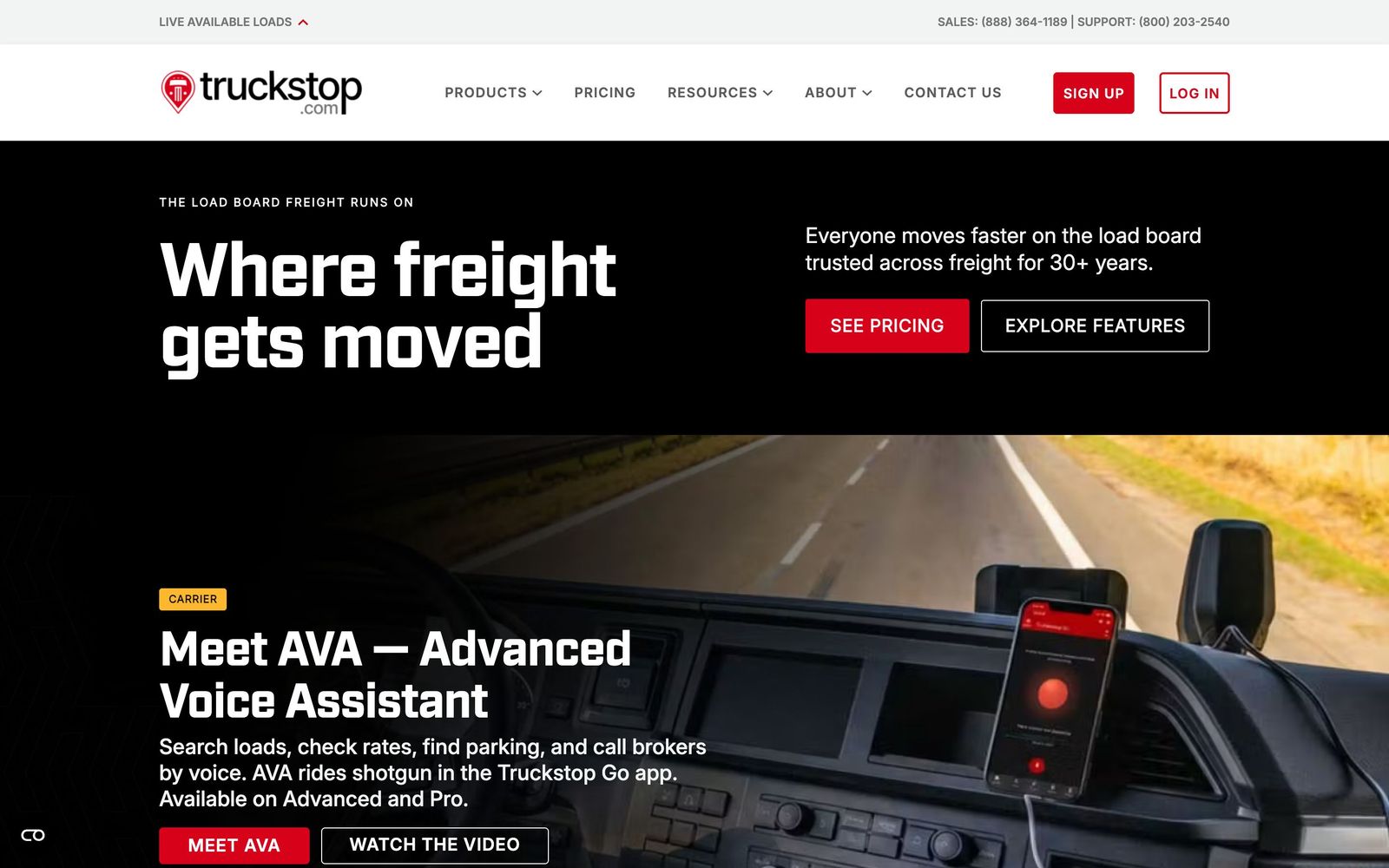
Load board for carriers, brokers and shippers, with broker credit data, rate insights and a bundled TMS.
The cheapest credible way into a professional load board, and the broker payment data is genuinely useful, though the features most operators want sit two tiers up.
Pros
- Entry pricing undercuts the main competitor while still providing unlimited load search, truck posting and backhaul search
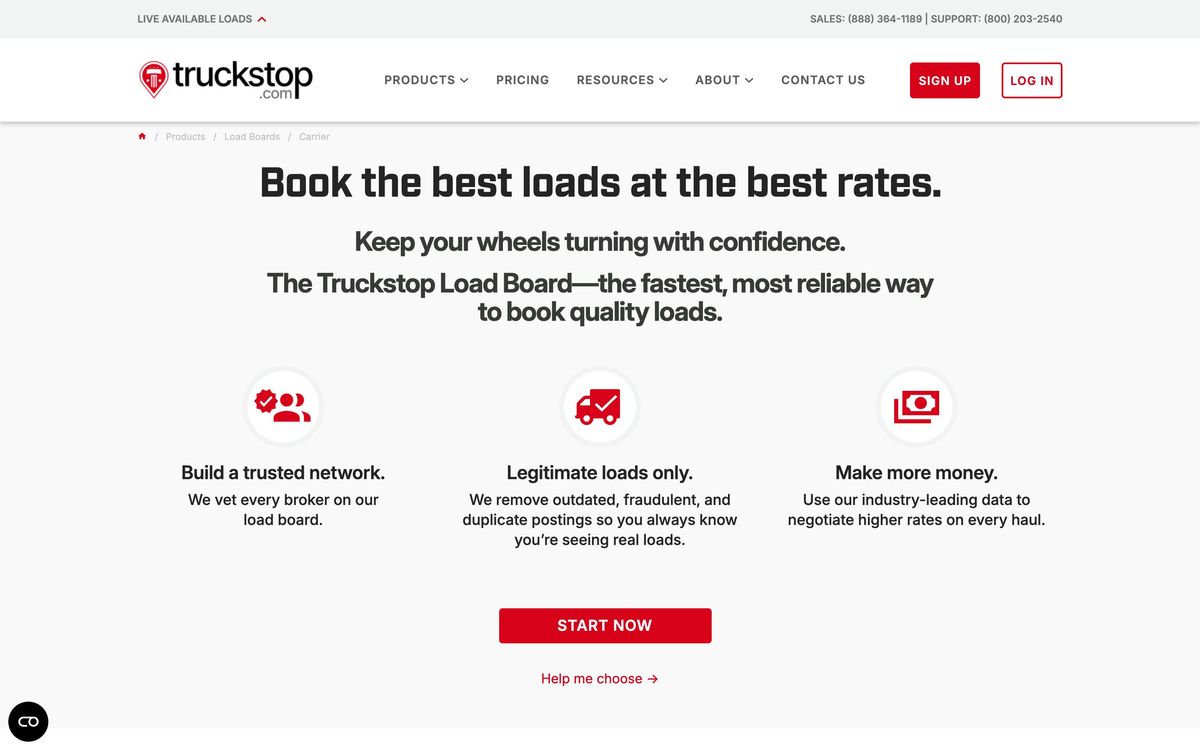
- Broker ratings include days-to-pay and credit history, which is the single most useful number a carrier can see before accepting a load
- Book It Now removes the phone-and-email round trip, letting a carrier take a load in a few clicks
- A TMS is bundled with load board subscriptions, so a small carrier gets dispatch and invoicing without a second vendor
- Broker and shipper plans add carrier onboarding, compliance monitoring and predictive sourcing rather than just posting
Cons
- The features that change day-to-day earnings, rate insights and live load refresh, are gated to the upper carrier tiers at roughly four times the entry price
- Broker vetting and fraud screening are widely rated behind the market leader, which matters in a spot market with active double-brokering
- New carrier accounts pay a non-refundable application fee before any load is booked, credited to the first month only if approved
- Users report refresh glitches and intermittent technical issues on the board, which is costly when loads move in seconds
Truckstop pricing
List prices in USD per month, taken from the vendor at review time.
| Plan | Per month | What it covers |
|---|---|---|
| Carrier Basic | $42 | unlimited load search, truck posting, bundled TMS; non-refundable application fee applies |
| Carrier Advanced | $135 | adds broker ratings, faster booking and fuel tools |
| Carrier Pro | $159 | adds rate insights, live loads and lane planning |
| Broker Basic | $109 | per user; broker plans rise to premium tiers with fuller sourcing tools |
What Truckstop actually does
Truckstop runs one of the two load boards that matter in North American spot freight. Brokers and shippers post available loads, carriers post available trucks, and the software matches the two by lane, equipment type, date and radius. For an owner-operator, the subscription is the difference between waiting for a phone call and choosing among hundreds of options for the return leg. The board is delivered as a web application with mobile access, and load alerts push matches as they appear.
The subscription buys more than a list. Truckstop layers commercial intelligence on top: broker credit history and days-to-pay ratings, so a carrier can see who actually pays before hauling for them; rate data comparing what a lane is paying today at load, broker and lane level; and decision tools showing truck-to-load density and where negotiating strength sits. Book It Now allows instant acceptance without a phone call. On the broker and shipper side, the platform adds carrier onboarding and compliance monitoring, load boosting for visibility and predictive sourcing for coverage. A transportation management system for dispatch and invoicing comes bundled with load board plans, and fuel routing with IFTA calculation is included on the higher carrier tiers.
Key features
The value concentrates in a handful of tools.
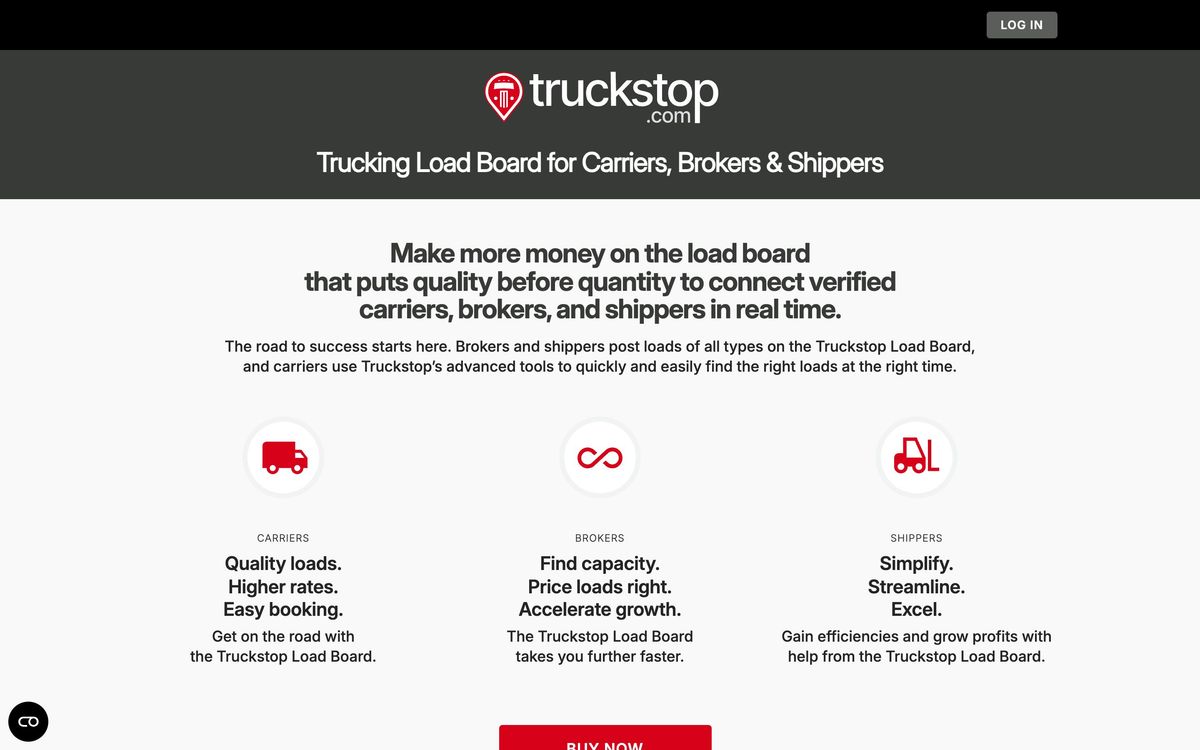
- Unlimited load search and truck posting, with alerts and backhaul matching
- Book It Now instant booking, skipping the call-and-confirm cycle
- Rate Insights, comparing same-day rates by load, broker and lane
- Broker ratings with credit history and days-to-pay
- Carrier onboarding, compliance monitoring and predictive sourcing for brokers
- Bundled TMS for dispatch and invoicing, plus fuel routing and IFTA reporting
Who it's for
Truckstop suits an owner-operator or small fleet running spot freight who wants a professional board without the market leader's price, and who values payment data as much as load volume. It also serves small brokerages well, since posting, carrier vetting and a TMS come from one vendor rather than three. Carriers running dry van specifically get a cheaper dedicated plan than the general tiers, and heavy haul operators have their own plan with permit and escort quoting built in.
It is a weaker choice for anyone whose margin depends on being first to a load in a thin market, because entry-tier refresh and rate data are limited and the upgrade is steep. Fleets already committed to a full TMS will find the bundled one redundant. And carriers hauling for a small set of contracted shippers do not need a board at all.
How it compares
DAT is the incumbent with the larger load volume, better fraud screening and stronger broker vetting, and it charges accordingly; many operators who can afford both run both. 123Loadboard is cheaper than either and thinner in every respect, reasonable as a supplement. Digital brokerages such as Uber Freight offer app-based booking with transparent rates but only their own freight. Truckstop's argument is that it opens the same market at a lower entry point and brings better payment intelligence than the budget options, which holds until the operator needs live refresh and rate data.
Verdict
Truckstop is a fair first subscription for a carrier going independent, and the broker credit ratings alone prevent the kind of non-payment that ends small operations. The rating reflects a pricing structure that keeps the genuinely differentiating features away from the entry tier, weaker fraud and vetting than the market leader, and a board that occasionally misbehaves when speed matters. Start at the entry plan, measure how many loads are lost to slow refresh, and only then decide whether the upgrade or a second board is the better spend.
Ready to try Truckstop?
More service-businesses tools like Truckstop
Weave
4.5All-in-one phone, texting, scheduling and payments platform for dental, vet and optometry practices.
Read Weave review →Jane
4.4Practice management and EMR for allied health clinics: booking, charting, billing and payments in one record.
Read Jane review →Synthflow AI
4.4No-code voice AI agents for inbound and outbound calls: booking, lead qualification and support, 24/7.
Read Synthflow AI review →Bókun
4.3Booking system and OTA channel manager for tour, activity and rental operators, owned by Tripadvisor.
Read Bókun review →Boulevard
4.3Booking, point of sale and client records for salons, spas and medspas that run on appointments.
Read Boulevard review →Buddy Punch
4.3Online time clock for hourly staff, with GPS, geofencing and photo verification on every punch.
Read Buddy Punch review →