
Motive review
Fleet platform combining ELD compliance, GPS tracking, AI dashcams and fuel card spend in one account.
The strongest option for regulated fleets that want compliance, tracking and camera footage under one contract, though pricing is quote-only and renewal terms draw complaints.
Pros
- ELD compliance is FMCSA-registered and consistently the part users rate highest, which matters more than any other feature for regulated carriers
- The AI dashcam and its event validation review cut down on the false-positive alerts that make driver coaching programmes collapse
- One vendor covers hours of service, GPS tracking, vehicle diagnostics, maintenance and a fuel card, so back-office reconciliation happens in one place
- Contract terms are more flexible than the category norm, with a twelve-month minimum rather than the multi-year prepayment competitors ask for
- Prebuilt connectors into trucking systems such as McLeod LoadMaster and Trimble, plus an API, keep transactions and hours flowing into the TMS
Cons
- No published pricing at all: every quote runs through sales, which makes budget comparison against rivals slow
- Renewal price increases and difficulty cancelling are recurring themes in customer complaints, so the contract deserves reading
- The feature catalogue and interface are narrower than Samsara's once a fleet grows past a few hundred vehicles and wants deeper integrations
- Hardware installation and camera placement add a setup burden that pure software tools do not carry
What Motive actually does
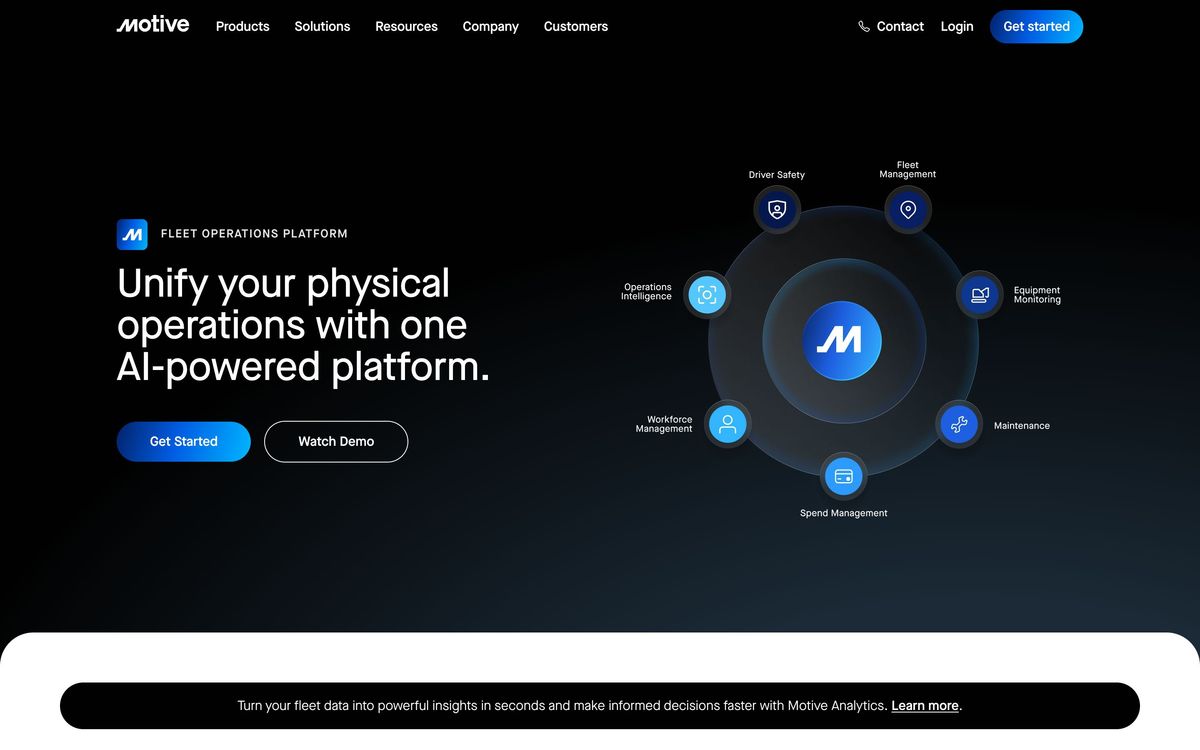
Motive sells fleet operations as a bundle. Hardware goes into the vehicle, a gateway for engine data and hours of service plus one or more cameras, and everything reports into a single dashboard: where each vehicle is, how it is being driven, whether the logs are compliant, what maintenance is due and what the driver spent at the pump. For a carrier subject to FMCSA rules, the electronic logging device is the mandatory part and the rest is what the vendor sells alongside it.
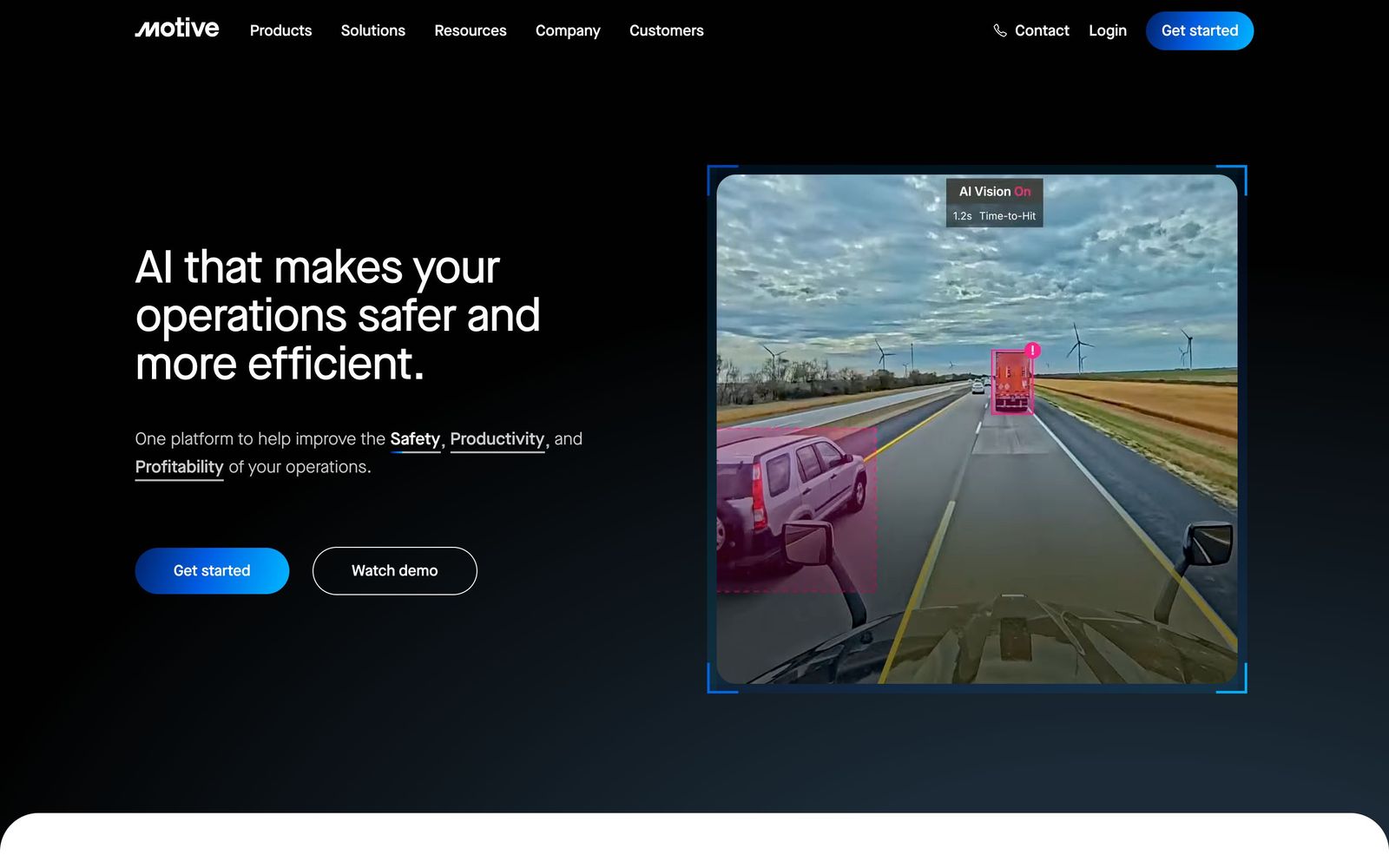
The safety product is the piece Motive markets hardest. Cameras detect events such as harsh braking, following distance and phone use, and those events pass through a validation step before a manager sees them, which is the difference between a coaching programme that runs and one that gets ignored after a month of false alerts. Around that sit fleet management, equipment and asset tracking, maintenance scheduling, a workforce module covering driver qualification and time, and the Motive Card for fuel and repair spend. Customers span trucking, construction, delivery, waste, utilities, field service and agriculture.
Key features
The bundle is broad, but these are the parts fleets actually run on.
- FMCSA-registered electronic logging with hours-of-service records and IFTA fuel tax reporting
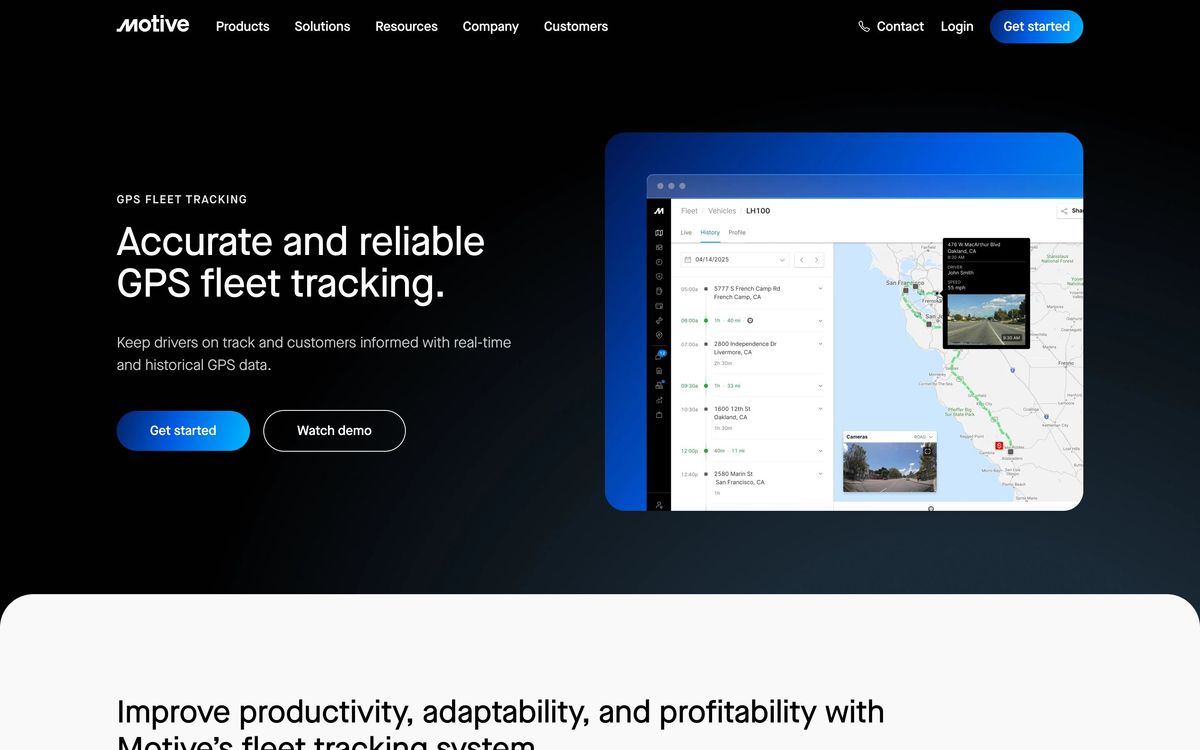
- GPS tracking with vehicle diagnostics and fault code monitoring
- AI dashcams, including 360-degree coverage, with event validation before alerting
- Driver safety scoring and structured coaching built on recorded incidents
- Motive Card for fuel and maintenance spend, reconciled against vehicles and drivers
- Trailer and equipment tracking, plus maintenance and repair scheduling
Who it's for
Motive fits a fleet of roughly ten to a few hundred vehicles where compliance is non-negotiable and someone in the office is responsible for both safety scores and fuel costs. Mixed fleets benefit most, because the same account handles a truck subject to hours-of-service rules and a service van that is not. Implementation is measured in weeks rather than months, and the twelve-month minimum makes it a realistic first telematics purchase for an operator who has been running paper logs or a cheap plug-in tracker.
It is a weaker fit at the top end. Large fleets with complex integration requirements tend to find the feature set and the administrative controls thinner than the enterprise alternative, and organisations that need published, comparable pricing for a procurement process will find the sales-only model frustrating. Anyone who only wants location tracking and no cameras is paying for a platform they will not use.
How it compares
Samsara is the direct rival and the more complete platform: a larger catalogue, a cleaner administrative experience and more integration depth, aimed at mid-to-large fleets, but sold on longer commitments and with no public pricing either. Verizon Connect has broad coverage and a long install base, and a matching reputation for rigid contracts. Lighter tools such as Azuga or a standalone plug-in tracker cost far less and are reasonable for an unregulated van fleet that needs location and nothing else. Motive's argument is compliance reliability and camera quality at a mid-market commitment level, and for small regulated fleets that argument holds.
Verdict
For a carrier that has to run compliant logs and wants footage when an incident goes to a claim, Motive is a sound choice, and the shorter contract term is a genuine advantage over the obvious alternative. The rating is held back by the two things buyers complain about most: no published pricing, so the only way to compare is through a sales process, and renewal increases that arrive with less notice than customers expect. Negotiate the renewal terms at signature rather than discovering them a year later.
Ready to try Motive?
More service-businesses tools like Motive
Tradify
4.6Job management app for tradespeople covering quoting, scheduling, invoicing and payments in one place.
Read Tradify review →Weave
4.5All-in-one phone, texting, scheduling and payments platform for dental, vet and optometry practices.
Read Weave review →Jane
4.4Practice management and EMR for allied health clinics: booking, charting, billing and payments in one record.
Read Jane review →Synthflow AI
4.4No-code voice AI agents for inbound and outbound calls: booking, lead qualification and support, 24/7.
Read Synthflow AI review →Bókun
4.3Booking system and OTA channel manager for tour, activity and rental operators, owned by Tripadvisor.
Read Bókun review →Boulevard
4.3Booking, point of sale and client records for salons, spas and medspas that run on appointments.
Read Boulevard review →