
Shiftie review
Rota planning, availability and time clock in one system for UK shift teams.
A clean, quick rota tool for shift businesses that also want a time clock and basic HR records, though its integration list is short and its pricing floor punishes small teams.
Pros
- Rotas build from templates and open shifts, with conflicts and labour cost visible while scheduling
- Availability and booked leave feed the schedule automatically, so double-booking a holiday takes effort
- Clock-in by mobile or fixed portal produces timesheets that export for payroll without retyping
- Ticketing and till integrations pull expected visitor numbers or sales into the planning view
- Support runs 08:00 to 20:00 UK time, seven days a week, which matches when shift managers actually plan
Cons
- Billing starts at a flat fee covering the first thirty employees, so a team of eight pays as though it had thirty
- No direct payroll integrations: timesheets leave as an export rather than syncing to a payroll provider
- Built around UK practice, from the Bradford Factor absence score to sterling pricing and UK support hours, which limits it elsewhere
Shiftie pricing
List prices in USD per month, taken from the vendor at review time. Custom means quote-only.
| Plan | Per month | What it covers |
|---|---|---|
| Monthly | $2.75 | GBP per employee per month; the first 30 employees are billed at £82.50 a month |
| Enterprise | Custom | custom pricing above roughly 200 employees |
What Shiftie actually does
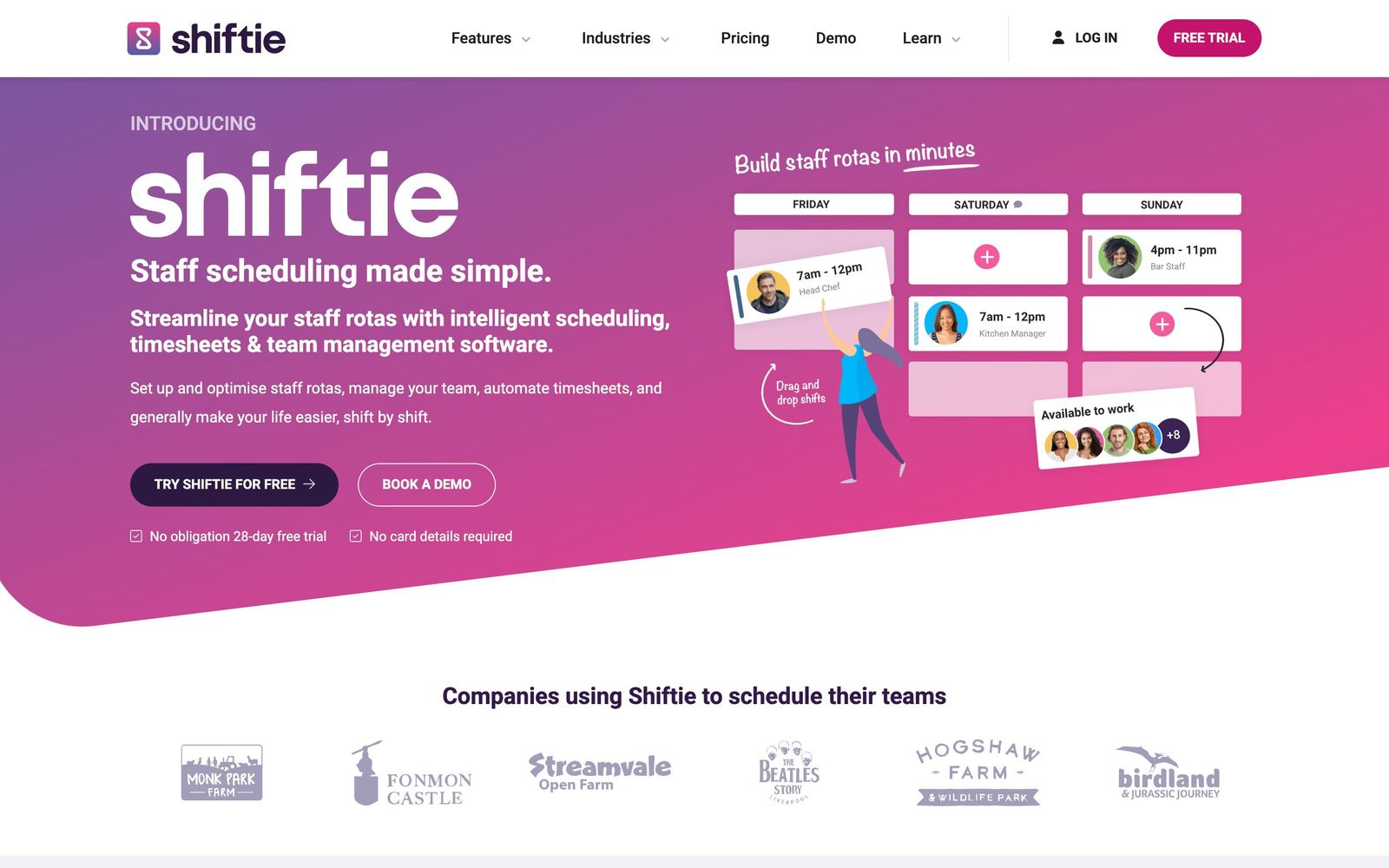
Shiftie is scheduling software for businesses that run on shifts rather than on salaried hours. A manager builds the week from templates or drops open shifts for staff to claim, and the schedule checks itself as it goes: who is unavailable, who has booked leave, who would tip into overtime, and what the week costs in wages before it is published. Staff see their rota on a phone, request swaps, and log availability, which removes most of the message traffic that a spreadsheet rota generates.
Around the rota sit two other layers. Time and attendance covers clock-in from a mobile or a fixed portal, a live view of who is on site, and digital timesheets that export for payroll. The HR layer is deliberately modest: an employee directory, leave and absence tracking with Bradford Factor scoring, document storage, and team messaging. The product is browser-based, sold per employee per month with a twenty-eight day trial that does not ask for card details, and it is unmistakably built for the United Kingdom, where its customers and its support hours sit.
Key features
The scope is one job done properly rather than a workforce suite.
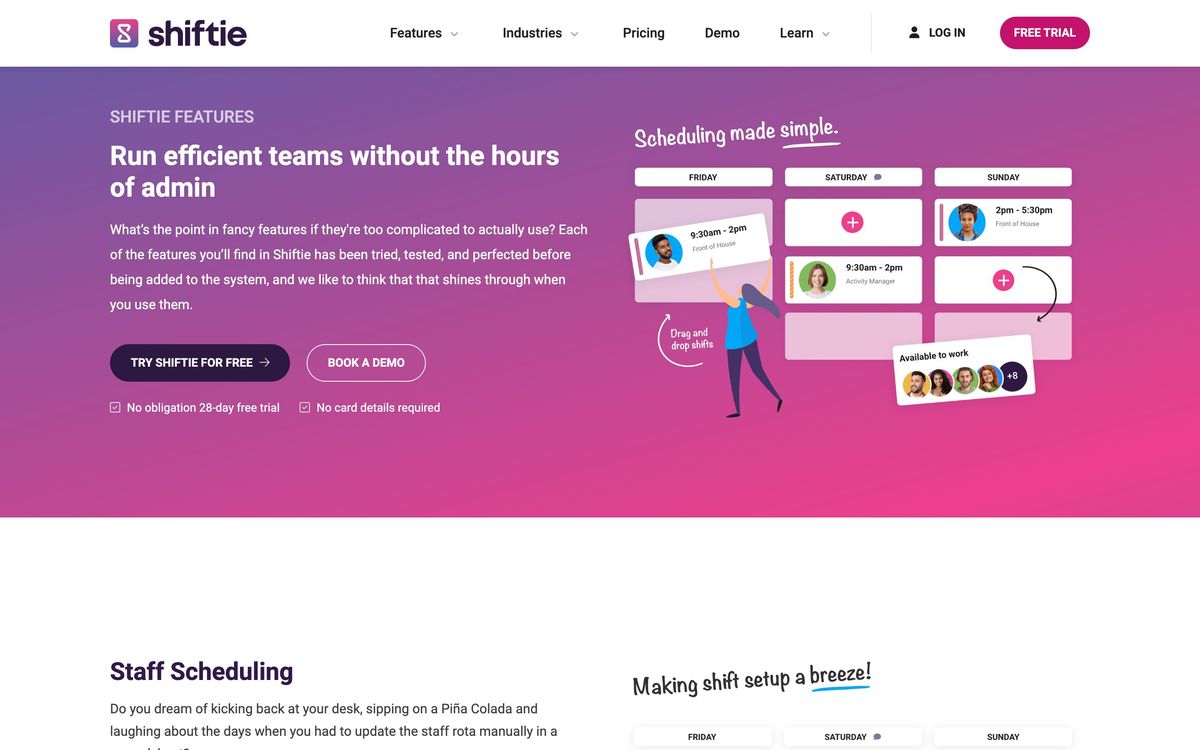
- Drag-and-drop rota builder with templates, open shifts and conflict detection
- Live labour cost totals while the schedule is being written
- Availability, leave and absence tracking that feeds the schedule automatically
- Mobile and portal clock-in producing timesheets ready for payroll export
- Employee records with document storage and team messaging
- Ticketing and till integrations that pull expected footfall or sales into planning
Who it's for
Visitor attractions, restaurants and cafes, bars, retail shops, dental and veterinary practices, hotels and leisure centres are the stated markets, and the integration list backs that up: ticketing platforms, an escape-room system, a hospitality till. The sweet spot is a team of thirty to two hundred people across one or a few sites, where rota building is a weekly chore that currently eats an afternoon and where forecasting staff against expected visitors matters.
Small teams should do the arithmetic first. Because billing covers the first thirty employees as a block, a cafe with eight staff pays a rate that only makes sense at scale. Companies outside the UK will find the absence scoring, terminology and support hours out of step, and any business that wants scheduling and payroll to be one system should look elsewhere, since timesheets leave Shiftie as a file rather than flowing into a payroll provider.
How it compares
Deputy is the broader product, with stronger payroll integrations, demand forecasting and coverage across many countries, at a higher per-user price and with more configuration to get through. Planday sits close on features and is well established in hospitality across Europe, again with deeper payroll links. Rotaready is the sharpest UK hospitality rival, tied tightly to till data and labour forecasting, and aimed at larger multi-site groups. Findmyshift undercuts everyone on price with a plainer interface and far less in the way of HR records. Shiftie's case against these is speed of setup and a clear interface rather than depth.
Verdict
Shiftie does the weekly rota well, and the parts around it, availability, leave, clock-in, timesheets, are joined up enough that a manager stops keeping a parallel spreadsheet. For a UK shift business of moderate size it is an easy tool to adopt and a hard one to complain about. The reservations are structural rather than about quality: the pricing floor makes it uneconomic below about thirty staff, payroll still needs a manual export, and the integration catalogue is short enough that a business on an unlisted till or ticketing system gets no data advantage at all. Run the twenty-eight day trial against a real week before committing.
Ready to try Shiftie?
More service-businesses tools like Shiftie
Atto
3.6Mobile time clock with GPS, automated timesheets and shift scheduling for hourly and field-based crews.
Read Atto review →Tradify
4.6Job management app for tradespeople covering quoting, scheduling, invoicing and payments in one place.
Read Tradify review →Weave
4.5All-in-one phone, texting, scheduling and payments platform for dental, vet and optometry practices.
Read Weave review →Jane
4.4Practice management and EMR for allied health clinics: booking, charting, billing and payments in one record.
Read Jane review →Synthflow AI
4.4No-code voice AI agents for inbound and outbound calls: booking, lead qualification and support, 24/7.
Read Synthflow AI review →Bókun
4.3Booking system and OTA channel manager for tour, activity and rental operators, owned by Tripadvisor.
Read Bókun review →