
respond.io review
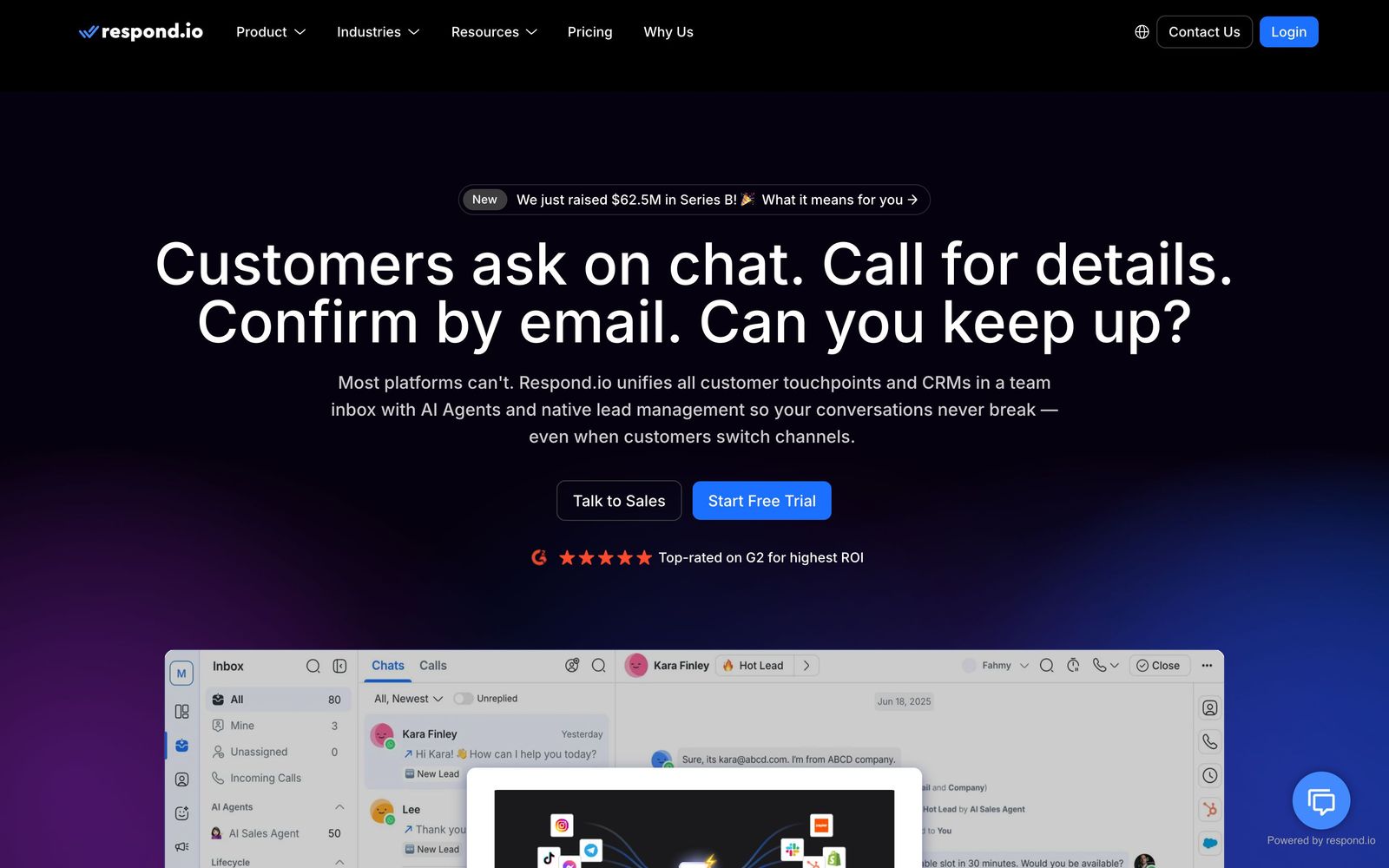
Shared inbox and automation layer for WhatsApp, Instagram, Messenger and TikTok conversations across a whole team.
The most capable shared inbox for businesses that sell and support over WhatsApp, though the contact-based meter makes the real monthly cost hard to predict.
Pros
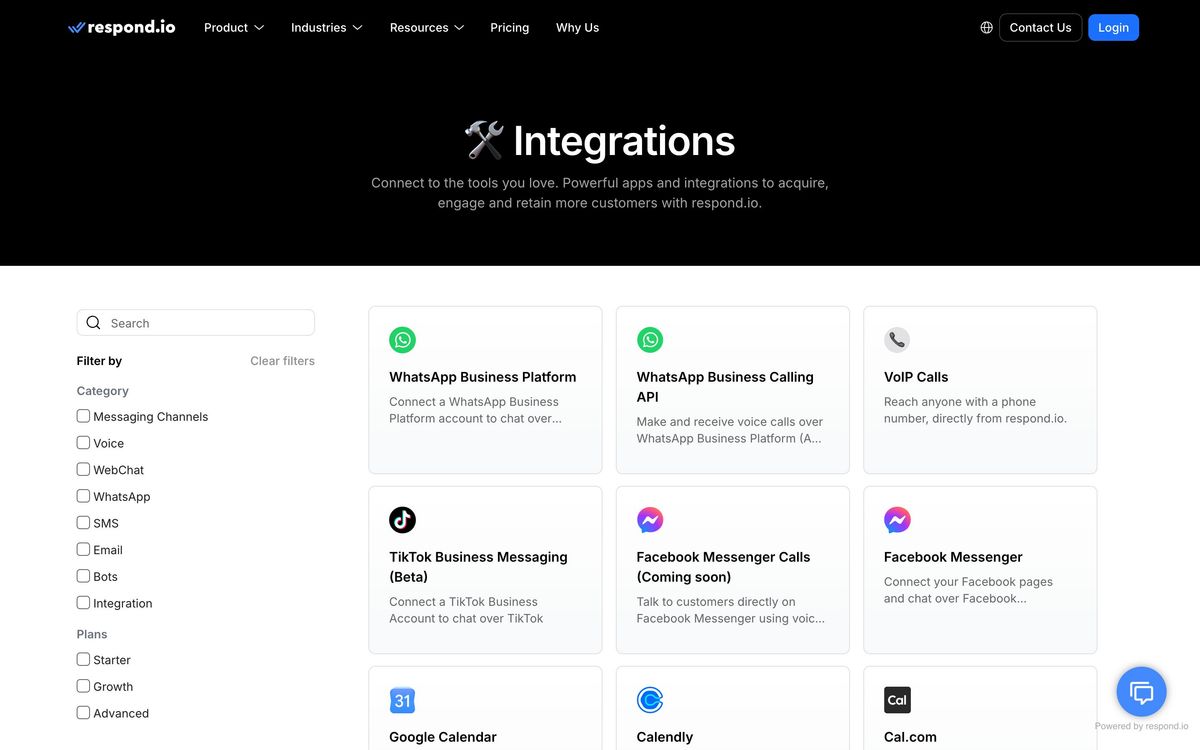
- One inbox genuinely covers WhatsApp, Instagram, Messenger, Telegram, TikTok, email and SMS with contact merging across them
- The workflow builder handles routing, qualification, booking and CRM updates without external automation tools
- AI agents answer routine questions and hand off to a human with the conversation history intact
- Broadcasts, click-to-chat ad tracking and in-chat surveys sit alongside support in the same tool
- Connectors reach HubSpot, Salesforce, Pipedrive, Shopify, Zapier, Make and n8n, plus a webhook and custom-channel API
Cons
- Billing runs on monthly active contacts, and a busy month or a large broadcast reply rate can push the invoice well past the plan price
- WhatsApp Business Platform message fees are charged by Meta on top of the subscription
- The automation builder takes real time to learn, and reporting is the weakest part of the product for teams that want deep analytics
respond.io pricing
List prices in USD per month, taken from the vendor at review time.
| Plan | Per month | What it covers |
|---|---|---|
| Starter | $79 | five seats, annual billing saves up to 20 percent |
| Growth | $159 | ten seats, monthly active contact allowance applies |
| Advanced | $279 | ten seats, adds SSO, webhooks and multiple workspaces |
What respond.io actually does
respond.io is a shared inbox for the messaging channels consumers actually use. WhatsApp Business Platform, Instagram, Facebook Messenger, Telegram, LINE, Viber, TikTok, SMS and email all land in one queue, and a contact who writes on two of them is merged into a single record with one history. Agents work conversations the way a support team works tickets: assignment rules, tags, internal notes, snooze, closing. Supervisors see queue volume, response times and agent load on a dashboard rather than by asking.
The second half of the product is automation. A visual workflow builder handles the routine work around the conversation: greeting and qualifying an inbound lead, routing by language or territory, booking an appointment against a connected calendar, pushing the outcome into a CRM, sending a satisfaction survey after closure. AI agents sit inside those workflows, answering common questions, recommending products and escalating to a human with the full transcript attached. Outbound is covered too, through segmented broadcasts, renewal reminders and click-to-chat advertising that tracks which ad started which conversation. Billing is organised around monthly active contacts rather than message volume, which is the mechanic that most affects what an account actually pays.
Key features
The following list is what separates it from a plain WhatsApp inbox.
- Unified inbox across WhatsApp, Instagram, Messenger, Telegram, TikTok, SMS and email
- Contact merging so one customer remains one record regardless of channel
- Workflow builder covering routing, qualification, booking and CRM updates
- AI agents with multilingual handling and clean escalation to a human
- Segmented broadcasts, reminders and in-chat satisfaction surveys
- Supervisor dashboard with response-time, channel and agent reporting
Who it's for
respond.io suits consumer-facing businesses in markets where messaging has replaced email and phone: retail and ecommerce in South East Asia, the Middle East and Latin America, education providers, clinics, property agencies, travel operators. The characteristic buyer has several agents fielding WhatsApp on personal phones and no visibility into any of it. Teams running click-to-chat advertising get particular value, because the attribution from ad to conversation to outcome exists in one place.
It is over-specified for a business with a handful of conversations a week, where a shared phone and a spreadsheet would do. It is also the wrong shape for a company whose support runs on email and web chat, where a conventional help desk gives better macros, knowledge base and reporting for less. Anyone with high message volume but low revenue per contact should model the contact meter carefully before committing.
How it compares
Wati is cheaper and simpler and focused almost entirely on WhatsApp, which is enough for a small store but not for multi-channel work. SleekFlow and Trengo compete directly on the same multi-channel inbox idea, with Trengo stronger on European support workflows and SleekFlow closer on commerce features. ManyChat covers Instagram and Messenger marketing automation well and costs far less, but it is a marketing tool rather than a support platform, with no real agent queue. respond.io wins on channel breadth and automation depth, and loses on price predictability and on analytics.
Verdict
For a team whose customers arrive by message rather than by email, respond.io is the most complete option available, and the combination of a real agent queue with a serious workflow builder is uncommon at this size. The AI agents are useful for deflecting repeat questions, and the click-to-chat attribution answers a question most competitors dodge. The caveat is cost behaviour rather than capability: monthly active contacts drive the bill, replies count while broadcasts do not, Meta's own message fees sit on top, and a strong campaign month can therefore cost noticeably more than the plan suggests. Model a realistic month before signing an annual term.
Ready to try respond.io?
More service-businesses tools like respond.io
Aircall
4.1Cloud phone system with a shared call inbox and automatic CRM logging, for support and inside-sales teams.
Read Aircall review →Textline
4.1Shared inbox for business texting, with HIPAA-grade controls for support, logistics and clinic teams.
Read Textline review →Nextiva
3.9Cloud phone system that extends into a contact centre with shared inboxes, chat and AI call handling.
Read Nextiva review →Ruby
3.8Live virtual receptionists and managed website chat answering for small businesses around the clock.
Read Ruby review →SupportBee
3.5Email-first ticketing with a shared inbox, knowledge base and customer portal for small support teams.
Read SupportBee review →Tradify
4.6Job management app for tradespeople covering quoting, scheduling, invoicing and payments in one place.
Read Tradify review →