
Nextiva review
Cloud phone system that extends into a contact centre with shared inboxes, chat and AI call handling.
A dependable business phone system with a credible upgrade path into contact centre work, though regulatory fees and cancellation friction sour the billing experience.
Pros
- Call quality and uptime are the most consistently praised parts of the product in user reviews
- One number rings desk phone, desktop app and mobile app, so field staff stay reachable without giving out a personal line
- Auto attendants, call queues and business-hours routing are configurable by an office manager, not an engineer
- Text messaging from the business number sits in the same interface as calls
- The contact centre tiers add queues, transcription and supervisor tooling without a platform migration
Cons
- Regulatory recovery and emergency-service fees are added per line, so the invoice runs well above the advertised seat price
- Billing and cancellation disputes dominate the negative reviews, including charges continuing after a cancellation request
- The mobile apps score noticeably lower than the desktop experience in user ratings
Nextiva pricing
List prices in USD per month, taken from the vendor at review time.
| Plan | Per month | What it covers |
|---|---|---|
| Core | $15 | per user, billed annually; $23 month to month |
| Engage | $25 | per user, billed annually; $50 month to month, adds inbound call centre and live chat |
| Scale | $75 | per user; full platform with transcription and journey orchestration |
| Contact Center Essential | $75 | per agent, from; higher tiers are quote-only |
What Nextiva actually does
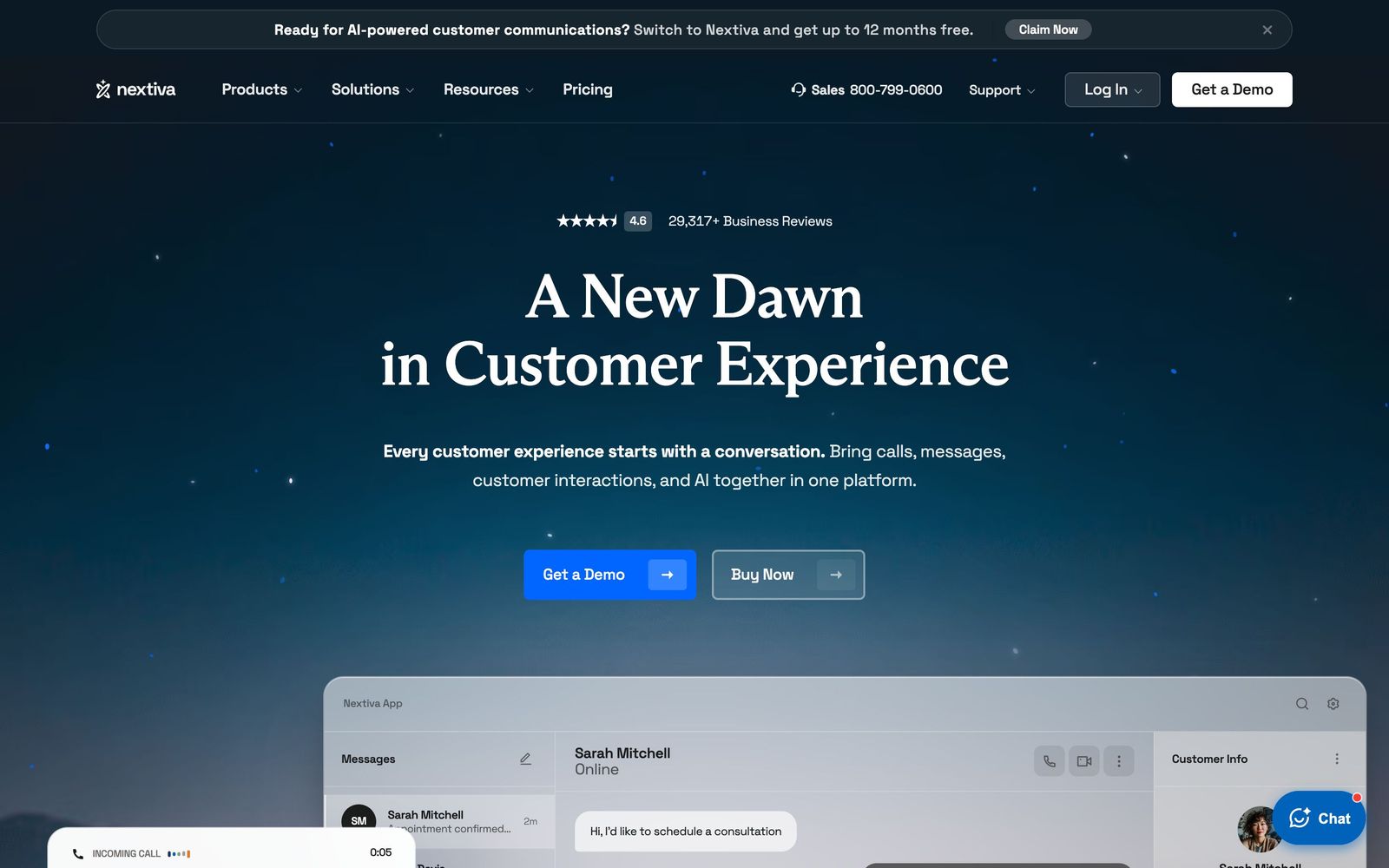
Nextiva sells a hosted phone system to businesses that would otherwise run a physical PBX or a pile of mobile numbers. Each seat gets a business number that rings a desk phone, a desktop app and a mobile app at once, with voicemail transcription, call recording on the higher tiers and porting from the old provider handled during onboarding. Around the lines sit the parts an office actually configures: an auto attendant that answers out of hours, queues that hold callers with a position announcement, ring groups so a small team shares an inbound number, and routing by time of day.
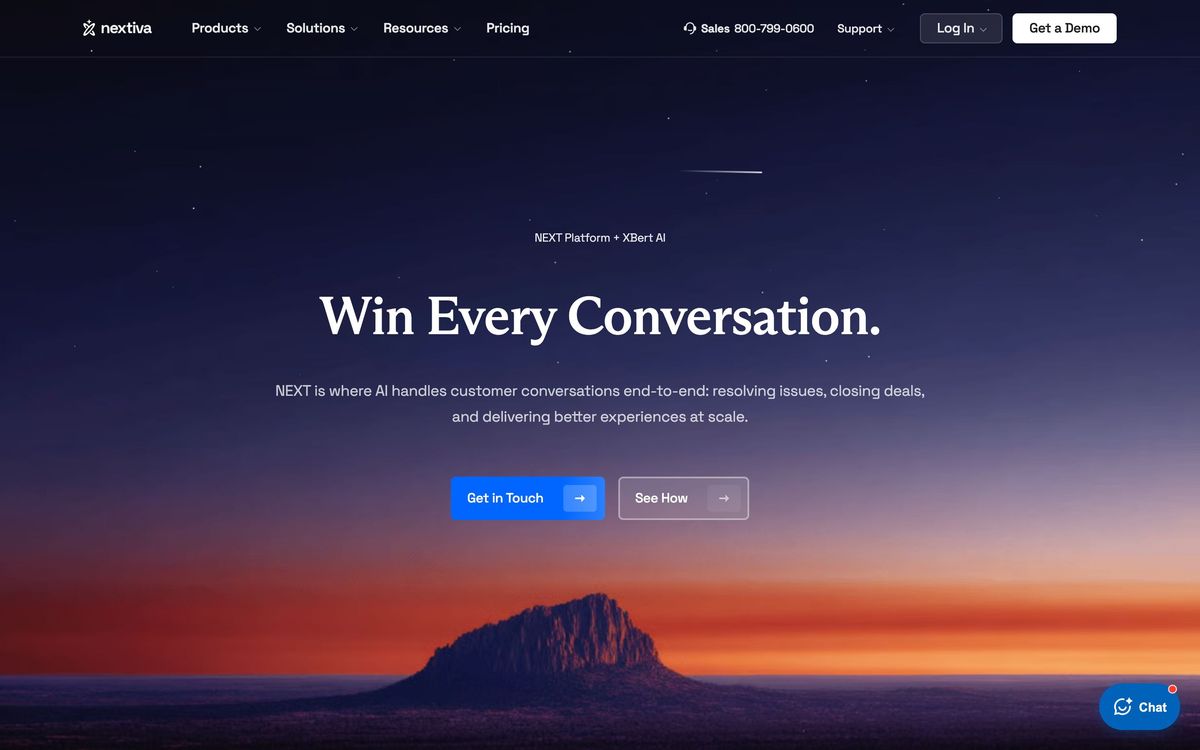
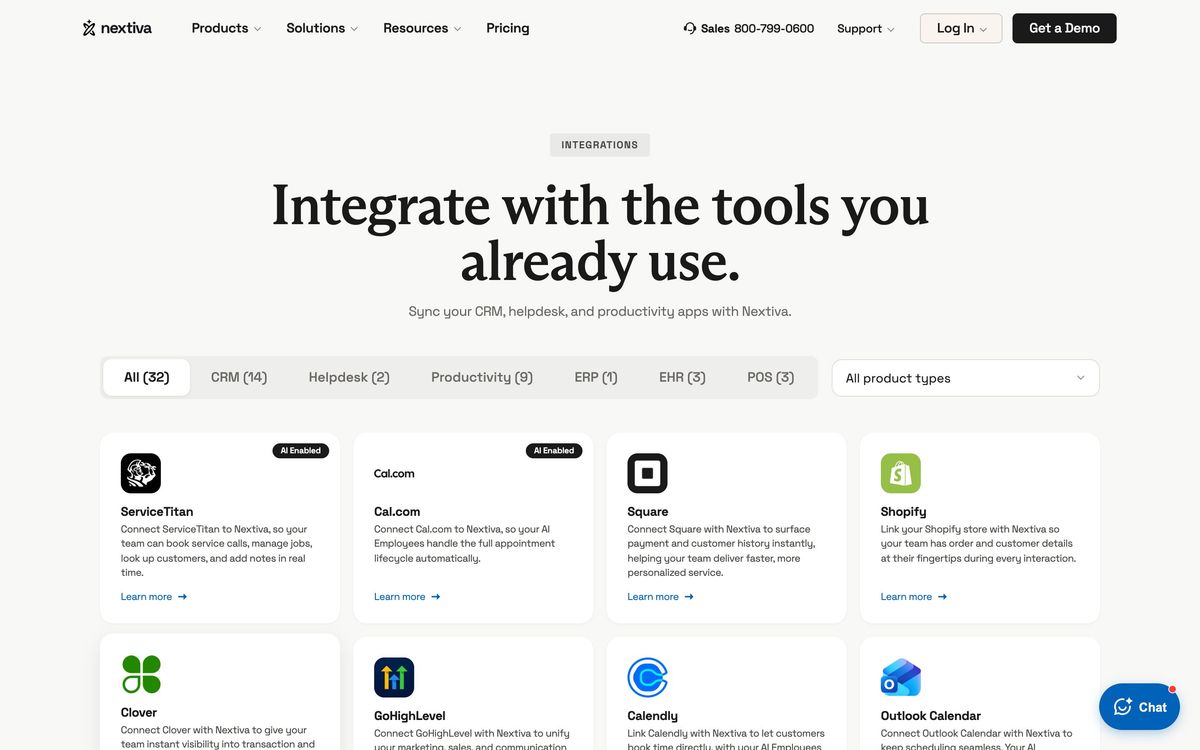
Above the phone tier, the company has built a customer experience platform. The middle plans add inbound call centre features, live chat and business texting from the same number; the contact centre plans add skills-based routing, call transcription, supervisor monitoring and outbound dialling. An AI receptionist add-on answers routine calls, books appointments and hands off to a person when the question stops being routine. Integrations push call activity into Salesforce, HubSpot, Zendesk and Microsoft tooling, so the record of a call lands beside the customer record.
Key features
The feature set spans a simple phone line and a staffed contact centre, sold as separate tiers.
- Cloud phone service with unlimited domestic calling, transcription and number porting
- Auto attendant, call queues, ring groups and time-of-day routing
- Business texting and team chat from the same number and interface
- Video meetings with screen sharing for internal and customer conversations
- Contact centre tiers with skills-based routing, live chat and supervisor tools
- AI receptionist add-on that answers, qualifies and schedules before escalating
Who it's for
The natural buyer is a United States service business where the phone is the front door: a clinic, a home services company, an insurance office, a property manager, a small support desk. Between roughly five and a hundred staff, the configuration work is small enough for an office manager and the routing features remove the receptionist bottleneck. Companies that expect to add formal queueing and reporting within a year or two benefit from staying on one vendor rather than migrating from a phone system to a contact centre later.
It is a poor fit for teams that live in chat and treat calls as an exception, where a lighter tool costs a fraction as much. Distributed international teams should check number availability and calling coverage carefully, since the product is oriented to the United States. Any buyer who values billing predictability should also read the contract terms closely before signing, for reasons covered below.
How it compares
RingCentral is the closest competitor and is stronger on international numbering and third-party integrations, while charging more for equivalent tiers. Dialpad leads on built-in transcription and real-time coaching and feels more modern, but its analytics and administration are shallower for larger phone estates. Ooma and similar low-cost providers undercut Nextiva for simple line replacement, without the contact centre path or the CRM integrations. Nextiva sits in the middle: fewer features than RingCentral, better call handling depth than the budget tier, and a smoother move from phone system to contact centre than either.
Verdict
As a phone system Nextiva is solid, and reviewers consistently credit it with clear audio, few dropped calls and support that answers. The upgrade path into contact centre features is the strongest argument for choosing it over a cheaper line provider. The caveat is the commercial relationship rather than the technology: regulatory recovery and emergency-service charges are added per line and push the real invoice meaningfully above the advertised seat price, discounted rates depend on annual commitment, and a recurring pattern of complaints concerns billing after cancellation. Buyers who negotiate the contract carefully and budget for fees on top of the seat price will be satisfied; buyers who expect the published price to be the price will not.
Ready to try Nextiva?
More service-businesses tools like Nextiva
Aircall
4.1Cloud phone system with a shared call inbox and automatic CRM logging, for support and inside-sales teams.
Read Aircall review →Ruby
3.8Live virtual receptionists and managed website chat answering for small businesses around the clock.
Read Ruby review →KrispCall
4.2AI cloud phone: numbers from 100+ countries, unified callbox, AI Copilot, 100+ CRM integrations.
Read KrispCall review →Quo
4.2Shared business phone system for calls and texts, with an AI agent that answers when nobody can.
Read Quo review →Zendesk
4.2Omnichannel support platform: ticketing, messaging, voice, help centre and AI agents in one agent workspace.
Read Zendesk review →Textline
4.1Shared inbox for business texting, with HIPAA-grade controls for support, logistics and clinic teams.
Read Textline review →