
Proof review
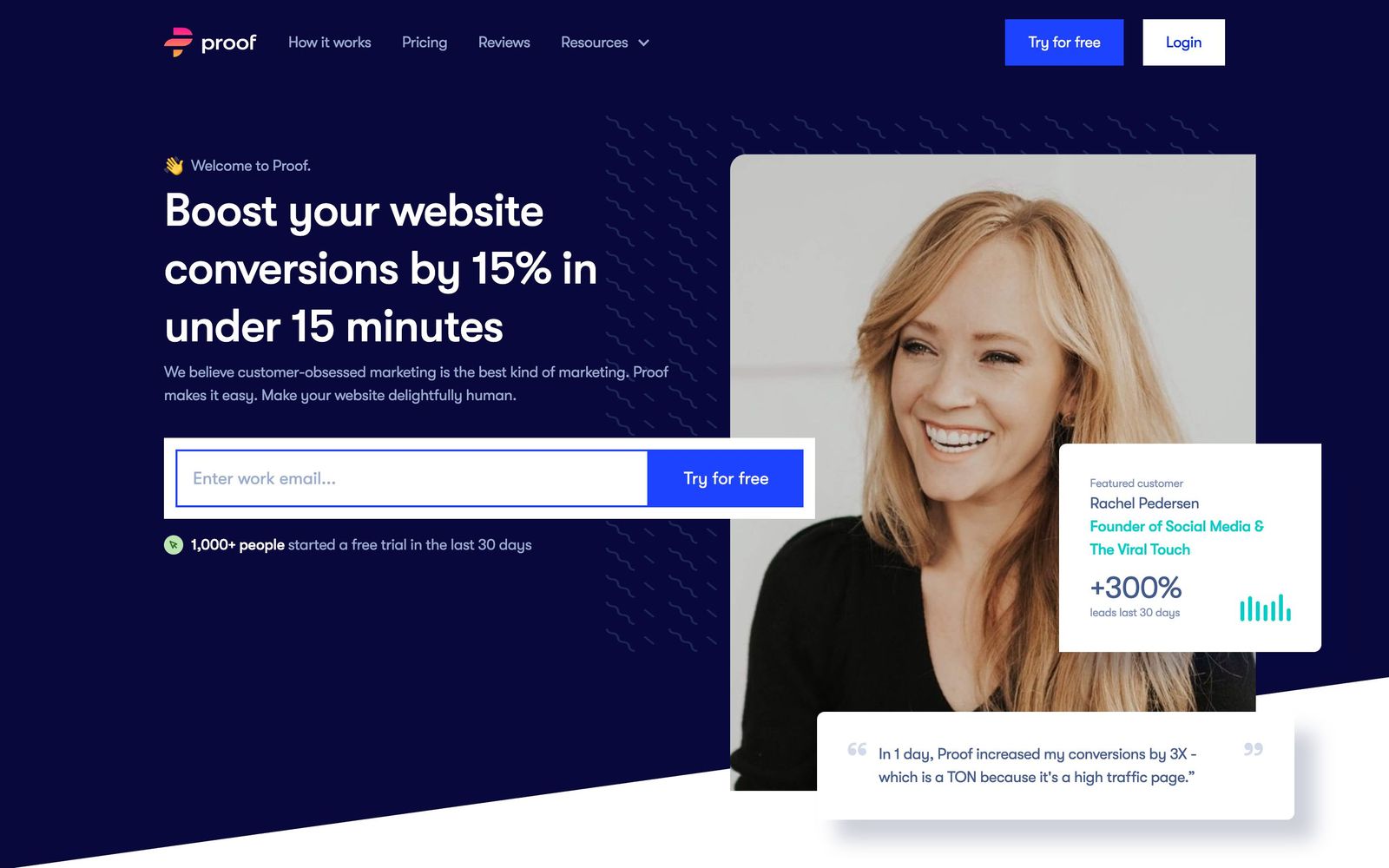
Social proof notifications and page personalisation, with a split test that measures the lift.
A mature social proof widget with honest split-test reporting, though its visitor allowances are tight and the product has moved little while cheaper rivals caught up.
Pros
- The header pixel installs without template changes and loads after page content
- Built-in split testing withholds the widget from a share of traffic, so the conversion difference is measurable
- Analytics report sales, conversion rate and visitors separately for exposed and unexposed traffic
- Unlimited domains and notifications on every Pulse tier, which suits agencies running several client sites
- A custom webhook covers conversions that happen off the page, not just on-page form submissions
Cons
- Pulse tiers are metered on unique visitors and the entry allowance covers only a small site
- The Experiences personalisation product starts at many times the price of the notification product, with no middle step between them
- The notification formats have not changed in years while competitors added reviews, counters and coupon widgets
Proof pricing
List prices in USD per month, taken from the vendor at review time.
| Plan | Per month | What it covers |
|---|---|---|
| Pulse Basic | $29 | 1,000 unique visitors a month; 24 billed annually |
| Pulse Pro | $79 | 10,000 unique visitors a month; 66 billed annually |
| Pulse Business | $129 | 50,000 unique visitors a month |
| Pulse Premium | $199 | 100,000 unique visitors a month |
| Pulse Platinum | $299 | 300,000 unique visitors a month |
| Experiences Essentials | $599 | personalisation product, up to 25,000 visitors a month, 2 users |
What Proof actually does
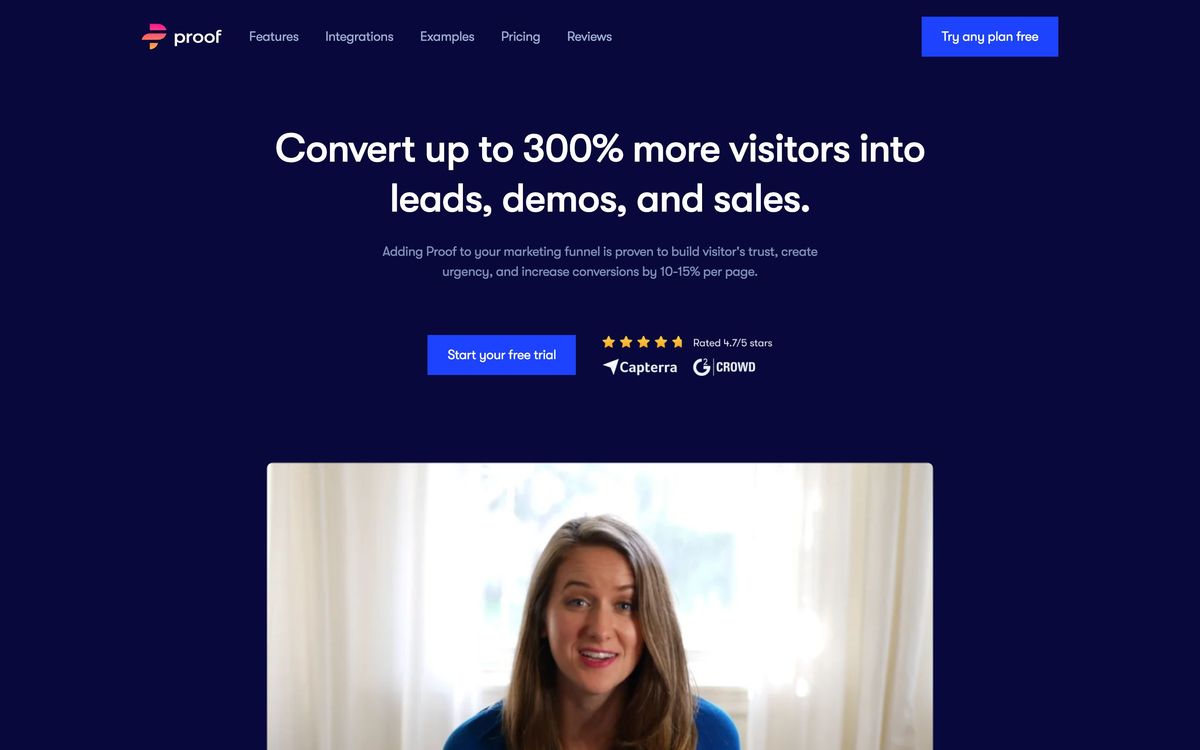
Proof sells two products from one account. Pulse is the original: a snippet placed in a site's header that shows small notifications drawn from real visitor and conversion events, a recent signup with a first name and city, a live count of people viewing the page, or a running total of actions taken in the last day. Experiences is the newer and much larger product: a personalisation layer that swaps headlines, images and calls to action for defined audience segments, with conversion goals and split tests attached to each variant.
Pulse installs in minutes. The pixel goes in the header, the script loads after page content so it does not block rendering, and notifications are configured in a dashboard rather than in code. Events come either from Proof's own capture of on-page form submissions or from a custom webhook, which matters when the conversion happens somewhere other than the landing page. Experiences takes real setup: audiences, variants and goals have to be defined, and the segmentation is only as good as the data arriving from a connected CRM or customer data platform. Both products report into the same analytics view, showing sales, conversion rate and visitor counts split by whether a visitor saw the treatment.
Key features
What the account actually gives a marketer:
- Recent activity notifications naming a first name and city for a genuine conversion event
- A live visitor count for the current page, and hot streaks showing recent totals over a rolling window
- Split testing that withholds the widget from a share of traffic so the lift can be read rather than assumed
- Conversion analytics separating exposed and unexposed visitors on sales, rate and volume
- Personalisation in Experiences: headline, image and call-to-action variants tied to audience segments and goals
- Connections to Webflow, WordPress, HubSpot, Kajabi, ClickFunnels, Segment and Zapier, plus a custom webhook
Who it's for
Pulse suits a marketer running lead-generation or checkout pages with steady traffic and a conversion event a visitor can recognise, a demo request, a trial start, a purchase. It works best where the offer is credible but the visitor hesitates, and where enough events happen each day that the feed does not look stale. Low-traffic sites are the wrong buyer twice over: the tiers are metered on unique visitors, and a handful of conversions a week produces a thin, unconvincing stream of notifications.
Experiences is a different purchase entirely, priced for teams with a dedicated conversion owner and a running test programme. A company that only wants the notification widget should not be steered into it. Anyone selling in a regulated category, or to buyers who react badly to consumer-style urgency cues, should test carefully before leaving it on. The same notification that lifts a course signup can read as pressure on a B2B pricing page, and the split test is the only honest way to find out which is happening.
How it compares
Provely and FOMO sit in the same notification niche and generally cost less, with lighter analytics and less careful test design. WiserNotify bundles more widget types, review badges, counters, coupon bars, for a fraction of the price, which makes it the obvious comparison for a small site. On the personalisation side, Experiences competes with Mutiny and Intellimize, both of which have gone further into account-level B2B targeting and automated variant selection. Proof's advantage is that Pulse is mature and measures itself honestly rather than claiming credit for every conversion on the page. Its weakness is that little about Pulse has changed in years while the cheaper alternatives caught up on features.

Verdict
Pulse still does what it promises. It installs quickly, its split test gives a defensible read on whether the notifications help, and the reporting does not flatter the result the way bundled widgets often do. But the visitor allowances are tight for the price, the feature set has stood still, and the gap between the notification product and the personalisation product is wide enough that the two feel like different companies sharing a login. A site with meaningful traffic and a clear conversion event should trial it against a cheaper widget and let the split test settle the argument. A site with modest traffic will struggle to justify even the entry tier.
Ready to try Proof?
More marketers tools like Proof
Outgrow
4.0Builder for calculators, quizzes and assessments that qualify a visitor before asking for an email.
Read Outgrow review →Uniqode
4.0Dynamic QR codes with scan analytics, bulk management and digital business cards for distributed teams.
Read Uniqode review →Leadpages
3.9Landing pages, pop-ups and opt-in forms with unlimited traffic on every plan and Stripe checkout built in.
Read Leadpages review →Bread & Butter
3.8First-party visitor tracking that enriches traffic, scores intent and syncs the result into a CRM.
Read Bread & Butter review →Pingtree
3.8Lead distribution and funnel platform: capture leads, ping buyers in real time, route each one to the best bid.
Read Pingtree review →POWR
3.8Sixty-odd embeddable widgets, forms, popups, galleries, reviews, for sites built on someone else's platform.
Read POWR review →