
Pingtree review
Lead distribution and funnel platform: capture leads, ping buyers in real time, route each one to the best bid.
A modern replacement for the ageing ping-post stacks the lead trade runs on, though the product assumes you already know how ping-post works.
Pros
- Ping-post routing with real-time bidding, per-buyer timeouts and automatic fallback to the next bidder when the winner rejects at post
- Funnel and form building sit in the same product as distribution, so the landing page and the buyer routing are configured once
- Revenue is attributed from the bid amounts returned in ping responses, so reports show what a source earned rather than how many leads it produced
- Source tracking spans paid social, search, affiliates, inbound calls and direct mail in one view
- Overage is billed after the cycle closes rather than mid-cycle, which avoids surprise charges during a campaign
Cons
- Documentation is written for practitioners: buyer field mapping, response parsing and bid tokens assume prior ping-post experience
- Usage-based overage on top of the self-service base means the true monthly cost is not knowable before the month ends
- Almost no independent review record, so claims about throughput and buyer-side reliability cannot be checked outside the vendor's own material
Pingtree pricing
List prices in USD per month, taken from the vendor at review time.
| Plan | Per month | What it covers |
|---|---|---|
| Self-Service | $199 | starting price, includes core usage and unlimited users; overage billed after the cycle closes |
| Managed Services | $2,500 | starting price, scoped with the account team; adds a solutions engineer and SLA support |
What Pingtree actually does
Pingtree is infrastructure for businesses that sell leads. A lead generation operation buys traffic, captures a form fill or a call, and then has to place that lead with whichever buyer will pay most for it, within a second or two, before the consumer moves on. Pingtree covers the whole path: landing funnels and forms at the front, source tracking across paid social, search, affiliates, direct mail and inbound calls in the middle, and distribution to buyers at the end.
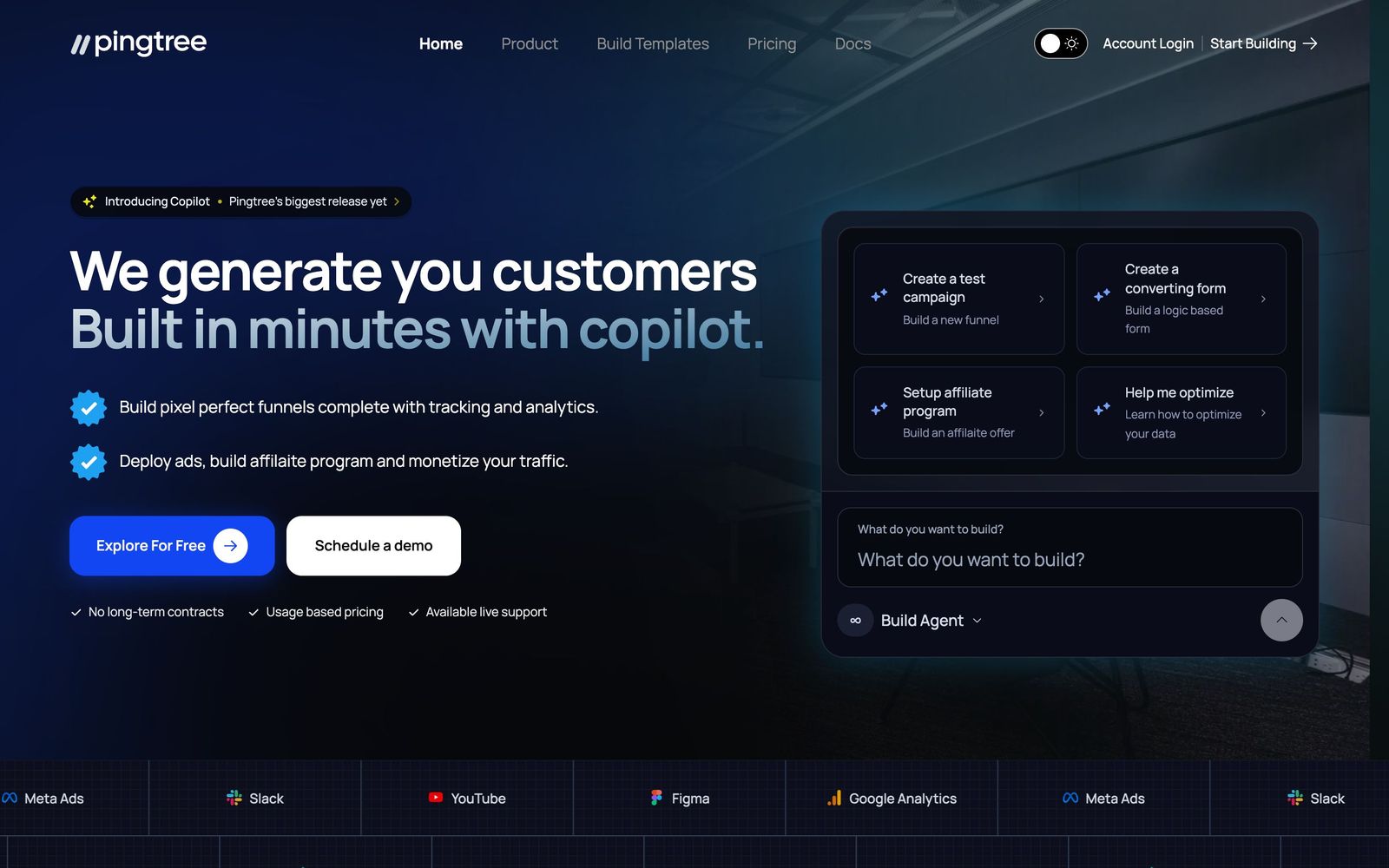
Distribution is the core. The platform runs ping-post routing, the standard mechanism in the lead trade. Partial lead data goes out to every eligible buyer, each returns an acceptance flag and a bid, the highest bid wins, and the full record is posted to that buyer with the ping token attached. If the winner rejects at post time the system falls through to the next bid. Buyers are configured individually with field mappings, response parsing, timeouts and caps, and routing can run in parallel or sequentially. Revenue attribution comes from the bid values in the ping responses, so reporting shows what each source actually earned rather than how many leads it produced. A copilot drafts campaign and funnel setups for a human to approve before anything goes live.
Key features
The feature set assumes a buyer who already sells leads and wants fewer moving parts.
- Ping-post and ping-tree distribution with real-time bidding, per-buyer timeouts and automatic fallback to the next bidder
- Buyer configuration covering field mapping, response parsing, delivery caps and filters
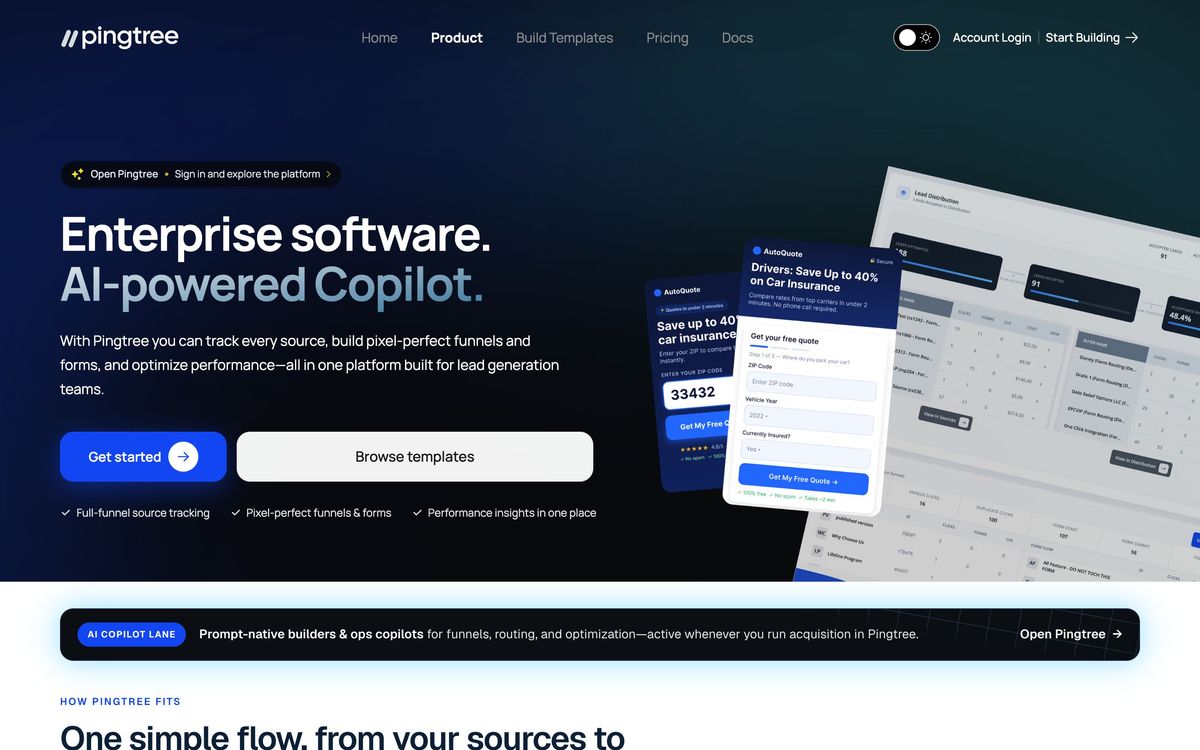
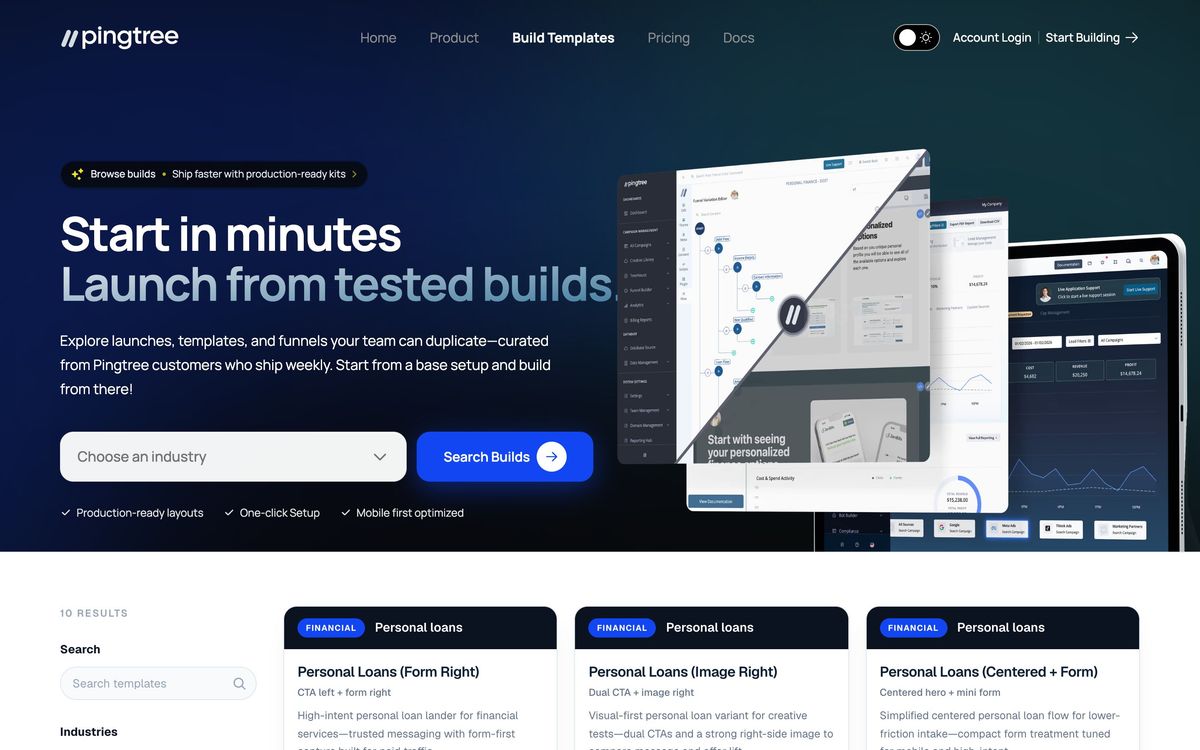
- Funnel and form builder with tracking pixels, aimed at matching the ad creative that drove the click
- Source tracking across paid social, search, affiliate traffic, inbound calls and direct mail
- Revenue reporting attributed from bid amounts, down to source and campaign
- Copilot that drafts campaigns and funnels from a brief, with human approval before launch
Who it's for
Agencies, lead sellers, affiliate networks and media buyers working in verticals where ping-post is the norm: insurance, home improvement, auto finance, legal, mortgage. The argument is one system instead of a funnel builder plus a distribution platform plus a call tracker plus a spreadsheet reconciling revenue at month end.
It is not for anyone generating leads for their own sales team. If leads end in a CRM rather than an auction, the entire distribution layer is dead weight and a landing page builder with decent analytics is the cheaper answer. The platform also assumes fluency in ping-post vocabulary, since the documentation is written for practitioners rather than newcomers, so a first campaign will take help. Budgeting takes some tolerance too: the self-service plan carries usage overage billed after the cycle closes, which is friendlier than mid-cycle charges but leaves the monthly figure unknown until the month is over.
How it compares
boberdoo and LeadExec by ClickPoint own the incumbent ground in ping-post distribution. Both are more established and better tested on complex buyer logic, and both look and feel like software from an earlier era. Pingtree's advantage is the front half, with funnels, forms and attribution built in rather than bolted on, plus AI-assisted setup. Against a stack of a page builder plus a distribution API, Pingtree wins on reconciliation, because revenue and source sit in the same report. The managed tier competes with agencies more than with software.
Verdict
Pingtree is a credible modern take on a workflow that has been served by dated tools for a decade, and putting funnel building and real-time buyer bidding into one report is the right consolidation. The reservations are maturity and audience: there is little independent evidence to check the vendor's claims against, and the product is opinionated about the lead trading model, so it offers nothing to a business that keeps the leads it makes. For an operator already running ping-post, it earns a trial.
Ready to try Pingtree?
More marketers tools like Pingtree
WhatConverts
4.3Tracks calls, forms, chats and transactions back to the campaign that produced them, in one lead log.
Read WhatConverts review →Bread & Butter
3.8First-party visitor tracking that enriches traffic, scores intent and syncs the result into a CRM.
Read Bread & Butter review →Databox
4.2Analytics platform pulling 130+ data sources into dashboards, automated reports, goals, AI-queried metrics.
Read Databox review →Gravity Forms
4.2A WordPress form plugin for lead capture, payments and multi-step workflows, with data staying in your own database.
Read Gravity Forms review →Survicate
4.1Customer feedback platform for website, in-product, email and link surveys with AI theme analysis.
Read Survicate review →Wistia
4.1Video hosting, recording and analytics for marketing teams that need viewer data, not view counts.
Read Wistia review →