
Diginius review
Reporting dashboard that pulls paid, organic and website visitor data into one view for SMEs and agencies.
A tidy way to stop rebuilding the same monthly report across four ad platforms, though the entry tier's caps are tight enough that a free dashboard plus a connector often does the same job.
Pros
- Microsoft Advertising is treated as a first-class channel rather than an afterthought, which is unusual in this category
- Paid, organic, social and website visitor data land in one dashboard instead of four exports
- Reports can be scheduled and emailed automatically, which removes the recurring monthly assembly job
- Website visitor identification is bundled rather than sold as a separate subscription
- All tiers include unlimited data source connections, so channel count does not drive the bill
Cons
- The entry tier tracks only two dozen SEO keywords and a handful of identified leads a month, which is thin for anything past a single small site
- Contact credits and intent leads are metered weekly and monthly, so heavy prospecting months run out before the period does
- Independent review coverage is sparse compared with established reporting tools, leaving little outside evidence of how it holds up at scale
Diginius pricing
List prices in USD per month, taken from the vendor at review time.
| Plan | Per month | What it covers |
|---|---|---|
| Essential | $75 | 2 users, 25 SEO keywords |
| Pro | $250 | 5 users, 500 SEO keywords |
| Core | $500 | 10 users, 1,000 SEO keywords |
What Diginius actually does
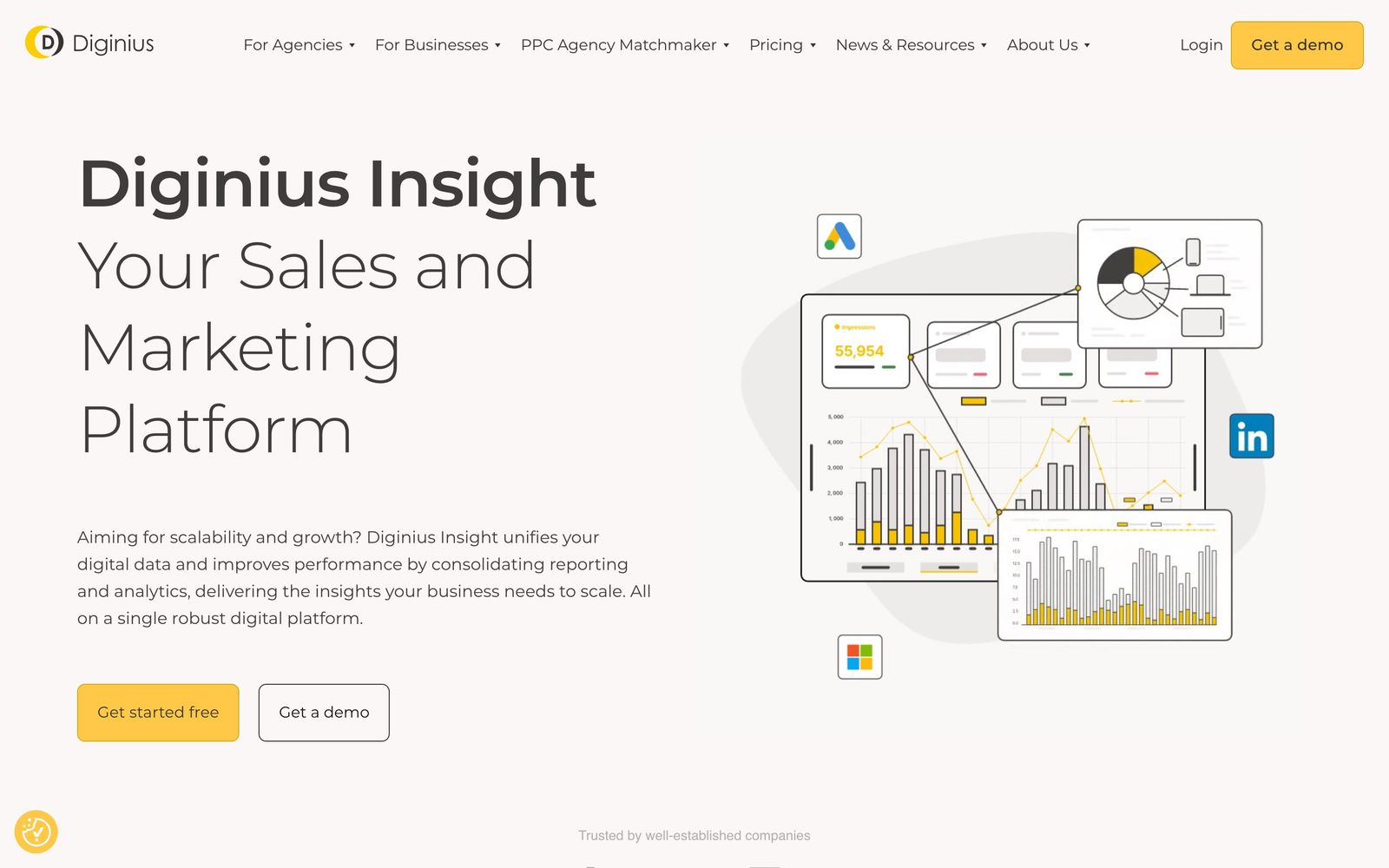
Diginius sells a reporting platform called Insight, alongside a separate agency services arm. The software is the part worth evaluating. Insight connects to advertising accounts across Google, Microsoft, Facebook and LinkedIn, pulls in organic search and website data, and consolidates all of it into dashboards and scheduled reports. The problem it addresses is mundane and universal: the monthly performance report that someone rebuilds by hand from four exports, arriving late and inconsistently formatted. Insight assembles it automatically and emails it out on a schedule.
Two things sit beside the reporting. The first is SEO tracking - keyword positions, site health errors, organic reach against competitors - so the organic side of the report is not a manual paste from a second tool. The second is lead intelligence: identifying the companies visiting a website, surfacing intent signals week by week, and revealing contact details against a monthly credit allowance. That last piece is what pushes Insight past being a pure dashboard and into the territory of a light prospecting tool, though the allowances are modest and metered. The company's positioning leans heavily on its status as a large Microsoft Advertising channel partner, and it shows in the product: Microsoft campaign data is handled with the same attention as Google's, which is rarer than it should be.
Key features
The scope is reporting plus a lead layer, not a full analytics suite.
- Consolidated advertising dashboard across Google, Microsoft, Facebook and LinkedIn
- Keyword position tracking and site health error detection on a crawled page allowance
- Website visitor identification producing company-level lead records
- Weekly intent signals and a monthly allowance of revealed contact details
- Automated report scheduling and email delivery
- Unlimited data source connections regardless of tier
Who it's for
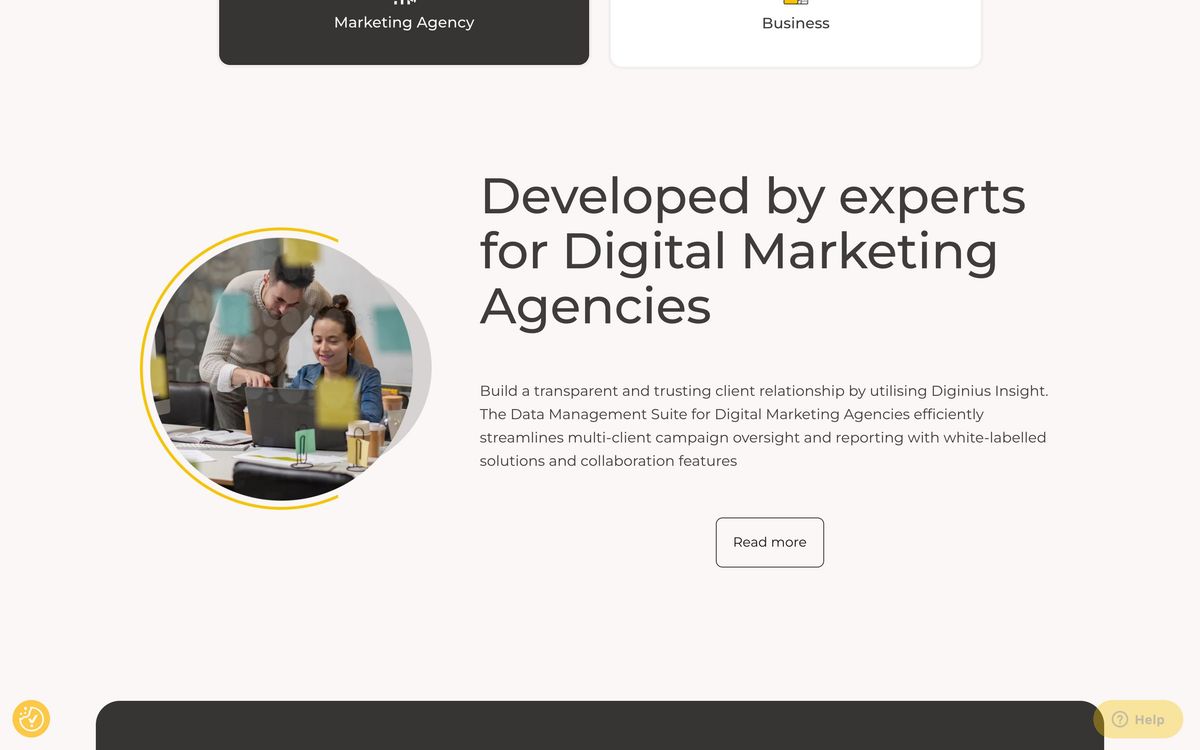
The natural buyer is a small in-house marketing team or a boutique agency that runs both Google and Microsoft campaigns and has to explain results to someone every month. If Microsoft Advertising is a meaningful share of spend - common in UK B2B, financial services and older-skewing consumer categories - the platform handles it properly rather than as a bolted-on afterthought, and that alone can justify the switch from a generic connector.
It is a weak fit for a team whose spend sits almost entirely in Google and Meta, since the cheaper and more mature reporting tools cover those channels comprehensively. It also fits badly for anyone whose main need is SEO: the keyword allowance on the entry tier is small enough to be a rounding error next to a dedicated rank tracker, and the tier above it costs several times as much. Larger organisations with a data team will want raw connectors into a warehouse instead.
How it compares
AgencyAnalytics is the direct competitor for the agency reporting job, with a wider set of integrations, white-label client dashboards and a lower entry price, though it has no visitor identification. Databox covers the same reporting ground with stronger goal tracking and a genuinely usable free tier, and is the more sensible default for a team that mostly wants numbers in one place. At the free end, Looker Studio with a paid connector such as Supermetrics does the aggregation for less money, at the cost of building and maintaining the reports yourself. Diginius wins on Microsoft Advertising depth and on bundling visitor identification into the same subscription; it loses on price-to-allowance ratio and on the size of its integration catalogue.
Verdict
Insight solves a real and tedious problem, handles a channel most competitors treat carelessly, and bundles a visitor identification layer that would otherwise be a second subscription. The rating sits below the category leaders because the value per tier is hard to defend: the entry plan's keyword, lead and contact allowances are small enough that most teams outgrow them quickly, and the next step up is a steep jump. There is also little independent review evidence to lean on. For an agency deep in Microsoft Advertising it is worth the trial; for most others, a cheaper reporting tool plus a dedicated rank tracker gets further for the same outlay.
Ready to try Diginius?
More marketers tools like Diginius
WhatConverts
4.3Tracks calls, forms, chats and transactions back to the campaign that produced them, in one lead log.
Read WhatConverts review →Databox
4.2Analytics platform pulling 130+ data sources into dashboards, automated reports, goals, AI-queried metrics.
Read Databox review →PartnerStack
4.1Partner program platform for B2B SaaS: recruit affiliates and resellers, track deals, pay everyone once.
Read PartnerStack review →SocialBee
4.1Social media scheduling built around content categories, with an evergreen queue and client workspaces.
Read SocialBee review →Survicate
4.1Customer feedback platform for website, in-product, email and link surveys with AI theme analysis.
Read Survicate review →Bïrch
4.0Rule-based automation and bulk campaign management for Meta, Google, TikTok and Snapchat ad accounts.
Read Bïrch review →