
Mycroft review
GRC automation covering evidence collection, risk and vulnerability management across SOC 2 to FedRAMP.
One of the few compliance platforms that treats CMMC and FedRAMP as first-class rather than an upsell, though quote-only pricing and a young public track record make it a diligence-heavy purchase.
Pros
- Framework coverage reaches CMMC, FedRAMP and CPCSC, which most compliance automation vendors treat as bespoke work
- Combines GRC, cloud security posture and third-party risk in one platform rather than three subscriptions
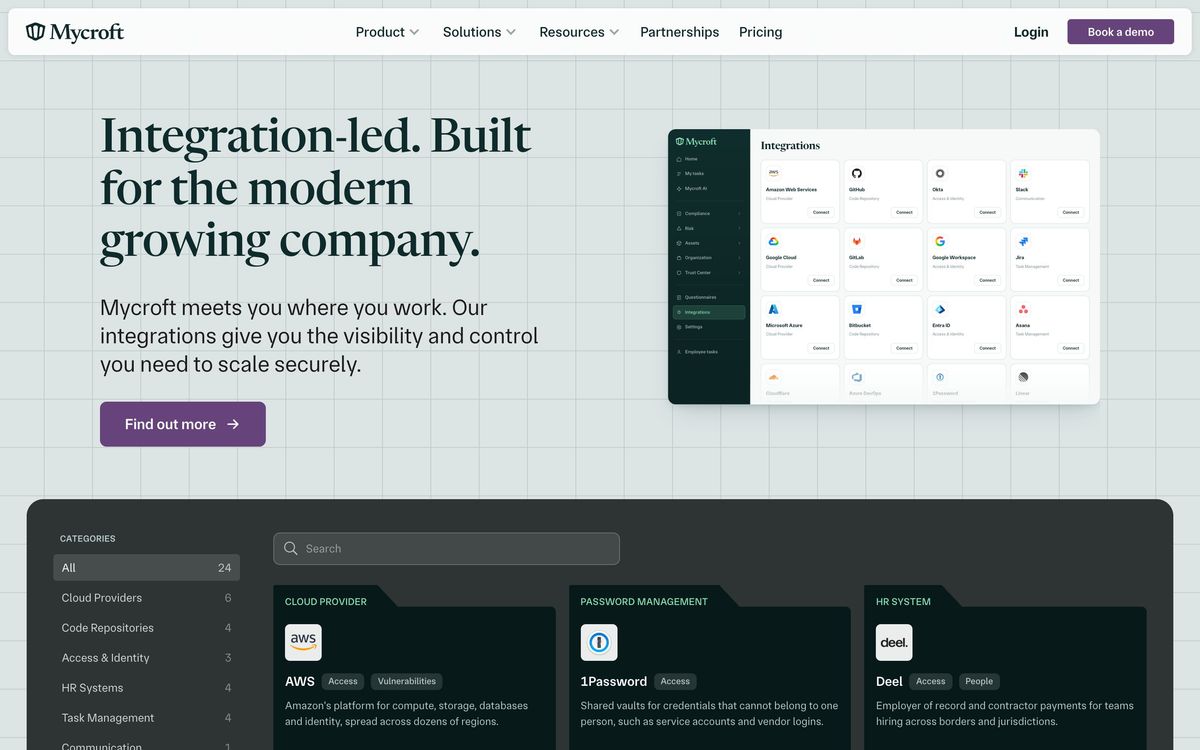
- Integration list is concrete and published: cloud providers, code repositories, identity, HR systems, ticketing and device management
- Higher tiers bundle penetration testing and a customer success manager, closing the gap between tooling and an audit
- AI-assisted scoping helps draw the compliance boundary, which is the step that sinks most first-time CMMC efforts
Cons
- No published pricing at any of the three tiers, so cost comparison against Vanta or Drata requires a sales cycle
- The Managed tier bundles fractional CISO support, which blurs where the software ends and consulting begins
- A young vendor with little independent review coverage, which is awkward for a buyer whose auditors will ask about it
What Mycroft actually does
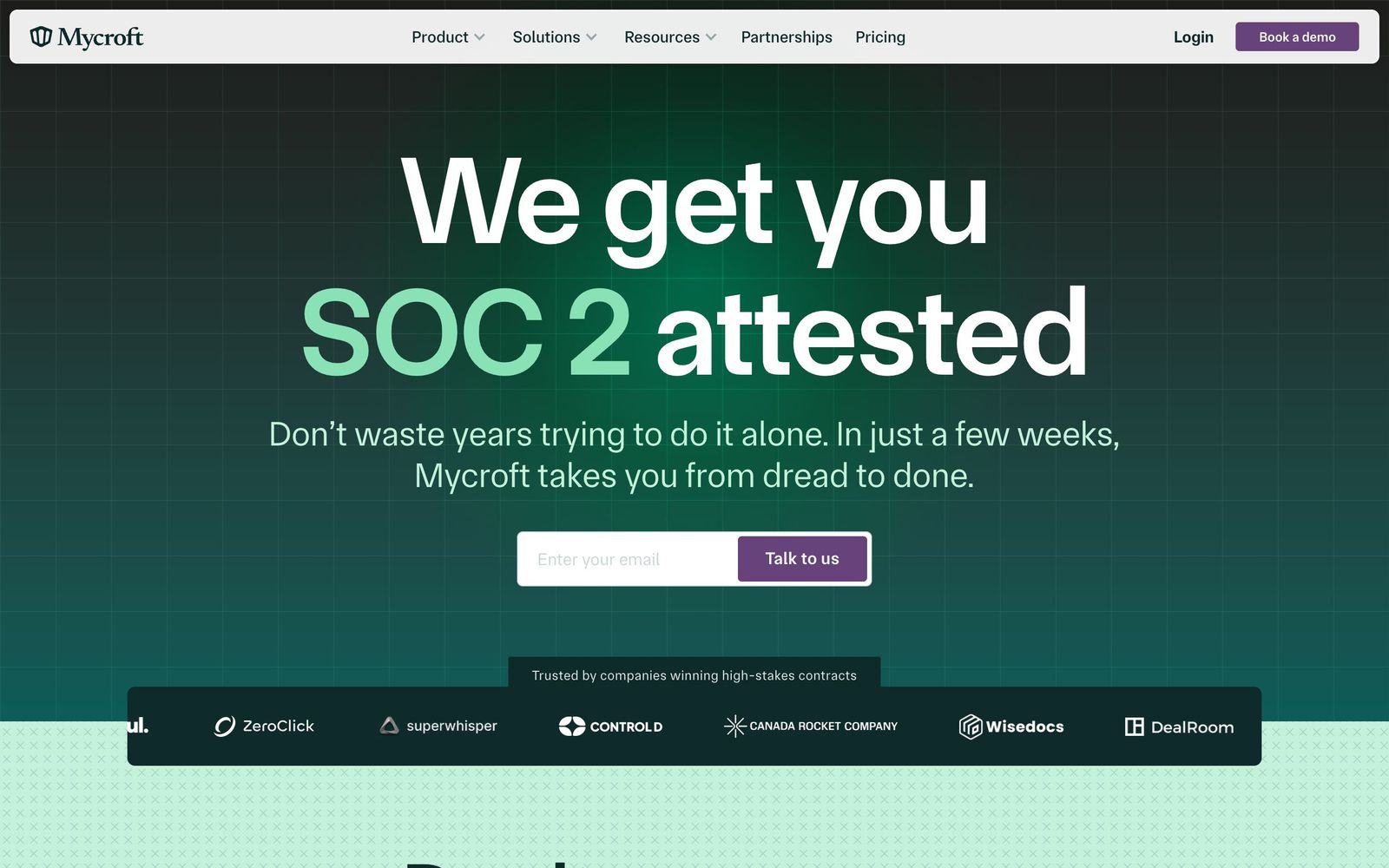
Mycroft is a governance, risk and compliance platform that automates the parts of certification that consume the most calendar time: implementing controls, monitoring whether they still pass, collecting the evidence, and assembling the artefacts an auditor asks for. It connects to the systems where the evidence actually lives, cloud accounts, code repositories, identity providers, HR systems, ticketing, device management, and keeps posture current rather than reconstructing it in the fortnight before an audit.
What separates it from the better-known compliance automation vendors is framework range. Alongside SOC 2, ISO 27001, ISO 42001, HIPAA, PCI DSS, GDPR and the NIST 800 series, it treats CMMC, FedRAMP and Canada's CPCSC as core coverage. That is a deliberate positioning: defence contractors, aerospace suppliers and federal vendors face frameworks where the mainstream platforms either stop or hand the work to a consultancy. Mycroft also folds in cloud security posture, application security and third-party risk, so the buyer is consolidating three categories rather than one.
Key features
The platform spans compliance operations and the security tooling that feeds it.
- Continuous control monitoring with automated evidence collection from connected systems
- Framework coverage from SOC 2 and ISO 27001 through to CMMC, FedRAMP and CPCSC
- AI-assisted scoping that defines the compliance boundary before control work begins
- Third-party and vendor risk management alongside the internal risk register
- Cloud and application security posture management, plus endpoint and device controls
- Audit management, including artefact preparation and direct coordination with the auditor
Who it's for
The clearest fit is a company whose contracts depend on a hard framework. A defence supplier facing CMMC, a SaaS vendor pursuing FedRAMP authorisation, an insurtech carrying both SOC 2 and a sector regulator, these are organisations where the compliance programme is a revenue gate, and where the scoping decision alone determines whether the effort takes six months or two years. For them, the AI-assisted scoping and the bundled advisory in the upper tiers are the substance of the purchase, not an accessory.
A startup that needs SOC 2 Type 2 and nothing else should look at the established alternatives first, because that particular job is a commodity and the incumbents have more auditors, more integrations and public pricing. Organisations that already run a mature GRC tool will find overlap rather than replacement, though Mycroft explicitly supports layering on top of existing tooling. Anyone who needs to compare cost across a shortlist should be aware that a sales conversation is the only route to a number.
How it compares
Vanta and Drata own the commercial framework market, with larger integration catalogues, established auditor networks and far more public reference material, but both treat CMMC and FedRAMP as specialist territory. Sprinto competes on price and speed for smaller teams and is narrower still on federal frameworks. Against a traditional consultancy-led programme, Mycroft is cheaper and continuous rather than a point-in-time engagement, though it asks the customer to trust a small vendor with the evidence chain for an audit that matters.
Verdict
Mycroft is aimed at a genuinely underserved buyer. If a company's roadmap runs through CMMC or FedRAMP, the shortlist of platforms treating those as core rather than custom is short, and consolidating GRC with cloud posture and third-party risk removes real tool sprawl. The reservations are commercial and evidentiary rather than technical: no published pricing at any tier, a Managed tier where software and consulting are hard to separate, and a thin independent review record for a product whose whole purpose is being trusted during an audit. Ask for customer references in the same framework before signing.
Ready to try Mycroft?
More developers tools like Mycroft
Sentaro
3.6AI email security that sits inside Microsoft 365 or Google Workspace without touching mail flow or DNS.
Read Sentaro review →AFTRDRK
3.7Dark web surveillance that watches ransomware leak sites, stealer logs and closed forums for your name.
Read AFTRDRK review →Netlify
4.6Hosting and deployment platform with Git-based CI/CD, deploy previews, serverless functions, and AI workflows.
Read Netlify review →Pinecone
4.5Fully managed serverless vector database for similarity search, RAG, and agent memory at billion-vector scale.
Read Pinecone review →Runpod
4.5GPU cloud for AI workloads: on-demand instances, serverless inference endpoints, and multi-node clusters.
Read Runpod review →NinjaOne
4.4Endpoint management and RMM platform for monitoring, patching, backing up and remotely supporting company devices.
Read NinjaOne review →