
AFTRDRK review
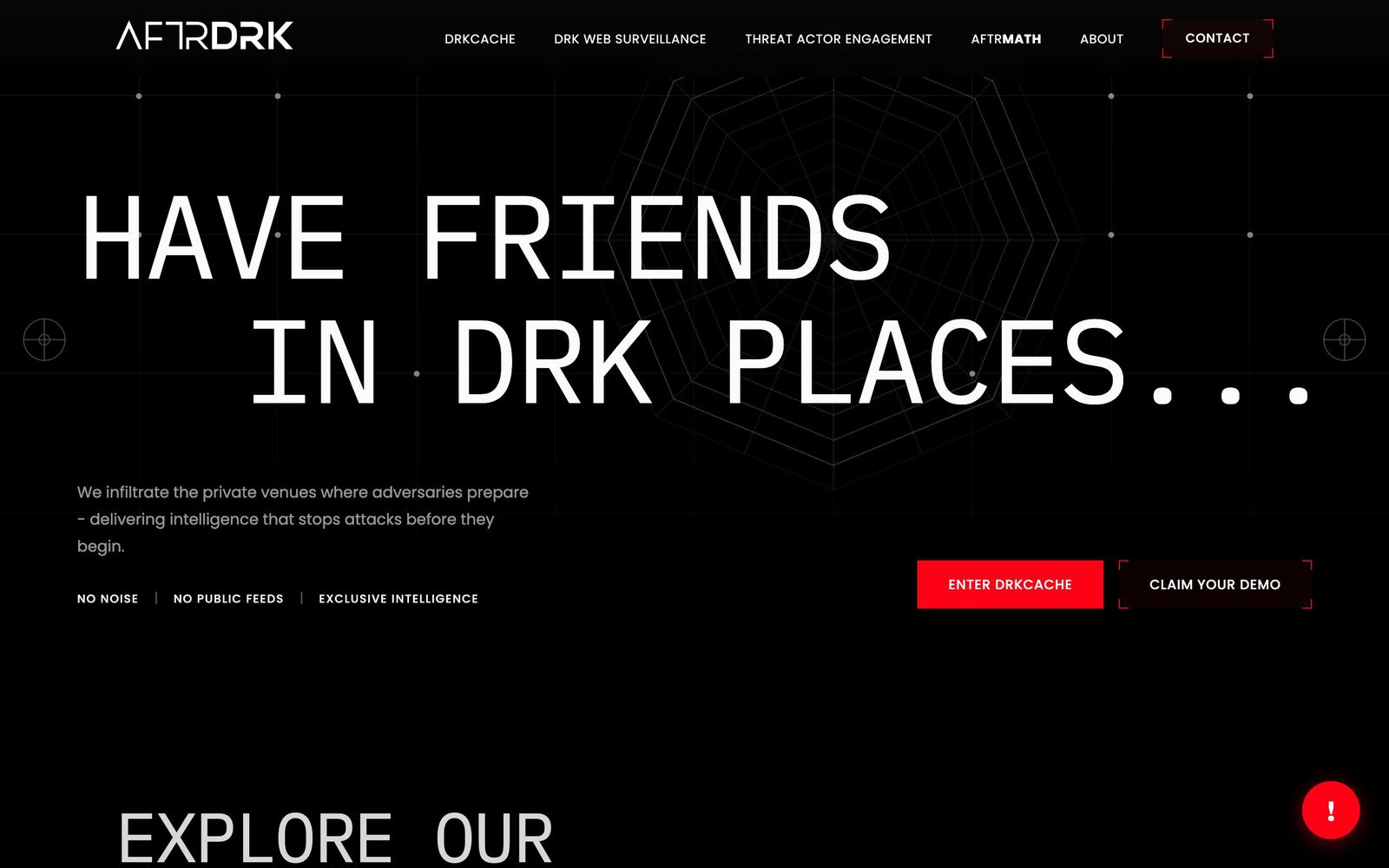
Dark web surveillance that watches ransomware leak sites, stealer logs and closed forums for your name.
Genuinely closer to the source than most feed-based monitoring, though the entry price and quote-shaped delivery put it out of reach for teams below a real security function.
Pros
- Sources are underground venues and stealer logs rather than recycled public threat feeds, which is where the early signal actually is
- Findings are human-verified before delivery, so the alert volume stays triageable for a small team
- Watchlist sizing scales with the plan, from 100 items at entry to 500 at the top tier
- Coverage extends past credentials to brand impersonation, insider selling and supply chain exposure
- A 30-day trial is available on the entry tier, which is unusual in dark web monitoring
Cons
- The entry plan starts in the low thousands per month, which prices out any organisation without a dedicated security function
- No named SIEM or SOAR integrations are published, so routing findings into an existing workflow needs a conversation
- Threat actor engagement is a service wrapped around the platform, and its scope and legal boundaries are not documented publicly
AFTRDRK pricing
List prices in USD per month, taken from the vendor at review time.
| Plan | Per month | What it covers |
|---|---|---|
| Core | $2,000 | 5 seats, 100 watchlist items; 30-day trial available |
| Professional | $3,000 | 15 seats, 250 watchlist items |
| Elite | $5,000 | 25 seats, 500 watchlist items |
What AFTRDRK actually does
AFTRDRK sells dark web surveillance: continuous monitoring of the places where compromise is arranged before it is executed. Its DRK Web Surveillance product watches ransomware leak sites, underground marketplaces and forums, Telegram and Discord channels, stealer logs and credential dumps, looking for an organisation's names, domains, executives, suppliers and data. When something surfaces, the finding is verified by a human before it reaches a customer, which is the deliberate difference from a feed that fires on every keyword match.
Delivery is a hosted portal with intelligence briefings sent by email, plus DRKCACHE, a conversational layer for asking questions of the collected material and generating reports on demand. A separate service line covers threat actor engagement, direct contact with adversaries, which is a consultancy offering wrapped around the platform rather than software. Plans are sized by seats and watchlist items, so the practical unit of purchase is how many brands, domains, executives and suppliers an organisation wants watched.
Key features
The coverage set is broader than credential monitoring alone.
- Collection across marketplaces, closed forums, Telegram and Discord channels, and credential databases
- Ransomware leak site tracking, alerting when an organisation is named or posted
- Stealer log ingestion for compromised employee and contractor credentials
- Brand protection for impersonation, fraudulent domains and unauthorised intellectual property use
- Supply chain and third-party exposure monitored against the same sources
- DRKCACHE for conversational queries over collected intelligence and on-demand reporting
Who it's for
This is a purchase for an organisation that already has somewhere for the findings to go. A security team that triages alerts, owns credential rotation and can act on a supplier compromise will get value from earlier warning of a listing or a leaked set of employee credentials. Sectors under active ransomware pressure, healthcare, manufacturing, professional services holding client data, are the obvious fit, particularly where a supply chain of smaller partners is the softest route in.
It is the wrong tool for a company without that function. At the entry tier the annual commitment is comparable to a junior analyst's salary, and an alert nobody is resourced to act on is worse than no alert. Smaller organisations are better served by credential monitoring bundled into an existing security suite, where the finding arrives inside a console someone already opens. Teams with rigid SOC tooling should also settle the routing question before the trial ends, since no SIEM or SOAR connectors are named publicly and a portal nobody logs into is a subscription paid for nothing.
How it compares
Recorded Future and Flashpoint are the established names, with far larger collection operations, mature integrations and analyst teams, at enterprise pricing and complexity that mid-market buyers routinely find excessive. Cheaper dark web monitoring bundled into a broader platform, such as the modules inside SpyCloud or a managed detection provider, covers credentials competently but not brand impersonation or insider selling. AFTRDRK's position is the middle: narrower than the large intelligence vendors, deeper and better verified than a bolt-on feed, and priced between the two.
Verdict
AFTRDRK is doing the harder version of this work, proximity to closed venues and human verification before an alert leaves the building, and the coverage list backs that up, extending well past leaked passwords into impersonation, insider activity and supplier exposure. The trial on the entry tier is a fair way to test whether the collection actually finds anything about a given organisation. The reservations are the price floor, which assumes a funded security team, and the missing public detail on how findings reach existing tooling. Buyers should establish the routing and the engagement service's boundaries during the trial rather than after it.
Ready to try AFTRDRK?
More developers tools like AFTRDRK
Mycroft
3.6GRC automation covering evidence collection, risk and vulnerability management across SOC 2 to FedRAMP.
Read Mycroft review →Sentaro
3.6AI email security that sits inside Microsoft 365 or Google Workspace without touching mail flow or DNS.
Read Sentaro review →Netlify
4.6Hosting and deployment platform with Git-based CI/CD, deploy previews, serverless functions, and AI workflows.
Read Netlify review →Pinecone
4.5Fully managed serverless vector database for similarity search, RAG, and agent memory at billion-vector scale.
Read Pinecone review →Runpod
4.5GPU cloud for AI workloads: on-demand instances, serverless inference endpoints, and multi-node clusters.
Read Runpod review →NinjaOne
4.4Endpoint management and RMM platform for monitoring, patching, backing up and remotely supporting company devices.
Read NinjaOne review →