
Sellfy review
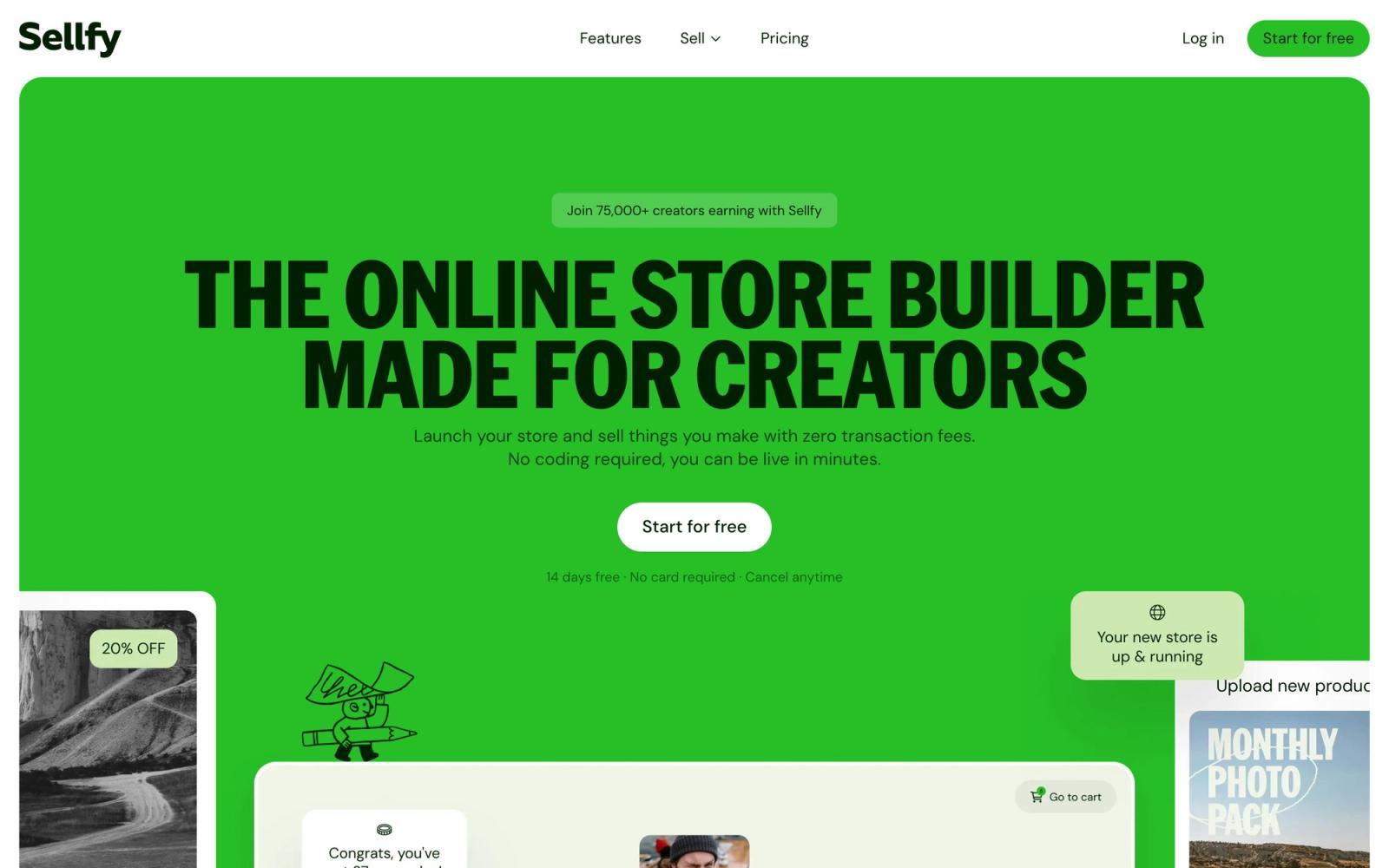
Storefront for creators selling digital files, subscriptions and print-on-demand merch in one place.
A fast way for a creator to start selling digital products and merch without assembling a stack, though the annual revenue caps and thin analytics make it something most sellers eventually outgrow.
Pros
- Digital delivery, subscriptions, physical goods and print-on-demand run from one dashboard with no add-on apps
- Sellfy charges no transaction fee of its own on any plan, leaving only the payment processor's cut
- Products can be sold through embeds and buy-now buttons on an existing site rather than only on the Sellfy store
- Email marketing with a monthly credit allowance is included, so a first list does not need a separate tool
- PDF stamping with buyer details and download limits give some protection on file-based products
Cons
- Each plan caps annual sales volume, and crossing the entry cap forces a jump to a plan costing roughly three times as much
- Store design is limited to a small theme set with no custom category pages or custom URLs
- Analytics stop at basic sales and traffic reporting: no cohort views, no lifetime-value tracking, little on visitor behaviour
Sellfy pricing
List prices in USD per month, taken from the vendor at review time.
| Plan | Per month | What it covers |
|---|---|---|
| Starter | $22 | billed annually, up to 10,000 in sales a year; 29 monthly |
| Business | $59 | billed annually, up to 50,000 in sales a year; 79 monthly |
| Premium | $119 | billed annually, up to 200,000 in sales a year; 159 monthly |
What Sellfy actually does
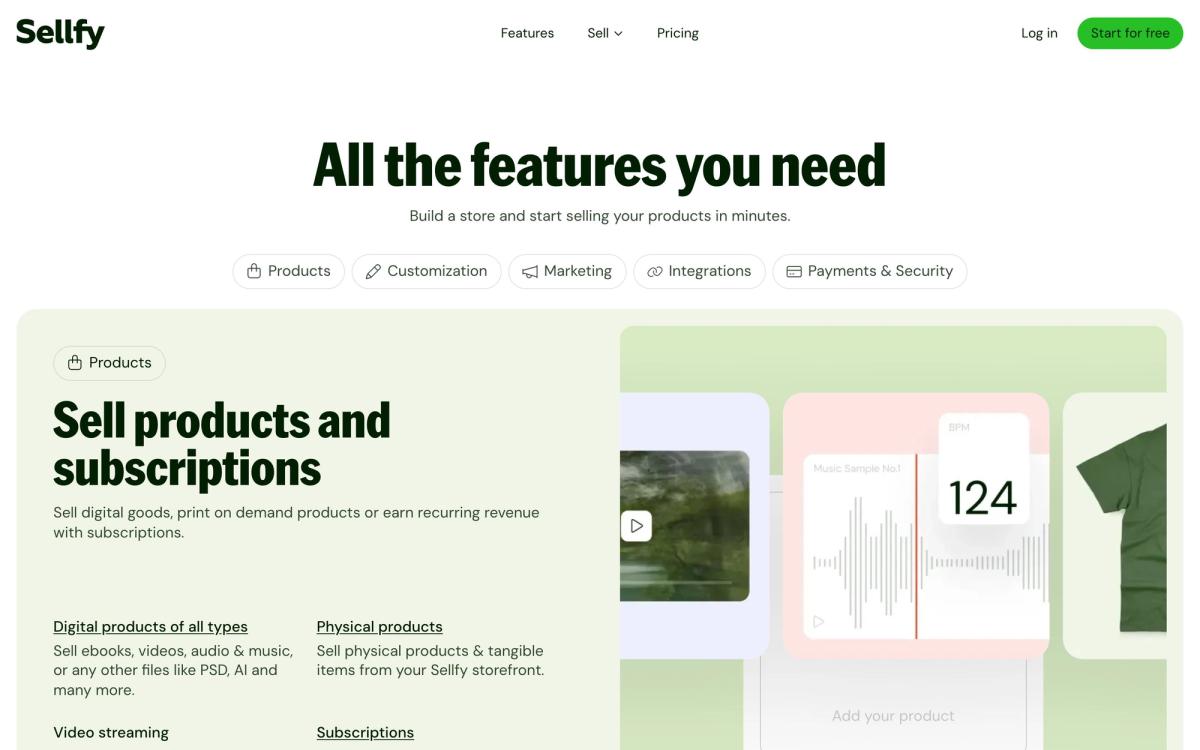
Sellfy is a hosted storefront aimed at people who make things and already have somewhere to sell them, a channel, a newsletter, a following. A seller uploads products, sets prices, connects Stripe and PayPal, and gets a store on a Sellfy subdomain or a custom domain. The product types cover more ground than the digital-downloads label suggests: files of any kind with download limits and PDF stamping, streamed video with basic piracy protection, subscription products billed on a recurring cycle, physical goods with shipping, and print-on-demand merchandise fulfilled when an order arrives so no stock is bought in advance.
The second half of the product is distribution. Rather than forcing traffic to the Sellfy store, a seller can drop buy-now buttons, embedded product cards, or an entire store into an existing site, and attach product links to YouTube end screens and cards. Around this sit the marketing pieces most creators would otherwise buy separately: discount codes, checkout upsells, cart-abandonment emails, an email campaign tool with a monthly credit allowance, and affiliate program management on the higher plans. Sellfy takes no transaction fee of its own on any tier, so the only cut is the payment processor's.
Key features
What comes with an account:
- Digital delivery for arbitrary file types, with download limits and buyer details stamped into PDFs
- Subscription products billed weekly, monthly or yearly
- Print-on-demand merchandise with no upfront inventory
- Buy-now buttons, product cards and full-store embeds for a site the seller already runs
- Email campaigns, discount codes, checkout upsells and cart-abandonment automation
- Affiliate program management and removal of Sellfy branding on the mid and upper tiers
Who it's for
The right buyer is a solo creator or small studio with an audience and a handful of products: a designer selling templates, a musician selling sample packs, a YouTuber selling a course and a hoodie. The appeal is time. A store that would take a weekend to assemble from a site builder, a digital-delivery plugin, a merch service and an email tool goes live in an afternoon here, and stays in one dashboard afterwards.
It suits that seller badly once the catalogue or the revenue grows. The plans cap annual sales volume, and the caps are the defining constraint of the product: a store that outgrows the entry allowance faces a plan costing roughly three times as much rather than a proportional step. Sellers who need custom category pages, custom URLs, a distinctive storefront design, or serious analysis of visitor behaviour will hit walls that no plan removes. Anyone building a brand where the store itself is part of the identity should start elsewhere.
How it compares
Gumroad is the closest comparison and charges a percentage of every sale instead of a monthly fee, which is cheaper below a few thousand in monthly revenue and much more expensive above it. Payhip sits in similar territory with a genuine free tier and weaker merch support. Lemon Squeezy appeals to software sellers who want a merchant of record handling sales tax, something Sellfy does not do. Shopify is the eventual destination for anyone whose store becomes the business: far more design and app flexibility, at the cost of needing add-ons for digital delivery and a considerably longer setup. Sellfy's argument is that the simple case should stay simple, and it holds until volume arrives.

Verdict
Sellfy does one thing well: it gets a creator selling quickly, across digital, subscription and merch products, without a stack to assemble or a platform fee on each sale. That is worth real money to someone whose time is better spent making the products. The reasons it does not rate higher are structural rather than incidental. Revenue caps trigger sharp upgrade steps, the storefront offers little room to look like anything other than a Sellfy store, and the analytics never answer the questions a growing seller starts asking about where buyers come from and what they are worth over time. Good for a first store and a first few years; not a platform to build a decade on.
Ready to try Sellfy?
More creators tools like Sellfy
Kartra
3.9All-in-one platform for selling courses and memberships: pages, checkout, email, automation and affiliates.
Read Kartra review →ElevenLabs
4.7AI audio platform with 5,000+ voices in 70+ languages: text-to-speech, voice cloning, dubbing, and agents.
Read ElevenLabs review →Descript
4.5AI audio and video editor where you edit recordings by editing the transcript text.
Read Descript review →Gamma
4.5AI design partner that generates presentations, documents, websites, and social content from a prompt.
Read Gamma review →Riverside
4.5Browser recording studio that captures every remote guest locally in 4K, then edits and publishes the episode.
Read Riverside review →Consensus
4.4AI search engine over 200M+ academic papers, with a Consensus Meter showing where the science agrees.
Read Consensus review →