
Kartra review
All-in-one platform for selling courses and memberships: pages, checkout, email, automation and affiliates.
A sensible single subscription for a solo business selling digital products, though the page builder and membership areas look their age next to Kajabi.

Pros
- Pages, checkout, email, memberships, calendars and affiliates share one contact record and one automation engine
- Behavioural triggers fire on video watch percentage, page visit or purchase, not only on form submissions
- Affiliate management with tiered commissions is included, where most competitors charge for a separate tool
- Helpdesk, appointment calendars and quizzes remove three more subscriptions from a small operation
- WebinarJam and EverWebinar come from the same company and push registrants directly into Kartra automations
Cons
- The page builder feels dated next to dedicated landing page tools, and the template library shows its vintage
- API access and the Zapier connection are withheld until the third tier, which blocks integration on cheaper plans
- Plans are banded by stored contact count, so a list that grows without converting raises the bill on its own
Kartra pricing
List prices in USD per month, taken from the vendor at review time.
| Plan | Per month | What it covers |
|---|---|---|
| Essentials | $59 | 500 contacts; $52/mo billed annually |
| Starter | $119 | 2,500 contacts, 5 team members; $99/mo billed annually |
| Growth | $229 | 12,500 contacts, adds automations, affiliates and API; $189/mo billed annually |
| Professional | $549 | 25,000 contacts; $429/mo billed annually |
What Kartra actually does
Kartra bundles the machinery of selling a digital product into one subscription. There is a page and funnel builder for landing pages, sales pages and checkouts; a shopping cart with order bumps, upsells and several payment gateways; an email platform with sequences, tagging and behavioural automation; course and membership hosting with drip scheduling and its own video player; and an affiliate programme with tiered commissions and payout tracking. Because these share one contact record, a purchase, a video watched to a certain percentage or a page visit can all trigger the same automation without a connector in between.
Round the edges sit the smaller pieces a one-person business otherwise buys separately: appointment calendars, a helpdesk for support tickets, surveys and quizzes, and a funnel mapper that diagrams a customer journey before it is built. The same company publishes WebinarJam and EverWebinar for live and evergreen webinars, and those hand registrants straight to Kartra. An AI assistant drafts copy for pages and emails. The pitch is that a coach or course seller replaces most of a software stack with one login and one bill, and for the intended customer that is broadly what happens.

Key features
What the platform actually contains:
- Drag-and-drop page and funnel builder with a funnel mapper and simulator
- Checkout with order bumps, upsells and multiple payment gateways
- Email marketing with behavioural automation, tagging and sequences
- Course and membership hosting with drip scheduling and video hosting
- Affiliate programme management with tiered commissions and payouts
- Appointment calendars, helpdesk and quizzes for post-sale work
Who it's for
Kartra suits the solo operator or very small team whose revenue comes from selling a course, a coaching programme or a membership to a list they own. For that shape of business the arithmetic is favourable: one subscription against a page builder, an email platform, a cart, a course host and an affiliate tool bought separately, with none of the connectors to maintain. Marketers who think in funnels and tags will recognise the model immediately and be productive quickly.
It is a poor fit for anyone whose product is primarily education and whose students judge the experience, since the membership and course areas look plainer than the dedicated platforms. It is also wrong for a business with existing systems that must be integrated, because the API and Zapier access needed to connect anything sit two tiers up. Anyone who wants a modern, expressive page builder will be disappointed within an hour of opening the template library.
How it compares
Kajabi is the direct rival and wins on polish, particularly the student-facing course experience, at a noticeably higher subscription. ClickFunnels is sharper on funnel building and split testing but still leans on external tools for email depth and membership automation, which erodes its price advantage. Kit is the choice for creators whose business is the newsletter first and the product second, with far better sending and far less commerce around it. Kartra's case is breadth per dollar rather than best in any single category.
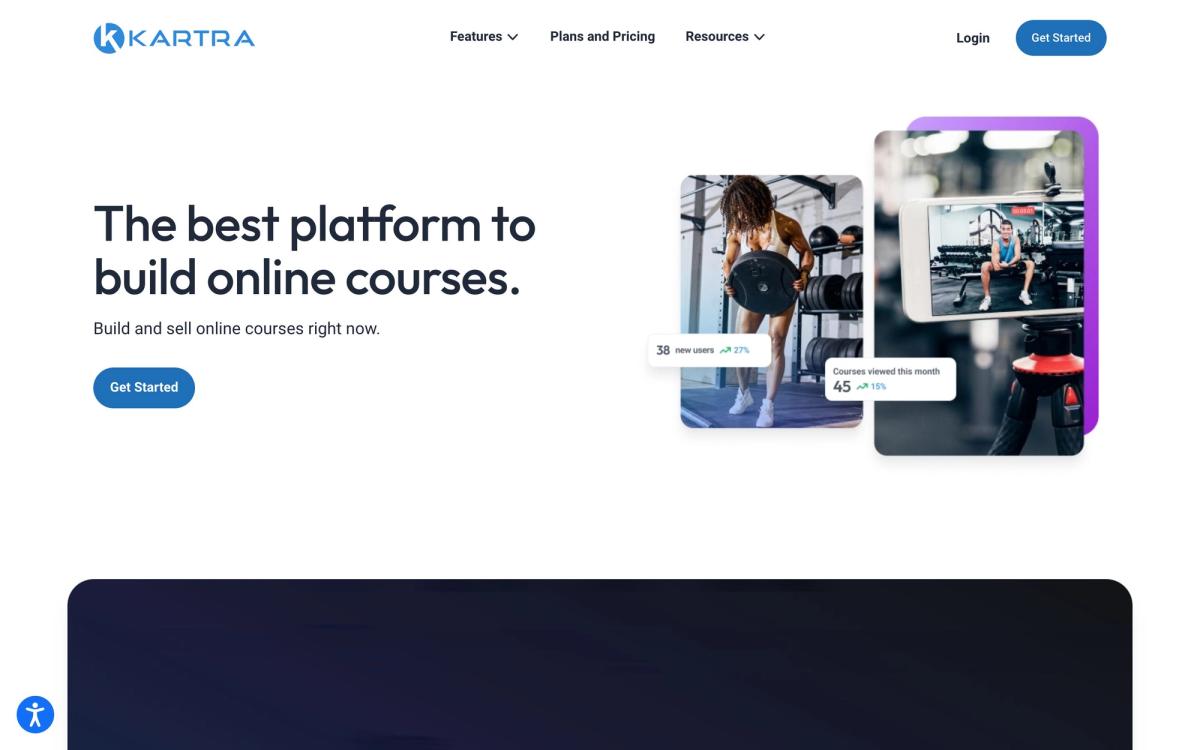
Verdict
Kartra remains a reasonable purchase for the business it was designed for, and the automation engine in particular is stronger than the entry price implies. The rating reflects age rather than absence: the page builder and membership areas have not kept pace with newer competitors, and the tier structure holds back API access and automations that a growing operation will want early. Start on the plan that includes automations and API access if anything has to be integrated, and look at Kajabi first if the course experience itself is the product being sold.
Ready to try Kartra?
More creators tools like Kartra
Format
3.9Portfolio site builder for photographers and designers, with client proofing galleries and a commission-free store.
Read Format review →Sellfy
3.7Storefront for creators selling digital files, subscriptions and print-on-demand merch in one place.
Read Sellfy review →ElevenLabs
4.7AI audio platform with 5,000+ voices in 70+ languages: text-to-speech, voice cloning, dubbing, and agents.
Read ElevenLabs review →Descript
4.5AI audio and video editor where you edit recordings by editing the transcript text.
Read Descript review →Gamma
4.5AI design partner that generates presentations, documents, websites, and social content from a prompt.
Read Gamma review →Riverside
4.5Browser recording studio that captures every remote guest locally in 4K, then edits and publishes the episode.
Read Riverside review →