
Puzzle review
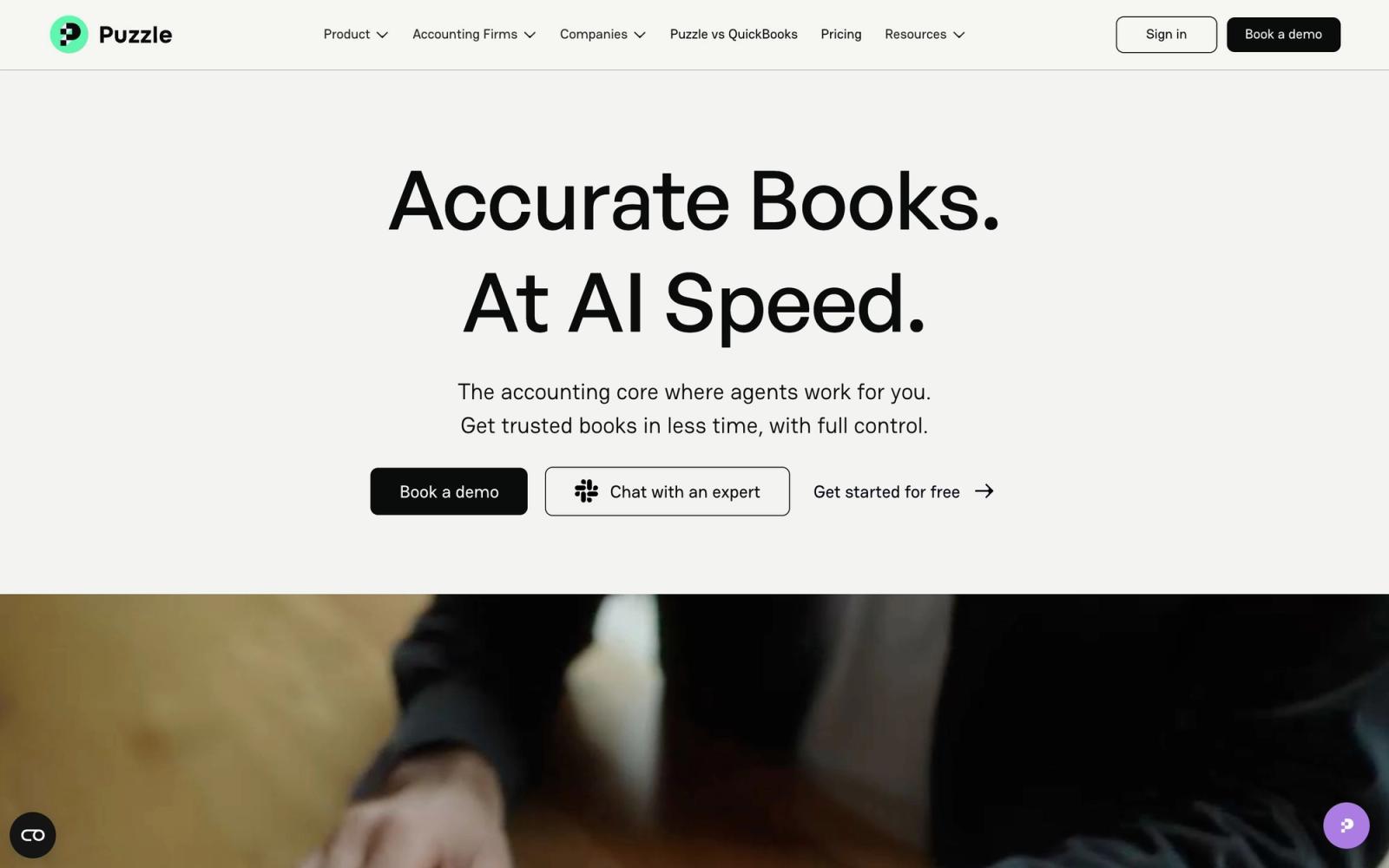
AI-native accounting software: cash and accrual from one ledger, with up to 98% automated categorization.
Puzzle is the best ledger for startups on a modern fintech stack, with AI doing the bookkeeping prep and humans approving, but its integration set is thinner than QuickBooks' for old-school businesses.
Pros
- Cash and accrual views generated from a single ledger, no parallel books
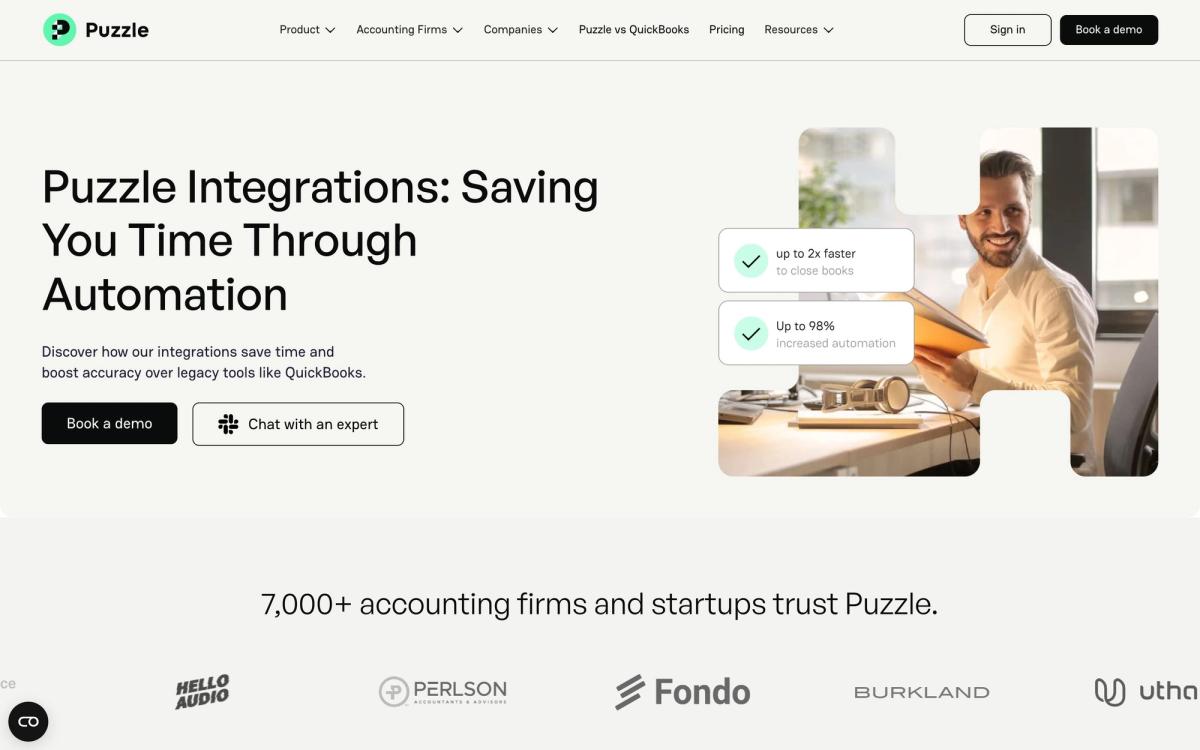
- AI agents draft categorization and reconciliation, claimed up to 98% automated, with human approval before posting
- Continuous reconciliation through the month instead of a painful close
- Real-time burn rate, runway, and cash flow built for startup operators
- Direct integrations with the modern stack: Stripe, Mercury, Brex, Ramp, Gusto, Rippling, Deel
- Free entry tier makes it easy for early startups to start on real books
Cons
- Integration catalog is far smaller than QuickBooks' ecosystem
- Fewer accountants and bookkeepers are trained on it than on legacy ledgers
- Less suited to inventory-heavy or brick-and-mortar businesses
Puzzle is accounting software built as if the ledger were being invented today: AI-native, wired directly into the modern fintech stack, and designed to produce both cash and accrual views from a single set of books. It positions itself as the QuickBooks alternative for startups, and the architecture backs the claim. Instead of importing bank feeds into a general-purpose ledger and paying a bookkeeper to categorize everything at month-end, Puzzle connects to tools like Stripe, Mercury, Brex, Ramp, Gusto, and Rippling, and lets AI agents draft the categorization and reconciliation work continuously, with a human approving before anything posts.
What Puzzle actually does
At the foundation is a single ledger that can present financials on either a cash or accrual basis without maintaining parallel books, which matters for startups that run on cash today but will need accrual statements for diligence, board reporting, or their first audit. Transactions flow in from direct integrations rather than generic bank feeds, so revenue from Stripe and payroll from Gusto or Rippling arrive with context the AI can use.
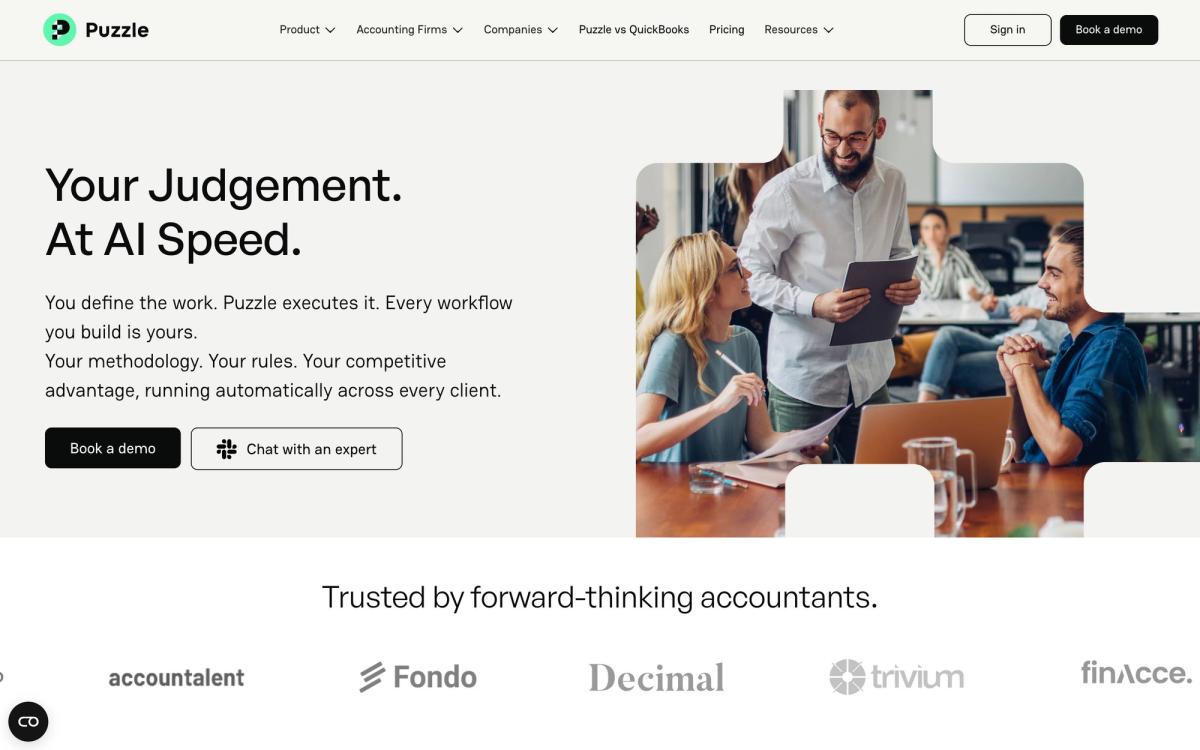
Puzzle calls its automation model governed automation: AI handles the repetitive preparation, categorization, matching, and reconciliation, claiming up to 98 percent automated with no rules to write, while accountants review and approve before posting. Reconciliation happens continuously through the month, so the close becomes a review rather than an archaeology project. On top of the ledger, founders get the dashboard numbers they actually check: burn rate, runway, and cash flow, computed in real time rather than three weeks after month-end.
Key features
- Single ledger producing both cash-basis and accrual-basis financials
- AI agents that draft categorization and reconciliation for human approval
- Up to 98% automated transaction categorization without manual rule-writing
- Continuous, throughout-the-month reconciliation instead of batch closes
- Real-time burn rate, runway, and cash flow visibility
- Native connections to Stripe, Mercury, Brex, Ramp, Gusto, Rippling, and Deel
- Multi-client tooling for accounting firms serving startups
Who it's for
The sweet spot is venture-track and bootstrapped startups whose finances already live in the modern stack: a Mercury bank account, Stripe revenue, Ramp or Brex cards, and payroll in Gusto, Rippling, or Deel. For those companies, Puzzle's direct integrations and automation deliver clean books with minimal bookkeeping effort, and the free entry point removes the excuse for running the business out of a spreadsheet. Accounting firms with startup client bases are the other audience, since the automation does the prep work juniors used to do. It is a poor fit for inventory-heavy retailers, construction, or businesses that depend on the long tail of plugins built around legacy ledgers.
How it compares
QuickBooks Online is the incumbent comparison, and it still wins on ecosystem: thousands of app integrations and an enormous base of accountants who know it cold. Puzzle wins on automation depth, the single cash-and-accrual ledger, and how well it understands startup-stack data sources that QuickBooks treats as generic feeds. Xero sits in a similar position to QuickBooks: a mature, well-loved general ledger with broad integrations but a fundamentally pre-AI workflow where categorization rules are written by hand. The practical question for a founder is whether your financial stack is modern enough for Puzzle's direct integrations to cover everything; if it is, the automation advantage is hard to give up.
Verdict
Puzzle is what accounting software looks like when AI is in the foundation rather than bolted on, and its governed-automation model, AI drafts, humans approve, is the right answer to the obvious trust question. The single ledger serving both cash and accrual is a genuinely better architecture for companies that will grow into accrual reporting. The honest limits are ecosystem breadth and accountant familiarity, where the legacy players retain a real lead. For startups on a modern fintech stack, Puzzle is the strongest ledger choice we have reviewed; for everyone else, the incumbents are still the safer default.
Ready to try Puzzle?
There's a free tier, so you can test it before committing.
More accountants tools like Puzzle
Aplos
4.0Fund accounting and donation tracking built for nonprofits and churches rather than adapted from small-business books.
Read Aplos review →Qoyod
3.8Arabic-first cloud accounting for Saudi businesses, with ZATCA e-invoicing, VAT and Zakat reporting built in.
Read Qoyod review →Dext
4.6AI receipt and invoice capture that pushes clean data into Xero, QuickBooks and Sage.
Read Dext review →Ignition
4.5Client engagement for accounting firms: proposals, engagement letters, and automated billing in one flow.
Read Ignition review →BILL
4.4Category-leading AP/AR automation for US firms, with a free Spend & Expense module bundled in.
Read BILL review →DataSnipper
4.4Excel-native AI document extraction and matching for audit and finance teams.
Read DataSnipper review →