
Unitel Voice review
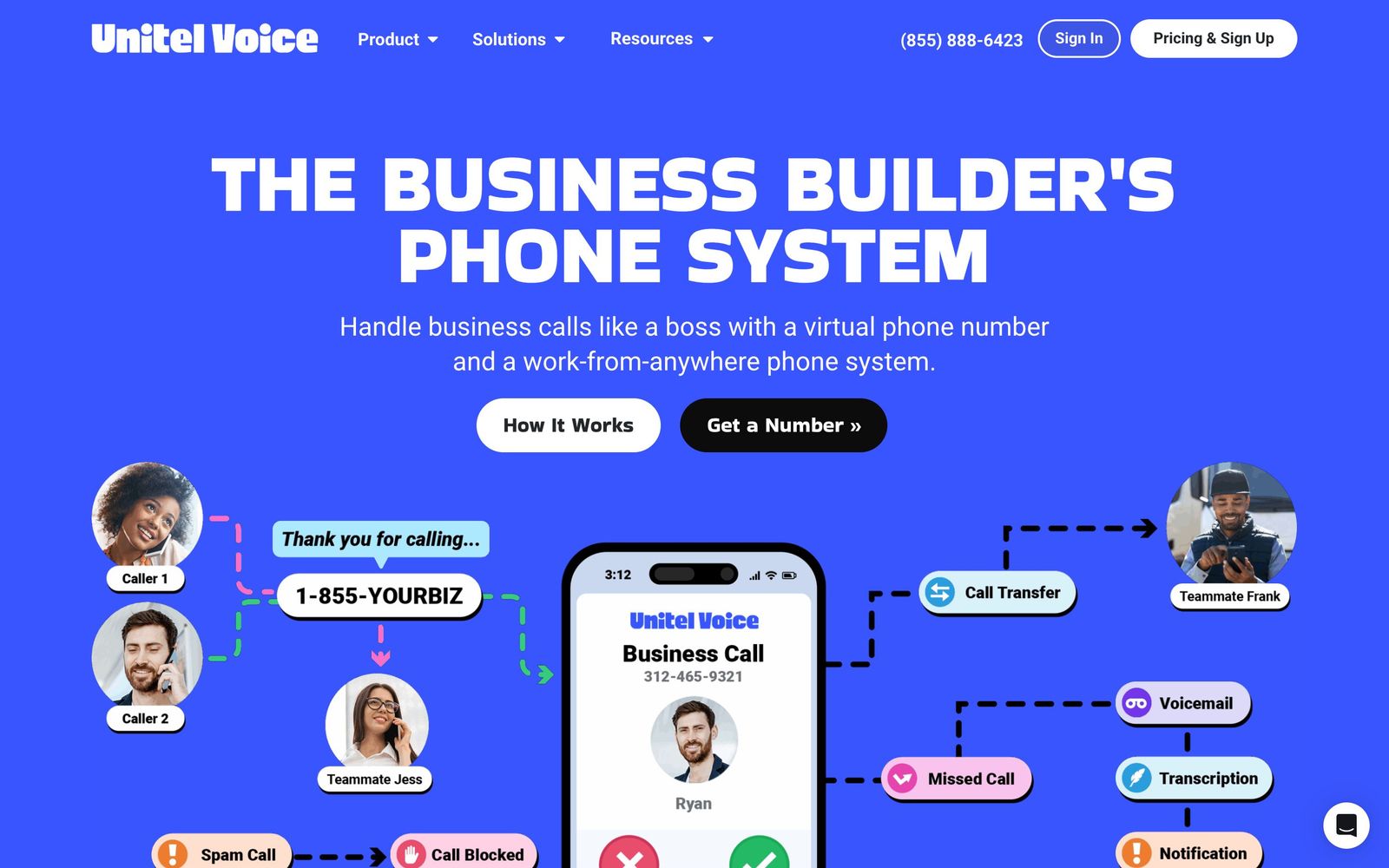
A virtual phone system that puts a business number, auto attendant and shared voicemail on phones a team already owns.
A sensible first business phone line for a solo operator or a small crew that answers on mobiles, though the integration list and the app interface both lag the larger VoIP suites.
Pros
- Flat monthly pricing with unlimited minutes on most plans, so a busy month does not produce a surprise invoice
- Runs on existing mobiles and computers through apps and call forwarding, with no hardware purchase required to start
- Auto attendant, extensions, greetings and voicemail boxes are configured from a web dashboard in minutes rather than through a provisioning ticket
- Support is staffed in the United States and reachable by phone, which is unusual at this price point
- Local, toll-free and vanity numbers are available, and professional greeting recording is bundled
Cons
- The integration catalog is short: there is no deep native CRM logging comparable to what RingCentral or Dialpad ship, so call records mostly stay inside Unitel
- The mobile app and web console look dated next to Dialpad or OpenPhone, and reviewers repeatedly single out the interface rather than the call quality
- No built-in video conferencing and thin international calling support, so a distributed or client-facing team still needs a second tool
Unitel Voice pricing
List prices in USD per month, taken from the vendor at review time.
| Plan | Per month | What it covers |
|---|---|---|
| Start-Up | $9.99 | 1 number, 500 monthly minutes, 3 users, mobile app |
| Unlimited | $24.99 | 1 number, unlimited minutes and users, mobile app |
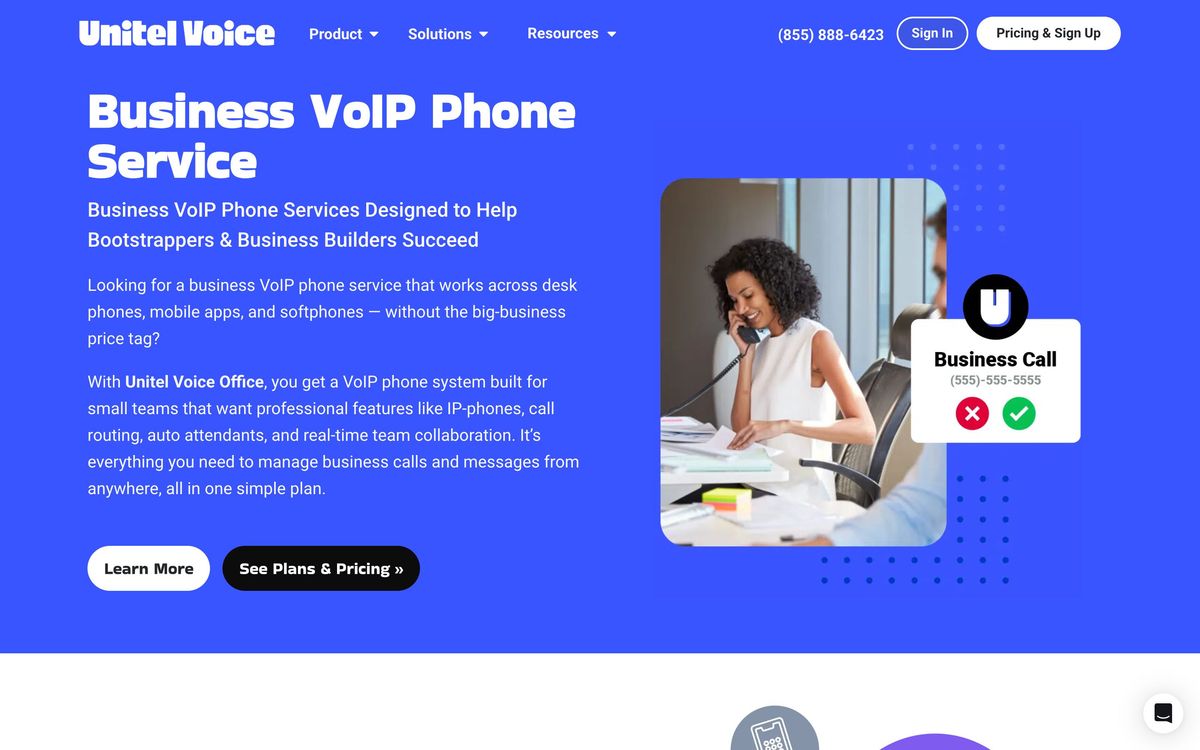
| Office | $29.99 | 3 users included, additional users $9.99 each; adds desktop softphone, desk phones, team messaging |
| Office-Max | $69.99 | 10 users included, additional users $9.99 each; annual billing saves over 30% |
What Unitel Voice actually does
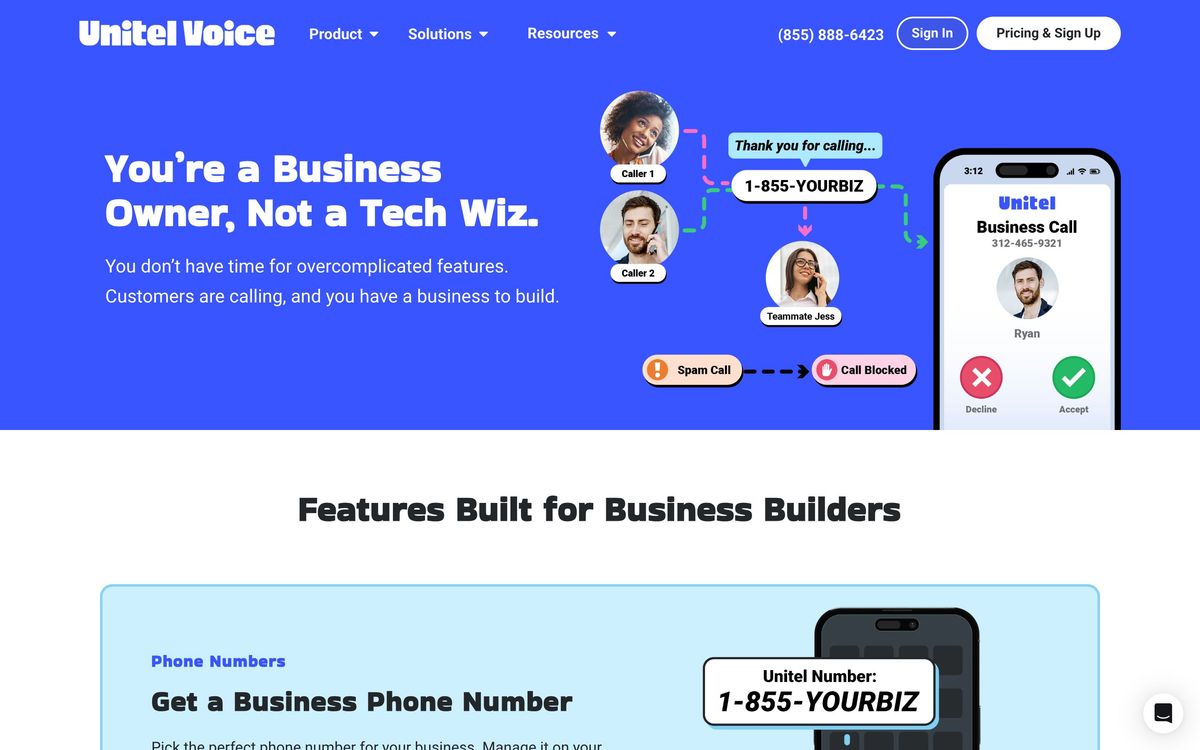
Unitel Voice is a cloud phone system for businesses that do not want a phone system. It provisions a business number, local, toll-free or vanity, and layers an auto attendant, extensions, voicemail boxes and routing rules on top of devices the team already carries. Calls arrive through a mobile app, a desktop softphone, a forwarded mobile number or a SIP desk phone, and the caller hears a recorded greeting and a menu instead of somebody's personal voicemail. Everything is configured from a browser dashboard: greetings are uploaded or recorded by the vendor's voice talent, extensions are assigned, and call flow is edited without opening a support ticket.
The delivery model matters as much as the feature list. There is no PBX to install and no minimum hardware order, and porting an existing number is part of onboarding. Plans are flat-rate: most include unlimited minutes and, on the mid tiers, a fixed number of users with a per-user charge beyond that. The company makes a point of staffing its own support in the United States rather than outsourcing it, which is the difference most reviewers mention first. The trade is a narrower product than the large unified-communications suites, this is a phone system, not a collaboration platform.
Key features
The scope is deliberately small, and the tiers differ mostly by minutes, users and device support.
- Local, toll-free and vanity numbers, with porting from an existing carrier during setup
- Auto attendant with recorded greetings, department routing and per-extension menus
- Call forwarding, transfer and recording to mobiles, landlines or softphones
- Mobile and desktop apps, with desk phone support on the office-grade plans
- Voicemail boxes per extension with notification, plus on-hold music and messaging
- Conference calling and internal team messaging on the higher tiers
Who it's for
The fit is a service business where the phone is still the main channel and the staff are rarely at a desk: a contractor, an agency of five, a clinic front desk, a real estate team, a solo consultant who wants callers to reach an extension rather than a mobile voicemail. For that shape of operation the value is a professional call flow at a predictable monthly cost, and the setup work is measured in an afternoon rather than a project.
It is the wrong purchase for a sales or support team that lives inside a CRM. Without deep call logging into Salesforce or HubSpot records, activity has to be re-entered by hand, and there is no conversation intelligence layer, no shared inbox and no video meeting. Teams with meaningful international calling or heavy business texting requirements will also find the coverage thin. Anyone in those situations should price a full unified-communications platform instead and accept the higher per-seat cost.
How it compares
RingCentral covers far more ground, video, SMS, contact centre, extensive CRM integrations, and charges accordingly, with per-seat pricing that a three-person business rarely justifies. OpenPhone is the closer modern rival: a cleaner interface, better shared-inbox and texting behaviour, and real CRM sync, but it prices per user, so a team that needs many extensions and few active seats ends up paying more than under Unitel's bundled-user model. Grasshopper sits nearest in spirit and price, offering a similar virtual-number-plus-extensions package, though Unitel includes unlimited minutes at a lower entry price and answers the phone with a person. Dialpad wins on transcription and AI call notes and loses on simplicity.
Verdict
Unitel Voice is a narrow product executed carefully. The plans are legible, the minutes are unmetered where it counts, the dashboard does what a small business needs, and the support reputation is earned rather than claimed. Ratings on the public review sites cluster in the mid-fours for exactly those reasons. The caveat is that the product has not modernised at the same pace as its competitors: the apps look their age, the integration catalog is short, and there is no video or serious texting story. For a business that wants a reliable main line and nothing more, that is an acceptable trade; for one that expects its phone system to feed a CRM, it is not.
Ready to try Unitel Voice?
More service-businesses tools like Unitel Voice
Aircall
4.1Cloud phone system with a shared call inbox and automatic CRM logging, for support and inside-sales teams.
Read Aircall review →Calilio
4.0AI-powered cloud phone system with a unified callbox and virtual numbers from 100+ countries.
Read Calilio review →Nextiva
3.9Cloud phone system that extends into a contact centre with shared inboxes, chat and AI call handling.
Read Nextiva review →Ruby
3.8Live virtual receptionists and managed website chat answering for small businesses around the clock.
Read Ruby review →800.com
3.7Toll-free, local and vanity business numbers with call forwarding, texting and call tracking in one account.
Read 800.com review →Tradify
4.6Job management app for tradespeople covering quoting, scheduling, invoicing and payments in one place.
Read Tradify review →