
Thryv review
All-in-one CRM, booking, invoicing and local marketing for small service businesses that run on one system.
A workable single system for a trades or clinic owner tired of stitching five tools together, though the multi-month term and the cancellation record are the reasons to read the contract twice.
Pros
- One login covers the CRM, booking calendar, estimates, invoices and payment collection
- Listings are pushed to more than sixty directories, which removes a genuinely tedious job
- Review requests and AI-assisted responses run from the same place as the customer record
- Automated reminders measurably cut no-shows for appointment-driven businesses
- Onboarding is done with a human rather than left to the buyer, which matters for non-technical owners
Cons
- The Business Center is sold through a demo on an initial multi-month term, and cancellation complaints dominate the vendor's BBB and Capterra profiles
- Each module is priced separately, so the useful configuration costs far more than the advertised entry plan
- The QuickBooks sync has a documented history of creating duplicate contacts that owners then clean up by hand
Thryv pricing
List prices in USD per month, taken from the vendor at review time.
| Plan | Per month | What it covers |
|---|---|---|
| Marketing Center Starter | $99 | per month, 15 percent off billed annually |
| Marketing Center Signature | $399 | per month, up to five users |
What Thryv actually does
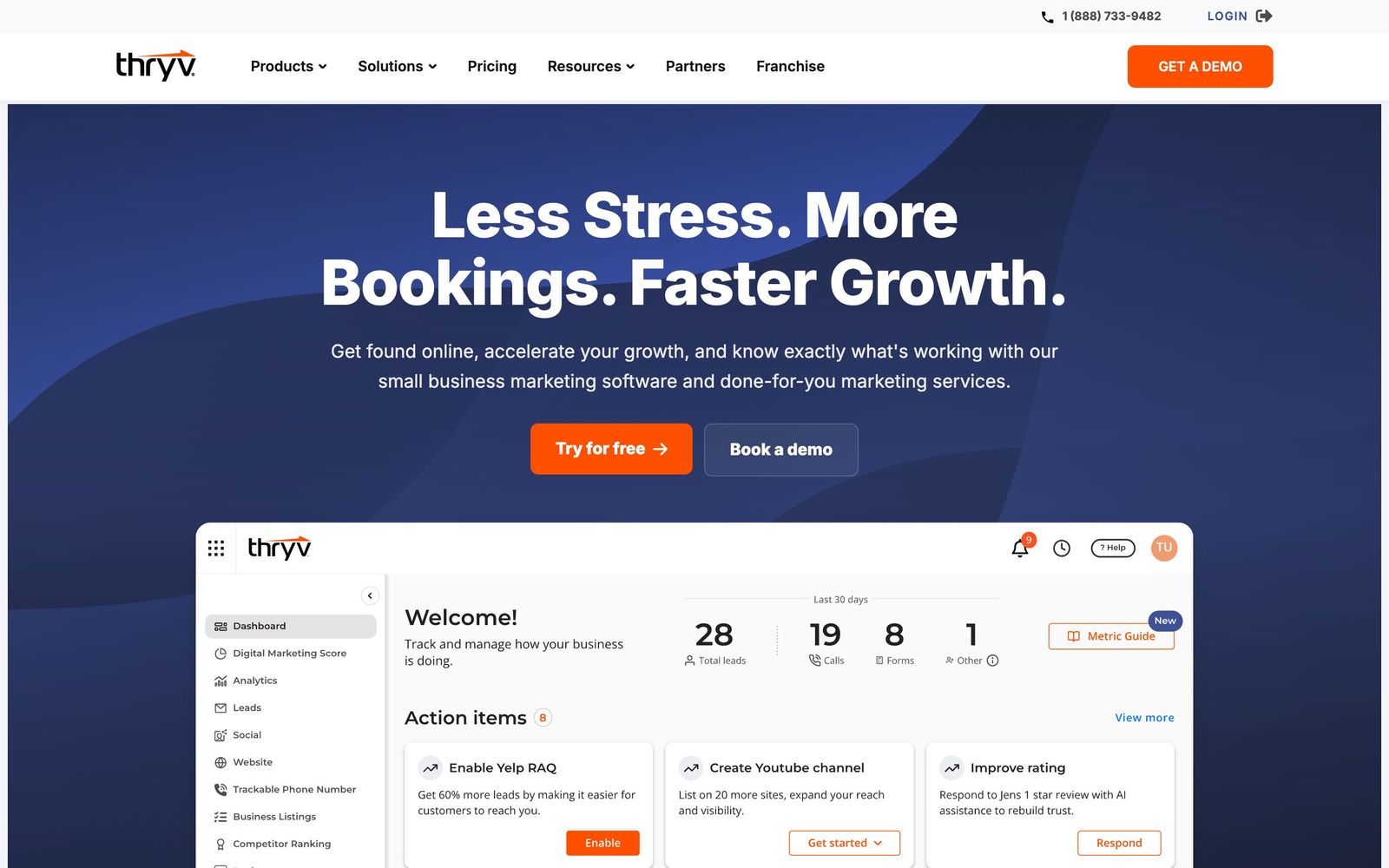
Thryv is a small-business operating system aimed squarely at local service companies: plumbers, salons, dental practices, pet groomers, law offices. It bundles the jobs those owners otherwise buy separately. A customer database holds contact history, notes and documents. An online booking calendar takes appointments and fires reminders. Estimates turn into invoices, invoices take card payments, and the payment posts back against the customer. On the marketing side it pushes business details to dozens of listing directories, chases reviews, schedules social posts and hosts a website.
The product is sold as separate centres rather than one plan. Marketing Center handles visibility, listings, reviews and ads. Business Center holds the CRM, scheduling, estimates and invoicing. Command Center covers phone, text and shared inbox communications. Marketing Center prices are published; Business Center is quoted after a demo rather than bought self-serve, and comes with an initial term rather than month-to-month billing. Layered on top is a set of AI helpers that score inbound leads, summarise them and draft review responses, plus optional managed services Thryv calls Boosts, where its own staff run search and social campaigns.
Key features
The features below are the ones owners actually use week to week.
- Customer database with history, notes, documents and a client-facing portal
- Online booking with automated text and email appointment reminders
- Estimates and invoices with card payment collection tied to the customer record
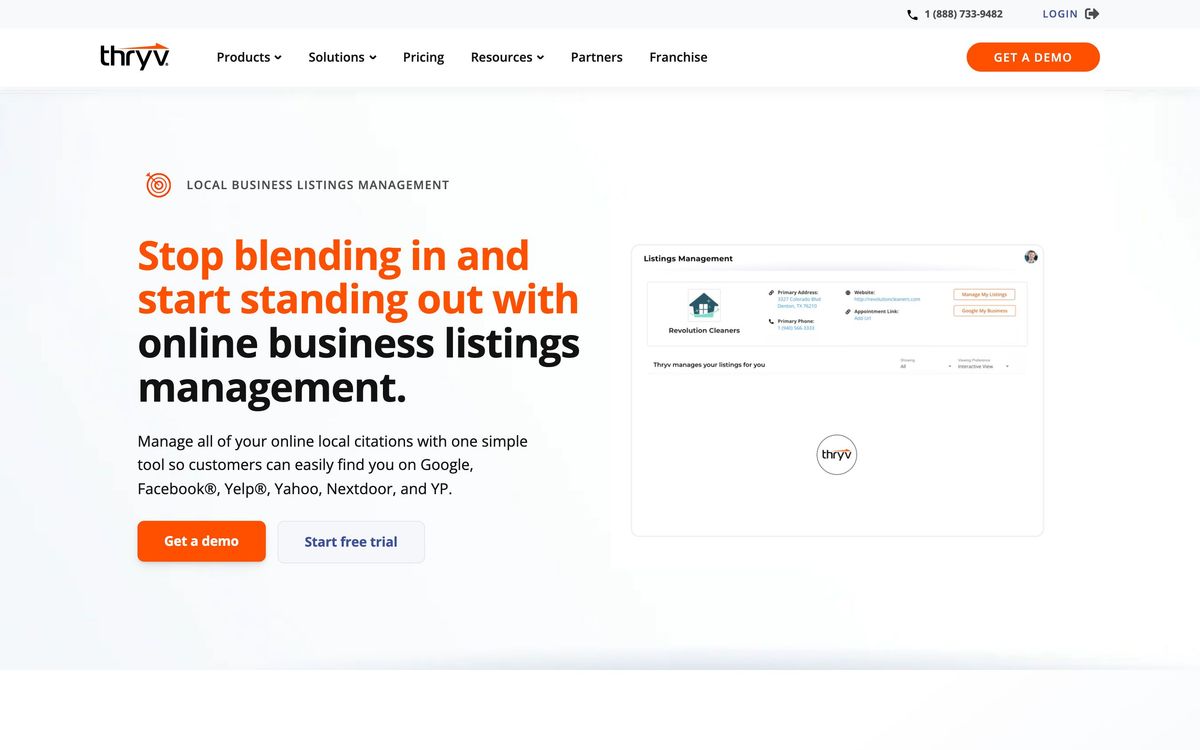
- Listings pushed and monitored across more than sixty directories
- Review requests with AI-drafted responses for Google and Facebook
- Website builder, social scheduling and managed advertising sold as add-on Boosts
Who it's for
Thryv suits an owner-operator with a few staff, no marketer, and five subscriptions they are tired of reconciling. The value is consolidation rather than depth in any one area: booking that talks to invoicing that talks to the review request is worth more to that buyer than a better standalone calendar. The guided onboarding matters here too, because this is a buyer who will not configure a CRM from a help centre article.
It is the wrong choice for anyone who wants to test before committing, since the core product is not self-serve and the initial term is measured in months. It is also a poor fit for businesses with field crews and complex dispatch, where job-management specialists handle scheduling, routing and technician tracking far better, and for anyone whose accounting is intricate enough that a shaky sync would cause real damage.
How it compares
Jobber and Housecall Pro beat Thryv on field-service mechanics, with proper dispatch, route planning and technician apps, but neither does listings and reputation work in the same depth. HighLevel offers a broader marketing and automation stack at a lower price, though it assumes an agency or a technical operator to configure it. Vagaro and Mindbody are stronger for salons and studios specifically, with memberships and class booking Thryv lacks. Thryv's argument is breadth under one login plus done-for-you marketing; its weakness is that no individual module leads its category.
Verdict
Thryv genuinely removes work for a small local business that would otherwise run five disconnected tools, and the listings and reputation modules are the strongest part of the bundle. The AI lead scoring and review drafting are useful without being decisive. The rating sits below the middle of the pack for commercial reasons rather than functional ones: the core product is demo-gated, the initial term is long, module pricing stacks up quickly, and billing and cancellation complaints are the most persistent theme in public reviews. Get the total monthly figure, the term and the exit terms in writing before signing, and confirm who owns the website if Thryv builds it.
Ready to try Thryv?
More service-businesses tools like Thryv
Rebolt
4.1Done-for-you marketing for home service businesses: SEO website, social posts and Google profile in one plan.
Read Rebolt review →MyCase
4.0Practice management for small law firms, built around the client portal and getting invoices paid.
Read MyCase review →NiceJob
4.0Automated review requests, referrals and social proof widgets for local service businesses.
Read NiceJob review →Shore
3.8Online booking, customer records, an iPad till and campaigns in one system for salons and studios.
Read Shore review →Marketing 360
3.7All-in-one marketing platform for small local businesses, sold with a marketing manager attached.
Read Marketing 360 review →Momence
3.7Class booking, memberships, payments and marketing in one back office for studios, gyms and spas.
Read Momence review →