
Filevine review
Configurable case and matter management for law firms, with an AI layer that writes back into the matter.
The most configurable case manager for high-volume contingency firms, though pricing is quote-only and the modules stack quickly.
Pros
- Project types can be reshaped per practice area, so immigration and personal injury matters carry different fields, phases and deadline chains in one account
- Deadline chains recalculate downstream dates when a trigger date moves, which is the whole job in litigation calendaring
- The LOIS AI layer drafts documents and creates tasks inside the matter rather than returning text to be retyped elsewhere
- Medical record chronology and demand drafting are built in, not bolted on from a third-party vendor
- Intake, e-signature, timekeeping and billing live in the same record, so a matter does not have to be re-keyed between systems
Cons
- Pricing is quote-only and assembled from modules, so two firms of the same size can pay very different amounts and neither can check the number against a published rate card
- Permissions are coarser than firms expect: reviewers report broad report visibility and a short list of role levels rather than field-level control
- Implementation in a larger firm is a multi-week project with data migration and workflow design, not a signup, and support response times draw repeated complaints
What Filevine actually does
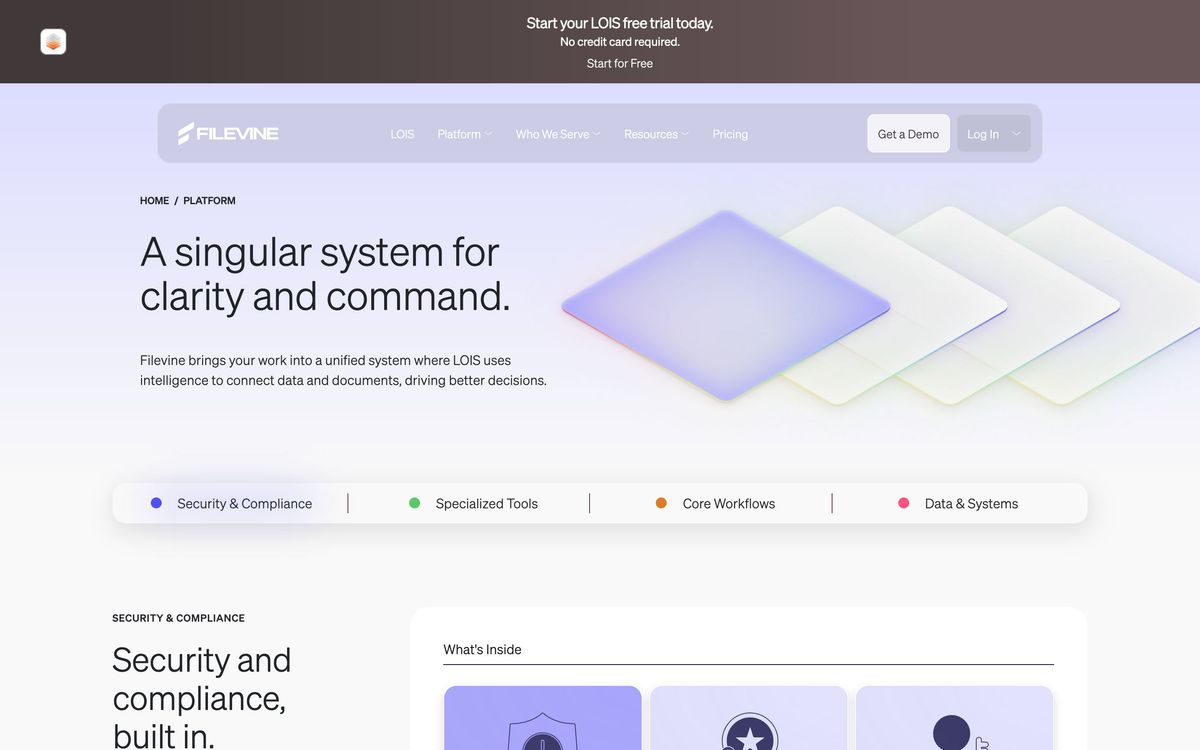
Filevine is a cloud case and matter management platform for law firms. Everything hangs off a project record, the matter, which carries deadlines, documents, notes, contacts, tasks and time entries, and which a firm can reshape per practice area rather than accept as shipped. An immigration project and a personal injury project can hold different fields, phases and deadline chains inside the same account. Around that core sit modules for lead and client intake, document assembly, deposition management, contract lifecycle management, e-signature, timekeeping, billing and firm analytics.
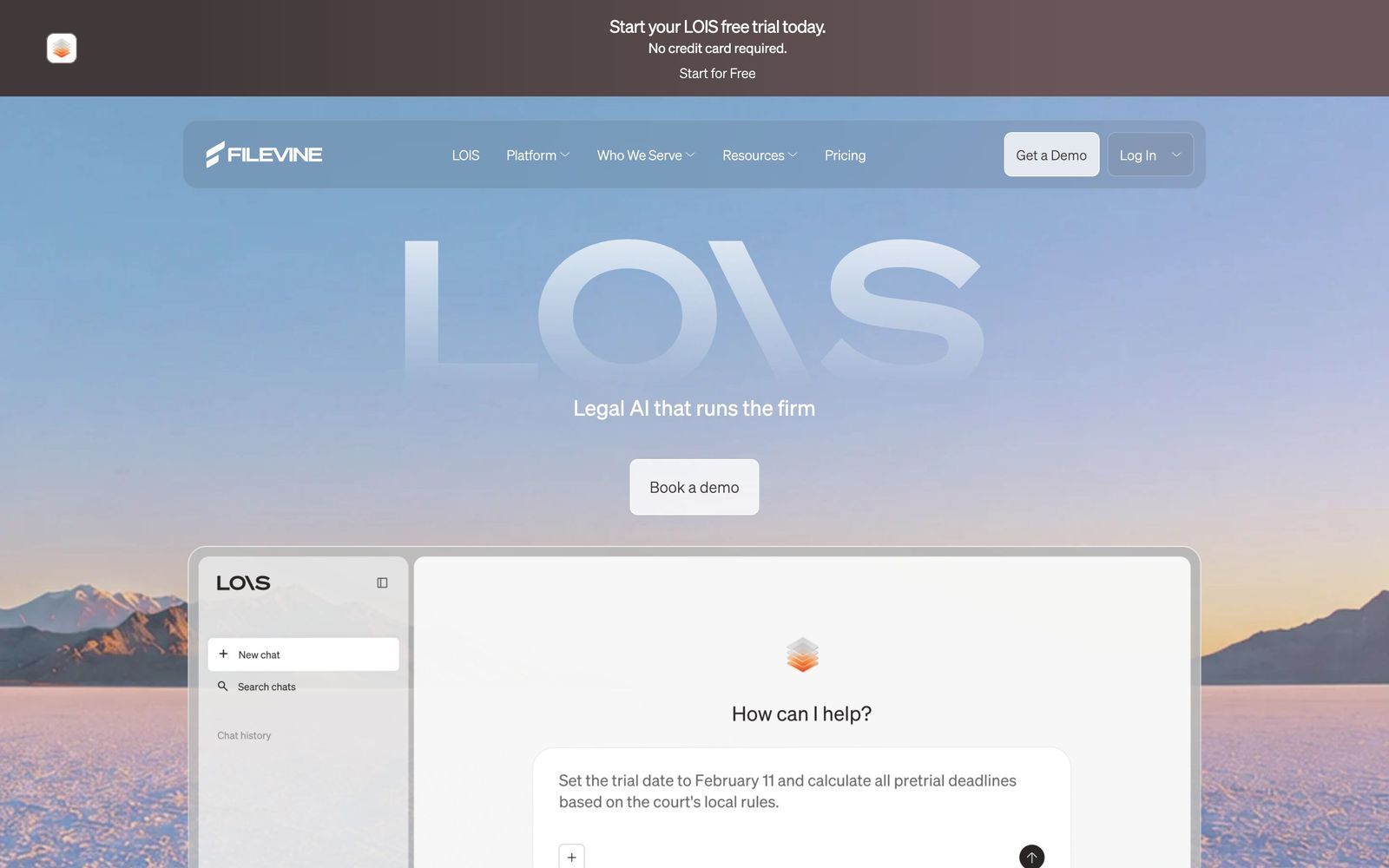
The newer layer is LOIS, Filevine's AI system, which the company positions as read-and-write rather than read-only: it drafts documents, creates tasks and moves deadlines inside the matter instead of handing back a summary for someone to retype. Filevine says the underlying legal graph is built on more than 40 million matters and that the platform is used by over 125,000 professionals. Delivery is browser plus mobile. There is a no-cost entry tier of LOIS that needs no card and carries limits against the full platform, but the case management product itself is sold by quote, with packages assembled per firm, the single most common complaint in public reviews.

Key features
The pieces that carry the daily work:
- Custom project types with per-practice-area fields, phases and linked deadline chains
- Lead and client intake with web forms and a prospective-client pipeline
- Document assembly and management, with templates that populate from matter data
- Medical record chronology and AI demand drafting for personal injury files
- Deposition management and native e-signature, so transcripts and signed documents stay in the matter
- Timekeeping, billing and analytics reporting on caseload and revenue
Who it's for
The natural fit is a contingency practice running high matter volume through repeatable stages, where automating deadline chains and demand packages pays back the configuration effort. Filevine also sells to government legal teams, in-house counsel and non-legal groups managing high-stakes projects, though nothing about the vocabulary pretends the product started anywhere but a law firm.
It suits a firm poorly when the requirement is a small, predictable subscription. Reviewers describe stacked module pricing and a bill that must be negotiated, setup that takes real weeks in larger firms, permission levels coarser than expected, and support that answers slowly. A solo practitioner with fifty active matters will find the configuration overhead out of proportion to the gain, and should look at something that ships opinionated defaults instead.
How it compares
Clio is the obvious alternative and wins on transparency and ecosystem: published per-user pricing and roughly five times the third-party integration catalogue, at the cost of a more rigid matter model. MyCase is cheaper and faster to go live and its billing is well liked, but document drafting and templates are its weakest area, precisely where Filevine is strongest. Against personal injury specialists such as SmartAdvocate and CASEpeer, Filevine offers deeper AI and more configurability while asking for more implementation effort. Its own integration directory leans toward legal-sector vendors, records retrieval, court filing, mail services, rather than mainstream business software, so firms embedded in general-purpose tools should check the list before signing.
Verdict
Filevine earns its standing on configurability and on an AI layer that writes into the matter rather than sitting beside it, and ratings from law-firm users are genuinely high across review sites. The caveat is commercial rather than technical: the price is negotiated, the modules stack, and going live is a project rather than a signup. Firms that want a published rate and a two-week rollout are buying the wrong product.
Ready to try Filevine?
There's a free tier, so you can test it before committing.
More service-businesses tools like Filevine
Momence
3.7Class booking, memberships, payments and marketing in one back office for studios, gyms and spas.
Read Momence review →ABC Trainerize
3.7Coaching platform for trainers and studios: programme delivery, client check-ins, scheduling and payments in one app.
Read ABC Trainerize review →Thryv
3.6All-in-one CRM, booking, invoicing and local marketing for small service businesses that run on one system.
Read Thryv review →Tradify
4.6Job management app for tradespeople covering quoting, scheduling, invoicing and payments in one place.
Read Tradify review →Weave
4.5All-in-one phone, texting, scheduling and payments platform for dental, vet and optometry practices.
Read Weave review →Jane
4.4Practice management and EMR for allied health clinics: booking, charting, billing and payments in one record.
Read Jane review →