
PARiM review
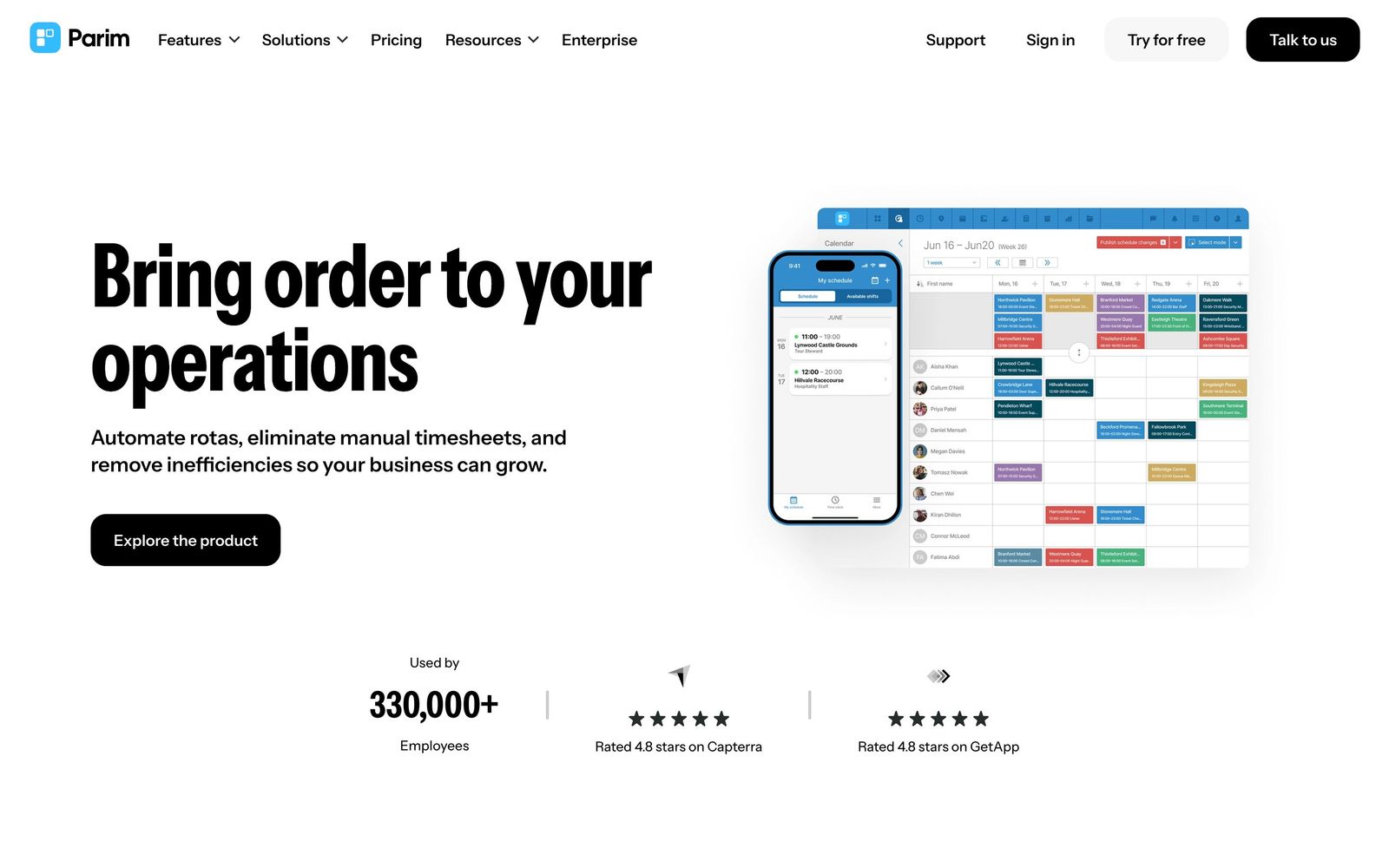
Shift scheduling, time and attendance and compliance for security, events and staffing operations.
A strong fit for shift work carrying compliance baggage such as badges, guard tours and event surges, though pricing is effectively quote-only and setup takes real time.
Pros
- Compliance is built into scheduling: working-time rules, document expiry alerts and a SIA badge checker stop non-compliant assignments before they are published
- Staff can apply for open shifts from the mobile app, which removes the round of calls and texts that usually fills a rota
- Client-side billing rates, invoicing reports and a client portal mean the same schedule produces both the pay run and the invoice
- Timesheets carry overtime multipliers and automatic salary calculation from clocked hours, then export to payroll
- Unusually long integration list for a tool this size, covering accounting, Zapier and more than fifty HR systems
Cons
- Only a starting figure is published; tier prices depend on module set and monthly shift volume, so shortlisting requires a sales conversation
- Reviewers consistently report a learning curve during setup, which follows from the amount of configuration the compliance features need
- It is not a payroll engine or an HR record: pay is exported and employee data typically lives in a separate HRIS
PARiM pricing
List prices in USD per month, taken from the vendor at review time.
| Plan | Per month | What it covers |
|---|---|---|
| Starter | $47 | from, quoted in GBP per month with unlimited users; Pro and Premium priced by module set and monthly shift volume |
What PARiM actually does
PARiM is workforce management software for shift work: the scheduling, time tracking and compliance layer under businesses whose staff turn up at a different site each week. It was built around the awkward end of that market, serving security firms, live events, temporary staffing, healthcare rosters, warehousing and hospitality, where shifts move, staff are cancelled at short notice, and someone has to prove afterwards that the person on site held the right badge on the day.
The system runs in a browser for planners and as a mobile app for staff. Managers build rotas from shift patterns, match positions to qualified people, publish open shifts in bulk and let employees apply for them. Staff clock in through the app with GPS capture, request time off and see their own pay. Behind that sit absence management with custom leave types and holiday accrual, working-time rules that block non-compliant assignments, document expiry alerts, and a badge checker for UK security work. Client-facing work is covered as well: billing rates per client, invoicing reports, a client portal and client-submitted shift requests. Bolt-ons handle large-scale event staffing, NFC guard tours, incident reports and asset tracking. Pricing appears only as a starting figure with unlimited users; the real quote depends on which module tier you take and how many shifts you run a month.
Key features
The strength lies in operational detail rather than in the calendar view.
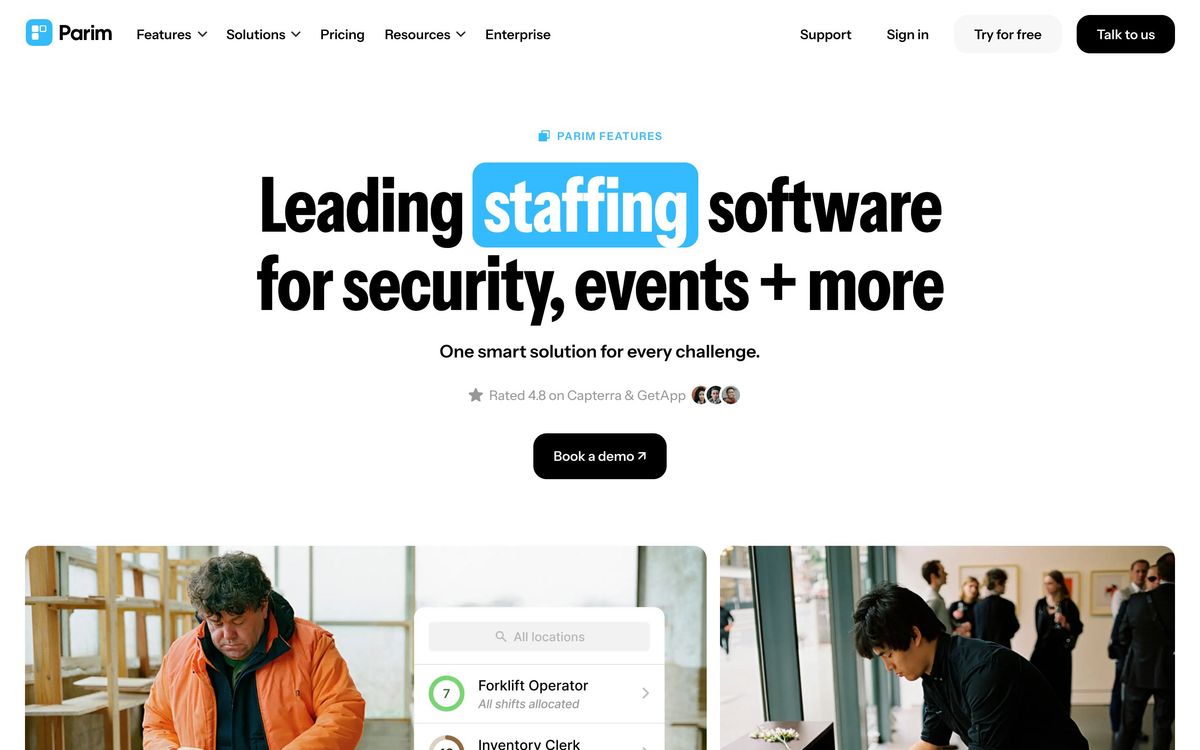
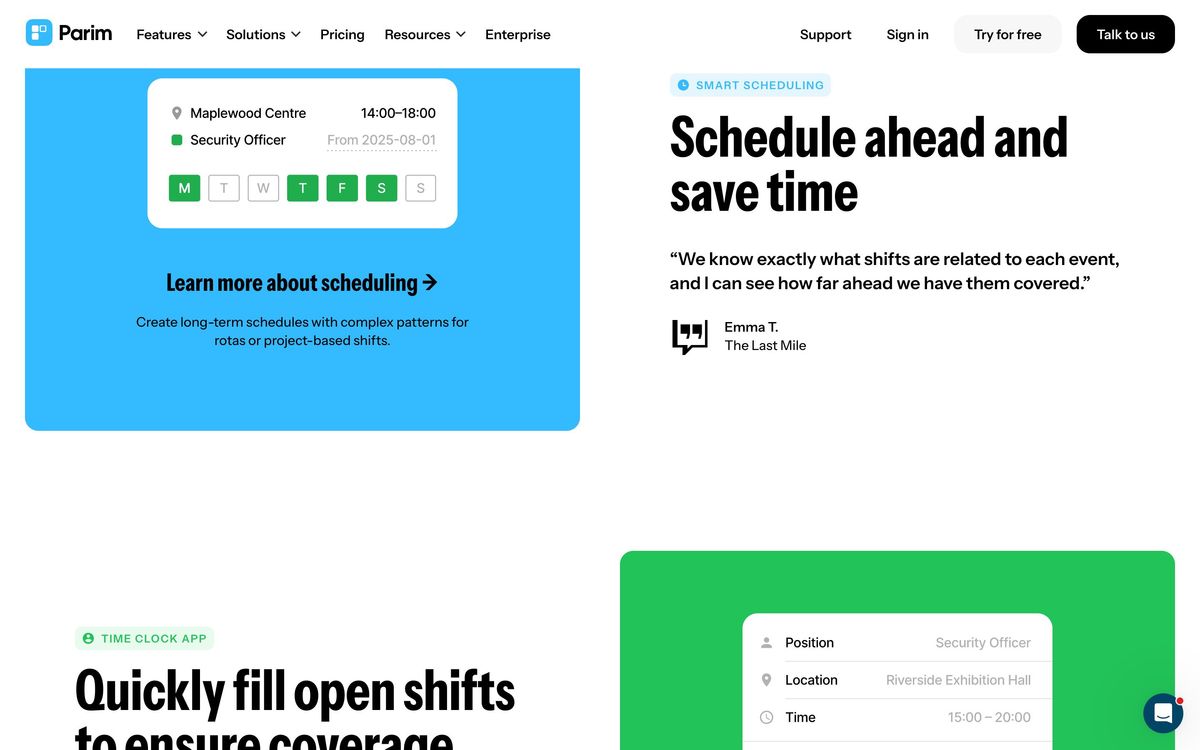
- Rota building from shift patterns and rolling rotas, with position matching and bulk publishing of open shifts
- Self-scheduling, so staff apply for open shifts from the app instead of being assigned by phone
- Time clock with GPS capture and break handling, feeding timesheets that drive pay runs
- Compliance tooling: working-time rules, document expiry notifications and a SIA badge checker for UK security work
- Pay rates with overtime multipliers, automatic salary calculation from clocked hours, and payroll exports
- Client billing rates, invoicing reports, a client portal and client-submitted shift requests
Who it's for
Operators with fifty to several hundred shift workers spread across many sites, particularly in the UK and Europe, and staffing agencies that bill clients for the hours their workers deliver. The client-side billing and portal are what separate PARiM from a generic rota tool: when the schedule is also the invoice, keeping both in one system removes an entire reconciliation step every month.
It is the wrong tool for a single-site business with a fixed roster. A coffee shop or a one-location clinic will find it heavier than needed and will never touch the compliance features that justify the configuration work. It is also neither a payroll engine nor an HR record; it exports to both, which is why the integration list matters so much. Reviewers are consistent about a learning curve at setup, and the quote-only pricing beyond the entry figure makes shortlisting slower than it should be.
How it compares
Deputy and Planday are easier to start with and better suited to retail and hospitality rosters, but neither goes as deep on badge compliance, guard tours or client billing. TrackTik sits closer to PARiM in the security market and is stronger on guarding operations specifically, while carrying a heavier implementation. Against an HRIS with a scheduling module attached, PARiM wins on shift-level detail and loses on the employee record, which is the trade the integrations exist to soften.
Verdict
PARiM does the unglamorous parts of shift work well: compliance rules that actually block a bad assignment, open shifts staff can claim themselves, and timesheets that turn into both a pay run and a client invoice. Users rate it highly on ease of use once configured, and the payroll and HR integration list is unusually long for a tool of this size. The caveats are onboarding effort and pricing opacity, so expect configuration work before value and a sales conversation before a number.
Ready to try PARiM?
More recruiters tools like PARiM
Checkr
4.4AI-powered background check platform: criminal, identity, MVR, drug, and verification screening at scale.
Read Checkr review →Deel
4.4Global EOR, contractor management and payroll for hiring across 150+ countries from one platform.
Read Deel review →Rippling
4.4One employee record driving HR, payroll, benefits, devices and spend, with onboarding automated end to end.
Read Rippling review →HiBob
4.3HRIS for mid-sized, multi-country companies, covering the employee record, performance, compensation and payroll sync.
Read HiBob review →Recruit CRM
4.3An all-in-one ATS and CRM built specifically for recruitment and executive-search agencies.
Read Recruit CRM review →Breezy HR
4.2Drag-and-drop applicant tracking and hiring automation built for small and growing recruiting teams.
Read Breezy HR review →