
Vibe review
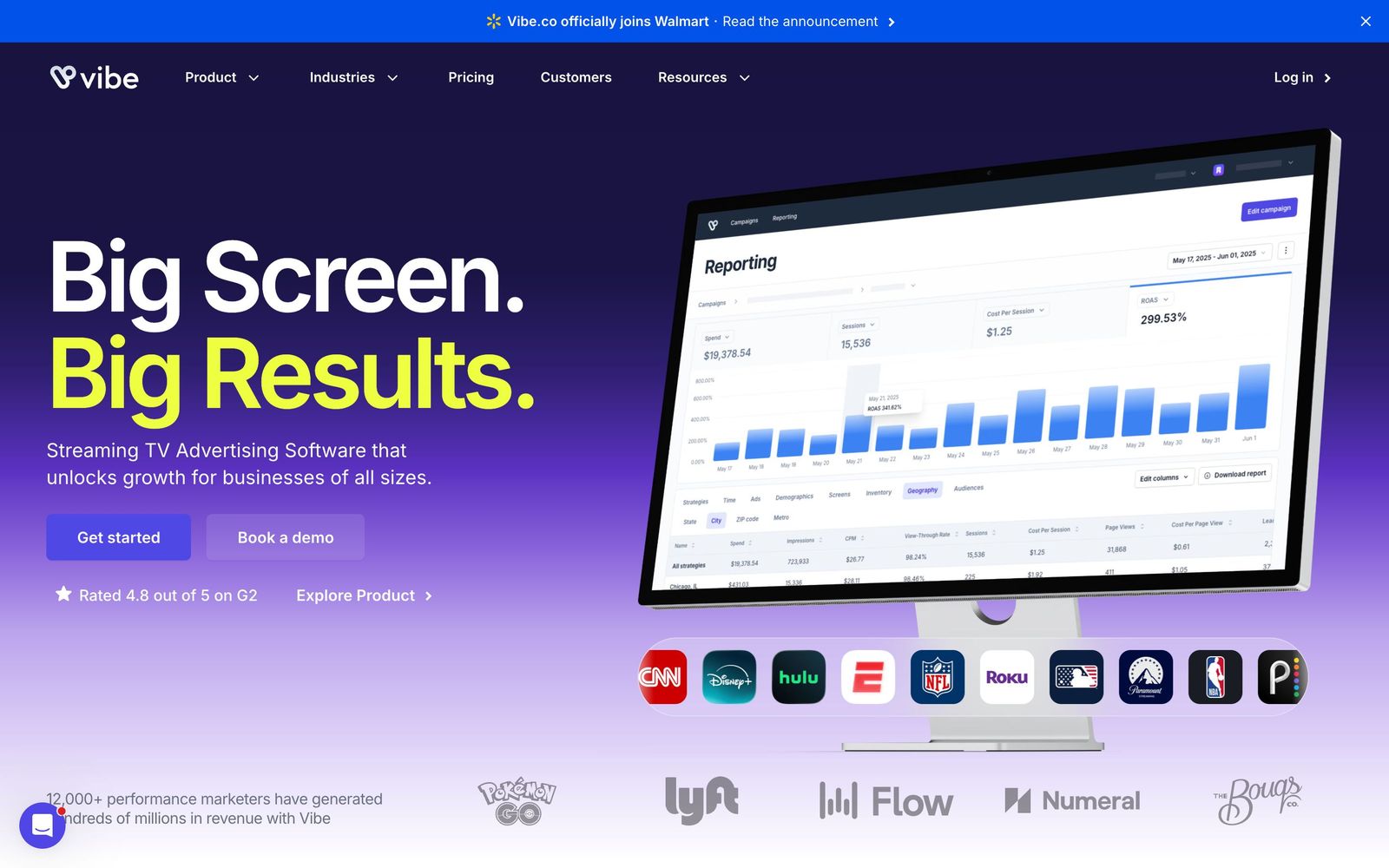
Self-serve buying for streaming TV ads, with zip-code targeting and web analytics attribution.
The simplest way for a small advertiser to buy streaming TV inventory without an agency, though the platform fee is not published and outcome measurement stays looser than paid search.
Pros
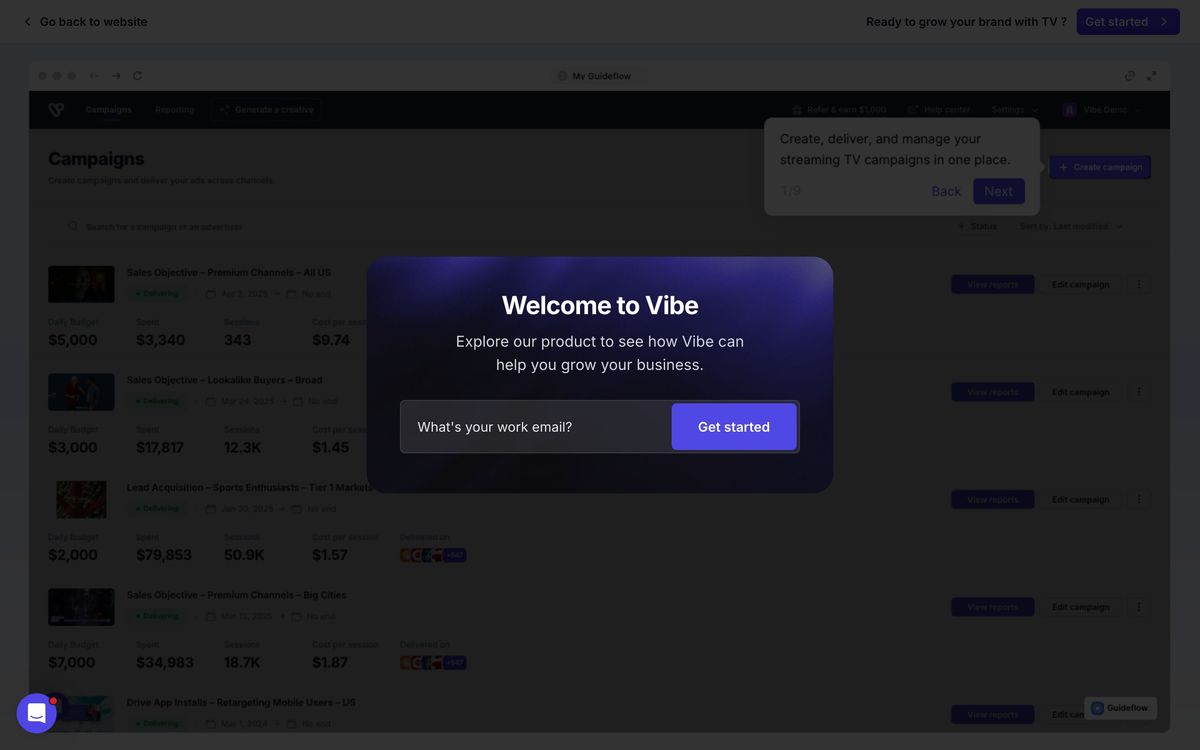
- Campaign setup is genuinely self-serve: pick geography, audience and daily budget, upload a spot, launch the same day
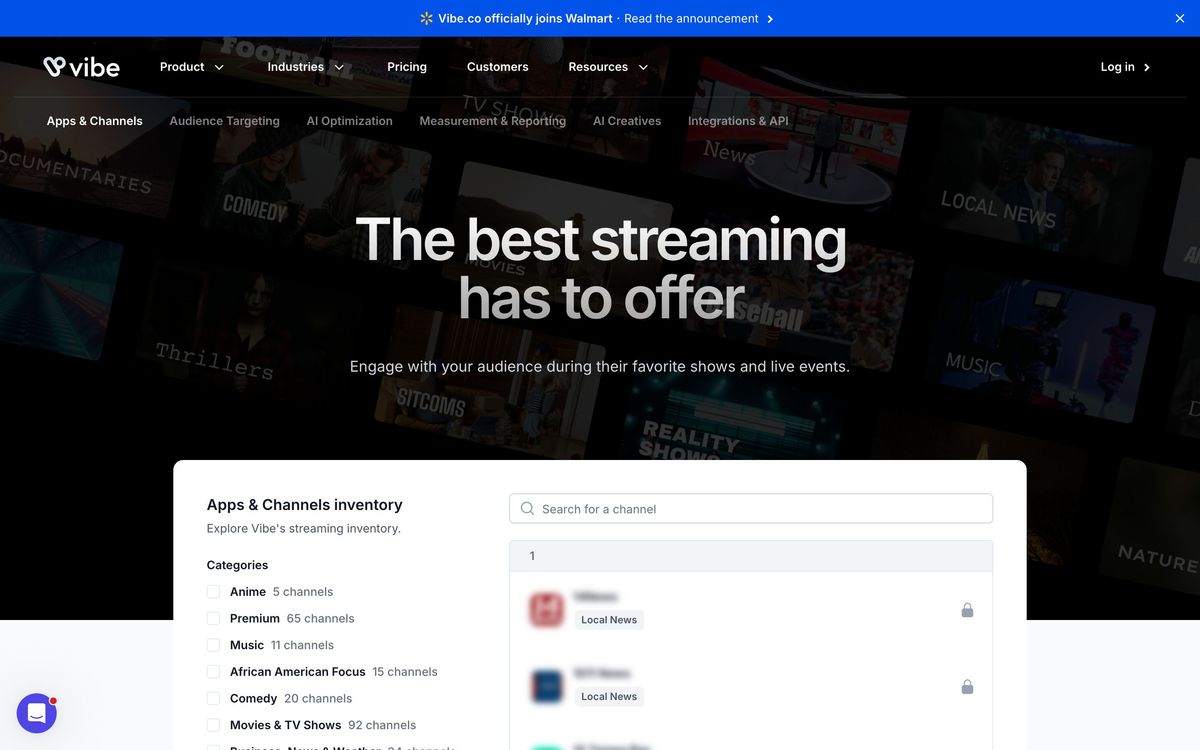
- Inventory spans 500 or more streaming channels, including Hulu, Peacock, Paramount+, Tubi, Pluto TV and Roku
- Geo-targeting goes down to zip code, which suits single-location and regional businesses
- Vibe Studio builds a TV-ready 15 or 30 second spot from existing assets at no extra charge
- Conversion tracking connects to Shopify, Google Analytics, Klaviyo and attribution tools such as Northbeam
Cons
- The platform's cut of ad spend is not stated on the pricing page, so the true media cost is unclear before signing up
- Attribution on connected TV is modelled from site visits rather than clicks, and small budgets often end a month with impressions and no traceable leads
- Inventory is bought programmatically, so specific show or daypart placements cannot be guaranteed the way a direct network buy can
Vibe pricing
List prices in USD per month, taken from the vendor at review time. Custom means quote-only.
| Plan | Per month | What it covers |
|---|---|---|
| Self-serve | Custom | no subscription fee; campaigns start from $50 a day in ad spend, with estimated CPMs of $15-$35 |
What Vibe actually does
Vibe is a demand-side platform for connected television. An advertiser signs up, chooses where the ad should run geographically, narrows the audience by age, income, interests or viewing behaviour, uploads a spot, sets a daily budget, and the platform buys impressions across streaming apps and free ad-supported channels. The inventory list is long and recognisable: Hulu, Peacock, Paramount+, Tubi, Pluto TV, Roku, Samsung TV Plus, plus sports and news feeds. What Vibe sells is not new inventory but access without the traditional gatekeeping, since buying the same impressions through a network or an agency has historically meant insertion orders, minimum commitments and a media planner.
The second half of the product is measurement. Connected TV has no click, so Vibe attributes by matching exposed households to site visits, wiring into Google Analytics, Google Tag Manager, Shopify, Klaviyo and third-party attribution tools such as Northbeam and Triple Whale. There is also a creative studio that assembles a fifteen or thirty second spot from an advertiser's existing images and footage, which removes the other classic barrier: most small businesses have no television commercial and no budget to shoot one.
Key features
The platform bundles buying, creative and measurement into one self-serve flow.
- Campaign builder covering 500 or more streaming channels, with no insertion order or minimum term
- Targeting by geography down to zip code, plus demographics, household income, interests and device
- Vibe Studio, which produces a broadcast-format spot from existing brand assets at no extra cost
- Retargeting of website visitors on the television screen, with frequency caps applied across channels
- Conversion measurement through a site pixel and connections to analytics, ecommerce and email platforms
- Reporting on impressions, completed views, cost per view and attributed site visits in a single view
Who it's for
Vibe fits an advertiser who already has demand and wants a channel that paid search and social cannot reach: a regional service business, a direct-to-consumer brand hitting rising acquisition costs, a local franchise group with a defined trading area. It also fits a marketing team that wants to test television at a budget an agency would not accept, since the daily minimum is small enough to run a market test for the price of a week of search ads.
It is a poor fit for anyone who needs each conversion tied to a specific impression, or who is buying at the scale where a trading desk and direct network deals bring the media cost down. Brands without a coherent offer should also stay away. Television is an upper-funnel channel, and a campaign built on an untested proposition will spend the budget and return a chart of impressions.
How it compares
tvScientific is the closest competitor and leans harder on performance attribution, which suits advertisers who want to optimise toward a cost per acquisition rather than reach. MNTN targets larger brands with more account service and a heavier onboarding process, and prices accordingly. Roku Ads Manager buys only Roku's own inventory, which is narrower but cheaper and simpler to reconcile. Vibe sits between them: broader inventory than a single publisher, lighter service than MNTN, and a creative tool neither of the others gives away.
Verdict
Vibe delivers on the promise that a small advertiser can be live on streaming television the same afternoon, and the free spot production genuinely removes the barrier that keeps most of them off the channel. The reservations are about transparency and expectations. The platform's share of ad spend is not published, so the effective media rate is unclear until the account is running, and attribution rests on modelled site visits rather than clicks, which means a modest budget can end its first month with plenty of impressions and no leads anyone can trace. Treat it as a reach channel measured over quarters, not a direct-response line item, and it is a fair deal.
Ready to try Vibe?
More marketers tools like Vibe
Tidio
4.5AI customer service platform with Lyro AI agent, live chat, ticketing, and automations for 300K+ businesses
Read Tidio review →Vista Social
4.5Social media management covering publishing, inbox, listening, reviews, and reporting across 11+ networks.
Read Vista Social review →Unbounce
4.4Landing page builder with AI traffic routing (Smart Traffic), A/B testing, popups, and sticky bars.
Read Unbounce review →ActiveCampaign
4.3Email marketing and automation platform with a built-in CRM, contact scoring, and SMS and WhatsApp sending.
Read ActiveCampaign review →AgencyAnalytics
4.3Client reporting for marketing agencies: 85+ connectors, white-label dashboards and scheduled reports.
Read AgencyAnalytics review →Bouncer
4.3Email verification and deliverability testing that strips invalid addresses before a send hurts your domain.
Read Bouncer review →