
Tidio review
AI customer service platform with Lyro AI agent, live chat, ticketing, and automations for 300K+ businesses
One of the easiest ways for ecommerce teams to put a capable AI agent on support duty, though costs climb quickly once Lyro conversation volumes grow past the entry tiers.
Pros
- Lyro AI agent answers from your own support content and resolves around two-thirds of conversations on average
- Live chat, ticketing, AI agent, and automation flows in one platform instead of three tools
- Deep Shopify integration: order status, product recommendations, and cart context inside chat
- Free plan plus 50 free lifetime Lyro conversations make testing genuinely risk-free
- Flexible handoff rules escalate sensitive or high-value conversations to humans
Cons
- Pricing scales with Lyro conversation volume, which gets expensive for busy stores
- A large gap between mid and top tiers leaves scaling businesses awkwardly placed
- Advanced analytics and some channels are gated to higher plans
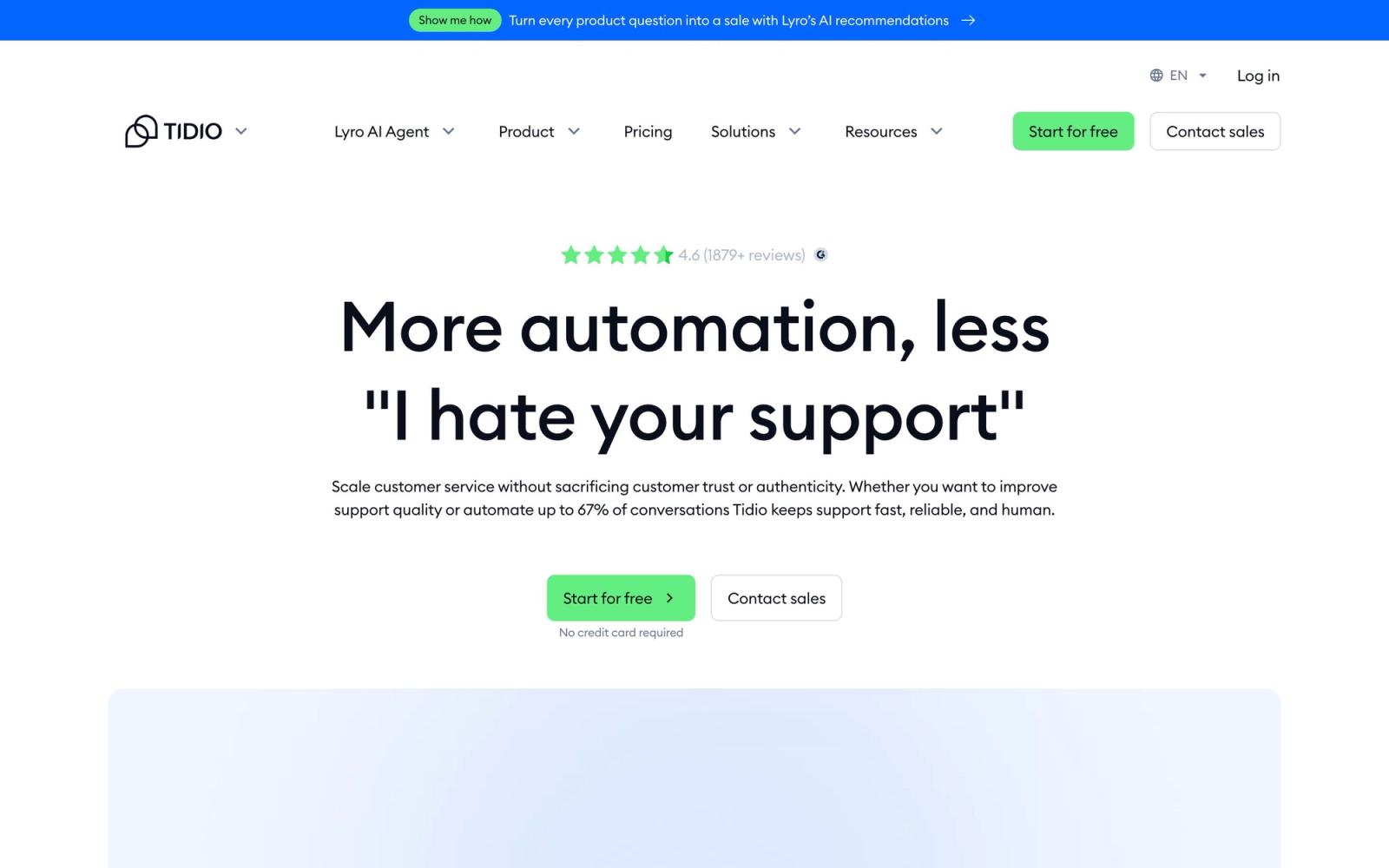
Tidio started as a friendly live chat widget and has grown into a full AI customer service platform used by more than 300,000 businesses. Its centerpiece today is Lyro, an AI agent that learns from your support content and resolves customer questions on its own, backed by live chat, a ticketing system, and automation flows. For ecommerce teams, especially on Shopify, it has become one of the default options in chatbots and conversational marketing.
What Tidio actually does
The platform combines four layers. Live chat handles real-time conversations on your site with a widget you can install in minutes. The ticketing system turns emails and missed chats into a manageable queue. Automation flows trigger messages based on visitor behavior, such as greeting returning customers or rescuing abandoned carts. And Lyro, the AI agent, sits in front of all of it.
Lyro is trained on your own help content: FAQ pages, support docs, and past answers. It understands intent rather than matching keywords, generates conversational answers grounded only in your material, and hands off to a human when rules say it should. Tidio reports an average resolution rate around 67 percent, which tracks with the experience of routine ecommerce questions like shipping, returns, and order status being absorbed almost entirely. Dashboards show resolution rates, satisfaction scores, and conversation patterns so you can spot where Lyro needs more source content.
The Shopify integration is the standout. Inside a conversation, the AI can check order status, recommend products, and see what a shopper viewed, which turns support chat into a quiet revenue channel via upsells and discount codes.
Key features
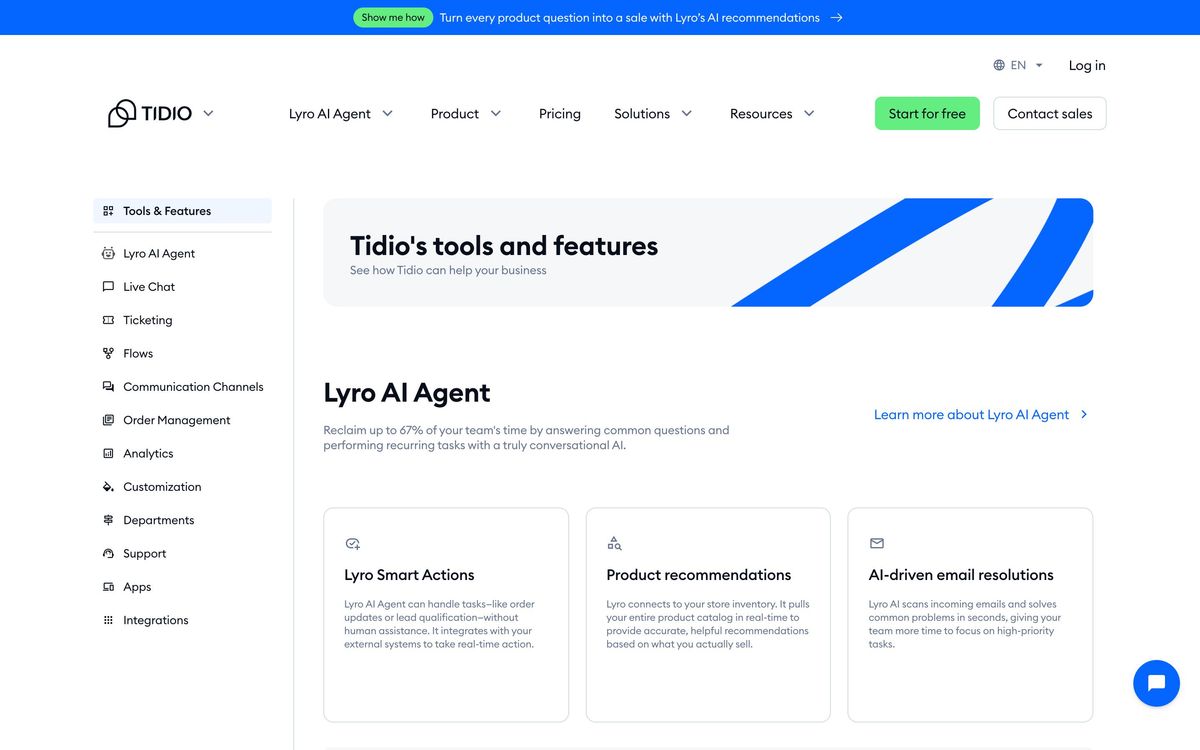
- Lyro AI agent that answers from your support content with configurable human handoff
- Live chat, ticketing, and visitor tracking in one inbox
- Automation flows for greetings, cart recovery, and behavior-triggered messages
- Native integrations with Shopify, WordPress, WhatsApp, Instagram, and Messenger
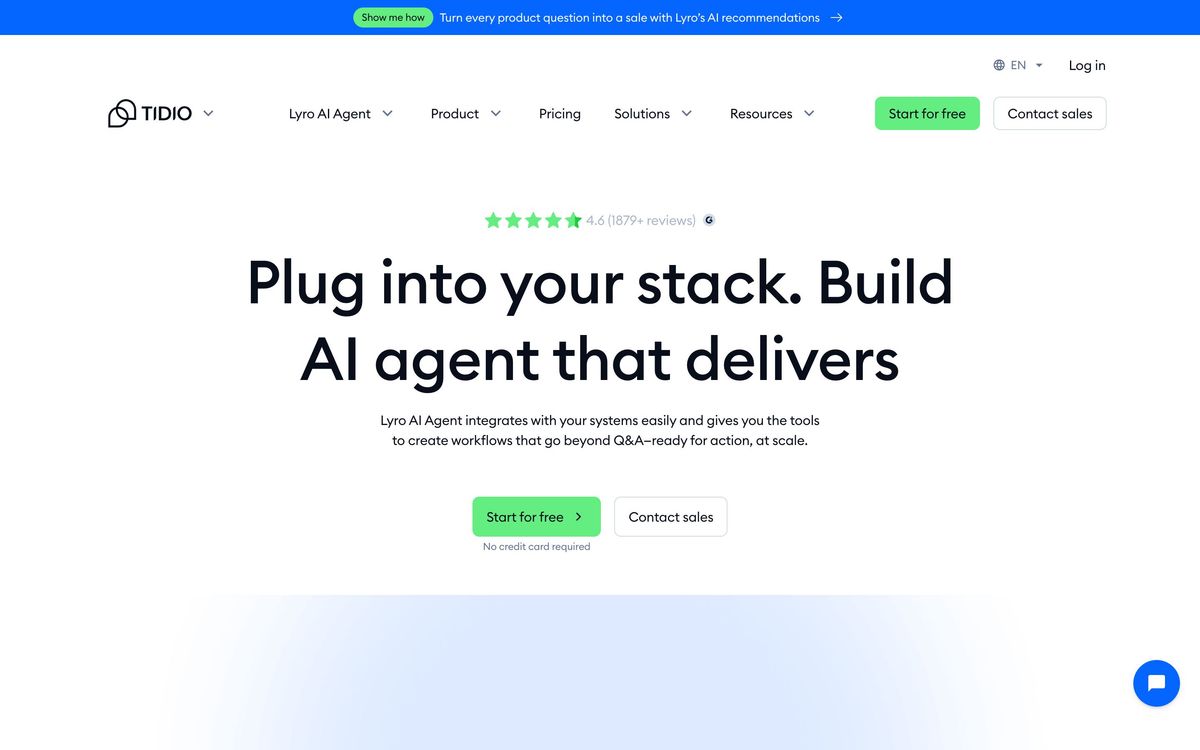
- Connections to help desks like Zendesk for teams with existing stacks
- Analytics covering resolution rate, CSAT, and conversation trends
Who it's for
Tidio is built for small and mid-sized ecommerce businesses that want most support handled automatically without sounding robotic. Shopify and WooCommerce stores get the most value because of the commerce context inside conversations. The free plan and 50 lifetime free Lyro conversations mean a small store can evaluate the AI on real customer questions before paying anything. Marketing teams also use the flows for lead capture and proactive chat on landing pages.
Large support organizations with complex routing, SLAs, and multi-brand setups will eventually feel the ceiling and look at enterprise help desks instead.
How it compares
Intercom is the premium alternative: its Fin AI agent is comparably capable and its inbox more powerful, but it is priced and designed for funded SaaS companies rather than lean stores. Gorgias competes directly on ecommerce, with deeper order management actions for Shopify merchants, though Tidio is friendlier to set up and its AI agent setup is simpler to get producing answers. For a small team choosing one tool that covers chat, tickets, and AI, Tidio hits the most practical middle ground.
Verdict
Tidio earns its reputation: Lyro is one of the few AI support agents that small teams can deploy in an afternoon and trust with the majority of routine questions, and the surrounding chat, ticketing, and flow tooling is mature. The real watch-out is cost trajectory, since conversation-based pricing climbs as your store grows and the jump between tiers is steep. Start on the free plan, measure Lyro's resolution rate on your actual traffic, and let that number make the decision.
Ready to try Tidio?
There's a free tier, so you can test it before committing.
More marketers tools like Tidio
Manychat
4.0Automates Instagram, WhatsApp and Messenger conversations, including comment-to-DM keyword replies.
Read Manychat review →Wati
3.7WhatsApp Business API platform with a shared team inbox, broadcast campaigns and a no-code chatbot builder.
Read Wati review →ActiveCampaign
4.3Email marketing and automation platform with a built-in CRM, contact scoring, and SMS and WhatsApp sending.
Read ActiveCampaign review →AgencyAnalytics
4.3Client reporting for marketing agencies: 85+ connectors, white-label dashboards and scheduled reports.
Read AgencyAnalytics review →Bouncer
4.3Email verification and deliverability testing that strips invalid addresses before a send hurts your domain.
Read Bouncer review →Brand24
4.3Media monitoring tool tracking brand mentions across social, news, blogs, forums, podcasts, and reviews.
Read Brand24 review →