
Bouncer review
Email verification and deliverability testing that strips invalid addresses before a send hurts your domain.
Among the most accurate verifiers available and cheaper than ZeroBounce at volume, though the deliverability and enrichment layers are billed separately from verification credits.
Pros
- Independent benchmarks place accuracy in the top tier, with catch-all detection materially better than most competitors
- Verification credits do not expire, so an occasional cleaner is not pushed onto a monthly subscription
- The per-address rate falls steeply with volume and undercuts ZeroBounce at comparable tiers
- Bouncer Shield validates addresses at the signup form, so bad data never reaches the list in the first place
- EU hosting and GDPR handling, which matters when the list contains European contacts
Cons
- The Deliverability Kit that does inbox placement testing and blocklist monitoring is a separate monthly subscription on top of verification credits
- The minimum purchase is a thousand credits, so verifying a handful of addresses by hand is not economical
- Toxicity scoring and data enrichment are useful additions but shallower than what a dedicated enrichment provider returns
Bouncer pricing
List prices in USD per month, taken from the vendor at review time.
| Plan | Per month | What it covers |
|---|---|---|
| Verification credits | $8 | one-off pack of 1,000 credits; the rate falls to roughly a quarter of that per address at high volume |
| Deliverability Kit Starter | $25 | 250 test emails, 10 IPs or domains monitored |
| Deliverability Kit Standard | $125 | 1,000 test emails, 25 IPs or domains monitored |
What Bouncer actually does
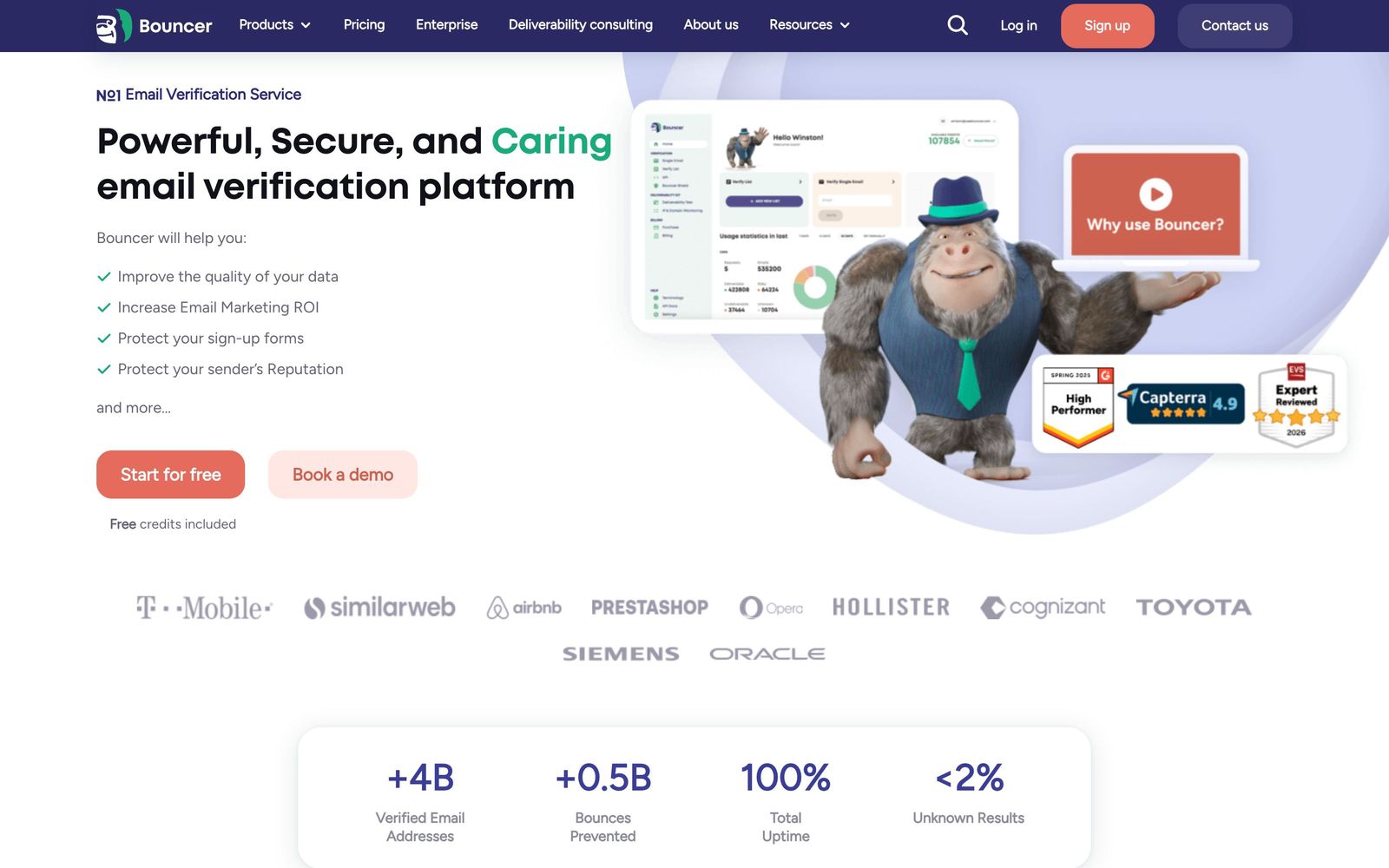
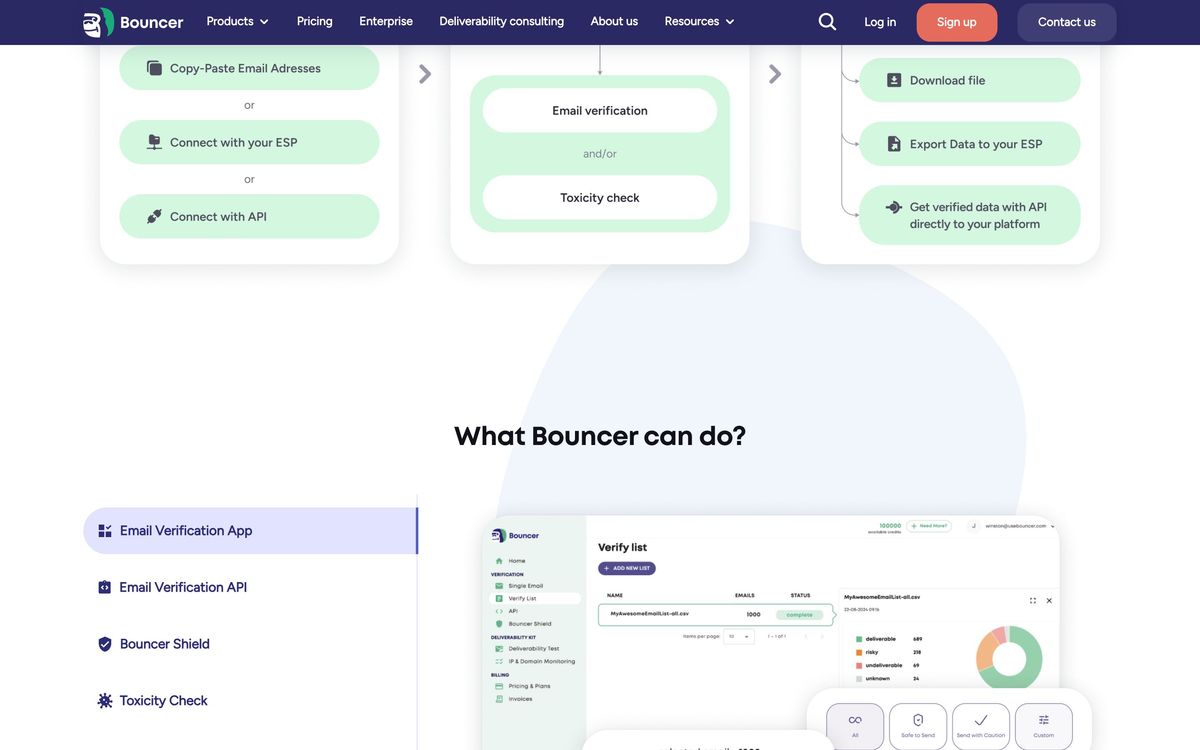
Bouncer is an email verification service. You upload a list, it checks each address against a chain of tests, and it returns a verdict of deliverable, undeliverable, risky or unknown so the bad rows can be removed before a campaign goes out. The reason this is worth paying for is unglamorous: mailbox providers judge a sender by how many messages bounce, and a list that has been sitting in a CRM for two years will bounce enough to damage the domain that sends it. Verification is maintenance on an asset most teams only notice once it is broken.
The product has grown outward from that core. An API does the same check in real time, so a signup form can reject a typo while the visitor is still on the page, and Bouncer Shield packages that for form protection. A toxicity check scores addresses from zero to five for spam-trap and complaint risk, which is a different question from whether the mailbox exists. The Deliverability Kit sits further downstream, sending seed messages to measure whether mail lands in the inbox or the spam folder and watching the sending IPs and domains against blocklists. There is also a light enrichment layer that appends company information. The company is EU-based, hosts in the EU and leans on that for GDPR-sensitive lists.
Key features
What the platform covers:
- Bulk list verification with syntax, domain, mailbox and catch-all checks
- Real-time verification API for forms, checkouts and in-app signup
- Bouncer Shield for blocking bad addresses at the point of entry
- Toxicity scoring for spam-trap and complaint risk on otherwise valid addresses
- Inbox placement testing and blocklist monitoring through the Deliverability Kit
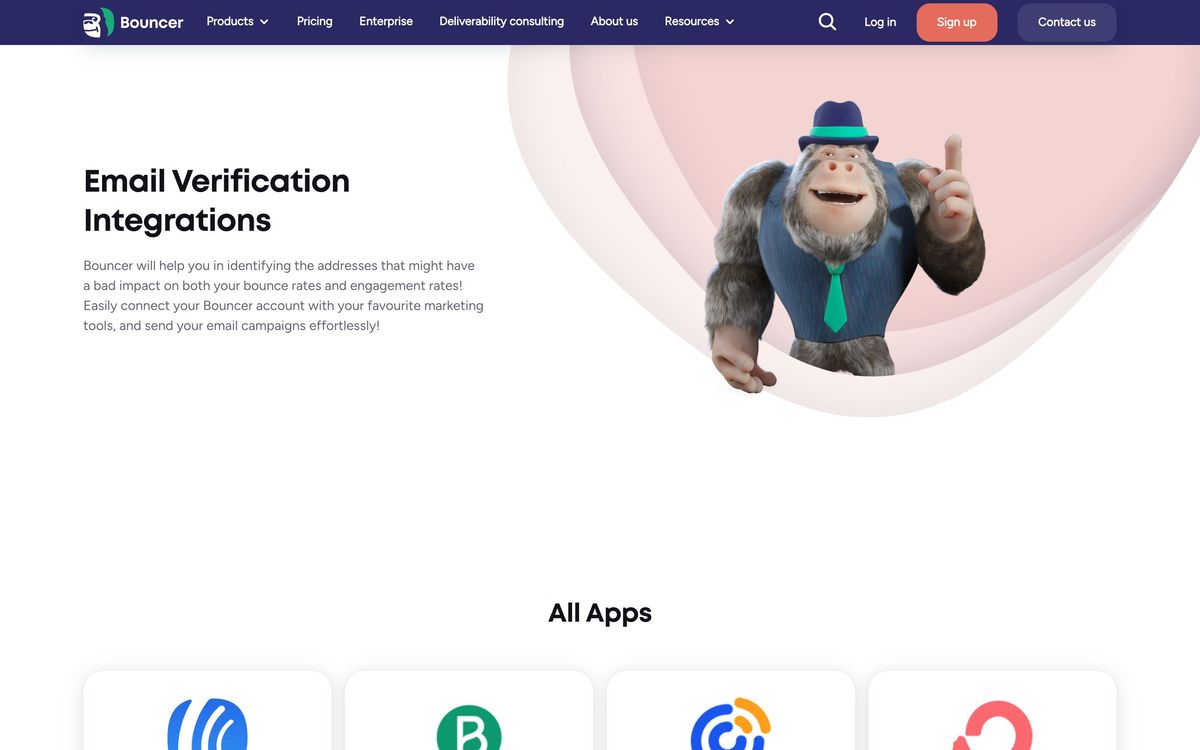
- Native connectors to the major email platforms plus Make, Zapier-style automation and an open API
Who it's for
Bouncer fits a marketing or outbound team that sends to lists it did not build yesterday: an email programme with a long-dormant segment, a lifecycle team importing from an old CRM, an SDR operation buying or scraping contact data. The economics work best above roughly ten thousand addresses, where the volume discount bites and the cost per campaign becomes trivial next to the cost of a damaged sending domain.
It is unnecessary for a small, recent, double-opted-in list that already sees low bounce rates, and a solo sender checking a dozen addresses will find the thousand-credit minimum wasteful. It is also not a substitute for list hygiene practices. Verification tells you an address exists; it cannot tell you the person wants to hear from you, and teams that treat a clean list as permission to send more will still end up in the spam folder.
How it compares
ZeroBounce offers a broader platform, including its own deliverability suite and larger enterprise footprint, but costs noticeably more for equivalent verification volume. NeverBounce advertises a higher headline accuracy figure and is deeply embedded in the ZoomInfo ecosystem, though in independent tests the whole top tier sits within a point or two of each other. Kickbox and Hunter are simpler and pleasant to use, with less depth on catch-all domains, which is precisely where Bouncer's testing advantage shows up on B2B lists. On price per address at volume, Bouncer is usually the cheapest of the group.
Verdict
Bouncer is a strong pick in a category where the differences between the leaders are small: accuracy is at the top of the field, catch-all handling is genuinely better than most, credits never expire and the volume pricing is the most reasonable among the serious options. The caveat is packaging. Verification credits, real-time protection and the Deliverability Kit are three separate purchases, so a team that wants the full deliverability picture ends up assembling a bill rather than choosing a plan. Buy the credits first, and only add the Kit if inbox placement is an active problem.
Ready to try Bouncer?
There's a free tier, so you can test it before committing.
More marketers tools like Bouncer
InboxAlly
4.0Deliverability repair service that rebuilds sender reputation with seed inboxes, placement tests and DNS checks.
Read InboxAlly review →CleverTap
4.2Behavioural analytics and cross-channel campaigns for teams whose customers live inside a mobile app.
Read CleverTap review →RGE Studio
4.1Drag-and-drop email and landing page builder that exports into whichever platform you already send from.
Read RGE Studio review →Sender
4.1Email and SMS marketing for small stores and newsletters, with automation included on the free plan.
Read Sender review →Brevo
4.0Email, SMS, WhatsApp and a light CRM on one bill, priced by messages sent rather than contacts stored.
Read Brevo review →Moosend
4.0Email marketing and automation priced per contact, with unlimited sends and a strict list policy.
Read Moosend review →