
InboxAlly review
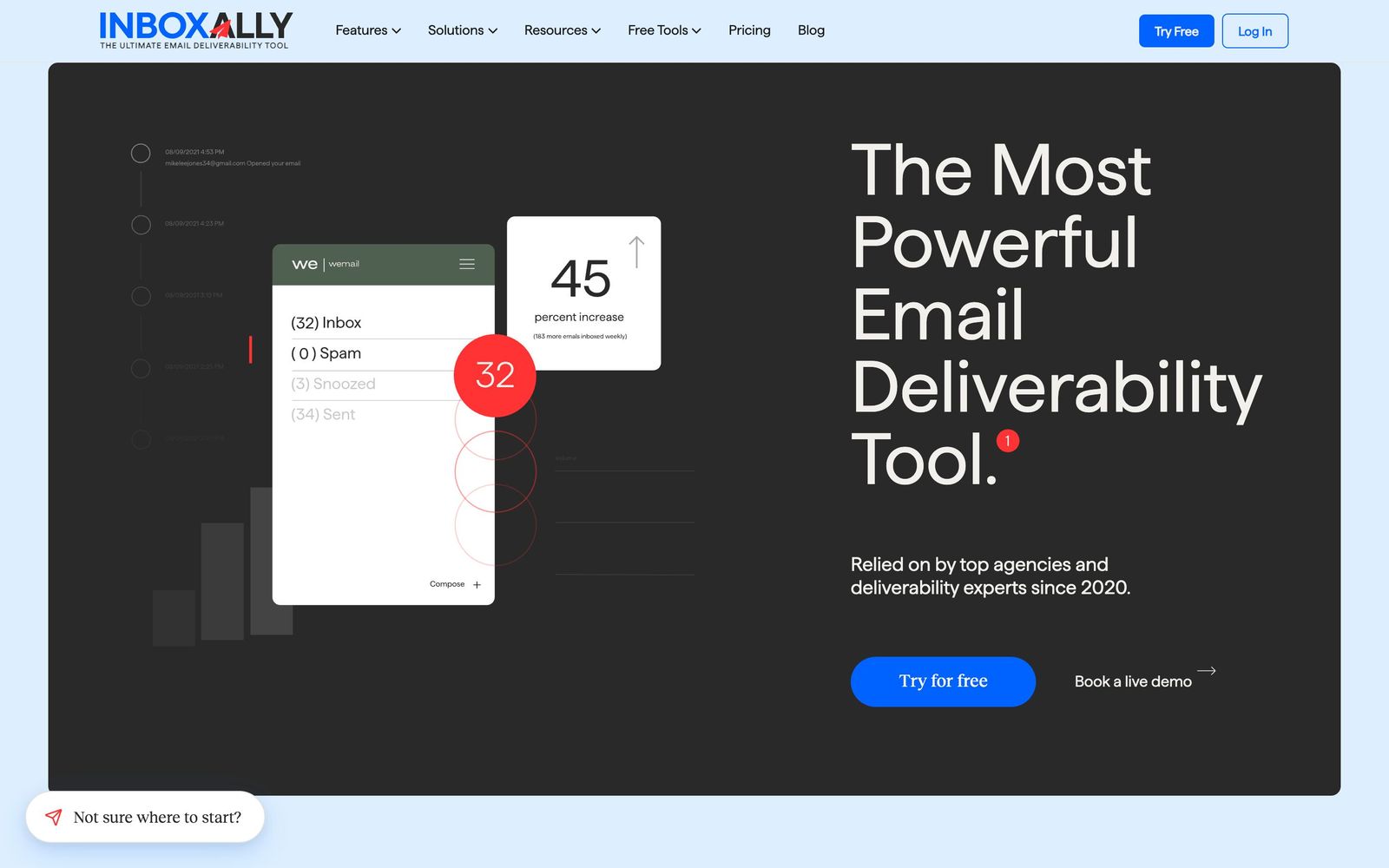
Deliverability repair service that rebuilds sender reputation with seed inboxes, placement tests and DNS checks.
The strongest option for pulling a burned sending domain back out of the spam folder, though the entry plan covers a single sender and the engagement it generates is simulated rather than earned.
Pros
- Works alongside the existing ESP rather than replacing it, so campaigns and lists stay where they are
- Seed accounts perform up to eight engagement actions per message - opening, reading, replying, starring, moving out of spam - rather than only opening
- Never asks for mailbox credentials or DNS control, which keeps it out of the security review that blocks some warmup tools
- Inbox placement testing, blacklist monitoring and DMARC reporting are on every plan rather than reserved for higher tiers
- A named customer success manager and setup session come with all plans, including the entry tier
Cons
- The entry plan covers one sender profile and one hundred seed emails a day, so anyone warming several domains jumps straight to a tier several times the price
- The engagement comes from seed accounts that will never buy, so the reputation gain decays if list hygiene and sending discipline do not change underneath it
- Billing is monthly with no annual discount, and the tool functions as an ongoing subscription rather than a one-off repair
InboxAlly pricing
List prices in USD per month, taken from the vendor at review time.
| Plan | Per month | What it covers |
|---|---|---|
| Starter | $149 | 1 sender profile, 100 seed emails per day |
| Plus | $645 | 5 sender profiles, 500 seed emails per day |
| Premium | $1,190 | 10 sender profiles, 1,000 seed emails per day |
What InboxAlly actually does
InboxAlly is a deliverability tool for senders whose mail has started landing in spam. It does not send campaigns and does not replace an email platform. Instead it maintains a network of seed inboxes across the major consumer providers, and the sender adds those addresses to their own sending list. When a message arrives, the seed accounts behave like enthusiastic subscribers: they open it, keep it open long enough to look read, star it, reply to it, mark it important, and pull it out of the spam folder if that is where it landed. Those signals accumulate and, over a few weeks, teach the receiving provider that mail from this domain is wanted.
Around that core sits the diagnostic layer, which is arguably the more useful half. Inbox placement testing shows where a given message actually lands per provider rather than guessing from open rates. Blacklist monitoring watches the sending IP and domain against public lists. DMARC reports are aggregated into something readable, and the setup guides cover SPF, DKIM, DMARC, reverse DNS and BIMI. There is list verification to strip invalid addresses before they bounce, an adaptive warmup mode that raises volume as reputation recovers, and a REST API. Crucially, none of this requires handing over mailbox credentials or DNS access, which keeps it clear of the security objections that block some competing warmup services.

Key features
The product splits cleanly between reputation repair and diagnosis.
- Seed network performing up to eight distinct engagement actions per delivered message
- Adaptive autowarmup that scales daily volume in step with reputation recovery
- Inbox placement testing with per-provider results across Gmail, Yahoo and Outlook
- Blacklist monitoring and aggregated DMARC reporting
- List verification that removes invalid addresses before a send
- API access plus free spam-checking and header-analysis tools
Who it's for
The clearest case is a sender in trouble: a list that used to reach the inbox and now does not, an agency that inherited a client's damaged domain, or a cold outreach team whose new domains need conditioning before real volume. Because the tool sits alongside an existing platform - Klaviyo, HubSpot, SendGrid, Amazon SES, Brevo, Mailchimp - nothing has to be migrated to try it. Deliverability consultants use it as a repair instrument on client accounts, which is a fair description of what it is.
It is a bad purchase for a small sender with one domain and modest volume, because the entry plan already costs more than many full email platforms. It is also the wrong answer for a list that is failing for structural reasons - purchased addresses, no consent, no unsubscribe discipline, irrelevant content. Seed engagement will mask that for a while and then stop working, and the subscription becomes rent paid to avoid fixing the actual problem.
How it compares
Warmy and Warmup Inbox occupy the same shelf at a lower price and are the sensible first stop for straightforward new-domain warmup; both lean more on automated warmup loops and less on the diagnostic and repair side. Mailreach sits between them, with solid placement testing and a cheaper entry point, but a smaller and less varied engagement network. Against all of these, InboxAlly's argument is that its seed accounts perform a wider range of actions through real browser interfaces and that placement testing, blacklist monitoring and a named success manager come standard rather than as upsells. The counter-argument is price: it is several times the cost of the alternatives, and for a single domain being warmed from clean the extra sophistication is hard to justify.
Verdict
InboxAlly does the thing it claims. Reviewers consistently describe mail moving out of spam within a couple of weeks, and the diagnostic tooling around it is better than most competitors bundle at any price. The rating stops short of the top band for two reasons. The pricing structure punishes anyone with more than one sending domain, jumping steeply between the entry plan and the next tier. And the underlying method generates engagement from accounts that will never become customers, so the improvement is rented rather than owned - stop paying, or keep sending to a stale list, and the gains erode. Treat it as a repair tool with a defined job, not a permanent line item.
Ready to try InboxAlly?
More marketers tools like InboxAlly
GetResponse
4.3All-in-one email marketing platform with automation, AI tools, webinars, and creator monetization features.
Read GetResponse review →CleverTap
4.2Behavioural analytics and cross-channel campaigns for teams whose customers live inside a mobile app.
Read CleverTap review →RGE Studio
4.1Drag-and-drop email and landing page builder that exports into whichever platform you already send from.
Read RGE Studio review →Sender
4.1Email and SMS marketing for small stores and newsletters, with automation included on the free plan.
Read Sender review →Brevo
4.0Email, SMS, WhatsApp and a light CRM on one bill, priced by messages sent rather than contacts stored.
Read Brevo review →Moosend
4.0Email marketing and automation priced per contact, with unlimited sends and a strict list policy.
Read Moosend review →