
Moosend review
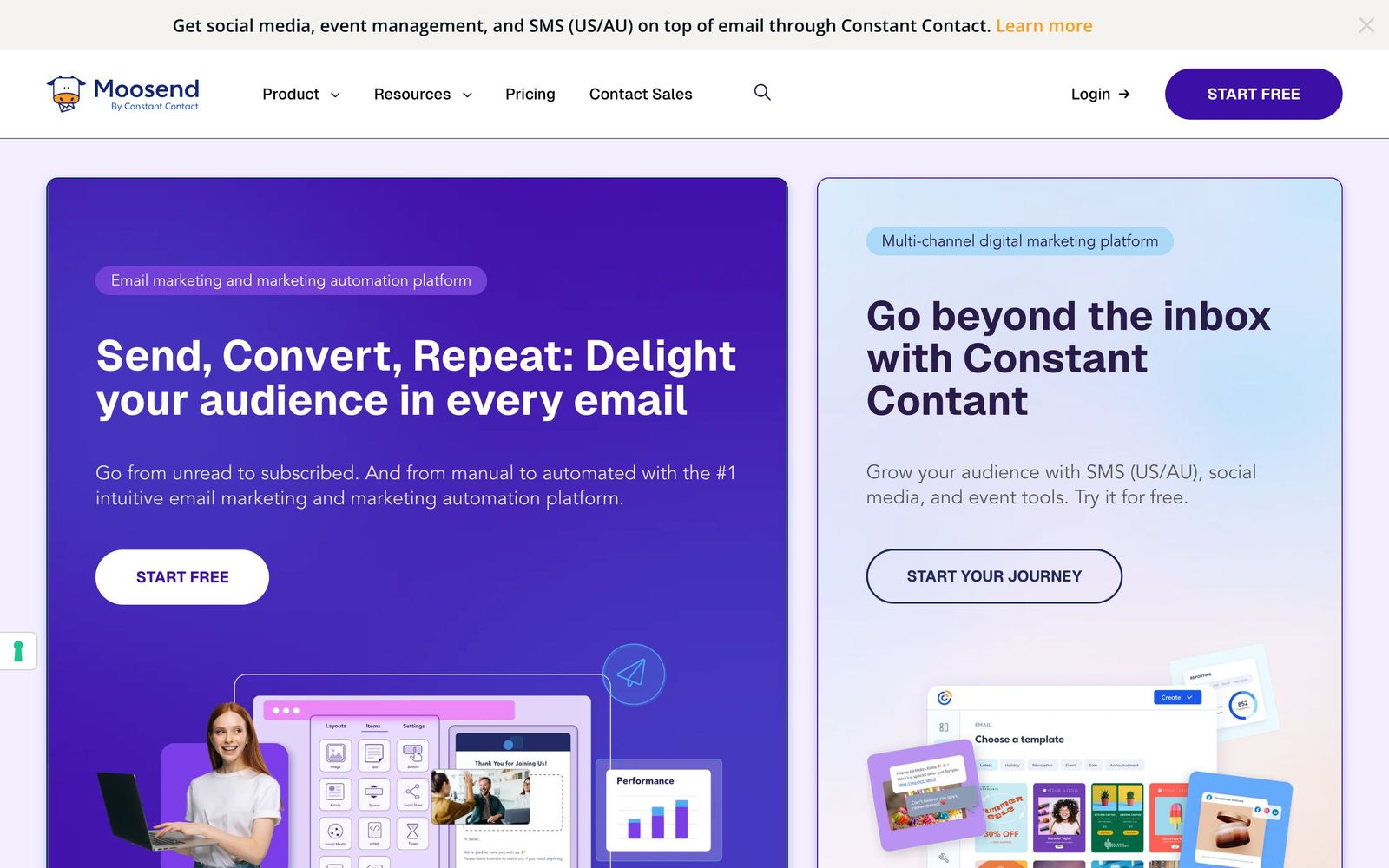
Email marketing and automation priced per contact, with unlimited sends and a strict list policy.
Strong automation and reporting for what it costs, though the anti-spam enforcement is unforgiving and there is no SMS, CRM or native Shopify sync.
Pros
- Sends are unlimited on every paid tier, so the bill is driven by contact count rather than send volume
- The automation builder with triggers, conditions and delays is available on the entry plan rather than gated upward
- Campaign reporting includes click maps, geographic breakdowns and revenue attribution
- Landing pages, subscription forms and an SMTP server are part of the platform rather than paid add-ons
- Contact-based pricing starts low enough for a list of a few hundred to be worth automating
Cons
- Importing stale, purchased or unverified contacts can get an account suspended within hours of the first send
- No SMS channel, no built-in CRM and no native Shopify sync, so ecommerce stacks need Zapier or an API bridge
- Reporting cannot filter out bot clicks or Apple Mail privacy opens, which inflates open and click rates
Moosend pricing
List prices in USD per month, taken from the vendor at review time.
| Plan | Per month | What it covers |
|---|---|---|
| Pro (500 contacts) | $9 | unlimited sends; 7 per month on annual billing |
| Pro (1,000 contacts) | $16 | price scales with contact count; 20 percent off on annual billing |
What Moosend actually does
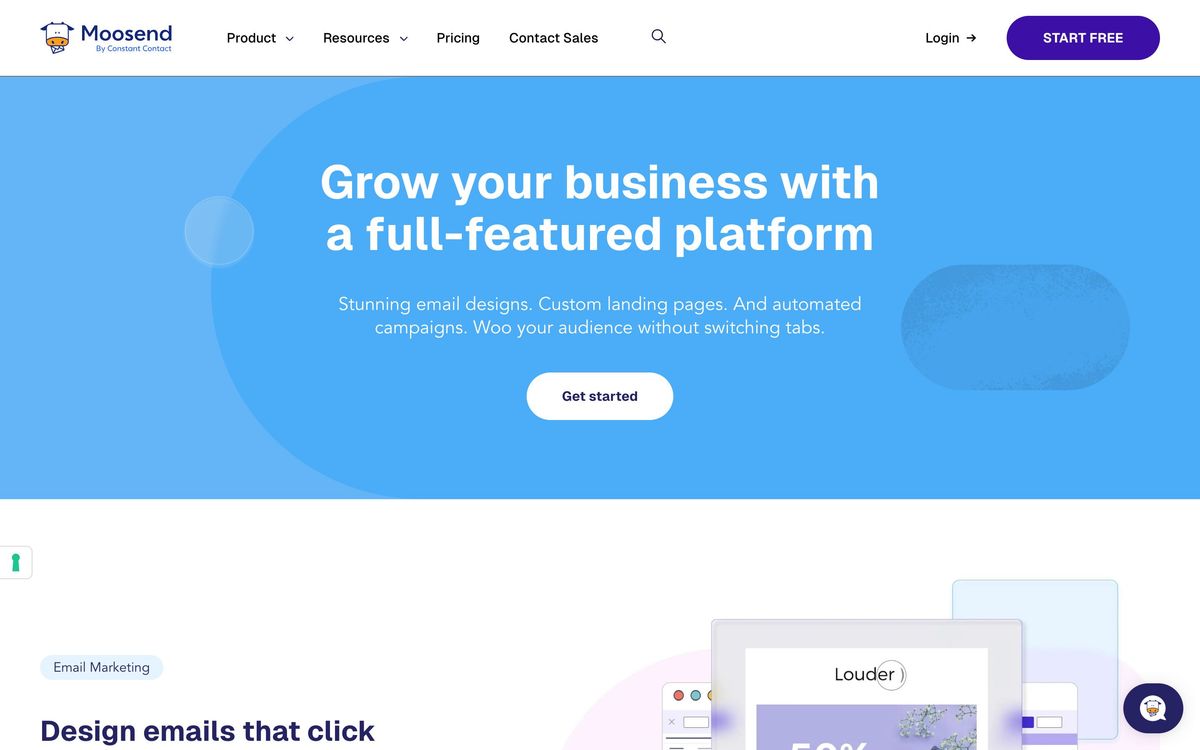
Moosend is an email marketing platform in the classic shape: build a list, segment it, design a campaign, send it, then wire the repeatable parts into automations. What separates it from the crowd is the billing model. Sends are unlimited on every paid tier and the bill is set entirely by how many contacts are stored, which suits senders who mail the same list often, daily newsletters, ecommerce lifecycle programmes, agencies running frequent client campaigns. A list of a few thousand that receives four campaigns a month costs the same as one that receives forty.
The platform is delivered as a hosted application with a drag-and-drop campaign builder, a workflow editor, hosted landing pages and subscription forms, and an SMTP server for transactional mail. Recent additions lean on AI: a writer that drafts subject lines and body copy, and an audience discovery feature that proposes segments from behavioural data. Deliverability is where Moosend has invested most visibly. The service is CSA certified, offers SPF alignment and DMARC guidance, and provides IP warm-up support. The other side of that investment is enforcement, discussed below.
Key features
The capabilities that shape a working setup:
- Drag-and-drop campaign builder with templates and per-recipient personalisation fields
- Automation workflows built from triggers, conditions and delays, including cart abandonment and onboarding sequences
- Segmentation on behaviour, engagement and custom fields, evaluated at the moment of send
- Hosted landing page and subscription form builders that publish without a separate site
- SMTP server and transactional sending, with dedicated IPs available on the custom configuration
- Reporting with click maps, geographic breakdowns and revenue attribution per campaign
Who it's for
The natural buyer is a lean marketing team or a small agency that sends often to a list built through opt-in, and wants automation and reporting without paying enterprise rates per send. Ecommerce sellers on WooCommerce or Magento are well served: the native connectors carry order data into segments and abandonment flows. Publishers and newsletter operators benefit most from the unlimited-send model, since frequency costs nothing extra.
Two groups should look elsewhere. Anyone whose list history is uncertain, imported from an old system, bought, scraped, or never verified, is taking a real risk, because the anti-spam enforcement is among the strictest in the category and suspensions arrive fast. And teams that need SMS, a built-in CRM, or a native Shopify sync will end up assembling those pieces from Zapier and the API, which erodes the price advantage that brought them in.
How it compares
Mailchimp remains easier to hand to a non-marketer and has a far larger app ecosystem, but its contact-plus-send pricing punishes frequent senders. Brevo is the closest structural rival, adding SMS and a light CRM with a send-based free tier, at the cost of a clumsier campaign editor. MailerLite matches Moosend on simplicity and price and beats it on interface polish, while offering less depth in automation logic. Klaviyo is the correct choice for Shopify stores that want ecommerce data modelled properly, and costs several times more for the privilege. Moosend's position is specific: the most automation and reporting available at the low end, provided the list is clean.

Verdict
Moosend earns its rating on substance rather than polish. The automation builder is genuinely capable at the entry tier, the reporting goes beyond opens and clicks into revenue and click maps, and the unlimited-send model removes the anxiety that comes with frequency-based billing. The caveats are real, though. Reporting cannot strip bot clicks or Apple Mail privacy opens, so engagement figures need reading with care. There is no SMS or CRM. And the strictness that protects deliverability for good senders will terminate an account that imports a questionable list, sometimes before the first campaign finishes sending. Teams with clean data get a good deal here; teams with messy data should clean it first, elsewhere.
Ready to try Moosend?
More marketers tools like Moosend
GetResponse
4.3All-in-one email marketing platform with automation, AI tools, webinars, and creator monetization features.
Read GetResponse review →CleverTap
4.2Behavioural analytics and cross-channel campaigns for teams whose customers live inside a mobile app.
Read CleverTap review →RGE Studio
4.1Drag-and-drop email and landing page builder that exports into whichever platform you already send from.
Read RGE Studio review →Sender
4.1Email and SMS marketing for small stores and newsletters, with automation included on the free plan.
Read Sender review →Brevo
4.0Email, SMS, WhatsApp and a light CRM on one bill, priced by messages sent rather than contacts stored.
Read Brevo review →InboxAlly
4.0Deliverability repair service that rebuilds sender reputation with seed inboxes, placement tests and DNS checks.
Read InboxAlly review →