
Ploy review
AI site builder that also identifies visitors, writes SEO pages and reports on paid campaigns.
A credible one-vendor answer for a startup with no web hire, though bundling the site, the ads and the visitor data into one credit pool makes it hard to leave.
Pros
- Imports an existing site and produces an editable version of it rather than starting from a blank template
- GitHub code sync means the generated pages are not trapped inside a proprietary editor
- Visitor identification and ad reporting sit in the same product as the pages, so attribution does not need a separate tool
- The free tier includes custom domains and a daily credit allowance, which most AI site builders reserve for paid plans
- Content work covers answer engine optimisation, not only classic on-page SEO
Cons
- Everything is metered from one credit pool, so a month of heavy page generation eats the budget for visitor enrichment
- CRM connectors are tiered: HubSpot and Attio only from the middle plan, Salesforce only on enterprise terms
- Visitor enrichment on the entry paid plan is capped at fifty a month, which is too few to run account-based outreach
Ploy pricing
List prices in USD per month, taken from the vendor at review time.
| Plan | Per month | What it covers |
|---|---|---|
| Free | Free | 800 credits a day, custom domains, GitHub sync |
| Starter | $50 | 4,000 monthly credits, 50 visitor enrichments |
| Pro | $300 | 24,000 monthly credits, 1,000 enrichments, HubSpot and Attio |
What Ploy actually does
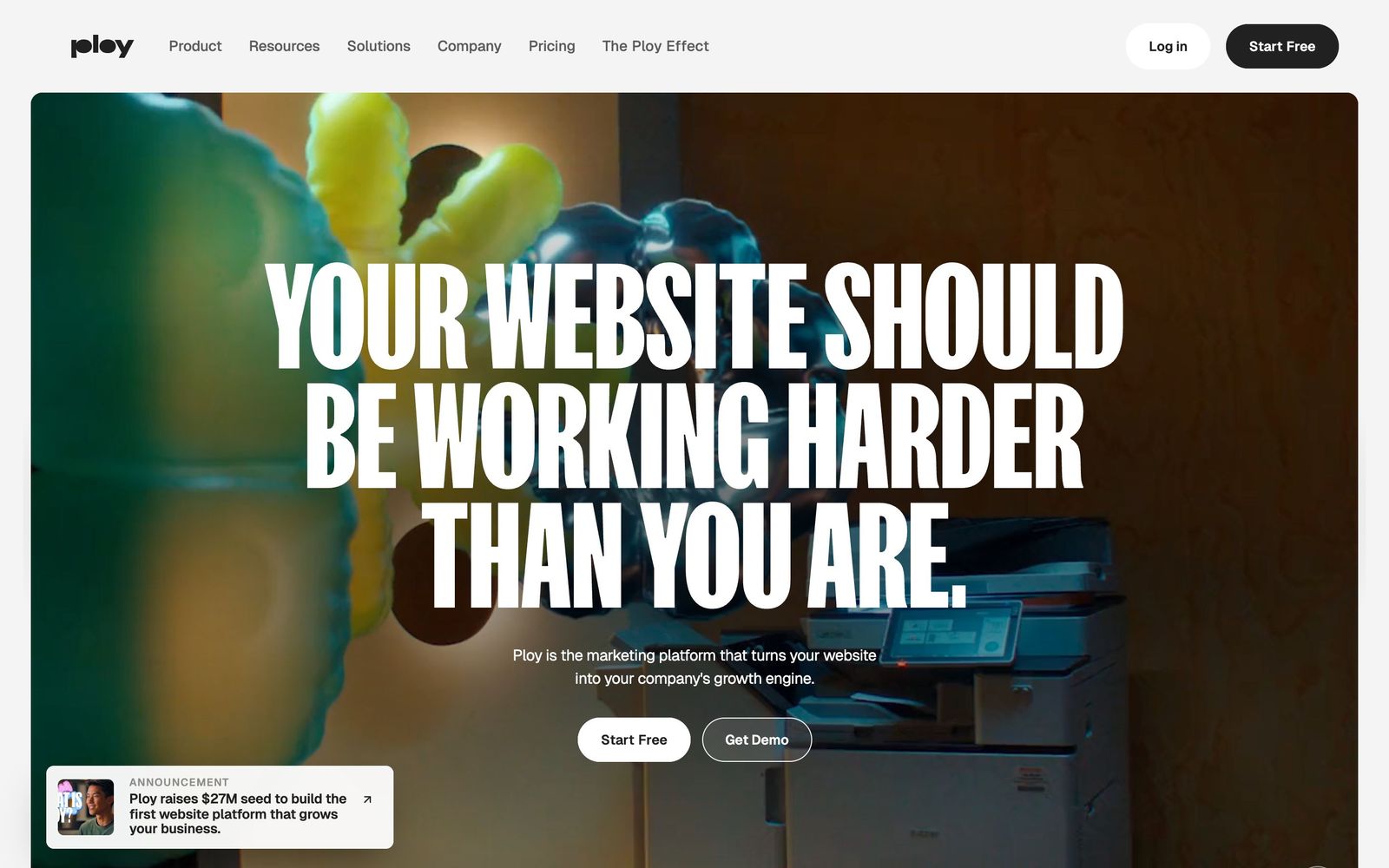
Ploy is a marketing platform organised around three engines. The web engine builds and edits a marketing site, importing an existing one in about a minute rather than starting from a template. The grow engine identifies who is visiting that site, scores intent, and hands qualified records to a CRM. The ads engine reads competitor ad libraries, generates creative, manages Meta campaigns, and ties impressions through to closed revenue. The claim underneath all three is that a marketing site should not be a static artefact maintained by whoever has Webflow access.
It is delivered as a hosted application with a code sync to GitHub, which matters more than it first appears. Generated pages are not locked behind a proprietary editor, so a team that later hires an engineer is not forced into a rebuild. Consumption across the whole product is metered in a single credit pool, and that pool is the real shape of the product: page generation, content rewrites and visitor enrichment all draw from it.
Key features
The feature set spans work usually split across three vendors.
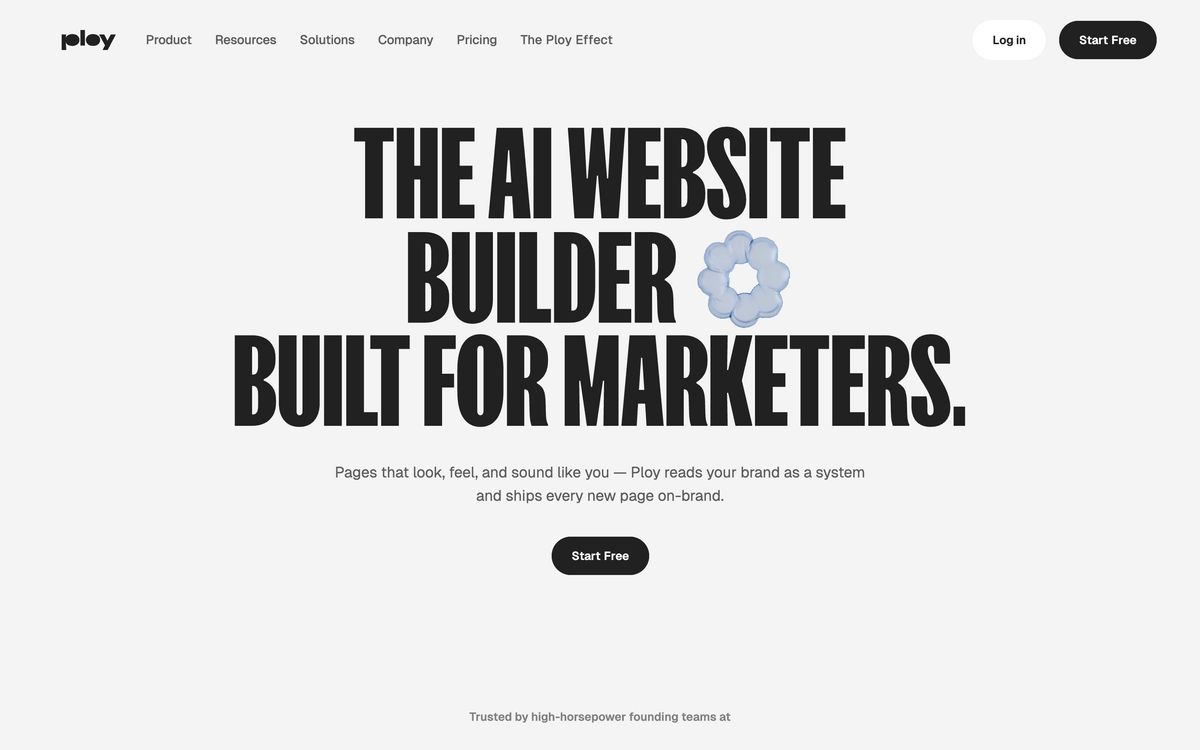
- AI website builder that imports a live site and returns editable, on-brand pages
- Programmatic SEO and account-based landing page generation across many pages simultaneously
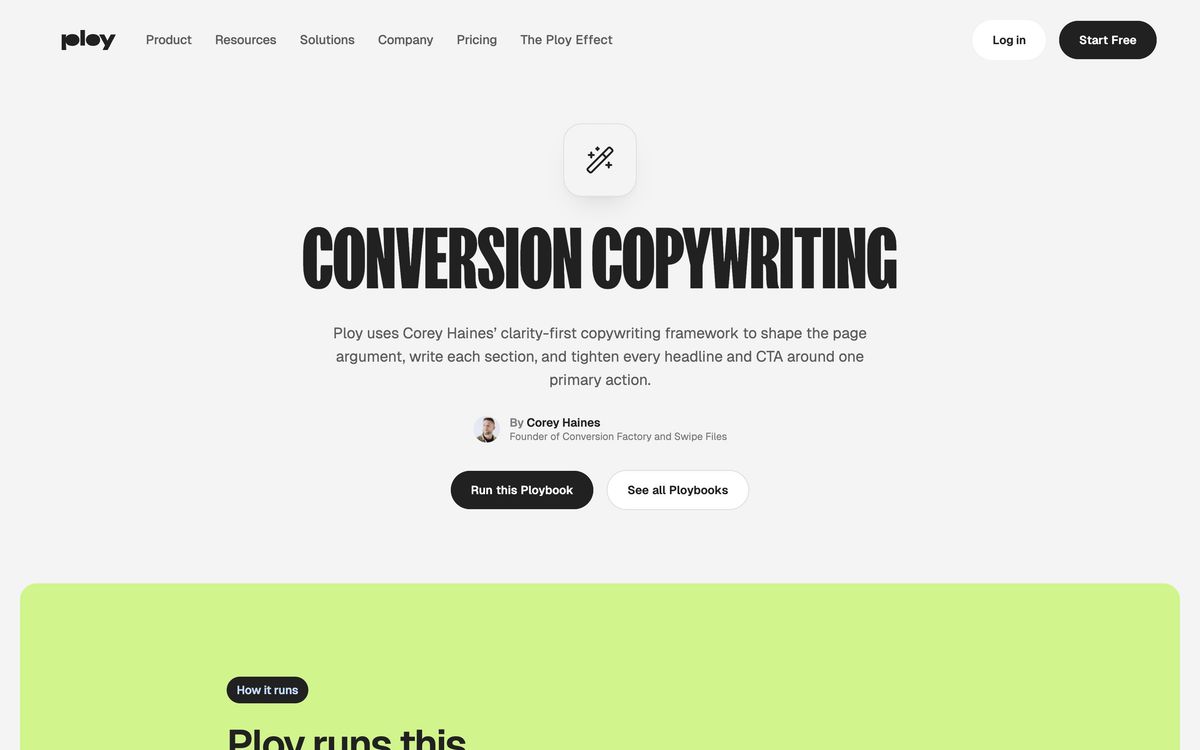
- Answer engine optimisation plus automated technical SEO fixes on generated content
- Visitor de-anonymisation with intent signals and lead scoring, pushed into a CRM
- Ad library intelligence, automated creative generation and Meta campaign management
- Attribution running from ad impression to closed deal, inside the same reporting view
Who it's for
The clear fit is a seed-stage startup with no web designer and no growth hire, where the marketing site changes weekly and nobody owns it. Ploy compresses a website builder, an SEO content tool, a visitor identification product and an ad reporting layer into one subscription, and for a team of four that consolidation is worth more than depth in any single area. Small agencies get a similar benefit from the multi-client dashboard and white-label handling.
It is the wrong purchase for a company that already runs Webflow with a content team, because the site building half is then redundant while the credit pool still charges for it. It is also premature for anyone whose account-based motion is real: fifty enrichments a month on the entry paid plan will not sustain outbound, and the CRM connector for Salesforce sits behind enterprise terms. Larger marketing organisations with existing SEO and paid specialists will find each engine shallower than the dedicated tool it replaces.
How it compares
Webflow with a separate SEO tool gives far more design control and a mature CMS, but leaves attribution and visitor identification to be bought elsewhere. Unbounce and similar landing page builders convert better on paid traffic and are simpler to hand to a contractor, though they do nothing about organic content or ad creative. Against a visitor identification specialist such as Warmly, Ploy is broader but identifies less aggressively, and its intent scoring is newer and less tested. The honest comparison is not feature by feature, it is one bill and one interface against three of each.
Verdict
Ploy is a reasonable bet for a small team that needs a marketing site to behave like a growth channel and has nobody to make that happen. The import path is genuinely fast, the GitHub sync is an unusual and welcome escape hatch, and the free tier is usable rather than decorative. The reservation is structural: one shared credit pool means the engines compete against each other inside a fixed budget, so a month of heavy page generation quietly starves the enrichment that justified the purchase. Model the credit maths against real page counts before committing to the middle tier.
Ready to try Ploy?
There's a free tier, so you can test it before committing.
More marketers tools like Ploy
Pagecloud
3.7Drag-and-drop website builder with popups, forms and cookie-free analytics for small business sites.
Read Pagecloud review →RGE Studio
4.1Drag-and-drop email and landing page builder that exports into whichever platform you already send from.
Read RGE Studio review →Outgrow
4.0Builder for calculators, quizzes and assessments that qualify a visitor before asking for an email.
Read Outgrow review →Instapage
3.9Landing page builder for paid traffic, with server-side A/B testing and ad-to-page matching.
Read Instapage review →Leadpages
3.9Landing pages, pop-ups and opt-in forms with unlimited traffic on every plan and Stripe checkout built in.
Read Leadpages review →AWeber
3.8Long-running email marketing platform for newsletters, autoresponders and sign-up forms, with a usable free tier.
Read AWeber review →