
Printify review
Print-on-demand network that routes each order to one of roughly 140 independent print shops worldwide.
The widest catalog and the lowest base costs among the large print-on-demand networks, though print quality and shipping speed move with whichever provider fills the order.
Pros
- The free plan carries the full catalog and five connected stores, so testing a design costs nothing but time.
- Roughly 1,300 products across about 140 facilities gives more SKUs and more regional routing than any single-factory network.
- Print Provider Performance Scores expose fulfillment speed and reprint history before an order is committed.
- Base costs undercut Printful on most apparel, which is what decides margin on lower-priced items.
- Native publishing to Etsy, TikTok Shop, eBay and Amazon, not only to Shopify.
Cons
- Print quality belongs to the provider, not the platform; sellers report reprint rates that differ sharply between shops offering the same blank.
- A multi-item order split across providers arrives in separate parcels with separate shipping charges, which buyers read as a fulfillment error.
- The paid subscription only repays itself above a certain monthly volume, and its discount applies to product cost rather than shipping.
Printify pricing
List prices in USD per month, taken from the vendor at review time. Custom means quote-only.
| Plan | Per month | What it covers |
|---|---|---|
| Free | Free | 5 stores per account, unlimited product designs |
| Premium | $24.99 | billed yearly; $39 month to month, 10 stores and product discounts |
| Enterprise | Custom | custom pricing: unlimited stores, custom API integration, dedicated account manager |
What Printify actually does
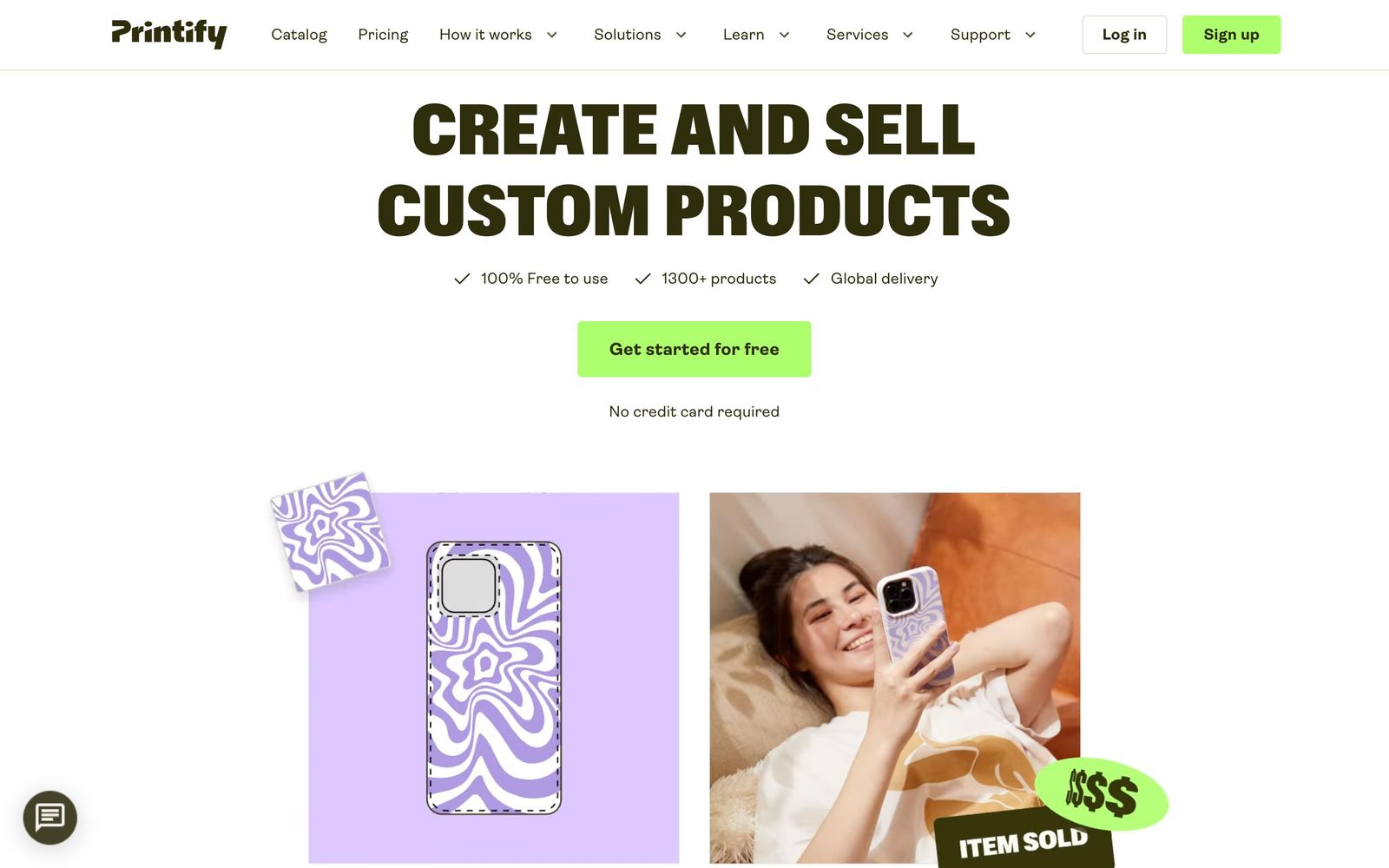
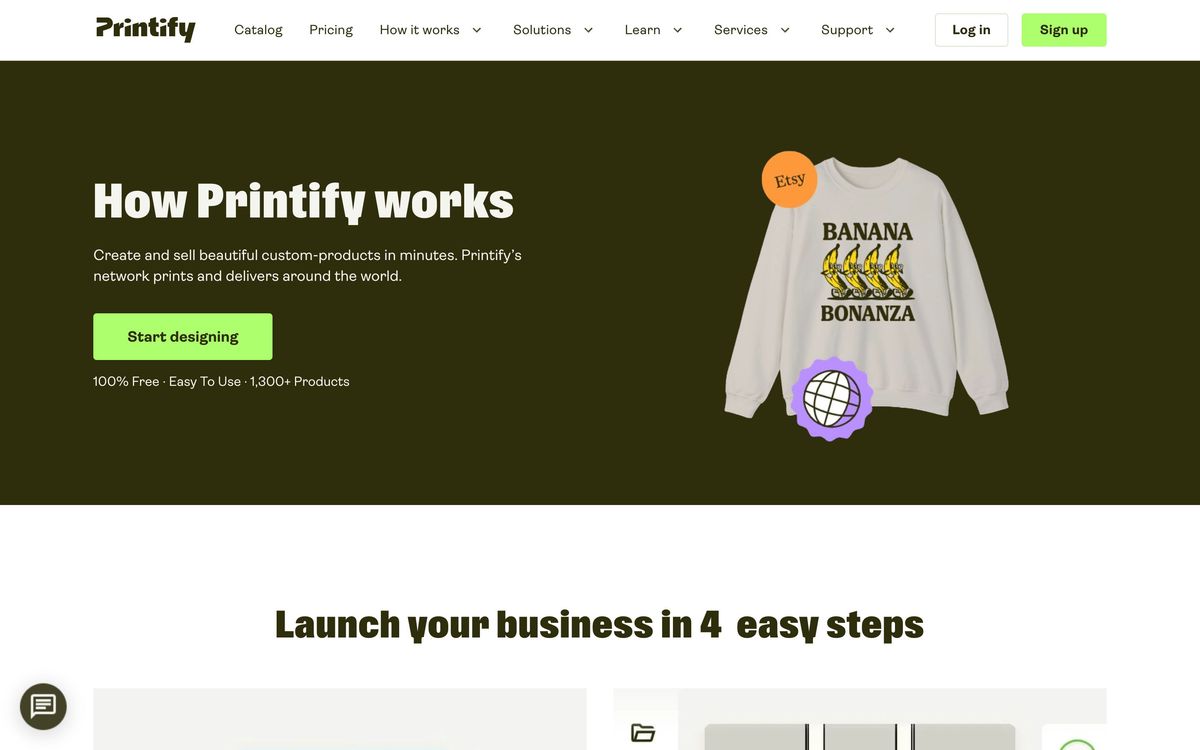
Printify is a print-on-demand network. A seller uploads artwork, places it on a blank from a catalog of roughly 1,300 products, publishes the listing to a connected storefront, and pays nothing until a customer buys. When an order arrives, Printify routes it to one of about 140 independent print facilities, which prints, packs and ships directly to the buyer under the seller's branding. No inventory is purchased and no minimum order applies.
The structural fact that governs everything else is that Printify owns no printers. It is a catalog and routing layer sitting over independent print shops, each of which sets its own base prices, product range, production times and shipping rates. The seller chooses the provider per product, and can choose different providers for different regions so a European order is not shipped across the Atlantic. The company reports 141 facilities and more than 60 million orders fulfilled across 209 countries and territories. Design, mockups and bulk publishing happen inside Printify's own product creator; order tracking, branding options and provider selection sit alongside it.
Key features
Most of the product is catalog, routing and the tooling around them.
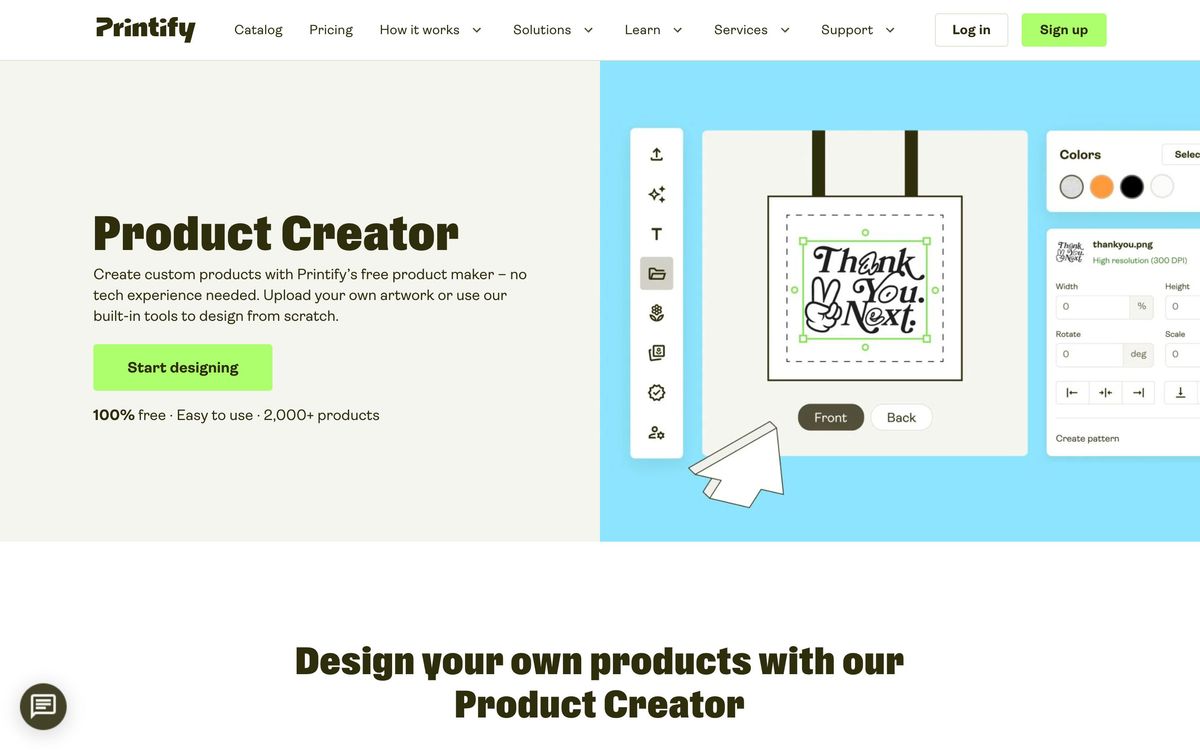
- Product creator with mockup generation and bulk publishing to connected storefronts
- A provider marketplace showing base cost, facility location and a performance score per print shop
- Automatic order routing with no minimum order quantity and no inventory commitment
- Custom branding on supported products: neck labels, packing slips, branded inserts
- AI mockups and the Printify Connect order management layer on the paid tier
- A public API and a hosted pop-up store for sellers with no storefront of their own
Who it's for
Printify fits a seller who treats print-on-demand as a margin business: someone testing many designs cheaply, selling across Etsy and TikTok Shop as well as their own store, and willing to spend an afternoon comparing providers before committing a bestseller to one. It also fits sellers outside the United States, because regional routing is the clearest advantage the multi-provider model has over a single-factory competitor.
It is the wrong tool for a brand whose product quality is the promise. Because fulfillment is delegated, consistency is something the seller manages through provider choice and sample orders rather than something the platform guarantees. Anyone shipping a premium apparel line, or anyone without the patience to order samples from several shops, will be happier paying more for a network that owns its own presses.
How it compares
Printful is the direct opposite trade: it owns its facilities, so quality and packing are consistent and support is accountable, but base costs run higher and the catalog is narrower, which squeezes margin on low-ticket items. Gelato competes on the same distributed-production idea with a stronger local-production story in Europe and Asia but a much smaller catalog. Gooten sits close to Printify's model with fewer sales-channel integrations and a less developed seller interface. Against all three, Printify wins on catalog breadth, entry cost and channel coverage, and loses on predictability.
Verdict
Printify is the most economically sensible starting point in print-on-demand, and the free plan makes that argument by itself: full catalog, several stores, nothing owed until an order exists. The provider marketplace with published performance scores is a real answer to the obvious objection about a distributed network, and the routing genuinely shortens delivery for international buyers. The caveat is that the seller inherits the quality control problem. Split shipments on multi-item orders and provider-to-provider variance in printing are structural, not bugs to be fixed, and they land on customer support rather than on Printify. Sellers who sample properly and stay with a small set of proven providers get most of the upside; those who route on price alone will spend the savings on reprints.
Ready to try Printify?
There's a free tier, so you can test it before committing.
More ecommerce tools like Printify
Tapstitch
3.8Print-on-demand and custom apparel manufacturing for sellers who want cut-and-sew garments rather than blank tees.
Read Tapstitch review →Spocket
3.8Dropshipping catalog weighted toward US and EU suppliers, with one-click import and branded invoicing.
Read Spocket review →Quartile
4.4Cross-channel retail media platform managing Amazon, Walmart, Instacart, Google and Meta ads with ML bidding.
Read Quartile review →soona
4.4Creative-for-commerce platform: studio photo and video, UGC creators, AI editing tools and listing insights.
Read soona review →DataHawk
4.3Enterprise-grade Amazon and Walmart analytics: SKU-level dashboards, anomaly alerts and AI diagnostics.
Read DataHawk review →Gorgias
4.3Ecommerce help desk where order data and refunds live inside the conversation, with an AI agent priced per resolution.
Read Gorgias review →