
Claap review
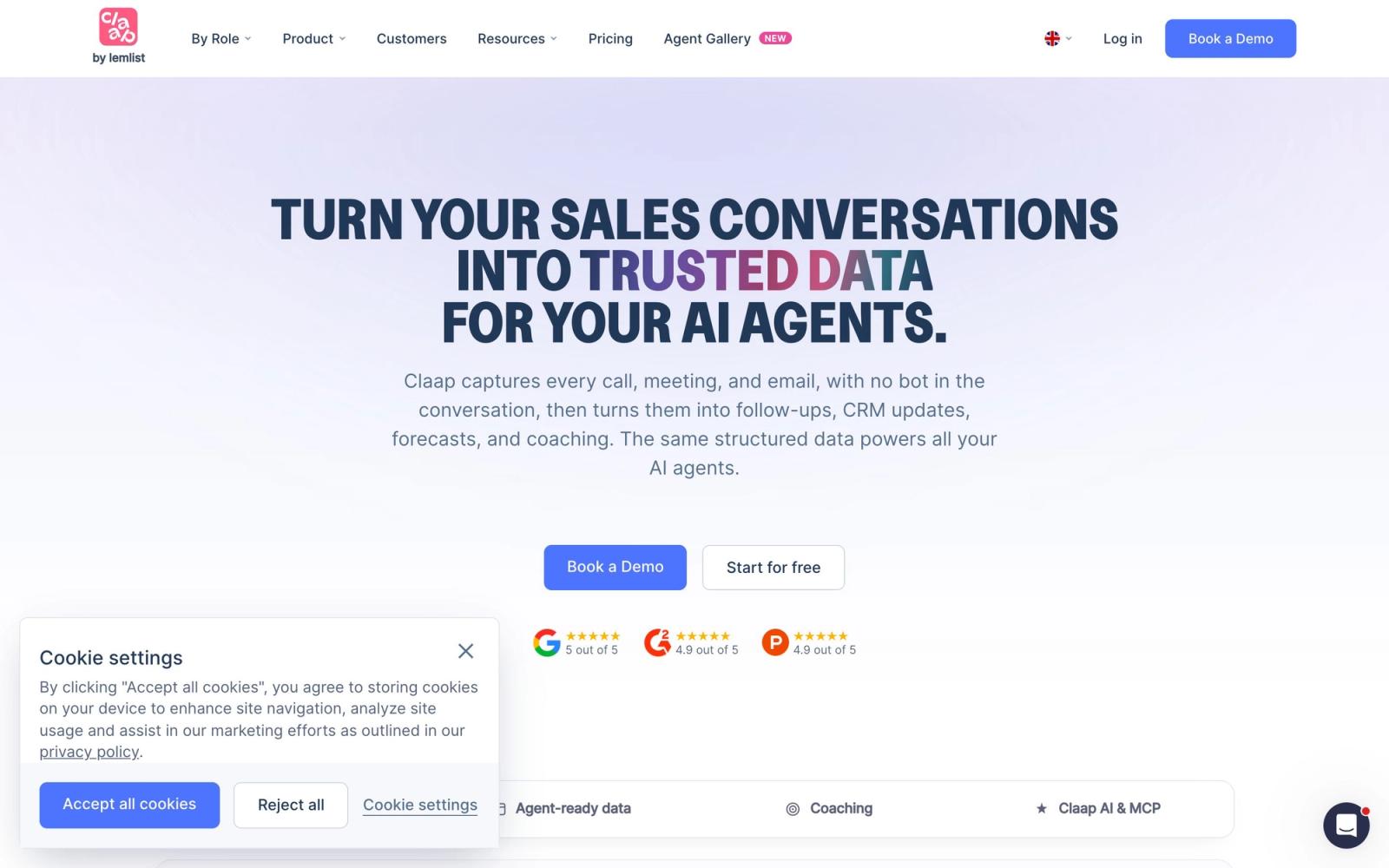
Records sales calls without a bot, writes the notes, fills the CRM and scores the deal against your methodology.
A credible conversation intelligence tool at a fraction of enterprise pricing, though the features sales teams actually want sit on the second paid tier.
Pros
- Records without joining as a visible bot, which avoids the awkward moment of a third participant appearing in a first call
- Captures calls beyond web conferencing, including VoIP and in-person conversations from a phone
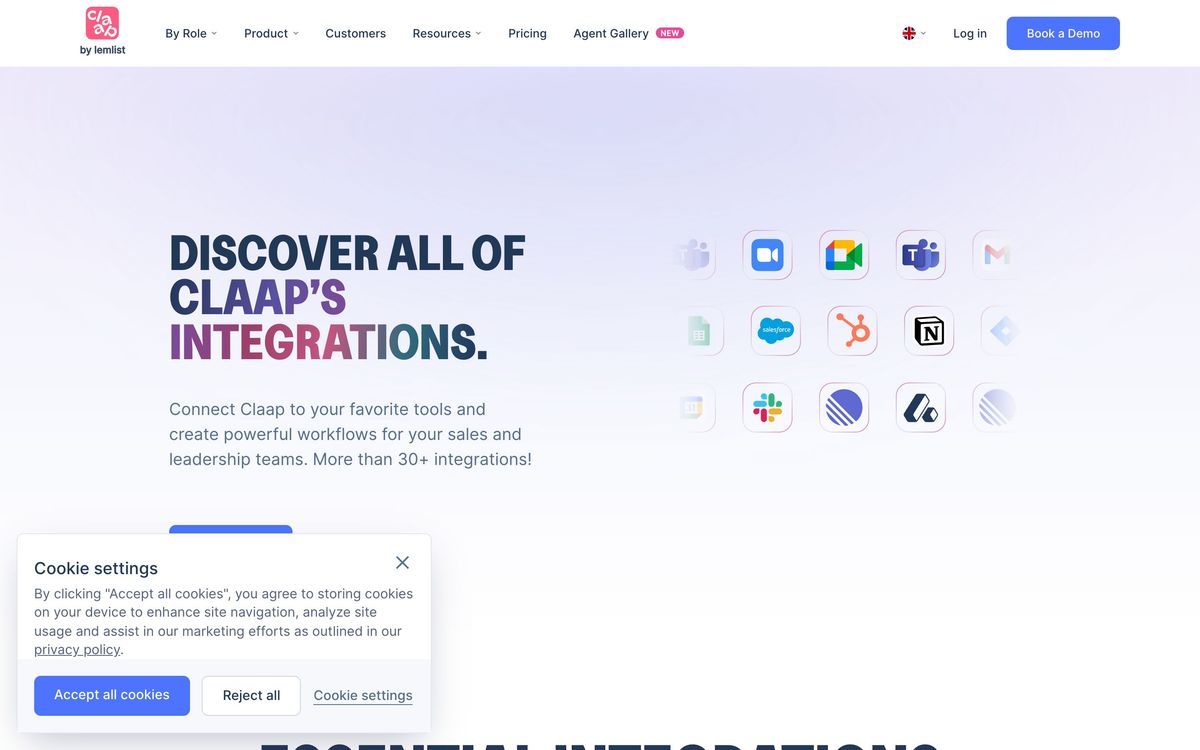
- Writes structured notes back into Salesforce, HubSpot, Pipedrive or Attio, so reps stop retyping after every call
- Scores conversations against MEDDIC, BANT or SPICED and surfaces objections, buying signals and deal risk
- Transcription covers around a hundred languages, which matters for teams selling across Europe
Cons
- CRM auto-complete, deal insights and AI coaching are all on the Business tier, twice the price of Pro, so the entry paid plan is effectively a note-taker
- Long recordings can sit in processing well after the call ends, which breaks a same-day follow-up habit
- The Slack connection only announces that a recording is ready rather than posting the summary, so the notes still live in another tab
Claap pricing
List prices in USD per month, taken from the vendor at review time. Custom means quote-only.
| Plan | Per month | What it covers |
|---|---|---|
| Basic | Free | free: 10 videos per user, 300 minutes total, transcripts and basic summaries |
| Pro | $24 | EUR per licence per month, billed annually; unlimited recordings, 500 AI credits, meeting insights |
| Business | $48 | EUR per licence per month, billed annually; adds CRM auto-complete, deal insights and AI coaching |
| Enterprise | Custom | custom pricing; adds SSO, SCIM provisioning, migration and onboarding support |
What Claap actually does
Claap records sales conversations and turns them into structured data rather than transcripts nobody reads. A call happens on Zoom, Teams, a VoIP line or across a table; Claap captures it without joining as a visible participant, transcribes it in one of roughly a hundred languages, and produces a summary organised the way a sales team thinks - what the prospect needs, what they objected to, what was promised, what happens next. The output then travels: fields are written back into the CRM, follow-up emails are drafted, and the deal picks up a score reflecting how much of the qualification framework has actually been covered.
The product began life as an async video tool, and that heritage is still visible in the workspace, where recordings live in channels with comments and highlights rather than disappearing into a personal folder. What has been layered on since is revenue-team machinery: methodology scorecards for MEDDIC, BANT and SPICED, deal risk signals, coaching views showing talk ratios and rep performance, and connectors that expose the conversation library to external assistants through MCP. It is SOC 2 Type 2 certified and GDPR-compliant, which matters for the European teams that make up much of its customer base.
Key features
The capabilities a revenue team uses daily:
- Bot-free recording across Zoom, Microsoft Teams, VoIP calls and in-person meetings
- Transcription and structured summaries in around a hundred languages and accents
- CRM field auto-completion and note sync for Salesforce, HubSpot, Pipedrive and Attio
- Methodology scorecards for MEDDIC, BANT and SPICED with automatic deal scoring
- Coaching views with speaker analytics, talk ratios and per-rep scorecards
- Async video and screen recording in a shared workspace with channels and comments
Who it's for
The fit is a B2B sales team of roughly five to fifty reps that has outgrown a personal note-taker but cannot justify an enterprise revenue intelligence contract with a floor in the tens of thousands. For a sales manager, the draw is coaching evidence: hearing why a deal stalled rather than reading a rep's summary of why it stalled. For reps, the draw is not typing the same information twice. European and multilingual teams have an additional reason, since transcription quality across languages is better than most competitors at this price.
It is the wrong tool for a solo founder who simply wants meeting notes, where a free note-taker does the same job without the workspace overhead. It is also the wrong tool for a large enterprise sales organisation that needs forecast rollups, territory analytics and market-level intelligence across thousands of calls - that is a different product category and Claap does not pretend otherwise. Teams should also check where their calls actually happen before buying, since much of the value depends on capture working reliably across their particular telephony setup.
How it compares
Gong remains the reference point for conversation intelligence, with deeper deal analytics, forecasting and a far larger data set behind its recommendations, but it is priced for organisations with a dedicated revenue operations function and requires a similar commitment of process. Fathom is the closest low-cost rival and has a generous free tier with fast, reliable summaries, though it is a note-taker first and its CRM writeback and coaching layers are shallower. tl;dv sits between the two on price and is stronger on multi-language coverage and clip sharing, but weaker on deal scoring. Claap wins on capture flexibility and on getting structured data into the CRM at a mid-market price; it loses to Gong on analytical depth and to Fathom on simplicity.
Verdict
For a growing sales team, this is a sensible middle path: more structure than a note-taker, far less money and process than an enterprise platform, with recording that works outside web conferencing. The rating reflects two honest limits. The tier that makes it a sales tool rather than a transcription tool costs double the entry plan, which should be factored into any comparison with cheaper rivals, and the surrounding workflow still has rough edges - processing delays after long calls, and a Slack connection that announces recordings without delivering the substance. Trial it on live pipeline, not on internal meetings, since the CRM writeback is where the value either appears or does not.
Ready to try Claap?
There's a free tier, so you can test it before committing.
More sales tools like Claap
FullEnrich
4.5B2B waterfall enrichment that cascades 20+ data vendors to find verified emails and mobile numbers.
Read FullEnrich review →Amplemarket
4.4All-in-one AI sales platform: B2B contact data, multichannel sequences, and the Duo AI copilot.
Read Amplemarket review →Clay
4.4A credit-based GTM data workbench that chains 100+ enrichment providers and AI into one spreadsheet.
Read Clay review →Smartlead
4.4Cold-email sending infrastructure built for unlimited mailboxes, continuous warmup, and one unified reply inbox.
Read Smartlead review →Apollo.io
4.3The default B2B contact database and SDR prospecting suite: huge data reach paired with built-in sequencing and dialing.
Read Apollo.io review →Blinq
4.3Digital business cards and event lead capture that push enriched contacts with context into the CRM.
Read Blinq review →