
SimpleTexting review
SMS campaigns and a two-way texting inbox for teams that want mass sends and real replies in one place.
A straightforward SMS platform that small marketing teams can run without help, though the automation and personalisation stop well short of what a full lifecycle tool offers.
Pros
- Campaign sending and a shared conversational inbox live in the same product, so replies do not disappear into a channel nobody watches
- Incoming SMS is free, which makes genuine two-way conversation viable instead of a cost line to be minimised
- Keywords for text-to-join are unlimited on every plan, so several campaigns can run without an upgrade
- Supports 10DLC local numbers, toll-free numbers, dedicated short codes and text-to-landline, covering most compliance situations a US team meets
- Credit-based plans can be sized up or down month to month, which suits seasonal senders better than fixed contact tiers
Cons
- Automation is limited to autoresponders, scheduled sends and keyword triggers; branching workflows and conditional logic are not really there
- Personalisation and dynamic content options are thin, so messages tend to look the same to every recipient in a segment
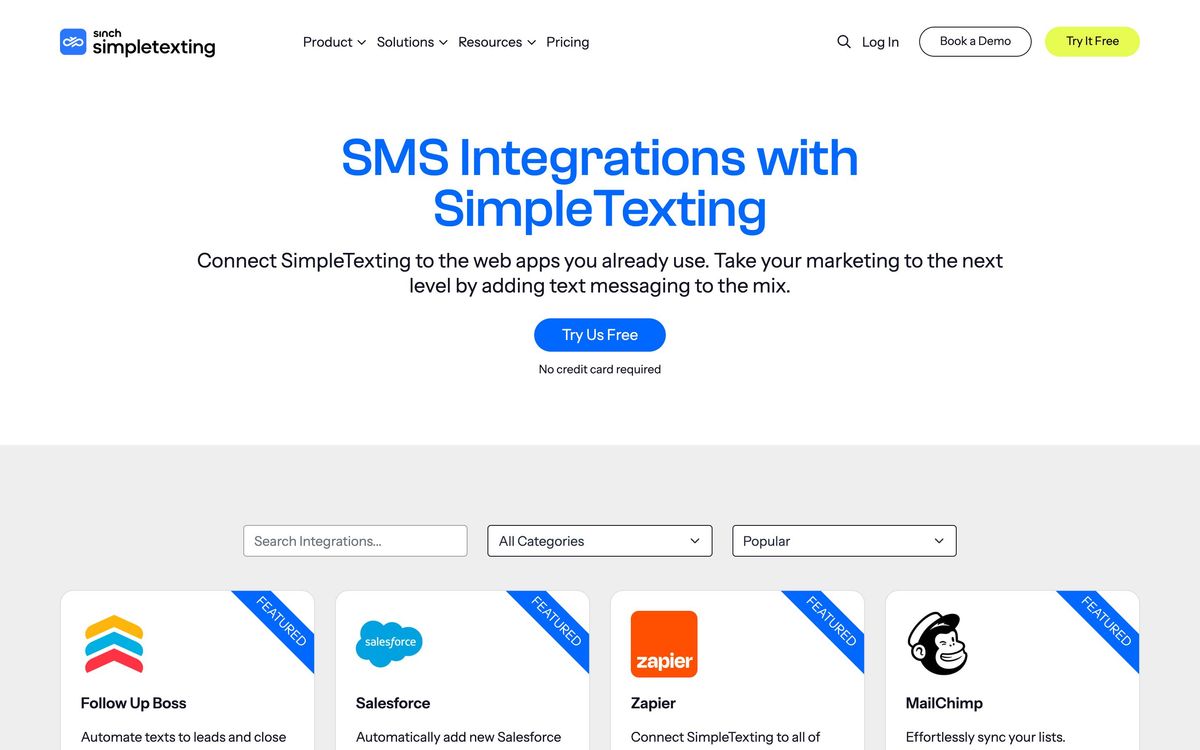
- Native integrations are few, and most connections beyond the named handful route through Zapier
- Costs stack in layers: message credits, per-number monthly fees, carrier registration, per-message carrier surcharges and overage credits
SimpleTexting pricing
List prices in USD per month, taken from the vendor at review time.
| Plan | Per month | What it covers |
|---|---|---|
| 500 credits | $39 | entry plan; credits scale with volume, annual billing saves 20% |
| Local number | $10 | per number, plus a one-time carrier registration fee |
| Additional user | $20 | per user beyond the three included |
What SimpleTexting actually does
SimpleTexting is an SMS platform aimed at teams that want to send a campaign to a list and then handle the replies that come back. Contacts are collected through keywords, web forms or imports, segmented by list and attribute, and messaged either in bulk or one at a time from a shared inbox. The distinguishing choice is that both halves sit in the same product: a marketing manager schedules the promotion, and whoever is watching the inbox answers the person who texts back asking about store hours.
Billing runs on message credits rather than contacts. A standard message is one credit, longer messages consume two, and a picture message costs three, while inbound texts are free. Plans are sized by monthly credit volume and can be moved up or down. Around that sit the parts a US sender cannot avoid: 10DLC registration for local numbers, toll-free options, dedicated short codes for high volume, and the ability to text-enable an existing landline so a business keeps one published number.
Key features
The feature set is compact and covers the standard SMS jobs.
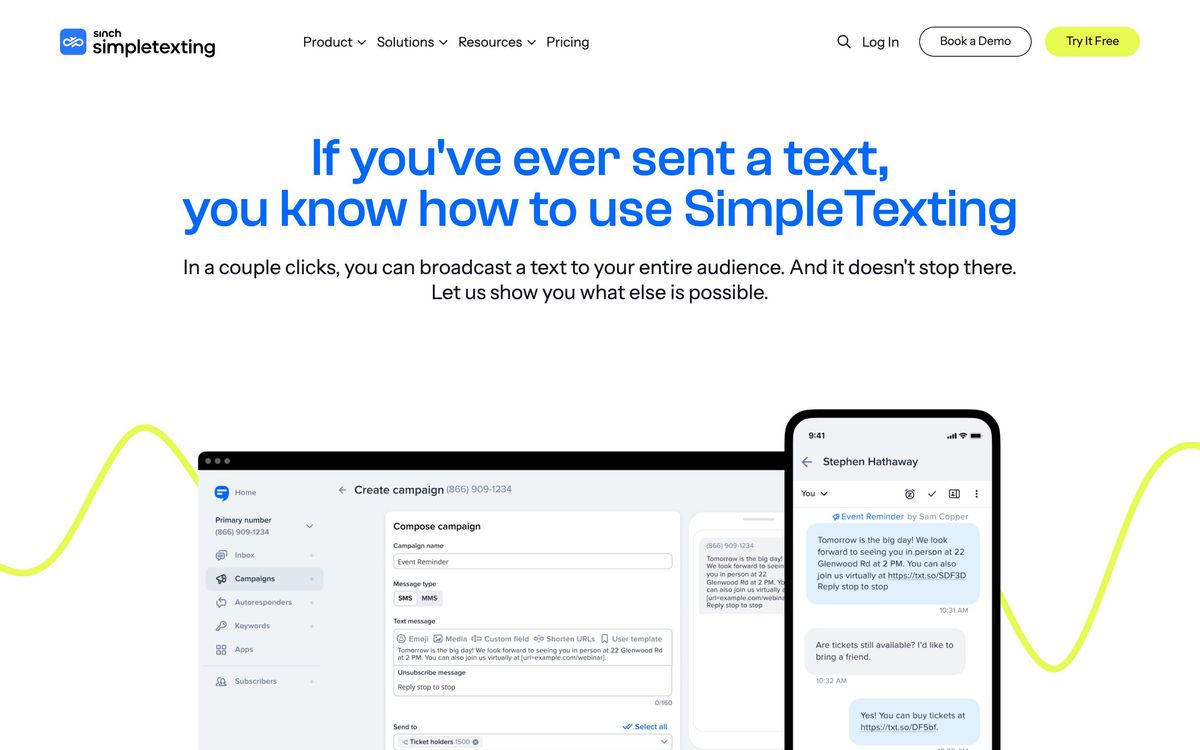
- Mass texting campaigns with scheduling, list segmentation and delivery reporting
- Two-way shared inbox for individual conversations, with free inbound messages
- Autoresponders and keyword campaigns for text-to-join signup
- MMS, plus text-to-vote and text-to-win formats for engagement campaigns
- Number provisioning across 10DLC, toll-free and dedicated short codes
- AI Assist for drafting copy, and text-based forms for collecting data in a conversation
Who it's for
The natural buyer is a small marketing team, a retailer, a clinic or a nonprofit that wants texting to work without a specialist. Setup is genuinely a day, the interface does not require training, and the credit model means a seasonal sender is not locked into paying for a quiet quarter. Teams that treat texting as a conversation rather than a broadcast get the most from it, because free inbound messages remove the reason to discourage replies.
It is a poor fit for anyone building lifecycle journeys where SMS is one branch among many, or for ecommerce teams who expect abandoned-cart flows and per-recipient product recommendations out of the box. Those teams will hit the automation ceiling quickly. International senders should also look elsewhere, since the number types, registration process and carrier fees are built around North America. Support and service teams considering it as a shared inbox should note that it is a texting product first: there is no ticketing, no assignment rules and no service-level reporting, so it works as a channel rather than as a help desk.
How it compares
Attentive and Postscript are the ecommerce specialists: deeper Shopify integration, revenue attribution and flow builders, sold at a level that assumes texting is a material revenue channel. Klaviyo folds SMS into an email and data platform, which is the right answer for a team already running its email there and wanting one segmentation model. Twilio is the raw infrastructure underneath much of this category and demands developer time. SimpleTexting sits between the hobby tools and the enterprise ones, and it wins on how little effort it takes to run.
Verdict
SimpleTexting does the ordinary things well and is easy to defend to a team that has never run SMS before, with a reply-friendly inbox and a pricing model that flexes with volume. The rating reflects two real ceilings: automation that stops at simple triggers, and a fee structure with more moving parts than the headline plan suggests once numbers, registration and overages are counted. For campaigns and conversations it is a sound choice; for orchestrated lifecycle marketing it is a stepping stone.
Ready to try SimpleTexting?
More marketers tools like SimpleTexting
Motion
4.5Creative analytics for paid social: visual reports and AI tagging that show which ad creatives perform.
Read Motion review →Tidio
4.5AI customer service platform with Lyro AI agent, live chat, ticketing, and automations for 300K+ businesses
Read Tidio review →Vista Social
4.5Social media management covering publishing, inbox, listening, reviews, and reporting across 11+ networks.
Read Vista Social review →Unbounce
4.4Landing page builder with AI traffic routing (Smart Traffic), A/B testing, popups, and sticky bars.
Read Unbounce review →ActiveCampaign
4.3Email marketing and automation platform with a built-in CRM, contact scoring, and SMS and WhatsApp sending.
Read ActiveCampaign review →AgencyAnalytics
4.3Client reporting for marketing agencies: 85+ connectors, white-label dashboards and scheduled reports.
Read AgencyAnalytics review →