
Postscript review
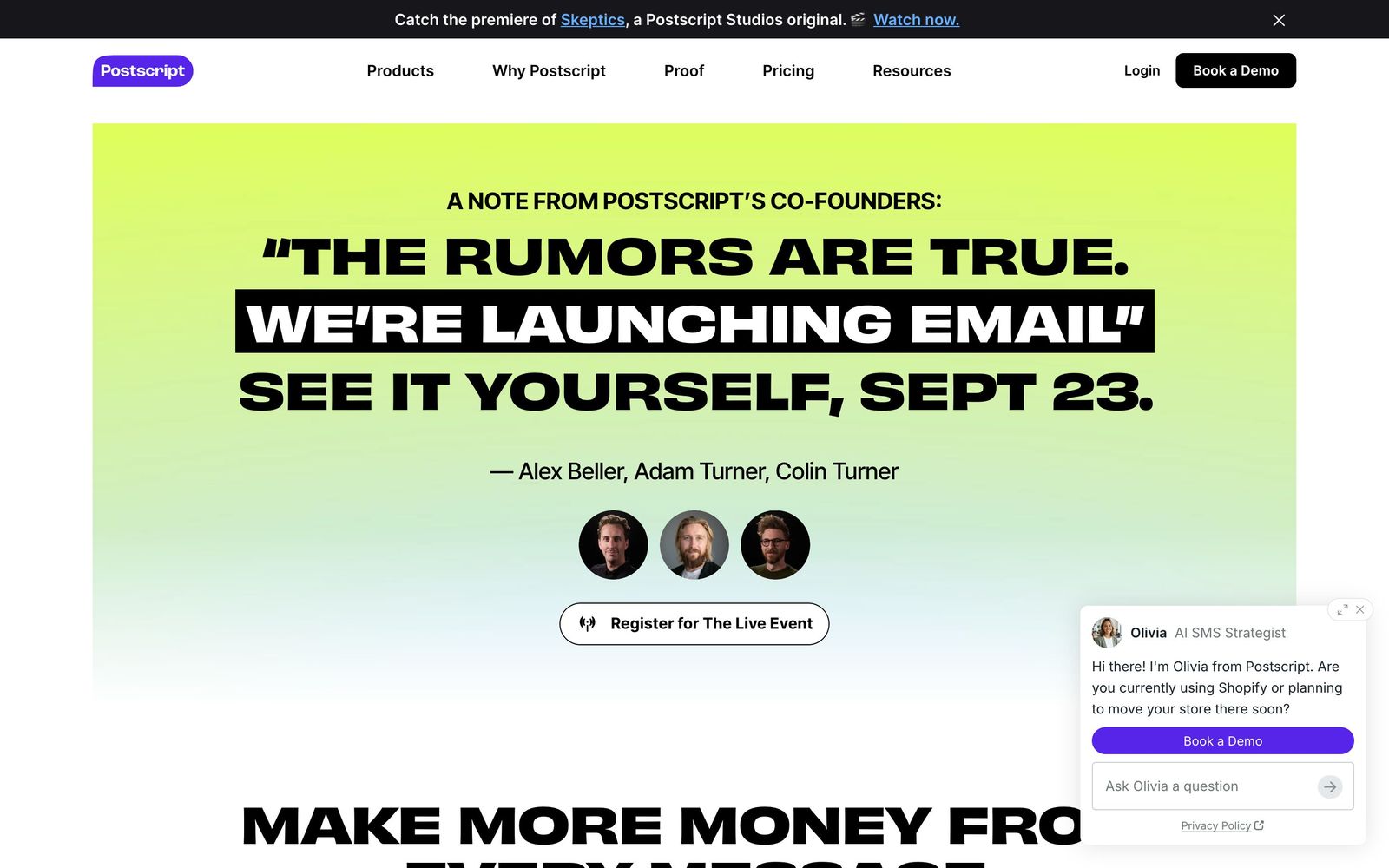
SMS marketing built only for Shopify stores, from list growth popups to campaigns and automated replies.
The strongest SMS platform for Shopify brands with a list worth messaging, though the Shopify-only design and platform fees make it a poor fit below real volume.
Pros
- Built for one platform, so subscriber, order and product data arrive from Shopify without mapping work
- Popup and onsite opt-in tools grow the list inside the same product rather than requiring a separate collection app
- Automations cover the standard ecommerce triggers, including abandoned checkout, browse and post-purchase flows
- Two-way conversations let support and sales reply to inbound texts instead of broadcasting only
- Compliance handling for consent, quiet hours and opt-outs is built in rather than left to the marketer
Cons
- Shopify only: stores on WooCommerce, BigCommerce or a custom platform cannot use it at all
- The mid and upper plans charge a monthly platform fee before a single message is sent, on top of per-message rates
- Picture messages cost several times a plain text, which makes image-led campaigns expensive at scale
Postscript pricing
List prices in USD per month, taken from the vendor at review time. Custom means quote-only.
| Plan | Per month | What it covers |
|---|---|---|
| Starter | Custom | no platform fee, $49 monthly minimum spend; per-message rates plus carrier fees |
| Growth | $100 | lower per-message rates plus carrier fees |
| Professional | $500 | lowest published per-message rates plus carrier fees |
What Postscript actually does
Postscript is text message marketing for Shopify stores and nothing else. That single-platform decision explains most of the product: subscriber records, order history, product catalogue and discount codes come across without field mapping, so segmentation by what someone bought, when they last ordered or which collection they browsed works from the first day. Campaigns are composed and scheduled against those segments; automations run on the familiar ecommerce triggers, from abandoned checkout and browse abandonment through welcome series and post-purchase follow-ups.
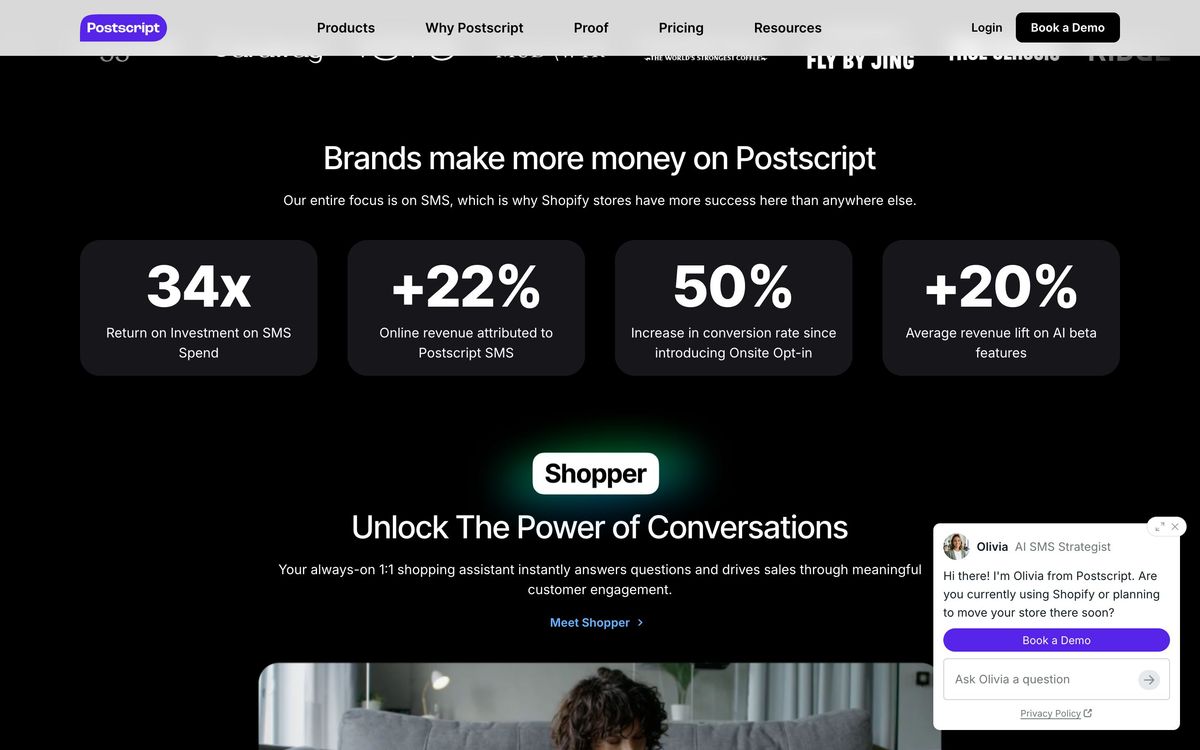
The surrounding tooling covers the two problems that make SMS harder than email. The first is list growth, handled with popups, onsite opt-in units and keyword sign-up, all inside the same product. The second is compliance: consent capture, quiet hours and opt-out processing are handled by the platform rather than left to a marketer to remember. Newer additions push into conversation and automation, with agents replying to inbound texts in a shared view, keyword responses, and a testing engine that generates and compares message variants automatically.
Key features
Everything is scoped to one channel, which is the point of the product.
- Campaigns and picture messages segmented on Shopify order and behaviour data
- Automation flows for abandoned checkout, browse abandonment, welcome and post-purchase
- Popup editor and onsite opt-in units for subscriber collection
- Two-way conversational messaging with agent replies and keyword handling
- Automated variant testing across large numbers of on-brand message versions
- Consent, quiet hours and opt-out compliance built into sending
Who it's for
Postscript suits a Shopify brand that already has an email programme working and wants a second direct channel: consumer goods, apparel, supplements, anything with repeat purchase and a promotional calendar. The economics need volume, because message rates and carrier fees are charged per send and the useful plans carry a monthly platform fee. Brands with a subscriber list in the tens of thousands and a reason to message them regularly are the ones who see the channel pay for itself.
It is the wrong purchase for stores on any other ecommerce platform, since there is no support for them, and for small stores testing the water, where the minimum spend and platform fee outweigh the revenue a short list can generate. Brands with an international customer base should also check deliverability and cost by country before committing, as the pricing model is built around North American messaging.
How it compares
Attentive is the main rival and offers more managed service, more channels and stronger enterprise reporting, at a contract size that excludes most small brands. Klaviyo bundles SMS with email and is the pragmatic choice for a store that wants one tool and one subscriber list, though its SMS depth and testing tools trail Postscript. Sendlane and similar mid-market platforms undercut both on price but bring smaller support teams and fewer Shopify-native behaviours. Postscript wins on Shopify integration depth and on the maturity of its automations; it loses on platform breadth and on cost transparency.
Verdict
As a single-channel product Postscript is well made: the Shopify data model makes segmentation genuinely easy, the automations are the ones that actually produce revenue, and the compliance handling removes a real legal risk from the marketing team. The variant testing is more useful than most vendor claims about automated optimisation. The caveats are commercial and structural. The platform is locked to one ecommerce system, the mid and upper plans charge a fee before any message is sent, picture messages cost several times a text, and carrier fees land on top of the quoted rate, so the true cost per campaign has to be modelled rather than read off the pricing page. Shopify brands with volume should shortlist it; everyone else should not.
Ready to try Postscript?
More ecommerce tools like Postscript
soona
4.4Creative-for-commerce platform: studio photo and video, UGC creators, AI editing tools and listing insights.
Read soona review →DataHawk
4.3Enterprise-grade Amazon and Walmart analytics: SKU-level dashboards, anomaly alerts and AI diagnostics.
Read DataHawk review →Gorgias
4.3Ecommerce help desk where order data and refunds live inside the conversation, with an AI agent priced per resolution.
Read Gorgias review →Teikametrics
4.3AI marketplace optimization for Amazon, Walmart and TikTok Shop: ads automation, listings and forecasting.
Read Teikametrics review →AfterSell by Rokt
4.2Adds one-click upsells to the cart, checkout and thank-you pages of a Shopify store.
Read AfterSell by Rokt review →AliDrop
4.2Dropshipping app importing AliExpress, Alibaba and Temu products into Shopify with automated fulfillment.
Read AliDrop review →