
StampEzee review
Branded digital stamp cards and repeat-visit campaigns for cafes, salons and small retail chains.
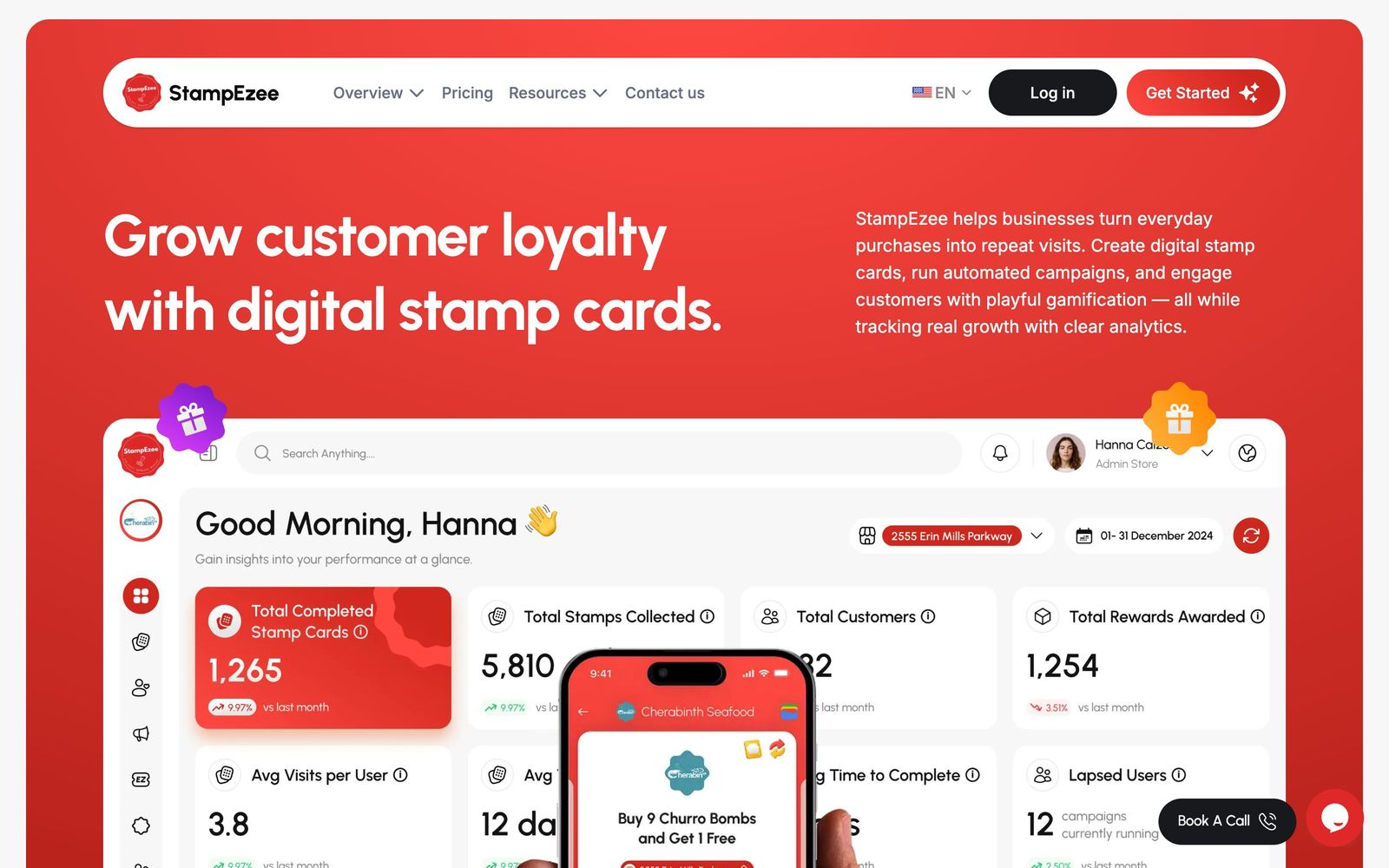
A tidy replacement for paper stamp cards with real campaign automation behind it, though the lack of published POS or e-commerce integrations leaves staff scanning codes by hand.
Pros
- Stamp cards carry the shop's own branding rather than a marketplace app's
- Lapsed-customer, birthday and anniversary campaigns run on their own once configured
- EzeeCodes issue stamps for delivery orders, printed receipts and influencer promotions, not just in-store visits
- Multi-branch dashboard keeps several locations under one account with per-branch reporting
- Customer accounts and stamp collection are unlimited on every tier
Cons
- No published integrations with POS systems, Shopify or WooCommerce, so stamping stays a manual QR scan at the counter
- Push notification allowances are capped per tier, and custom card design is reserved for the top plan
- Neither a free plan nor a public trial is listed, and the product has almost no independent reviews to check claims against
StampEzee pricing
List prices in USD per month, taken from the vendor at review time.
| Plan | Per month | What it covers |
|---|---|---|
| Stamp Lite | $29.99 | CAD per month; one branch, one active stamp card |
| Stamp Pro | $49.99 | CAD per month; more branches, active cards and push notifications |
| Stamp Elite | $99.99 | CAD per month; up to ten branches and one custom card design |
What StampEzee actually does
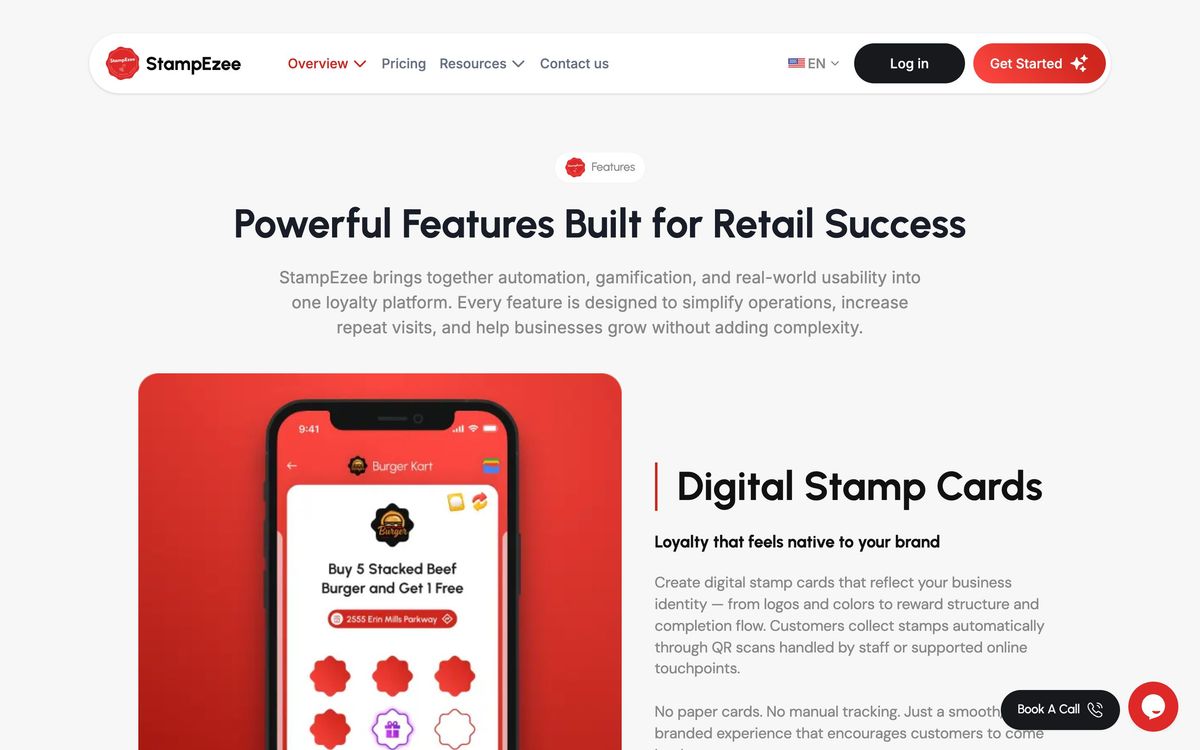
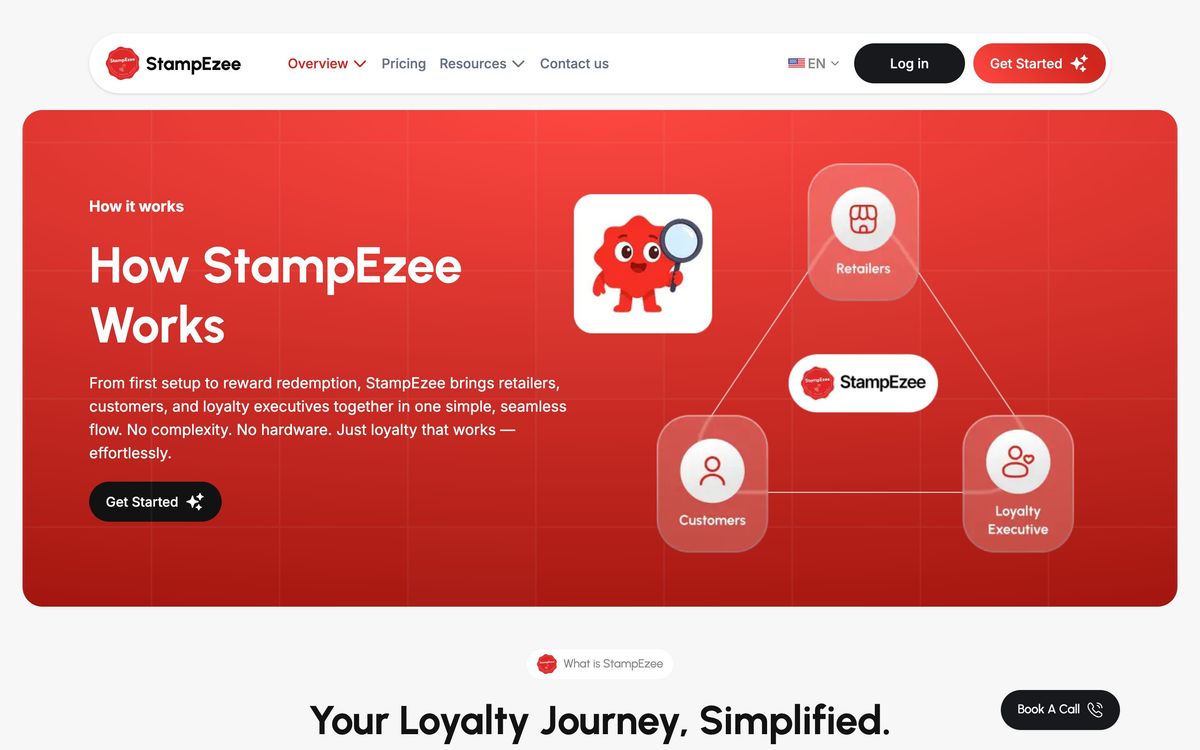
StampEzee turns the paper punch card by the till into a digital loyalty programme the business owns. A retailer builds a branded stamp card in the dashboard, decides how many stamps earn a reward, and customers collect them through a QR scan handled by staff at the counter. Customer accounts are unlimited on every plan, and the collection history sits in one place, which is the part paper never managed: a shop can finally see who came back four times and who stopped after one visit.
Around that core sit the campaigns. Automated messages chase customers who have not visited in a while, birthday and anniversary rewards go out on their own, and scratch-and-win or bonus cards run as short promotions. EzeeCodes extend the same mechanic beyond the shop floor, issuing stamps or rewards through single-use or bulk codes attached to delivery orders, printed receipts, events or influencer campaigns. Everything is browser-based with a per-branch view, so a small chain runs several locations from one login rather than one account per site.
Key features
The feature set is narrow by design, aimed at repeat visits rather than at general marketing.
- Branded stamp card builder with completion paths and bonus cards
- EzeeCodes for issuing stamps and rewards outside the physical counter
- Automated lapsed-customer, birthday and anniversary campaigns
- Location-based push notifications to enrolled customers
- Gamification through levels, badges, experience points and leaderboards
- Multi-branch management with redemption and campaign analytics in one dashboard
Who it's for
The natural buyer is a cafe, bakery, salon, barber, nail bar or small quick-service group with regular customers and no loyalty system beyond a rubber stamp. For that shape of business the numbers work: one card, one branch and a few automated campaigns cover most of what a punch card was doing, plus the visit data behind it. A group of three to ten sites gets more from the higher tiers, mainly for the extra active cards and the per-branch reporting.
It is the wrong tool for anyone who needs loyalty tied to spend rather than visits, for e-commerce sellers who want points to accrue automatically at checkout, and for operators unwilling to change counter habits. Because stamping depends on staff scanning a code, adoption lives or dies on whether the team remembers to ask. Businesses already running a POS with a loyalty module built in should compare that module first.
How it compares
Stamp Me covers the same ground with a longer track record and a larger review base, and it publishes prices in a currency most buyers recognise. Loopy Loyalty leans on Apple Wallet and Google Wallet passes, which removes the app-download step StampEzee's customers face and often suits retail better. Smile.io sits at the other end of the market, built for online stores with deep Shopify integration and points-based rules, and offers little for a counter-service shop. StampEzee's edge over these is the breadth of campaign automation at the small end, and its weakness against all three is ecosystem: no published POS or storefront connections.
Verdict
As a first loyalty system for a small hospitality or retail operator, StampEzee is credible. The card builder is straightforward, the automated campaigns are the sort of thing that quietly recovers lapsed regulars, and the multi-branch view is more than most competitors give at the entry tier. The caveat is the integration gap. Until stamps can be issued from the POS or an online checkout, every reward depends on a staff member scanning a code at the right moment, and the product carries too few independent reviews to know how well that holds up across a busy shift. Trial it in one location before rolling out to a chain.
Ready to try StampEzee?
More service-businesses tools like StampEzee
NiceJob
4.0Automated review requests, referrals and social proof widgets for local service businesses.
Read NiceJob review →Marketing 360
3.7All-in-one marketing platform for small local businesses, sold with a marketing manager attached.
Read Marketing 360 review →Thryv
3.6All-in-one CRM, booking, invoicing and local marketing for small service businesses that run on one system.
Read Thryv review →UENI
3.6A done-for-you website with bookings and payments, built by UENI's team in about a week and hosted on its own platform.
Read UENI review →Tradify
4.6Job management app for tradespeople covering quoting, scheduling, invoicing and payments in one place.
Read Tradify review →Weave
4.5All-in-one phone, texting, scheduling and payments platform for dental, vet and optometry practices.
Read Weave review →