
SimplePractice review
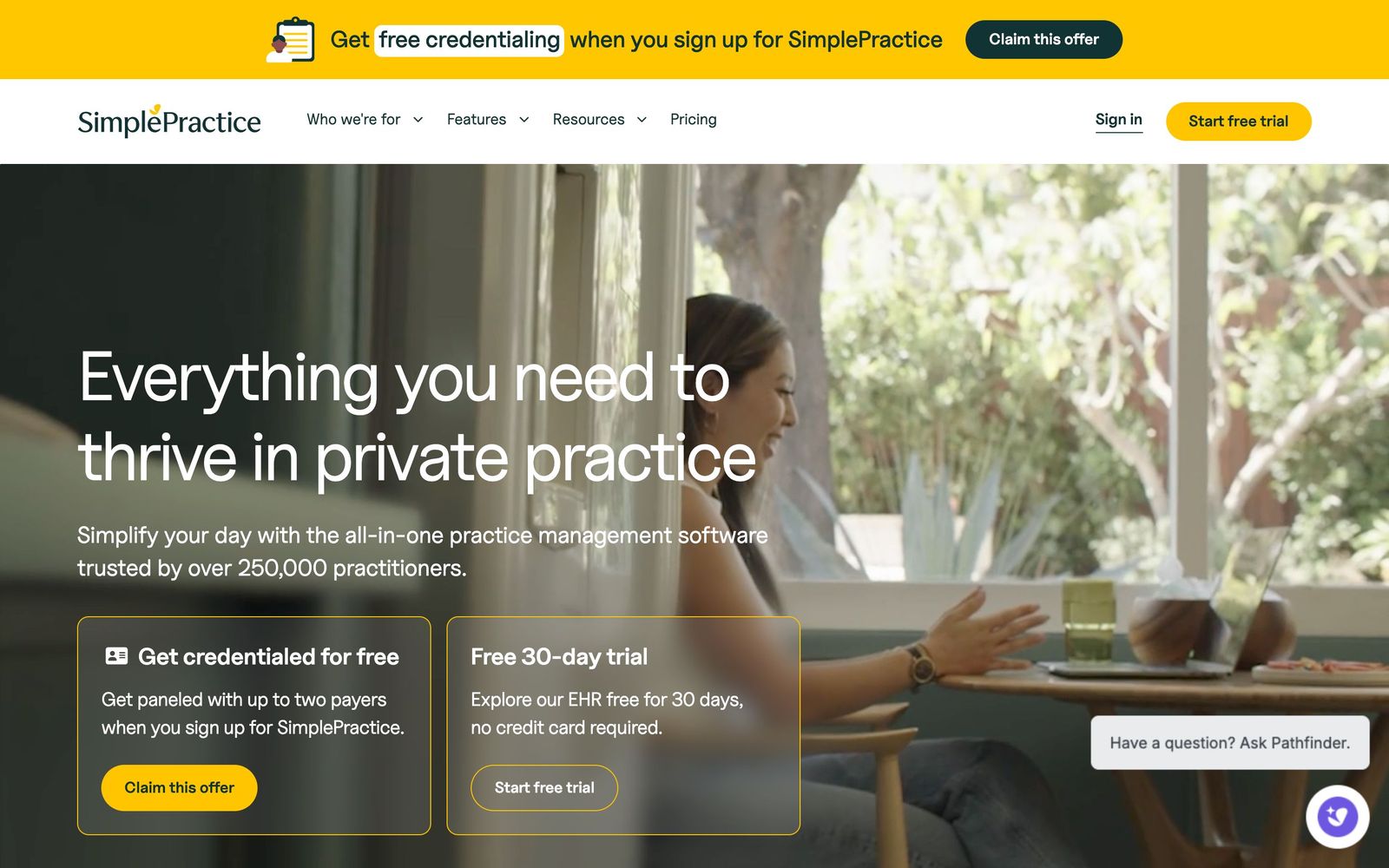
HIPAA-compliant practice management for therapists: scheduling, notes, telehealth, client portal and billing.
The most polished option for a solo therapist getting a practice off the ground, though insurance-heavy and larger group practices outgrow its billing and reporting.
Pros
- A solo practitioner can be seeing clients on it within days, with a client portal, intake forms and telehealth already configured
- Telehealth is built in rather than bolted on, so sessions run from the appointment record without a separate video subscription
- Insurance handling covers electronic claim submission, ERA and EOB processing and eligibility verification through clearinghouse partners
- The documentation template library and Wiley Practice Planners integration remove most of the note-writing setup
- HIPAA, HITRUST and PCI compliance are documented, which matters when a practice has to answer for its records
Cons
- Pricing is per clinician, so a three-person group practice pays roughly three times the advertised figure before any add-ons
- There is no phone support on any plan, a consistent complaint in reviews even where chat resolves the issue
- Managed billing, where SimplePractice files claims on your behalf, is charged as a percentage of collections with a monthly minimum that only makes sense at scale
SimplePractice pricing
List prices in USD per month, taken from the vendor at review time.
| Plan | Per month | What it covers |
|---|---|---|
| Starter | $49 | per clinician; 30-day free trial, no card required |
| Essential | $79 | per clinician |
| Plus | $99 | per clinician; group practice features |
| ePrescribe add-on | $49 | plus a one-off setup fee |
What SimplePractice actually does
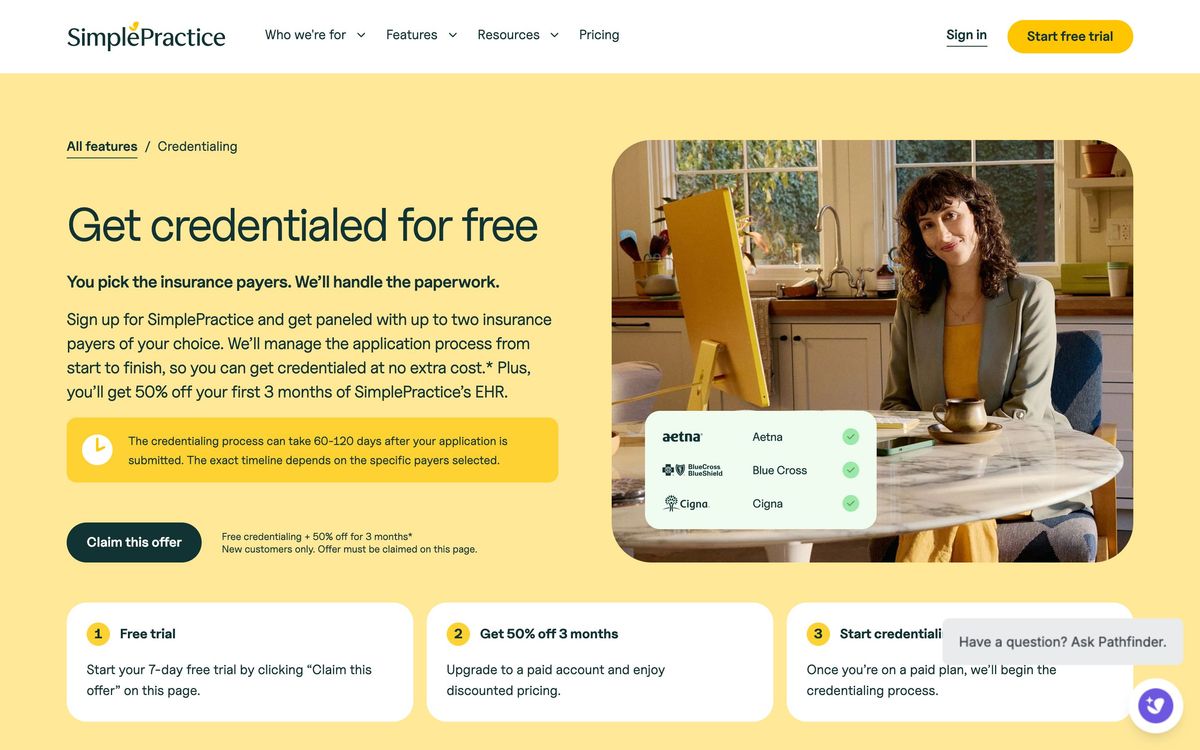
SimplePractice is practice management software for health and wellness practitioners, and in practice that mostly means therapists, counsellors, speech and occupational therapists and psychiatrists. It combines the pieces a private practice would otherwise assemble from four or five separate tools: a calendar with online booking and reminders, clinical documentation with a template library, a secure client portal for intake paperwork and messaging, integrated video for telehealth sessions, and billing that handles both card payments and insurance claims. It is delivered in the browser with mobile apps, and the whole thing sits under HIPAA, HITRUST and PCI compliance.
What makes it distinct is where the effort has gone. Rather than building the deepest clinical system, the company has spent its attention on the parts a solo practitioner touches daily: what the client sees when they book, how the intake forms arrive, whether a note takes two minutes or ten. Sessions launch straight from the appointment into telehealth, superbills generate for private-pay clients, and claims go out electronically with ERA and EOB processing coming back. Payment runs through Stripe, calendars sync with Google, Apple and Microsoft, and Wiley Practice Planners supplies ready-made treatment plan content. Recent add-ons layer AI note assistance on top of the documentation flow at extra cost.
Key features
What a practice gets in the core product:
- Calendar with client self-booking, appointment reminders and calendar sync
- Documentation templates, treatment planning and customisable progress notes
- Integrated telehealth launched from the appointment record
- Client portal for intake forms, secure messaging, documents and payment
- Electronic insurance claims with ERA and EOB handling and eligibility checks
- Card processing, invoicing and superbill generation for private-pay work
Who it's for
The ideal buyer is a therapist opening a private practice or running one alone, particularly on a mostly private-pay or lightly insured caseload. The learning curve is short enough that a clinician with no prior electronic records experience can be operating in days, and the client-facing experience is more polished than most competitors manage, which matters when the portal is the first thing a new client sees.
Two groups should be careful. Insurance-heavy practices will hit the limits of the billing module, where reviewers repeatedly describe frustration with claim edge cases and limited customisation of invoices and superbills. And group practices beyond roughly five to ten clinicians will feel both the per-clinician pricing and the ceiling on administrative reporting and role customisation. The product scales in headcount, but not gracefully in complexity.
How it compares
TherapyNotes is the standard comparison and is generally stronger on insurance billing and clinical depth, at the cost of a plainer interface and a less impressive client experience. Jane App is the better choice for multidisciplinary clinics with physical treatment rooms and complex scheduling. Valant and similar systems target larger behavioural health organisations and offer the structured documentation and reporting that SimplePractice lacks. Against all of them SimplePractice wins on speed to launch, interface quality and the sense that a solo clinician was the person in mind.

Verdict
SimplePractice deserves its position as the default recommendation for solo therapists: it is the least painful way to get a compliant practice running, and the client portal and telehealth are genuinely better than the alternatives. The caveats are financial and structural. Pricing is per clinician and add-ons for note assistance and prescribing stack on top, so a group practice budget looks nothing like the headline plan; managed billing carries a percentage of collections with a monthly minimum; and there is no phone support on any plan. Insurance-driven or growing practices should compare against TherapyNotes before committing.
Ready to try SimplePractice?
More service-businesses tools like SimplePractice
Healthie
4.0HIPAA-compliant EHR and practice management for wellness providers: scheduling, telehealth, charting and billing.
Read Healthie review →Carepatron
3.9Practice management and clinical records for small health and wellness practices, with booking, telehealth and AI notes.
Read Carepatron review →Consentz
3.8Clinic software for aesthetics practices: consent forms, treatment records, booking and payments in one chart.
Read Consentz review →Shore
3.8Online booking, customer records, an iPad till and campaigns in one system for salons and studios.
Read Shore review →Momence
3.7Class booking, memberships, payments and marketing in one back office for studios, gyms and spas.
Read Momence review →ABC Trainerize
3.7Coaching platform for trainers and studios: programme delivery, client check-ins, scheduling and payments in one app.
Read ABC Trainerize review →