
Salesmsg review
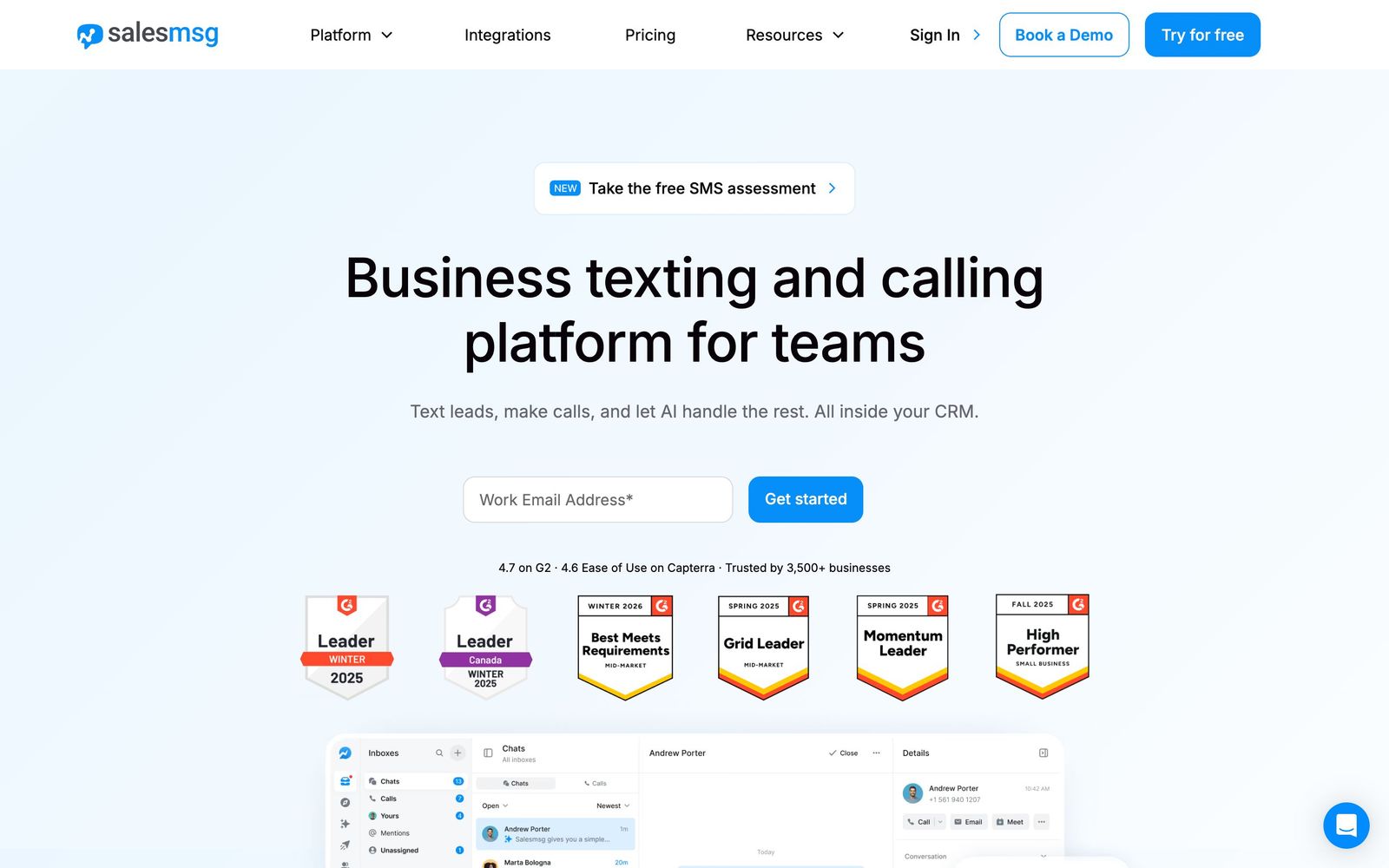
Two-way business texting and calling that logs to HubSpot and Salesforce from a shared team inbox.
A sensible texting and calling layer for a HubSpot or Salesforce team, though credit metering plus carrier fees make the real monthly cost hard to forecast.
Pros
- Native two-way sync with HubSpot and Salesforce writes every text and call to the contact record, so conversations survive a rep leaving
- A shared team inbox means no thread is trapped on one person's mobile, and coverage can be handed over mid-conversation
- Texting, calling with recording and transcription, and a power dialer sit in one tool rather than three subscriptions
- Broadcast campaigns support ringless voicemail alongside SMS and MMS for re-engagement lists
- 10DLC registration, opt-out handling and double opt-in are built in, which keeps compliance work off the rep
Cons
- The plan price covers credits only, A2P brand and campaign registration and carrier pass-through fees are separate line items, so the invoice is hard to predict from the plan alone
- Reporting is thin, and template and automation customisation runs out for teams that want granular control over multi-step flows
- Most of the value comes from the CRM sync; used standalone it is a texting inbox competing with cheaper business phone products
Salesmsg pricing
List prices in USD per month, taken from the vendor at review time.
| Plan | Per month | What it covers |
|---|---|---|
| Basic | $25 | 500 message credits, first user and first number included; 14-day trial |
| Additional user | $10 | per extra seat, or 100 per year billed annually |
| Additional number | $5 | per extra local or toll-free number |
What Salesmsg actually does
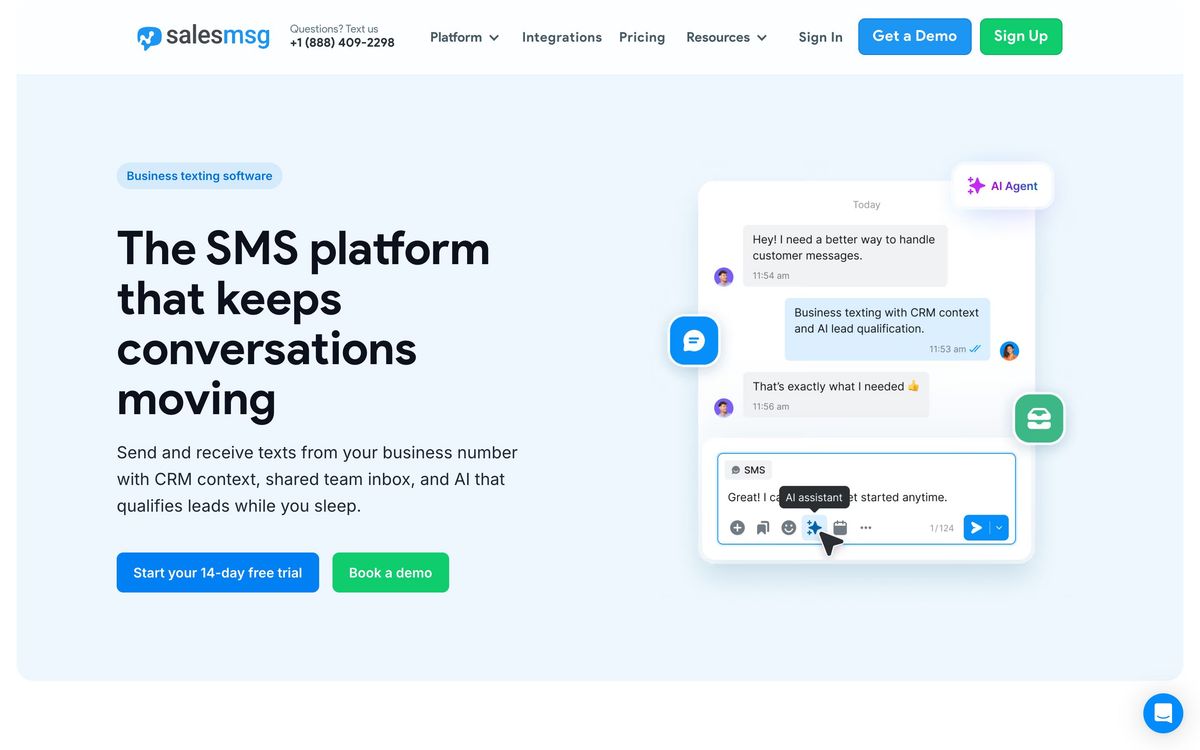
Salesmsg gives a sales or service team a business phone number that can text as well as call, and wires both directions into the CRM. A rep sends a message from the shared inbox, from inside a HubSpot or Salesforce record, or automatically from a workflow; the reply lands in the same inbox and is written back to the contact's timeline. Calling works the same way, with recordings and transcripts attached to the record, and a power dialer for reps working a list.
The reason teams buy it is usually simpler than the feature list suggests: leads answer texts and ignore email, but texting from personal phones puts the company's most valuable conversations outside the CRM and outside compliance. Salesmsg moves that traffic onto numbers the business owns, with opt-out handling, double opt-in and 10DLC registration managed inside the product. Newer additions extend into automation, broadcast campaigns with ringless voicemail, and AI agents that qualify inbound leads, book meetings or answer routine support questions without a human in the thread. Billing runs on message credits rather than flat unlimited messaging.
Key features
The product spans conversation, telephony and light automation.
- Two-way SMS and MMS on local or toll-free numbers, logged automatically to the CRM
- Inbound and outbound calling with recording, transcription and a power dialer
- Shared team inbox with assignment and internal notes so several reps can work one number
- Broadcast campaigns segmented from CRM lists, including ringless voicemail drops
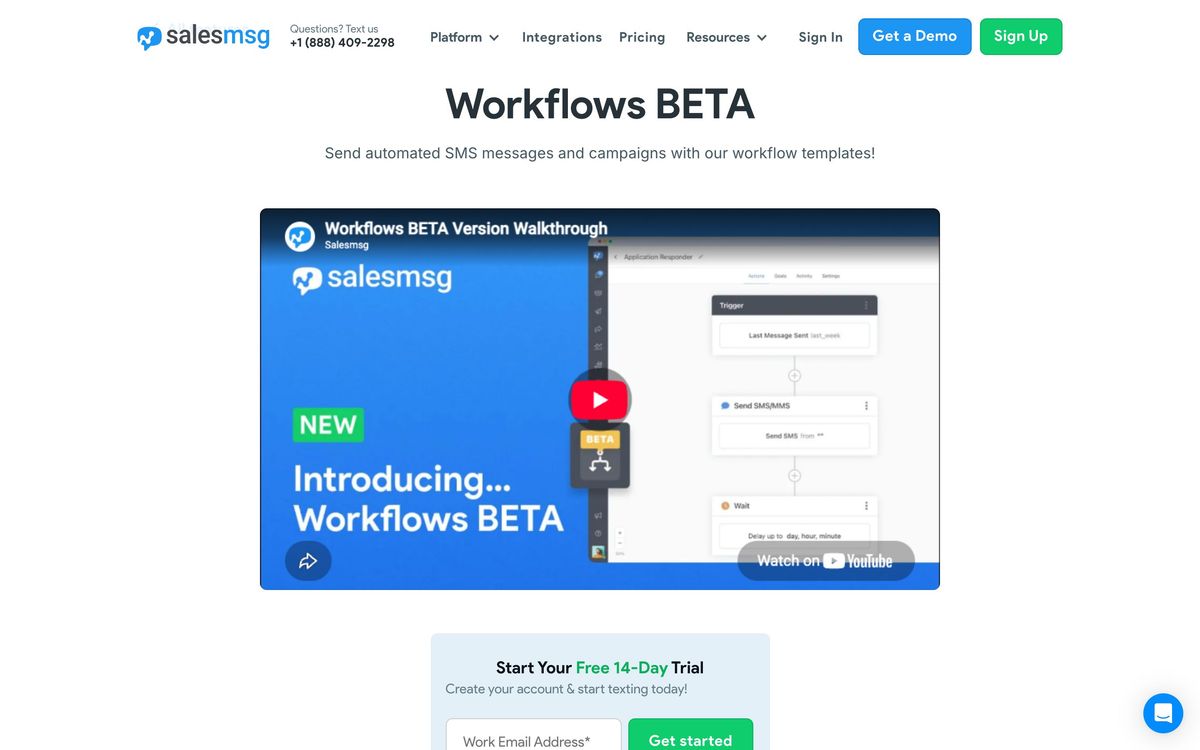
- Workflows triggered by CRM events that chain messages, calls and timed delays
- AI agents for lead qualification, meeting booking and first-line support replies
Who it's for
The fit is a revenue team already committed to HubSpot or Salesforce, with inbound leads that need a reply within minutes and a follow-up cadence that email alone loses. Inside sales teams, mortgage and insurance brokers, home services companies with quote follow-up, and customer success teams chasing renewals all get the same benefit: the conversation lives where the pipeline lives, and a manager can see it.
It is a weaker purchase in two situations. A team without one of the two native CRMs gets a competent texting inbox but loses the integration that justifies the price over cheaper business phone products. And any team planning high-volume outbound marketing messages should model the credit consumption first, since each message segment burns credits and heavy MMS use consumes them faster; a bulk SMS marketing platform will be cheaper per message at real volume, even if it does less inside the CRM.
How it compares
OpenPhone is cheaper and better as a general business phone system for a small team, with a good app and shared numbers, but its CRM integration is shallower and it does less around campaigns and compliance. Kixie attacks from the dialer side, and is the stronger choice for an outbound team whose day is calls with texting as a follow-up, though its inbox model is less suited to two-way conversation volume. Podium serves local businesses, bundling texting with reviews and payments, which is a different job entirely and overkill for a B2B pipeline. Salesmsg sits precisely at the CRM-native texting slot, and that is where it wins.
Verdict
For teams inside HubSpot or Salesforce, this solves a real problem cleanly: texting stops being invisible, calls get logged, and compliance is handled without a project. Reviewers rate the product and the support well, and the shared inbox is the part people keep. The caveat is cost transparency, credits, extra seats, extra numbers, carrier pass-through charges and A2P registration fees each arrive separately, so a team should build a realistic monthly estimate before committing, and revisit it once broadcast volume grows. Reporting depth is the other thing to check against your own questions before signing.
Ready to try Salesmsg?
More sales tools like Salesmsg
Close
4.5Sales CRM for SMB teams with built-in calling, email, SMS, automation, and an embedded AI sales agent.
Read Close review →FullEnrich
4.5B2B waterfall enrichment that cascades 20+ data vendors to find verified emails and mobile numbers.
Read FullEnrich review →Amplemarket
4.4All-in-one AI sales platform: B2B contact data, multichannel sequences, and the Duo AI copilot.
Read Amplemarket review →Clay
4.4A credit-based GTM data workbench that chains 100+ enrichment providers and AI into one spreadsheet.
Read Clay review →Smartlead
4.4Cold-email sending infrastructure built for unlimited mailboxes, continuous warmup, and one unified reply inbox.
Read Smartlead review →Apollo.io
4.3The default B2B contact database and SDR prospecting suite: huge data reach paired with built-in sequencing and dialing.
Read Apollo.io review →